Skip to content
|Animo

Animo MT200

7.5/ 10

Recommended

Data review — researched from sources, not physically tested. How we rate

Design & build7.5
Technology & features5.5
Operation & maintenance8.7
Capacity & range7.2
Value for money8.5
ca. 487 – 650 €

Guide prices net (excl. VAT), project prices may vary

  • Counter unit
  • Filter coffee
  • 205 × 585 × 380 mm
  • 7 kg

Eco label

ABCDE

Rated power consumption

2100 W

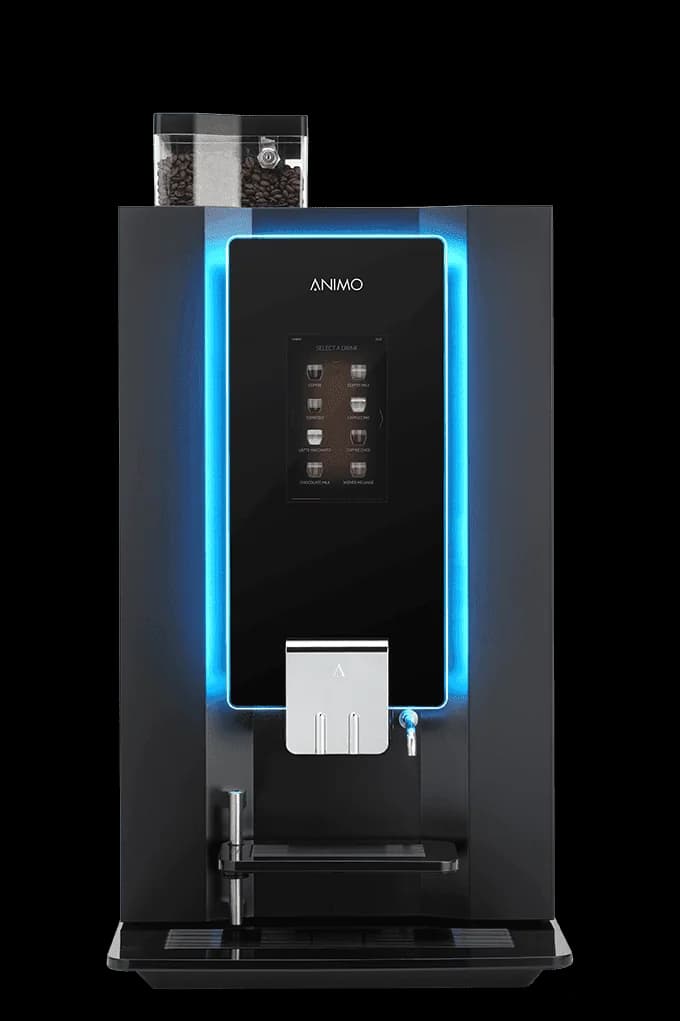
Animo MT200 — Frontansicht · Quelle: animo.eu

6 photos · Animo MT200

Use cases

Where this machine fits, and where it does not.

Best fit

Office 30–100 employees

Fixed water connection and thermal carafe operation ideal for office kitchens without permanent supervision.

Best fit

Hotel & breakfast buffet

205 mm width, no hotplate risk, service staff require no training.

Best fit

Canteen up to 80 employees

18 L/h throughput covers peak times; operating costs under €0.03 per brew cycle.

Best fit

OCS operator

Self-cleaning by end-user possible, few moving parts, no grinder wear.

Conditional

Operation over 120 employees

If peak times exceed 8 brew cycles/hour: evaluate MT202 (dual brewer) or ComBi-Line.

Not suitable

Espresso & specialty coffee

❌ No grinder, no steam, no milk system. Filter coffee only.

Our rating in detail

Five public rating axes, weighted against the available evidence.

Design & build
7,5 / 10
Technology & features
5,5 / 10
Operation & maintenance
8,7 / 10
Capacity & range
7,2 / 10
Value for money
8,5 / 10

Our verdict

7.5Good

144 cups per hour, fixed water connection, three operational steps: the Animo MT200 is a high-volume filter brewer for offices with 30 to 100 employees, hotel breakfast buffets, and canteens up to 80 staff. Each brew cycle produces 2.2 litres of filter coffee in 7.5 minutes; the thermal pump carafe maintains beverage temperature for 2 to 3 hours without a hotplate. This prevents the bitter aftertaste that develops in glass carafes with active hotplates after 30 minutes. Core strength: low-maintenance continuous operation with minimal staff training required. The weaknesses are equally clear: no integrated grinder (pre-ground only), no telemetry interface, no display beyond the descaling indicator. Operators with over 100 employees or remote monitoring requirements should evaluate the MT202 or Animo ComBi-Line. At 5 brew cycles daily over 250 working days, approximately 22,000 cups per year are produced. Annual operating costs are €742 to €1,208 (coffee supply, electricity, filter paper, descaling agent); including capital depreciation of €487 net over 5 years, this yields €0.04 to €0.06 per cup. For a reliable, manually operable filter coffee solution with no connectivity requirements, this represents solid value.

At a glance

Model
Animo MT200
Manufacturer
Animo
Category
Hot Drink Machines
Type
Filter coffee machines
Price range
ca. 487 – 650 €
Overall score
7.5 / 10
Origin
Animo (NL)

Pros & cons

Pros

  • Daily cleaning under 3 minutes: remove filter paper, rinse filter basket. No tools or cleaning agents required.
  • Thermal carafe maintains coffee temperature for 2 to 3 hours without additional power consumption after brewing.
  • Brew volume programmable between 1.0 and 3.0 litres; adapts to variable daily demand.
  • Auto-stop if carafe missing prevents work surface flooding from operator error.
  • 18 litres/hour brew capacity (144 cups at 125 ml) directly into thermal pump carafe: no bitterness from hotplate contact.
  • Pre-brew function (brief saturation of grounds before main brew) improves extraction with lighter roasts.

Cons

  • No integrated grinder: pre-ground coffee only. Fresh-grinding advantage of bean-to-cup is absent.
  • No verified Animo service network in Germany. Repairs routed through specialist distributors; response time not standardized.
  • Thermal pump carafe not in standard delivery (varies by distributor): machine is not operational without carafe.
  • No telemetry, no remote access, no usage statistics. Unsuitable for fleet management or OCS billing without external hardware.

Review

Design & Build

205 mm wide, 380 mm deep, 585 mm high: the Animo MT200 occupies less counter space than a stand mixer with accessories on a standard kitchen line. The stainless steel housing is adequately finished for a machine in the €487 segment. No visible clip fasteners, no plastic cladding on the main body, no sharp edges on filter basket or drip tray.

Construction consistently prioritises serviceability. The filter basket accepts standard basket-filter paper size 90/250, stocked by every foodservice supplier. Insert, fill, switch on: operation consists of these three steps. A descaling indicator is the only electronic feedback point. No touchscreen, no display with usage statistics, no connectivity module.

Rear-mounted fixed water connection G 3/4 inch allows clean plumbing integration in kitchen installations. The machine accepts water pressure between 2 and 10 bar according to the service manual (manufacturer specification, not independently verified). Weight of 7 kilograms allows a single person to relocate the machine (figure from service manual; distributor confirmation not available).

The auto-stop function if carafe is missing is operationally relevant: if a brew cycle runs without the thermal pump carafe attached, the machine stops before flooding the work surface. In operations with rotating staff, this is tangible protection against operator error.

Standard delivery without thermal pump carafe: Gastrouniversum lists from €487 net without carafe. For operation, a compatible 2.1-litre thermal pump carafe is mandatory. Animo offers proprietary accessories; third-party compatible carafes exist but should be checked for seal compatibility before purchase.

Model variants at a glance: MT100 (manual filling, no fixed water connection), MT100V and MT200V (variable brew volume), MT200W (fixed water connection plus instant-hot water dispenser for tea and instant beverages), MT200WP (as MT200W, thermal carafe included). If instant-hot water functionality for tea or instant products is needed alongside coffee, consider the W variant. The MT200 variant reviewed here is limited to coffee functionality.

For locations with design considerations, the plain steel aesthetic is neutral enough for reception areas. For back-of-house kitchens, canteens, and buffet zones, it is the appropriate choice. Note ceiling height: the thermal carafe sits within the 585 mm under the outlet, adding no height above the machine. However, space above is needed when loading the filter basket, which matters for under-counter installations.

Technology & Functions: What's Inside?

Filter brewers in this class operate on a simple principle: a flow-through heater brings mains water to brewing temperature; a water distributor directs it evenly over the coffee grounds. The Animo MT200 implements this with a 2,100-watt heating element. Brewing temperature is not stated as a precise value in publicly available documentation (manufacturer specification missing, not independently verified); it lies in the typical range for filter brewers of around 92 to 96 degrees Celsius.

Particularly relevant for extraction quality: the pre-brew function. Grounds are briefly saturated at the start before the main brew cycle begins. With medium-coarse grinds and medium-dark roasts, this leads to more uniform CO₂ release and thus more consistent extraction. With very fine grinds or very dark roasts, the effect is less pronounced.

No integrated grinder: the MT200 is designed exclusively for pre-ground coffee. Those requiring fresh-ground quality must plan for a separate grinder. This is not a manufacturing shortcoming but a category distinction. Filter brewers for foodservice are typically operated with portioned coffee or supply containers from a grinder.

Brew volume is programmable between 1.0 and 3.0 litres (manufacturer specification). From the 18 litres per hour capacity with 7.5 minutes per batch, approximately 2.25 litres per cycle follows; however, the specified thermal pump carafe holds 2.1 litres. The two manufacturer specifications thus do not align exactly, and programmed volume must be set to carafe capacity, otherwise the final quarter-litre overflows. Subsequent calculations are based on 2.2 litres, the figure corresponding to Animo's stated hourly capacity. This equates to approximately 17.6 servings per brew cycle at 125 ml per cup. Brew time for the 2.2-litre batch is 450 seconds (7.5 minutes; confirmed by Animo EN website and Coffeefair). With reduced volume, brew time shortens proportionally.

Connectivity: the MT200 has no Wi-Fi, Bluetooth, or Ethernet interface (manufacturer specification, confirmed). No telemetry, no app integration, no remote control. For operations wanting to use OCS contracts with billing functions or fill-level monitoring, the machine is not usable without external hardware.

Payment functions are completely absent. The machine is designed for staff-operated or complimentary dispensing; no MDB or EVA interface for coin or card reader integration is present (manufacturer specification). For locations requiring cost allocation (e.g. commercial operations with user identification), additional hardware is necessary or a different machine concept should be selected.

Capacity & Range

18 litres per hour is the manufacturer's stated brew capacity, equating to 144 cups at 125 ml per hour (Animo EN website, DE website). This figure applies to continuous changeover operation: one brew cycle takes 7.5 minutes and produces 2.2 litres; eight such cycles per hour are possible if carafe and coffee are changed immediately after each cycle.

For an office site with 50 employees and assumed consumption of 2 to 3 cups per person daily, this yields a requirement of 100 to 150 cups. Five to eight brew cycles at 2.2 litres each cover this. The 2.1-litre thermal pump carafe maintains coffee at serving temperature for 2 to 3 hours. Brewing in the morning and after lunch allows one carafe per brewing period.

Canteens with 80 employees and peak times around 11:30 can operate the MT200 if two to three brew cycles are feasible during the peak hour. Two cycles in 25 minutes deliver approximately 50 to 55 cups, sufficient for many canteen scenarios without continuous coffee flow. From 120 employees onwards, or with highly compressed peak times, the MT202 (dual brew systems in one unit) is the more stable option.

Range: filter coffee only. No espresso, no milk beverages, no tea brewing (the latter only in the MT200W variant with instant-hot water dispenser). This is both a strength and a clear limitation. Focus on one beverage type makes the machine reliable and simple to operate; those needing beverage variety must add a second machine or choose a different equipment category.

Programmable brew volume between 1.0 and 3.0 litres is a tangible operational advantage. In small offices with variable demand, full carafe volume need not be brewed each time. Coffee quality suffers with significantly reduced brew volume due to altered flow rate; for volumes below 1.5 litres, coffee dose should be adjusted accordingly to avoid over-extraction.

Operation & Maintenance

Daily cleaning takes approximately 3 minutes: remove used filter paper with grounds, rinse filter basket and drip tray under running water. No cleaning agents needed, no tools, no disassembly of brew group or milk pump. This is the principal operational advantage over bean-to-cup machines, which require 15 to 30 minutes of daily cleaning.

Weekly, a more thorough clean is recommended: disassemble filter holder, clean all plastic components with warm water, wipe housing. This takes approximately 10 minutes and requires no specialist knowledge.

Descaling is the most intensive maintenance step. The descaling indicator shows when it is needed; Animo recommends every 4 to 8 weeks depending on water hardness (approximately 200 to 500 brew cycles). The process is semi-automatic: add descaling solution, run the program. Animo original descaling agent costs €27.00 gross per kilogramm (spare parts list 2025). At 6 descalings per year and 0.1 to 0.2 kg per cycle, annual cleaning chemical costs are €16 to €32.

Spare parts availability in Germany: Gastroteileshop.de and Avola Coffeesystems stock MT200 spare parts (thermostat, flow heater, water distributor). Typical delivery time from German stock: 2 to 5 working days. Individual part prices are not stated in publicly visible search results and were deliberately not inventoried.

Animo operates no verified nationwide service network in Germany. Repairs are handled via authorised foodservice technicians. A known market scenario: thermostat failure after approximately 3 years, spare part available, but technician wait time of 3 to 5 working days. For locations where the MT200 is the sole coffee supply, this should factor into contingency planning.

The machine is mechanically simple: no grinder (thus no grinder wear), no milk pump, no pressure brew group. Principal wear parts are thermostat and flow heater, with typical service life of 5 to 10 years with consistent descaling. The small number of components is a reliability advantage over more complex equipment types.

Performance & Energy Consumption

Rated power: 2,100 watts (manufacturer specification, confirmed by Gastrouniversum and Animo EN website). A single brew cycle of 2.2 litres in 7.5 minutes consumes: 2.1 kW × (7.5 / 60) h = 0.2625 kWh. At 5 brew cycles daily over 250 working days, annual consumption is: 2.1 kW × 0.125 h/cycle × 1,250 cycles/year = 328 kWh.

Standby power: not publicly stated. The machine has no EU energy label (table-top equipment in this class does not fall under applicable EU ecodesign regulations). After brewing, no hotplate remains active, as coffee is held in the thermal carafe. This is an energy advantage over glass carafe machines with continuously active hotplates, which typically draw 40 to 80 watts continuously.

Energy cost calculation at 328 kWh/year and commercial electricity rate of €0.30/kWh: approximately €98 per year. This equates to €0.004 per cup at 22,000 cups/year. Electricity is thus the smallest cost component in this machine's TCO.

Heat-up time: not separately published. The flow heater heats water directly during brewing; there is no separate pre-heat phase as with boiler machines. The machine is immediately ready to operate once water and power are connected.

Noise level: not stated by manufacturer (not verified). The brew cycle produces water flow noise but no compressor or grinder noise. In office kitchens, the machine is not disruptive in normal ambient noise; reliable measurements are not available.

No eco-score is issued for this machine under EU energy label methodology. Based on available data (328 kWh/year operating consumption, no standby heating, no refrigerant), the machine ranks in the mid-range for its category.

Prices & Operating Costs: What Does a Cup Really Cost?

Entry price: €487 net without thermal pump carafe (Gastrouniversum, as of 2026-08-12). Gross price including 19% VAT: approximately €580. Animo states an MSRP of €760; actual market prices consistently undercut this. For full kit (machine plus thermal carafe), budget €550 to €650 net depending on distributor and carafe model.

Operating cost calculation at 5 brew cycles daily (2.2 litres per batch), 250 working days: 1,250 brew cycles and 22,000 cups per year (1,250 × 17.6 servings per cycle at 2,200 ml ÷ 125 ml).

Coffee supply: at 60 to 70 g coffee grounds per 2.2-litre batch, costs are €0.48 to €0.84 per cycle (budget roast €8/kg to premium €12/kg). Annual costs: 1,250 cycles × €0.48 to €0.84 = €600 to €1,050. Per cup: €600 ÷ 22,000 = €0.027 (budget) to €1,050 ÷ 22,000 = €0.048 (premium).

Electricity: 328 kWh/year × €0.30/kWh = approximately €98 per year, corresponding to €0.004 per cup.

Filter paper (size 90/250): available in specialist foodservice trade from approximately €0.022 gross per sheet; 1,250 sheets/year = approximately €28 (€0.001/cup).

Descaling agent: 6 descales at €2.70 to €5.40 each (0.1 to 0.2 kg Animo original descaler at €27/kg) = €16 to €32 per year.

Total operating costs annually (excluding capital): €742 to €1,208. Capital component at 5-year depreciation: €487 ÷ 5 = €97/year.

Total cost per cup over 5 years: (€487 + 5 × €742) / (5 × 22,000) to (€487 + 5 × €1,208) / (5 × 22,000) = €4,197 / 110,000 to €6,527 / 110,000 = €0.038 to €0.059 per cup.

For context: bean-to-cup machines from €3,000 purchase with grinder service range from €0.10 to €0.25 per cup depending on equipment and bean selection. The filter brewer suits environments where volume, simplicity, and low entry cost outweigh specialty coffee or billing features. For a 50-employee site requiring only filter coffee, the MT200's cost-benefit profile is hard to beat.

Technical data

All recorded data points at a glance.

Use & operations

Installation type
Counter unit

Heißgetränke

Brewing technology
Filter coffee

Abmessungen & Gewicht

Dimensions (W × H × D)
205 × 585 × 380 mm
Weight (unpacked)
7 kg
Rated power consumption
2100 W

Kaffee-Technik

Mains voltage
230 V
Espresso throughput
144 Tassen/h
Required water pressure
2–10 bar
Water supply
Mains connection

User reviews

Verified community reviews and clearly labelled external operator sources, separate from our 0–10 editorial score.

There are no confirmed community reviews for this model yet. You can submit your experience below.

Have experience with this machine?

Share your assessment. Your review helps other operators make purchasing decisions.

Share your experience with Animo MT200

4 / 5

0/5000 characters (min. 100)

Only your first name and selected use case will be shown publicly.

Useful Links and Documents

Further sources

  1. 1.Animo – Coffee makers with thermos (EN)animo.eu/en/coffee-makers/coffee-makers-with-thermos/
  2. 2.Animo – Kaffeemaschinen mit Thermos (DE)animo.eu/de/kaffeemaschinen/kaffeemaschinen-mit-thermos/
  3. 3.Gastrouniversum – Animo MT200 (487 Euro netto)gastrouniversum.de/kuechenmaschinen/kaffeemaschinen/kaffeemaschinen/642/animo-mt200-kaffeemaschine-mit-wasseranschluss
  4. 4.Coffeefair – Animo MT 200 ohne Kannecoffeefair.de/animo-mt-200-filter-kaffeemaschine-mit-festwasser-ohne-kanne/a-51857
  5. 5.Gastroteileshop – Cotherm Sicherheitsthermostat MT200W/M200Wgastroteileshop.de/en/cotherm-safety-thermostat-for-coffee-machine-animo-mt200w-m200w_1010359_39972
  6. 6.Gastroteileshop – Wasserverteiler MT200W (ø 82 mm)gastroteileshop.de/en/animo-water-distributor-for-coffee-machine-mt200w-m200w-mt202w-82mm_12862_16843
  7. 7.Gastroteileshop – Durchlauferhitzer MT200W/M200W (ø 68 mm, H 175 mm)gastroteileshop.de/en/animo-instantaneous-water-heater-mt200w-m200w-m100w-68mm-height-175mm-1600w_1042758_70659
  8. 8.Avola Coffeesystems – Animo Ersatzteilsuche DEavola-coffeesystems.de/ersatzteilsuche/animo
  9. 9.Bedienungsanleitung Animo MT200 (Deutsch)bedienungsanleitu.ng/animo/mt200/anleitung
  10. 10.Gastrotiger – Animo MT200 Geräteprofilgastrotiger.de/device/D0114294
  11. 11.Stock Kaffeemaschinen – Animo für Unternehmen und Gastronomiestock-kaffeemaschinen.de/animo-kaffeeautomaten-fuer-unternehmen-und-gastronomie/
Data review: AI-assisted research, editorially checkedLast checked: Redaktion AutomatenTests.deRating criteria documented transparently

Frequently asked questions about Animo MT200

How often should the Animo MT200 be descaled?

The integrated descaling indicator signals when descaling is required. Animo recommends every 4 to 8 weeks depending on water hardness (approximately 200 to 500 brew cycles). For hard water above 14 °dH, descale every 4 weeks. Animo original descaling agent costs €27.00 gross per kilogramm (spare parts list 2025); a descaling cycle typically requires 0.1 to 0.2 kg, costing €2.70 to €5.40 per cycle.

Is a thermal pump carafe included in the delivery?

This depends on the distributor. Gastrouniversum lists the MT200 from €487 net without carafe; Coffeefair offers set variants. Without a compatible thermal pump carafe (2.1-litre capacity), the machine is not operational. Third-party compatible carafes exist on the market; Animo recommends its original accessories.

At what employee count does the MT200 reach capacity?

The MT200 achieves 18 litres per hour, equating to approximately 144 cups at 125 ml. For offices up to 100 employees with 2 to 3 cups per person daily, capacity is sufficient. From 120 employees onwards, or if peak times require more than 8 brew cycles per hour, the MT202 (dual brew systems) or Animo ComBi-Line models are recommended alternatives.

What water connection is required?

The MT200 requires a fixed water connection G 3/4 inch with operating pressure between 2 and 10 bar (specification from service manual, not independently verified). The sister model MT100 operates with manual filling and no fixed water connection, making it an alternative where plumbing is unavailable.

Is there a service partner in Germany?

Animo (headquarters: Netherlands) operates no verified nationwide service network in Germany. Spare parts are available through German online specialist distributors such as gastroteileshop.de and avola-coffeesystems.de with typical delivery times of 2 to 5 working days. Repairs are provided by authorised foodservice technicians; standardised maintenance contract pricing is not publicly listed.

Franke A400

Franke · Hot Drink Machines

Franke A400

8.3Very good

The Franke A400 positions itself as a fully automatic coffee machine for medium commercial locations requiring up to 100 cups daily. Its CleanMaster system shortens daily cleaning to approximately 9 minutes and reduces manual effort to a minimum—a core argument for offices with 30 to 100 staff, cafes and self-service hotels. The FoamMaster variant delivers barista-level milk foam without requiring specially trained personnel. Capacity remains stable for constant use below the 100-cup threshold; sustained throughput beyond this level stresses grinding mechanisms and brew groups, shortening their operational life. Drawbacks include high acquisition costs in full configuration (up to €10,500) and regular service expenses. The Franke A400 amortizes within several years at high-traffic sites, provided that cleaning effort, service intervals and repair outages are factored into total cost of ownership. For sites requiring 120+ cups daily, upgrading to the larger A600 is recommended.

ca. 4,500 – 10,550 €

Melitta Cafina XT7

Melitta · Hot Drink Machines

Melitta Cafina XT7

8.3Very good

The Melitta Cafina XT7 is engineered for dense output peaks, not for a small location with low volume. The manufacturer specifies approximately 250 cups per day and 176 individual espressos per hour. Two grinding units, TopFoam for 2 milk types, an 8.4-inch touchscreen, CIP cleaning and optional telemetry form a robust feature set for hotels, bakeries or large self-service areas. The trade-offs remain substantial: 300 × 715 × 580 mm, 60 kg, 400 V, maximum 5700 W and daily cleaning demand prepared infrastructure and clear responsibilities. At approximately €13,000–16,000 net for the reviewed configuration, the machine is capital-intensive. Those not regularly requiring the stated capacity purchase expensive reserve capacity. Those using it should calculate accessories, service scope, water treatment and installation work as a complete bill of materials before placing an order.

ca. 13,000 – 16,000 €

No longer availableAnimo OptiBean XL Touch (V2)

Animo · Hot Drink Machines

Animo OptiBean XL Touch (V2)

8.6Very good

The Animo OptiBean XL Touch delivers 120 cups per hour, a 1.5 kg bean hopper, and dual instant modules, targeting mid-sized offices, clinics, and educational facilities with approximately 50+ employees. Strengths include high throughput, flexibility for multiple hot beverages, and a freely programmable 7-inch touchscreen. The optional MDB interface enables coin payment and change dispensing but is not standard-fit; cashless payment requires an additional module. Milk supply relies on instant powder only, which sets taste limits in clinical and premium office settings. List price in 2024 ranged from €4,060–4,470 net—for the machine alone without base unit or options. In comparison, the OptiBean offers a robust stainless-steel brew group with Ditting ceramic grinder, though telemetry is available only as an option without remote configuration. Service intervals align with practical use, requiring a maintenance kit after >25,000 vends. For high-volume sites dispensing ≥80 beverages daily, the investment yields mid-term returns; operators prioritising fresh-milk capacity, app payment, or remote service support will find broader feature sets in competing models.

ca. 4,064 – 4,468 €

Necta Kalea Plus

Necta · Hot Drink Machines

Necta Kalea Plus

8.5Very good

200–250 beverages daily, fresh-milk system with automated cleaning and touch operation: The Necta Kalea Plus targets larger offices, canteens and breakfast areas in hotels and foodservice venues with 60 to approximately 150 staff or high-volume guests. Testing confirms the robust Z4000 brew group and modular architecture for beans, instant and milk; the telemetry-capable platform enables straightforward monitoring without add-on modules. Operators praise reliability (with consistent cleaning), rapid beverage dispensing and parts availability (German warehouse: 1–3 days). Weaknesses: daily milk-system cleaning (5–8 minutes, mandatory) cannot be skipped, and every 10,000 vends requires brew-group service—at maximum throughput, this means every 2–3 months. Acquisition cost ranges from €6,800 to €9,400 net; maintenance and consumables are material. For high-throughput sites with professional oversight, the model justifies itself through minimal downtime and predictable follow-on costs.

ca. 6,798 – 9,439 €