Design & Build
At 390 mm wide, 744 mm tall and 598 mm deep, the WMF 9000 S+ demands noticeably more floor space than a standard office super-automatic, though it remains compact for its class. This footprint effectively rules out mobile deployment. The manufacturer specifies 50 mm clearance at the sides and rear, with 200 mm free above. Service work requires 800 mm of working space in front of the machine. Installation beneath a low-hanging cabinet quickly becomes impractical. Shipping weight is approximately 67 kg depending on configuration, making professional handling essential during transport and setup. These specifications are scaled for locations with 150–200+ persons, not small offices or mobile catering.
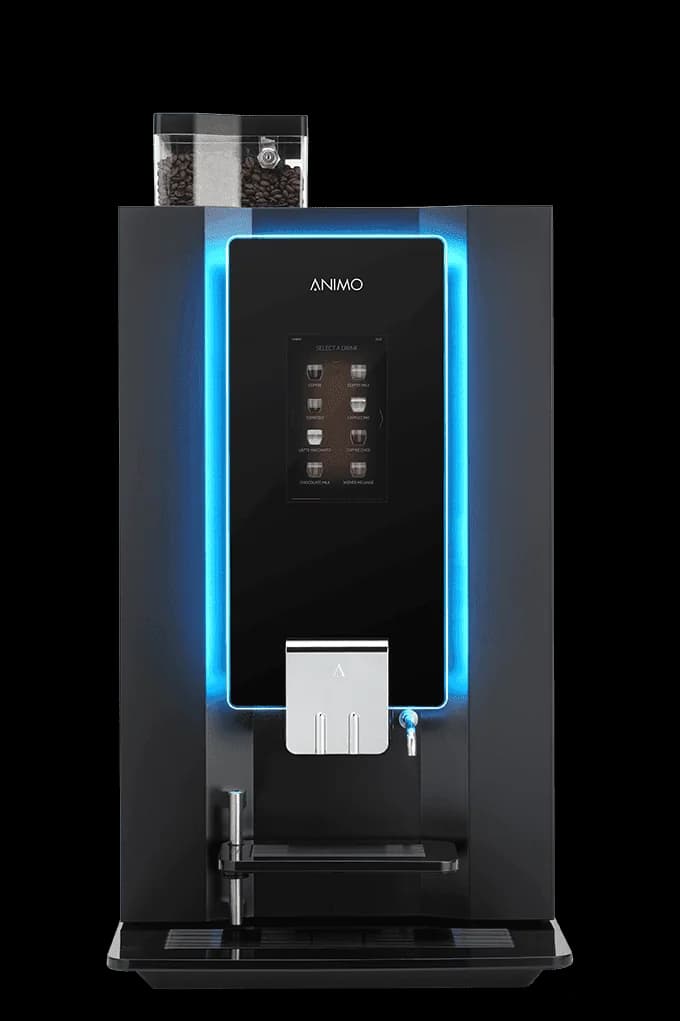
The 10-inch colour touch display dominates the front fascia, accommodating both standard and customised self-service designs. Display brightness suits indoor environments without glare; no field evidence supports outdoor deployment. Operators can design their own interface layouts and product displays; the manufacturer recommends certified setup and support (manufacturer brochure p. 3, operating instructions p. 2). The automatic cup platform adjusts up and down depending on beverage and vessel, assisting with varying cup formats. Tall glasses and thick mugs quickly cramp the work surface. WMF equips the machine with stainless-steel and plastic components as standard: the outer housing combines brushed stainless steel with matt plastic, while internal parts including bean hoppers and mixers use food-grade polymers. Materials are rated for hospitality and food-service environments, but scratches on exposed plastic corners remain visible.
Up to four product containers above, configured by model for beans (maximum 1,150 g in the large hopper) or cocoa powder (1,200 g). Visually, the transparent plastic bean hoppers represent a functional compromise. Filling and cleaning occur from the top—in rooms with tight ceiling height this becomes cumbersome; in low kitchens, impractical. The brewing unit sits centrally, is removable for inspection, but machined tolerances are designed for coffee grounds only. The operating instructions mandate regular visual checks and monthly bean hopper cleaning. The WMF-standard mixer unit ships as a wear component.
The machine requires a permanent fixed-water connection; factory retrofit to tank operation is not provided. The construction suits stationary high-volume sites where infrastructure is established, not mobile operators or changing venues. Access to core technical components (brewer, grinders, mixer, water intake) follows serviceability principles but demands the specified clearance space and sometimes specialised tools. In confined spaces, the wide front-panel opening angle feels cumbersome. Since this machine series is engineered primarily for chains, bakeries and institutional food service, limited design flexibility and material investment affect daily usability.
Display capability is not showroom dressing: touch response is brisk, the interface recalls modern tablets. In self-service mode, beverage access can be individually locked or enabled (CleanLock). Hygiene compliance is achieved without special coatings; baseline HACCP standards are met per operating instructions and documented via USB data export. Operators seeking maximum design freedom or premium visual impact will find alternatives in this segment offering custom panel options—at WMF, function dominates form.