The XT6 is engineered for demanding hospitality daily use with professional milk system for hot and cold foam, two milk type options, high hourly capacity and HACCP-certified cleaning.
⚡Suitable
Large Office Locations
With up to 250 recommended cups per day and intuitive touchscreen operation, the machine suits companies with high coffee consumption.
⚡Suitable
Company Cafeterias and Catering
Separate bean hoppers, optional instant modules and the fully automatic cleaning system make the XT6 a low-maintenance solution for shared catering.
Our rating in detail
Five public rating axes, weighted against the available evidence.
Design & build
7.5 / 10
Technology & features
8.5 / 10
Operation & maintenance
8.1 / 10
Capacity & range
7.5 / 10
Value for money
6.8 / 10
Our verdict
7.7Good
The Melitta Cafina XT6 achieves a data review score of 7.8 out of ten and positions itself as a compact gastro-automatic for locations with up to 250 cups per day. With a professional milk system for hot and cold milk foam, two milk type options, automatic extraction quality control and optional access to Melitta INSIGHTS via telemetry, it offers a comprehensive equipment package in the premium segment whose investment can justify itself with regular utilisation.
At a glance
Model
Melitta Cafina XT6
Manufacturer
Melitta Professional
Category
Hot Drink Machines
Type
Bean-to-Cup
Price range
approx. €11,677 – €14,094
Overall score
7.7 / 10
Origin
Melitta Professional (DE)
Pros & cons
Pros
Professional milk system for hot and cold milk foam with two milk type options
ACS quality control and pressure-variable VPS deliver consistent extraction results across beverage types
Compact width enables space-saving integration even into tight counter situations
Optional access to Melitta INSIGHTS via telemetry—cross-location operational monitoring possible without local IT infrastructure
Fully automatic cleaning of brewing and milk system in the machine (CIP®) with HACCP certification significantly reduces manual maintenance effort
Cons
Weight of 43–57 kg makes relocation difficult and requires sturdy installation surface
Optimal operation requires mains water connection and waste water line, which restricts location options
Acquisition costs of 11676.99–13173 € net require solid and regular utilisation for economic amortisation
Review
Melitta Cafina XT6 Overview
The Melitta Cafina XT6 is a professional automatic coffee machine by Melitta Professional, designed as a table-top counter unit for commercial use in hospitality, hotels and large office environments. With dimensions of 300 × 580 × 715 mm (W × D × H), the unit integrates into tight counter situations. Melitta positions the XT6 as a capable all-rounder for mid-range locations and recommends a daily output of up to 250 cups. Beyond the standard aluminium-silver finish, an optically distinctive "Black Edition" is available, which differs only in appearance but is technically identical. The equipment package includes a professional milk system for hot and cold milk foam, two milk type options, automatic extraction quality control, and fully automatic cleaning of the brewing and milk system in the machine (CIP®). The machine can optionally be integrated into cross-location operational monitoring via optional access to Melitta INSIGHTS through telemetry.
Design and Build Quality
The XT6 features a streamlined, functional casing design engineered for professional continuous use. The narrow width allows space-saving integration into existing counter configurations, even where space is limited. The weight of 43–57 kg ensures stable positioning but requires sturdy supporting structure and makes subsequent relocation difficult. The brewing unit is based on a stainless steel brewing group including pneumatic system, micro-fine filter basket, crema nozzle, maximum 20 g dose capacity and VPS—a combination intended for durability and reproducible extraction quality. For locations preferring a darker appearance, Melitta offers the "Black Edition" as a purely visual variant. Overall, the build quality conveys a solid, industrial-grade impression befitting the machine's premium price positioning.
Operation and Display
Operation is via an 8.4 inch touchscreen display, which enables intuitive beverage selection even with changing staff. Standard mode offers multiple quick-select buttons; via barista and service modes, several hundred individual recipes can be programmed. This approach allows the beverage range to be flexibly adapted to seasonal preferences or location-specific requirements without hardware modification. The menu structure is clearly organised and guides the operator step-by-step through settings such as grind size, water volume and milk foam consistency. Cleaning programmes are also initiated via the display and visually guided, which reduces error rates in daily maintenance. For operations with frequently rotating service staff, this significantly reduces training time.
Technology and Features
Technically, the Cafina XT6 distinguishes itself through several proprietary systems. The "Automatic Coffeequality System" (ACS) monitors extraction parameters and ensures consistent cup quality. The "Variable Pressure System" (VPS) adjusts brewing pressure according to recipe—an advantage when preparing different coffee specialties from strong espresso to mild café crème. The machine is equipped with a professional milk system for hot and cold milk foam with two milk type options, allowing it to offer conventional cow milk alongside a plant-based variant. The milk system can optionally be expanded with a steam wand or foam lance. Water supply is via a mains water connection G 3/4" external thread. For cashless or coin-based settlement, an MDB interface is available to connect standard currency dispensers and card readers. Optional access to Melitta INSIGHTS via telemetry transmits operating data via LTE modem to the cloud, enabling cross-location monitoring of consumption and maintenance status.
Capacity and Maintenance
The recommended daily output is up to 250 cups, which makes the XT6 ideal for mid-size hospitality and office locations. In practice, high hourly throughput for common beverages such as espresso, cappuccino and café crème ensures no significant queue times even during peak periods. Separate bean hoppers allow parallel operation with different roasts or types without manual refilling. Additionally, the machine can be factory-fitted with instant powder modules to add cocoa and other powder-based hot beverages to the range. Cleaning is largely handled by the fully automatic cleaning of the brewing and milk system in the machine (CIP®), which flushes the brewing group and milk pathways without manual removal of components. This cleaning concept is HACCP-certified and meets commercial food hygiene requirements. The coffee grounds drawer holds a limited number of portions and should be emptied regularly during operation—a point operators should account for in staff scheduling.
Price and Economics
The Melitta Cafina XT6 is clearly positioned in the premium segment of professional automatic coffee machines, with market prices of 11676.99–13173 € net. This entry price is offset by a comprehensive equipment package ranging from the professional milk system for hot and cold milk foam and two milk type options through automatic extraction quality control to optional access to Melitta INSIGHTS via telemetry. For operations regularly achieving the recommended daily volume of up to 250 cups, acquisition costs can be balanced by the high beverage variety and low manual cleaning overhead. Locations with significantly lower throughput should evaluate whether the investment is economically sound. Total cost of ownership depends on the chosen equipment variant, service contract and local installation conditions. Leasing models are available through specialised dealers and can ease the financial commitment.
Technical data
All recorded data points at a glance.
Use & operations
Installation type
Tabletop
Environment (indoor/outdoor)
Indoor
Payment & connectivity
Payment interface protocol
MDB (Multi-Drop Bus)
Technology
UI / display type
Touchscreen
Service & compliance
Price segment
Premium
HACCP compliance
Fully HACCP-compliant
Dimensions & weight
Dimensions (W × H × D)
300 × 580 × 715
Weight (unpacked)
60 kg
Electrical power input
2175 W
Standby power
60 W
Power supply / connection
200-240 V / 2,175 - 3,040 kW
Coffee technology
Approx. daily capacity
250 cups/day
Water supply
Mains connection
User reviews
Verified community reviews and clearly labelled external operator sources, separate from our 0–10 editorial score.
There are no confirmed community reviews for this model yet. You can submit your experience below.
Have experience with this machine?
Share your assessment. Your review helps other operators make purchasing decisions.
AIData review: AI-assisted source analysis, no hands-on test by us·Last checked: ·VendingTests.com editorial team·Rating criteria documented transparently
Frequently asked questions about Melitta Cafina XT6
What beverages does the Melitta Cafina XT6 prepare?
The XT6 offers multiple quick-select beverages in standard mode, including espresso, café crème, cappuccino, latte macchiato and hot water. Via barista and service modes, several hundred individual recipes can be created, allowing seasonal specials or location-specific creations without hardware modification. Optional instant powder modules expand the range to include cocoa and other powder-based hot beverages.
How does the automatic cleaning of the XT6 work?
The machine features fully automatic cleaning of the brewing and milk system in the machine (CIP®), which flushes the brewing group and milk pathways without manual component removal. The cleaning concept is HACCP-certified and meets commercial food hygiene requirements. Programmes are initiated directly via the touchscreen with visual guidance, allowing untrained staff to safely perform cleaning.
What milk options does the Cafina XT6 offer?
The XT6 is equipped with a professional milk system for hot and cold milk foam with two milk type options, enabling preparation of both warm and chilled foam variants. In practice, this means parallel use of conventional cow milk and a plant-based alternative on a single machine. The system can optionally be expanded with a steam wand or foam lance to enable manual barista preparation directly at the machine.
What installation requirements must be met?
Water supply is based on a mains water connection G 3/4" external thread; a pressure reducer is required if supply pressure is elevated. Electrical connection requires 200–240 V / 2,175–3,040 kW with appropriate circuit protection at the location. A waste water drain should be planned to ensure the fully automatic cleaning system operates smoothly.
Is the Cafina XT6 telemetry-capable?
Telemetry hardware is standard-equipped and can be activated via optional access to Melitta INSIGHTS through telemetry. Data transmission operates via LTE modem, so no local network setup is required at the location. Operators can view consumption data, maintenance status and operating statistics across locations to optimise their operations.
What operating sizes is the XT6 suitable for?
Melitta recommends the XT6 for a daily output of up to 250 cups, making it suitable for mid-size hospitality and office locations. The compact dimensions of 300 × 580 × 715 mm allow installation in tight counter areas. For locations with significantly higher daily demand, capacity should be critically reviewed or an additional machine considered.
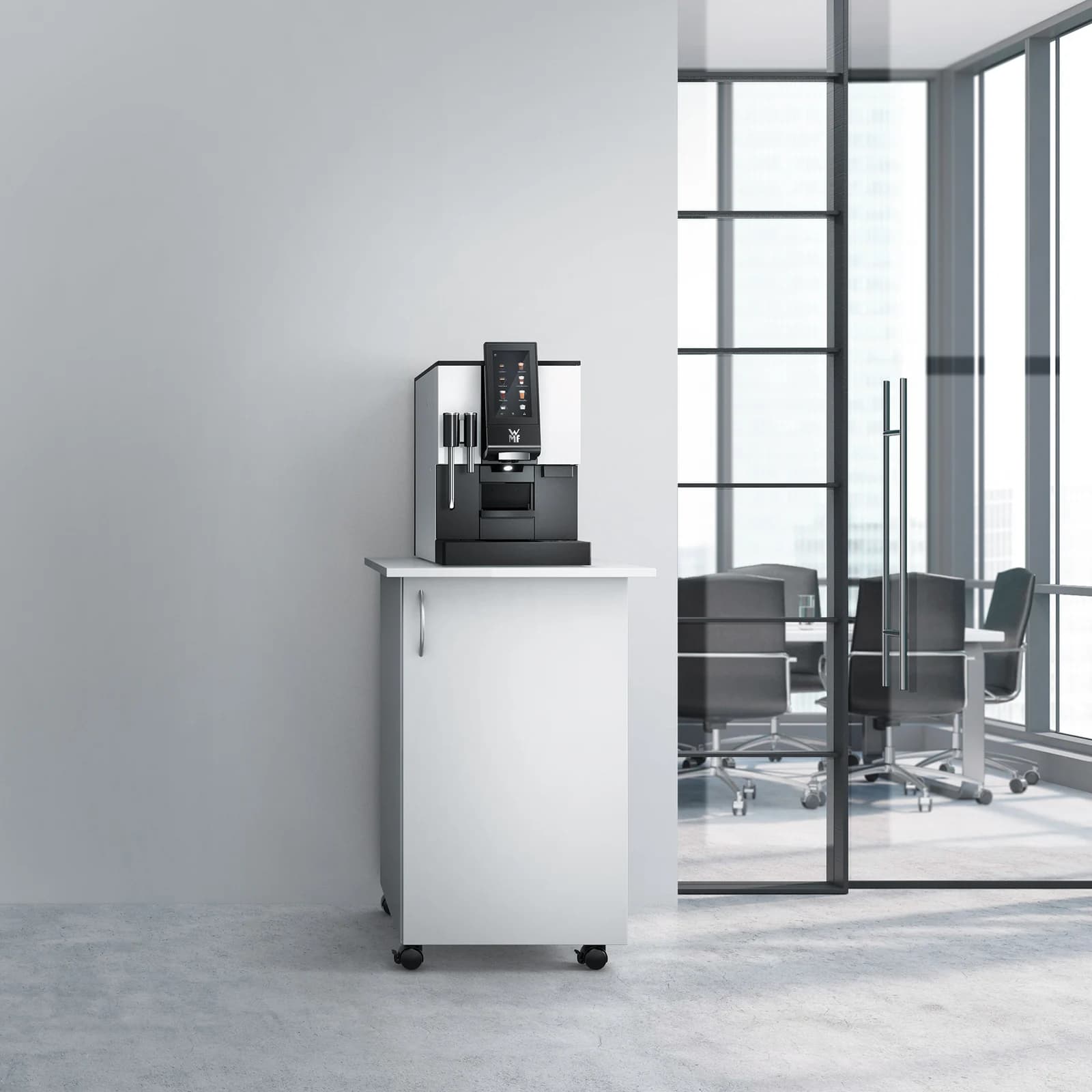
Up to 80 cups daily, 7-inch touchscreen display, and HACCP-capable cleaning protocols: the WMF 1100 S is a compact super-automatic espresso machine for offices with 20 to 60 employees. The unit measures 325 × 500 × 571 mm, weighs approx. 25.5 kg, and fits most kitchen counters without structural modification. The removable brewing unit processes a maximum of 15 g coffee grounds per brew and delivers consistent results; cleaning protocols can be exported via USB for HACCP documentation.
Two operational limitations merit attention: the Basic Milk system draws milk via tube from an external cooler or milk carton, requiring more daily handling than an integrated refrigerated system. Additionally, WMF designates the 1100 S as discontinued—orderable only until 30.09.2026. New units cost €3,495 to €4,873 net depending on configuration; spread over five years, depreciation amounts to €699 to €975 annually, plus consumables and service charges. The machine suits operators seeking a low-maintenance office unit with HACCP documentation who do not operate high-throughput sites.
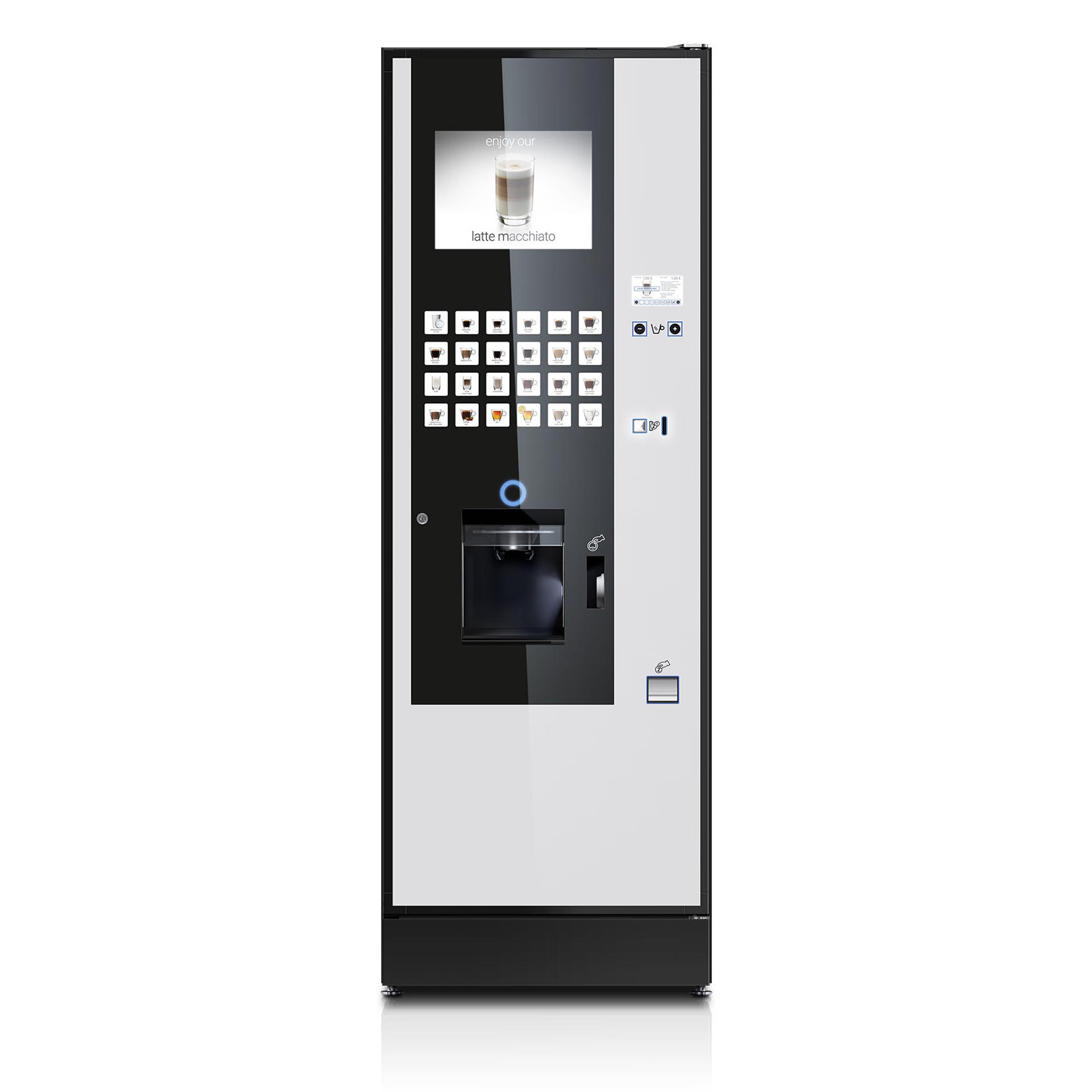
The luce zero is a ladder with five rungs, and its strength is that the footprint remains constant across all tiers: 640 × 1,830 × 705 mm, regardless of specification. The purchasing decision hinges on a clear breaking point. Between zero.1 and zero.2, power doubles from 1,600 to 3,200 watts, cup dispensing stations increase from one to two, grinders from one to up to two, and only here does the Varitherm induction system become available—for which Rheavendors claims 85 percent energy savings versus a boiler. Practically speaking: the smaller tiers operate at approximately 7 amperes on a standard outlet; the larger ones require 14 amperes and a dedicated circuit. The documentation is the weak point—weight, water connection, cup capacity, daily and hourly throughput, and any maintenance specifications are not publicly available.
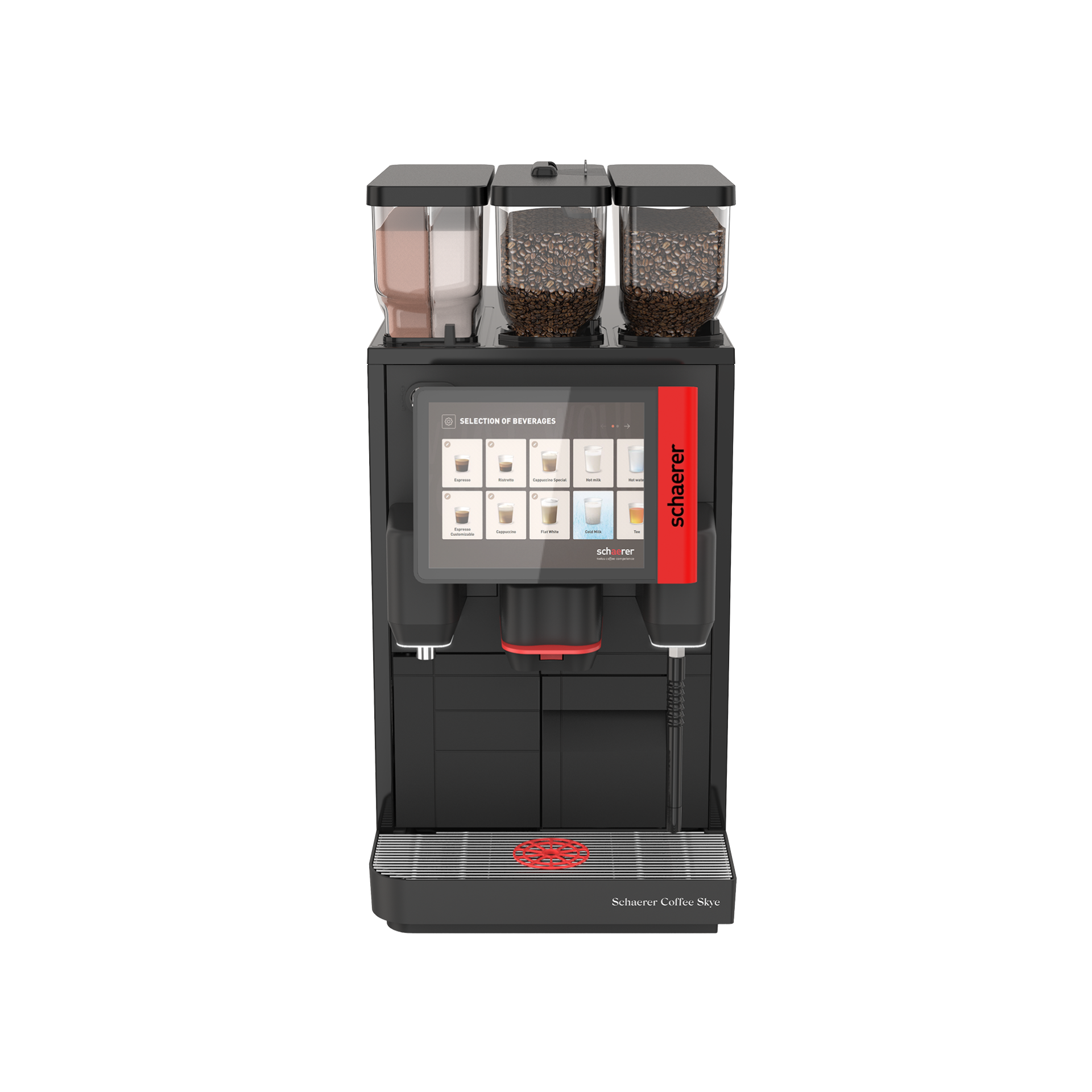
Compact premium fully automatic coffee machine from Swiss heritage brand Schaerer, designed for mid-volume locations up to approximately 180 cups/day: video-capable 8-inch touchdisplay with three operation modes, BestFoam milk system for hot and cold specialty beverages, and CoffeeLink telemetry. As a countertop unit with internal tank or mains water connection options, the Skye remains flexibly deployable — its capacity is deliberately sized for mid-volume locations, not high-volume operations.
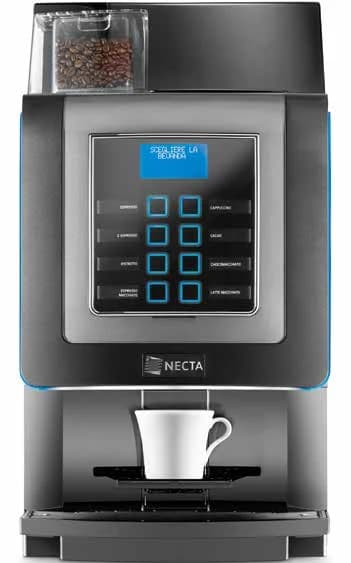
330 mm cabinet width, genuine espresso brewer (Z3000 L, maximum 12 g dose) and eight beverage options including chocolate: the Necta Koro Max Prime by Evoca (Varese, IT) is designed for offices with 30 to 80 employees and small food-service locations with moderate daily demand up to approximately 50 vends. Mains-fed variant from approximately €3,105 net (All4Vending DE); tank version up to €4,429 net (NL market). Two structural limitations: milk capability is restricted to powder, with no fresh-milk system. Telemetry and remote service are absent, as this device predates the 2020 product generation. Door opening for refilling triggers a complete device restart. Service infrastructure across the DACH region is sparse; spare parts arrive via specialist retailers with 3 to 10 days lead time. For office locations without high-throughput demands and with in-house cleaning staff, the device is a solid offering. Locations with more than 80 vends daily or requiring digital service interfaces should evaluate current OCS models with connectivity.