Design & Build
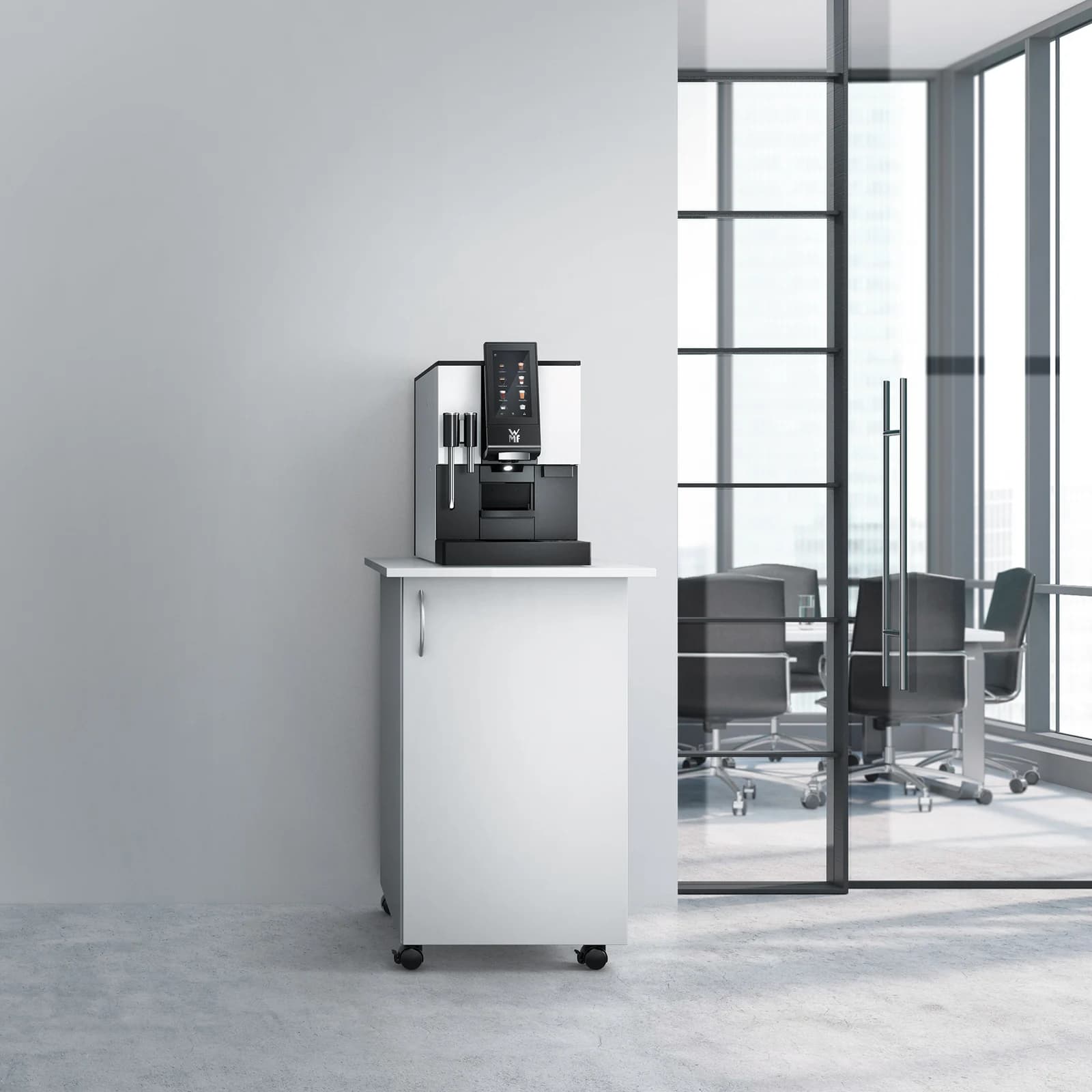
At 303 mm wide, 562 mm high and 528 mm deep, the WMF 950 S positions itself significantly more compact than typical fully automatic machines for small to mid-sized office environments. An unladen weight of 22 kg confirms a rather robust build. However, the required clearances at the sides and rear – 50 mm each according to the operating manual – complicate tight placement in constrained kitchens or tea areas. Those wishing to maximise available space must also plan for 200 mm clearance above the product container, for instance for refilling beans and cleaning operations. Particularly beneath low wall cabinets, precise measurement of the installation footprint is essential [see WMF Operating Manual p. 90].
Material quality is adequate for professional use: the brochure references a classic WMF cabinet with stainless steel and plastic components, without specific mention of anti-fingerprint surfaces. Visible seam gaps and a rather smooth aesthetic mark the unit as functionally oriented rather than premium in appearance. A 7-inch touch display dominates the operating front, which according to the manufacturer bundles all recipe selection, adjustment options and cleaning prompts. Labelling and UI appear clean but forego separate physical preset buttons. A clear advantage for changing user groups when structured operator guidance is required. With strong ambient light, reduced readability must be anticipated – no display contrast specification is provided. Although the display position at the top of the front permits viewing at standing height, it is beyond reach of users shorter than 1.60 m.
No specialist tools are required to access technical components such as the water filter, bean container or grounds drawer. The operating manual indicates the removable fresh water tank (approx. 1.8 l) on the left side. This can be pulled forward for refilling but requires a certain amount of working clearance. The bean container holds 750 g according to documentation and is visibly mounted on the unit. For service and maintenance work, such as removing the brewing group for cleaning, access from the front and top is sufficient. The rear is of little interest for maintenance. A shortcoming becomes apparent in tight counter spaces: emptying the waste container and drip tray requires removing both components entirely from the unit, necessitating adequate side clearance and working freedom.
External finish meets classic B2B standards, remains largely unadorned and purpose-driven. Sustained heavy use demands practical solutions, not design embellishment. Another point is the absence of colour options ex-factory—no custom wraps or corporate identity customisation are offered in the official accessory programme. Those requiring corporate branding must rely on in-house effort or third-party suppliers. Assembly of milk tubing for the external milk system appears functional but could lead to handling errors with frequently changing personnel. For small site kitchens lacking adequate space, the model is only conditionally suitable due to required access clearance and the tall filling area.
All technical data and design details originate from the official operating manual, planning information and WMF brochure [Sources: Operating Manual p. 90, Brochure pp. 6–8, Planning Information]. Independent third-party reviews supplement assessment with practical utility and handling aspects but document no discrepancies in finish or build [cf. OFFICE ROXX Editorial Test, office-roxx.de].