Skip to content
|Franke· Coffee Systems

Franke A600

8.7/ 10

Recommended

Data review — researched from sources, not physically tested. How we rate

Design & build8.0
Technology & features8.8
Operation & maintenance8.5
Capacity & range9.4
Value for money8.8
ca. 8,500 – 10,809 €

Guide prices net (excl. VAT), project prices may vary

  • Hospitality / foodservice, Office, Hotel, Retail
  • Tabletop
  • Indoor
  • Coins, Closed-loop card/key, Contactless (NFC), Mobile wallet (Apple/Google Pay)

Eco label

ABCDE

Energieklasse

C

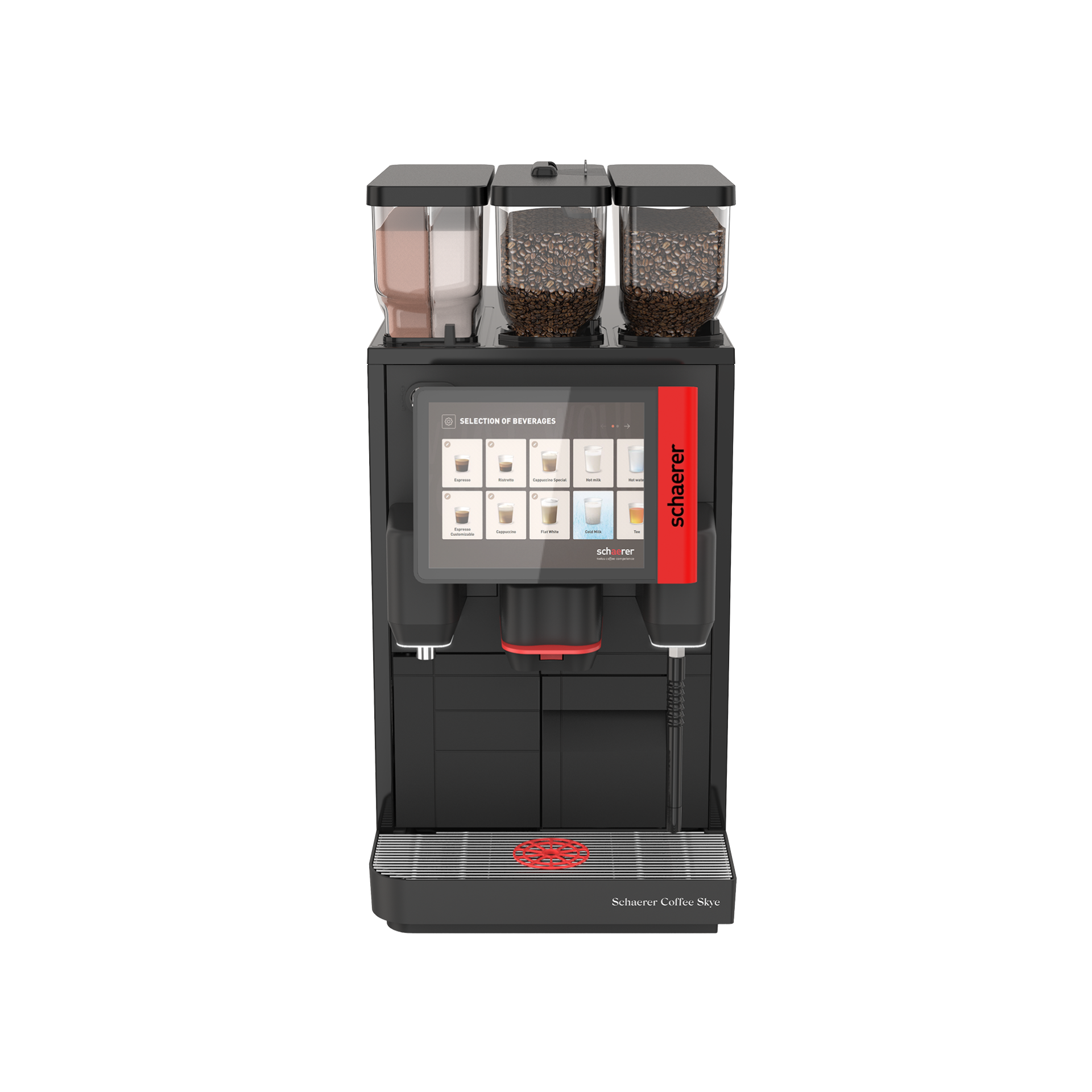
Franke A600 — Frontansicht · Quelle: assets.franke.com

6 photos · Franke A600

Use cases

Where this machine fits, and where it does not.

Best fit

Large office

Designed for teams of 60 to 200 people daily.

Best fit

Canteen

Handles multiple hundreds of beverages per hour without difficulty during peak times.

Best fit

Hotel/Conference venue

Variety and milk options cover breakfast, breaks and conference service.

Best fit

Vending fleet

Fleet management and remote control from factory for multi-site operators.

Not suitable

Small medical practice

❌ Capacity and technical complexity uneconomical for smaller teams.

Conditional

Skilled trades

Economical only at staff or customer frequency of approximately 60 cups/day or higher.

Conditional

Fitness studio

Adaptable for protein shakes/powder bar, but primary focus is coffee and milk drinks.

Best fit

Café/Retail

Product flavours, wide variety customizable, coin module standard.

Our rating in detail

Five public rating axes, weighted against the available evidence.

Design & build
8,0 / 10
Technology & features
8,8 / 10
Operation & maintenance
8,5 / 10
Capacity & range
9,4 / 10
Value for money
8,8 / 10

Our verdict

8.7Very good

The Franke A600 positions itself as a versatile fully automatic coffee machine for demanding offices, canteens and large sites with daily demand of up to 200 cups. Through its 10.4-inch touchscreen, modular brew groups and a powerful milk system, the machine is designed for both attended dispensing and pure self-service. Businesses with 60 to 200 employees particularly benefit from the high hourly throughput (e.g. 240 espressos/hour) and central fleet management via FrankeConnect. Weaknesses lie in non-publicly accessible purchase prices in Germany for the new generation and in the complexity of cleaning with IndividualMilk or CleanMaster variants. The investment pays off for locations with a broad hot beverage range, high dispensing frequency and digitalized administration. In used condition, a classic A600 is available from approximately 4,000 € net; for the current generation, German dealers do not quote list prices. The range stated here of approximately 9,700 to 10,800 € comes from two British dealers, applies to the classic A600 and has been converted at the ECB reference rate. Lower total cost of ownership results primarily through central control and reduced downtime during malfunctions or service.

At a glance

Model
Franke A600
Manufacturer
Franke
Category
Hot Drink Machines
Type
Bean-to-Cup
Price range
ca. 8,500 – 10,809 €
Overall score
8.7 / 10
Origin
Franke (CH)

Pros & cons

Pros

  • Three bean hoppers (up to 1.2 kg each) and two powder dispensers possible
  • Up to 200 cups/day per manufacturer (Datasheet 09/25)
  • FoamMaster produces hot and cold milk foam without steam discharge
  • 10.4-inch touchscreen for operating and self-service modes (Franke Brochure 09/25)
  • IndividualMilk system completely separates two milk types through to the cup
  • FrankeConnect: central management including OTA updates and remote diagnostics (cloud-capable from factory)

Cons

  • Pricing for the new generation in Germany available on request only, no list prices
  • Cleaning and maintenance of IndividualMilk/CleanMaster variants technically complex and time-intensive

Review

Design & Build

A width of 340 millimetres, a height of 831 millimetres and a depth of 602 millimetres determine the footprint of the new Franke A600 according to the product datasheet of 09/2025. This tall design stands out in many office kitchens and canteens; operators must verify space requirements, particularly in confined counter spaces or rooms with low ceilings, as the bean hoppers and powder dispensers load from above. For facilities with low overhead cabinets, on-site measurement before installation is recommended. The empty weight of approximately 63 kg places the unit in the "permanently installed" category; however, the robust housing components also simplify service, as all relevant brew groups are accessible from the front.

The A600 employs a 10.4-inch touchscreen as its operating interface. Compared to the classic A600 generation with 8-inch display, the screen diagonal increases by 30 per cent, with the display area growing by approximately 69 per cent at the same aspect ratio. The menu structure is designed separately for operating staff and self-service and switches according to user group (FrankeOS). In Operator Mode, service personnel access deeper menu functions. For the customer interface, Franke emphasises intuitive icon navigation and language-neutral beverage selection. Erroneous inputs can be minimized through the clearly delineated touch field.

The side housing panels are finished in painted metal; colour options including Onyx, Granite and Mahogany appear for the first time in the new A600 generation. The material finish remains businesslike: high-gloss surfaces are avoided, and fingerprints show little on the robust powder coating. Problems arise with prolonged high moisture on the device surface: painted metal reacts sensitively to chipping and corrosion. For canteens with frequent refilling, underlaying a moisture protection mat is advisable.

Service access is critical: the new A600 allows four different brew groups to be removed from the front without tools. The brew unit becomes accessible within minutes for checking the brew screen or seals. Two variants exist for cleaning dosage: CleanMaster (fully automatic) or EasyClean (manual). The Dynamic Spout Light signals operator error immediately; according to the manufacturer, height adjustment is motorized. For service, the machine offers a side-removable modular design.

A stainless steel variant is not available; premium plastic components dominate the interior. This is standard for this price class but provides only limited protection against foreign object intake and gross operator error. The substantial mass effect provides pleasant vibration damping but works against flexibility when relocating. Smaller locations with frequently changing usage patterns are better served by lighter machines.

Given the device height and open service concept, a minimum ceiling clearance of 150 millimetres and adequate working space to the sides and front are recommended during installation. Bean hoppers include factory-fitted individual locks against falling out, which improves safety in self-service environments. Classic A600 accessories available in trade fit only partially on the new generation — separate spare parts sets are planned. Access flaps and control panels feel consistently robust but cannot be locked. For locations with public access, supplementary access controls are essential.

Sources: Franke Neue A600 Produktbroschüre DE 09/25 (Technical specifications); Franke A600 – offizielle Produktseite (Display, colour, operating concept); Franke Neue A-Line Broschüre DE (Modular brew system, CleanMaster/EasyClean, Dynamic Spout Light).
Technology & Functions

iQFlow is standard equipment. The system regulates flow rate and extraction time in real time. Effects are particularly visible with high-frequency beverages and fluctuating site occupancy — the extraction process adapts continuously. An external sensor continuously measures water pressure between 0.8 and 8.0 bar (source: New A600 Product Brochure DE 09/25, p. 2). According to the manufacturer, this influences beverage consistency — independent evaluation by external laboratories remains absent.

Four different brew group modules can be removed from the front without tools. The coffee chamber holds up to 29 g per portion (A-Line Brochure p. 12). This is significantly more than entry-level machines. Franke identifies modular brew groups for pure espresso output, high filter coffee dispensing or sustained intensity stability (Duo or High Volume variant). In practice this is relevant for sites with changing product range or peak load such as breakfast or conferences. The downside: standardized wear parts prices per brew module range from 247.80 to 257.50 € net according to the Franke shop.

The 10.4-inch touchscreen enables central menu management and graphical recipe customization. In Operator Mode, all maintenance functions are available, while Customer Mode displays a reduced control layout. No multitouch capability. Display size is currently in the upper range for the vending sector but remains limited to direct inputs — control of external devices or comprehensive accessory integration via touch was not documented.

FrankeConnect as standard telemetry platform allows remote configuration, recipe and pricing management plus OTA updates via the cloud (source: Franke A-Line Press Release 2025, pp. 2–3). The machine can send beverage statistics, technical diagnostic data and fill levels to centrally managed dashboards. A benefit for operators running multiple sites — unnecessarily complex for smaller locations. Integration of external payment systems is possible via MDB. The datasheet names coin devices as an option; the classic MDB protocol is a prerequisite for vending locations (Brochure pp. 1–2). Contactless payment, chip cards or mobile wallets are not listed as standard and require third-party modules. Integration costs and timeline for connecting such cashless terminals are not publicly specified but vary from site to site.

The new FoamMaster measures milk flow via ultrasound. This produces cold, warm or hot foam without steam discharge — a classic weakness in older milk systems. Complete separation of two milk types occurs via the IndividualMilk system; residues are excluded according to system description. When switching between milk types, the A600 automatically starts a rinse cycle. How effective cleaning remains under continuous load cannot be reliably assessed from available data.

First Shot provides targeted preheating after extended idle periods. According to sources, the system deliberately draws on energy for the first beverage after standby so that brewing water reaches target temperature (A-Line Brochure). PrecisionTemp allows beverage-specific temperature profiles by mixing hot and cold water before the brew module. The practical advantage: more consistent results at high throughput and reduced risk of temperature fluctuations between early and late beverages during the day.

All technology claims in the datasheet are identified as manufacturer specifications and remain untested by independent laboratory publishing. How iQFlow, FoamMaster or IndividualMilk perform in real multi-shift operation against established reference systems awaits extended field experience. Due to absent independent operator feedback on the new A600 generation, risk assessment from the vending perspective remains incomplete.

Capacity & Product Range

Up to 200 cups per day are possible with the new Franke A600 according to the manufacturer. This figure refers to maximum daily capacity and matches what makes sense for high-frequency offices, canteens and medium-sized vending sites. For smaller businesses with fewer than 40 employees, a large share of potential remains permanently unused. The specification covers both espressos and coffee specialties and comes directly from official product literature and the English A-Line brochure (sources: Franke A600 Brochure DE 09/25, p. 1; A-Line Brochure EN, p. 5).

Performance data per DIN 18873 stands at 150 espressos per hour for single shots and 240 cups for parallel dispensing. For cappuccino, the datasheet shows 114 single or 186 double portions per hour. Hourly capacity for standard coffee is 111 cups individually and 150 in parallel. For hot water, the hourly figure is 120 dispensings. These figures always depend on specific configuration and add-on modules such as milk or flavour add-ons. A fully equipped variant with multiple grinders or powder dispensers can increase output speed during peak times but must be specifically ordered (Datasheet New A600 DE, p. 1).

With bean storage, the modular design offers flexibility: options include one 2-kg collection container, two containers of 1.2 kg each, or up to three individual 1.2-kg containers for different bean types. For offering decaffeinated coffee or specialty blends, this option can meet demand in facilities with frequently changing preferences. However: operators using the full range must commit to precise inventory planning. Powder dispensers are available as supplements and hold 0.6 to 1.2 kg depending on configuration. Also frequently requested in group catering is the optional Flavour Station. It can dispense up to six syrups simultaneously, rare among competing models.

Milk supply add-on modules are granularly configurable at Franke: external milk coolers with 6 or 12 litre capacity cover temporary peak load, such as breakfast service in hotels or conference venues. In vending fleet operation, maintaining two separate milk types (e.g. lactose-free, low-fat) can be beneficial.

Relevant limitation: specifications for cup sizes, individual programmability of beverage dispensing and limits for parallel brew groups are sparsely detailed in the publicly accessible datasheet. Operators requiring large cup volumes and flexible cup management in daily use must rely on individual enquiries with authorized partners. Maximum beverage variety thus only becomes apparent through consultation and with extra setup effort.

At very high frequency in vending or for sites with several hundred dispensings per day, even the new A600 reaches its limits. Refill intervals for beans and powder extend with larger containers, but maintenance intensity also rises. Operators with low daily load compromise economics, as cleaning and maintenance costs arise independently of actual output.

Operation & Maintenance

For daily cleaning, the new A600 requires a differentiated workflow executed via on-screen guidance. In typical use, the coffee path must be cleaned after each operating day. A cleaning tablet must be placed in the designated slot. The milk circuit is either flushed fully automatically (CleanMaster variant) or filled manually with cleaner by the operator (EasyClean). The manual cleaning step requires opening the inlet cap on the milk system, adding cleaner and starting the rinse cycle. Without this workflow, rapid milk stone and bacterial buildup threatens. The machine automatically activates temperature and rinse management; to meet HACCP requirements, IndividualClean controls hygiene steps: the system triggers automatic cleaning, rinse cycles and manual steps only when needed, according to schedules set during installation; milk and coffee paths can be cleaned separately. According to Franke, cleaning agent consumption drops by up to 80 per cent as a result, with a caustic wash due only after 400 cups or three days (Franke A-Line Brochure DE, p. 13; Franke Neue A-Line Broschüre DE).

For the operator this means: once daily, insert the tablet and start a program to clean the brew circuit. After shift end or when changing milk containers, rinse the milk system. Manufacturer specifications provide neither exact time requirement nor water consumption. In experience with comparable equipment, 5 to 10 minutes per standard cleaning cycle are typical; for the CleanMaster version with automatic dosing, operator input reduces noticeably, though savings depend on individual operating load and maintenance standard (Franke Shop, cleaner prices: Franke Shop – A600 FoamMaster EasyClean Reiniger).

Weekly, an extended rinse cycle and inspection of removable components — such as spouts, brew unit and drip tray — is advisable. Individual components such as the brew head or milk couplings are more heavily stressed with hard water and high load depending on use profile. For consumables (cleaning tablets, milk cleaner, filters), clear individual prices exist. Example: 100 cleaning tablets cost 27.10 € net; CleanMaster milk cleaner 20.60 € per 0.95-litre cartridge; filter cartridge per unit 48.90 € net [Franke Shop, source as above]. The manufacturer does not publicly specify pricing for technician callouts or standard repairs (e.g. brew piston group replacement); spare parts according to the shop range from approximately 112.90 € (brew piston group) to 257.50 € (brew module).

Repair reports with public source attribution are rare. One user in the Kaffeevollautomaten.org forum reported a second spout failure after approximately two and a half years on the classic model. The risk of costly repairs after warranty expiry is thus not excludable depending on component (Kaffeevollautomaten.org – Betreiberbericht zur Franke A600). For the new generation, reliable field experience on failure patterns and durability is absent; maintenance and service terms must be individually clarified.

The German Franke service network is structured via authorized specialist partners; locations and response times are not standardized or published. Without a maintenance contract, the operator undertakes basic cleaning and inspection independently, raising operational risks. Structured TCO models and binding flat rates for spare parts or labour are only calculated on request for the new generation. All-inclusive service is optional, though pricing and included services remain unpublished (Price and service offer per dealer: Daudert Kaffeemaschinen – Die neue A600).

Performance & Energy

220–240 V mains connection, 1L N PE, maximum power draw depending on configuration between 2.9–3.4 kW (16 A) and 5.2–6.2 kW (30 A) — for every installation the circuit must be prepared for these peak values. The datasheet clearly differentiates values by model variant. For facilities with fluctuating base load, this provides no flexibility: without separate protection or load management, risk exists that multiple large consumers together trigger shutdown. Exact standby power consumption is missing from manufacturer documentation; an energy-saving function is not aggressively marketed. Only the new A600 NM generation explicitly advertises lower standby heat loss.

Franke addresses heat loss through the "HeatGuard" function. In the New A600 NM generation, it is claimed to reduce idle consumption versus the Classic A600 by up to 44 per cent, measured per DIN 18837-2. So states the Franke product sheet; however, the German standard for energy demand of commercial hot beverage appliances carries the number DIN 18873-2, while Franke specifies hourly output per DIN 18873. For office practice, this figure is difficult to verify in the field. Without documented kWh values and specification of the test scenario, assessment remains abstract for operators. The datasheet does not list a precise annual consumption based on, for example, 150 cups per day across 230 working days, so realistic operating cost calculation remains rough — the energy section remains a black box. For planning purposes, only this is clear: at full configuration, electrical infrastructure must be permanently prepared for up to 6.2 kW load.

Water installation requires 0.8–8.0 bar flow pressure and inlet water temperature below 25 °C. The manufacturer defines no sound power level during operation. For office and canteen environments with open-plan layouts, noise generation remains an unquantified factor. Questions about noise peaks, for instance during parallel milk frothing and dispensing, also remain open — operators who value a quiet acoustic environment must measure on-site or test comparable equipment.

No examined brochure or manual provides a figure for warm-up time after power connection. For shift start timing, a first manual test with a stopwatch is recommended. In large fleets with telemetry integration, operating start can be centrally timed, though precise energy consumption figures are not automatically documented via this route either. Operators wishing to calculate a fixed cost per cup must rely on average values from experience with other equipment or from field tests by other operators.

During operation, the machine requires continuous flow of more than 0.1 l/s. Operators calculating with reduced minimum pressures will face low hourly output. A 16-mm drain hose with up to 2,000 mm length is mandatory. Connection to the house supply must be verified during installation.

Key sources for this section: Franke Product Brochure New A600, p. 2, Franke A-Line Brochure, p. 15, Franke New A600 Product Leaflet EN, p. 2, Franke A600 Original User Manual, 27.08.2024.

Pricing & Operating Costs

Net prices for the new Franke A600 are not publicly listed on the German market. Two quotes for the classic A600 from British dealers show approximately 9,732.99 € and 10,808.58 € net when converted at the ECB reference rate (as of 07.08.2026, source: Coffee Lady – Franke A600, Coffeeology – Franke A600 mit Milchkühler). The new A600 generation is handled exclusively through individual quotation processes by German dealers. Clear transparency is absent. Interested buyers are forced to request personal quotes — this complicates advance cost planning.

Cleaning and wear parts drive operating costs. Cleaning tablets cost approximately 0.271 € per use (100 pieces: 27.10 € net in the Franke shop, source: Franke Shop – A600 FoamMaster EasyClean Reiniger). The 1-litre EasyClean milk cleaner costs approximately 17.20 € net; CleanMaster cartridges approximately 20.60 € net per 0.95 litre. At high utilization, dozens of tablets and several litres of cleaner must be budgeted annually. The filter cartridge (6 pieces: 293.40 € net, source: Franke Shop – A600 Ersatzteile) costs 48.90 € per change. Typical replacement intervals are not named by the manufacturer.

Milk coolers, Flavour Station, additional grinders or telemetry generate additional costs. Quotations including milk cooler show that base configuration already varies widely, which complicates cost planning. Maintenance contracts, technician travel costs and wear-part replacement must be individually negotiated. No researched dealer or Franke itself provides repair prices. Operators can only orient themselves to spare parts pricing: a brew module costs 247.80–257.50 € net, brew piston group 112.90–135.80 € net (source: Franke Shop – A600 Ersatzteile).

A cost example over five years remains speculative due to absence of secured average figures. Even with favourable purchase terms, spare parts and cleaner alone plus a mid-range acquisition price quickly sum to 12,000–15,000 € without staff costs and service contracts. Operators running fewer than 100 cups daily face a lengthy ROI. Cost calculations using a custom allocation model with concrete consumption figures from pilot operation are urgently recommended.

Technical data

All recorded data points at a glance.

Use & operations

Use cases / locations
Hospitality / foodservice, Office, Hotel, Retail
Installation type
Tabletop
Environment (indoor/outdoor)
Indoor

Payment & connectivity

Payment methods
Coins, Closed-loop card/key, Contactless (NFC), Mobile wallet (Apple/Google Pay)
Payment interface protocol
MDB (Multi-Drop Bus)
Payment features
Offline mode / store&forward, Receipts, Remote price updates
Telemetry / remote monitoring
Full (sales+stock+remote)
Connectivity
Ethernet/LAN, Wi‑Fi

Technology

Sensors
Milk temperature, Bean level
UI / display type
Touchscreen

Service & compliance

Age verification
Not required
Price segment
Premium

User reviews

Verified community reviews and clearly labelled external operator sources, separate from our 0–10 editorial score.

There are no confirmed community reviews for this model yet. You can submit your experience below.

Have experience with this machine?

Share your assessment. Your review helps other operators make purchasing decisions.

Share your experience with Franke A600

4 / 5

0/5000 characters (min. 100)

Only your first name and selected use case will be shown publicly.

Useful Links and Documents

Further sources

  1. 1.Franke A600 – offizielle Produktseitefranke.com/de/de/coffee-systems/products/fully-automatic-coffee-machines/Vollautomat%20A600.html
  2. 2.Franke Coffee Systems – Maschinenanleitungenfranke.com/de/de/coffee-systems/resources/machine-manuals.html
  3. 3.Daudert Kaffeemaschinen – Die neue A600daudert-kaffeemaschinen.de/produkte/kaffeevollautomaten/franke-neue-a600/
  4. 4.Coffee Lady – Franke A600coffeelady.uk/franke-a600-coffee-machine/
  5. 5.Coffeeology – Franke A600 mit Milchkühlercoffee-ology.co.uk/products/franke-a600-coffee-machine
  6. 6.Europäische Zentralbank – EUR/GBP-Referenzkursecb.europa.eu/stats/policy_and_exchange_rates/euro_reference_exchange_rates/html/eurofxref-graph-gbp.en.html
  7. 7.Coffee Team – Franke A600 Classiccoffeeteam.de/A600.html
  8. 8.Coffee-B2B – Franke A600 MS EC Black Linecoffee-b2b.de/franke-a600-ms-ec-black-line-kaffeevollautomat/a-718124597
  9. 9.Franke Shop – A600 FoamMaster EasyClean Reinigershop.franke.coffee/reiniger/vollautomaten/a600/a600-foammaster-easyclean-mit-su05-su12/
  10. 10.Franke Shop – A600 CleanMaster Reinigershop.franke.coffee/reiniger/vollautomaten/a600/a600-cleanmaster-mit-su05-su12/
  11. 11.Franke Shop – A600 Ersatzteileshop.franke.coffee/ersatzteile/vollautomaten/a600/
  12. 12.Kaffeevollautomaten.org – Betreiberbericht zur Franke A600kaffeevollautomaten.org/forums/index.php?showtopic=49823
Data review: AI-assisted research, editorially checkedLast checked: Redaktion AutomatenTests.deRating criteria documented transparently

Frequently asked questions about Franke A600

What is the actual purchase price of the new Franke A600 in Germany?

For the new, 2025-announced A600, no fixed list prices are publicly visible. For the classic predecessor generation, current net quotes range from 9,700 to 10,800 € (excluding VAT); the current generation price is likely higher. Individual dealer quotes must be obtained.

How much daily time must be allocated for cleaning and maintenance?

Automatic coffee path cleaning occurs via tablet; the milk system — depending on variant — is either manual (EasyClean) or automated (CleanMaster), but overall requires approximately 10 to 18 minutes per day. With IndividualMilk or CleanMaster, additional effort applies through cartridge and system changes.

What beverage types and performance figures can realistically be offered?

The machine achieves 200 cups/day per datasheet, up to 240 espressos/hour in parallel operation (DIN 18873), and can process up to three bean types, powder and flavours depending on configuration. Hot water and milk frothing capacity are also in the upper segment.

What digital functions does the Franke A600 provide for vending fleets?

Through FrankeConnect, central menu, pricing and recipe management, remote setup, real-time monitoring and diagnostics can be handled in the cloud. Remote access is also available for all new A600 units from factory for site management and maintenance.

How are ongoing costs (consumption, maintenance, cleaning) structured?

Cleaning tablets run approximately 0.27 € net per use; milk calculation approximately 17 to 22 € per litre of cleaner. The brew piston group as a wear part costs between 113 and 136 €; a replacement brew module approximately 250 €. Filter cartridges are approximately 49 € to budget. Actual maintenance contracts vary by location and must be coordinated with the specialist dealer.

Franke A400

Franke · Hot Drink Machines

Franke A400

8.3Very good

The Franke A400 positions itself as a fully automatic coffee machine for medium commercial locations requiring up to 100 cups daily. Its CleanMaster system shortens daily cleaning to approximately 9 minutes and reduces manual effort to a minimum—a core argument for offices with 30 to 100 staff, cafes and self-service hotels. The FoamMaster variant delivers barista-level milk foam without requiring specially trained personnel. Capacity remains stable for constant use below the 100-cup threshold; sustained throughput beyond this level stresses grinding mechanisms and brew groups, shortening their operational life. Drawbacks include high acquisition costs in full configuration (up to €10,500) and regular service expenses. The Franke A400 amortizes within several years at high-traffic sites, provided that cleaning effort, service intervals and repair outages are factored into total cost of ownership. For sites requiring 120+ cups daily, upgrading to the larger A600 is recommended.

ca. 4,500 – 10,550 €

Melitta Cafina XT7

Melitta · Hot Drink Machines

Melitta Cafina XT7

8.3Very good

The Melitta Cafina XT7 is engineered for dense output peaks, not for a small location with low volume. The manufacturer specifies approximately 250 cups per day and 176 individual espressos per hour. Two grinding units, TopFoam for 2 milk types, an 8.4-inch touchscreen, CIP cleaning and optional telemetry form a robust feature set for hotels, bakeries or large self-service areas. The trade-offs remain substantial: 300 × 715 × 580 mm, 60 kg, 400 V, maximum 5700 W and daily cleaning demand prepared infrastructure and clear responsibilities. At approximately €13,000–16,000 net for the reviewed configuration, the machine is capital-intensive. Those not regularly requiring the stated capacity purchase expensive reserve capacity. Those using it should calculate accessories, service scope, water treatment and installation work as a complete bill of materials before placing an order.

ca. 13,000 – 16,000 €

No longer availableAnimo OptiBean XL Touch (V2)

Animo · Hot Drink Machines

Animo OptiBean XL Touch (V2)

8.6Very good

The Animo OptiBean XL Touch delivers 120 cups per hour, a 1.5 kg bean hopper, and dual instant modules, targeting mid-sized offices, clinics, and educational facilities with approximately 50+ employees. Strengths include high throughput, flexibility for multiple hot beverages, and a freely programmable 7-inch touchscreen. The optional MDB interface enables coin payment and change dispensing but is not standard-fit; cashless payment requires an additional module. Milk supply relies on instant powder only, which sets taste limits in clinical and premium office settings. List price in 2024 ranged from €4,060–4,470 net—for the machine alone without base unit or options. In comparison, the OptiBean offers a robust stainless-steel brew group with Ditting ceramic grinder, though telemetry is available only as an option without remote configuration. Service intervals align with practical use, requiring a maintenance kit after >25,000 vends. For high-volume sites dispensing ≥80 beverages daily, the investment yields mid-term returns; operators prioritising fresh-milk capacity, app payment, or remote service support will find broader feature sets in competing models.

ca. 4,064 – 4,468 €

Necta Kalea Plus

Necta · Hot Drink Machines

Necta Kalea Plus

8.5Very good

200–250 beverages daily, fresh-milk system with automated cleaning and touch operation: The Necta Kalea Plus targets larger offices, canteens and breakfast areas in hotels and foodservice venues with 60 to approximately 150 staff or high-volume guests. Testing confirms the robust Z4000 brew group and modular architecture for beans, instant and milk; the telemetry-capable platform enables straightforward monitoring without add-on modules. Operators praise reliability (with consistent cleaning), rapid beverage dispensing and parts availability (German warehouse: 1–3 days). Weaknesses: daily milk-system cleaning (5–8 minutes, mandatory) cannot be skipped, and every 10,000 vends requires brew-group service—at maximum throughput, this means every 2–3 months. Acquisition cost ranges from €6,800 to €9,400 net; maintenance and consumables are material. For high-throughput sites with professional oversight, the model justifies itself through minimal downtime and predictable follow-on costs.

ca. 6,798 – 9,439 €