Skip to content
|Franke· Coffee Systems

Franke A800

8.6/ 10

Recommended

Data review — researched from sources, not physically tested. How we rate

Design & build8.2
Technology & features8.4
Operation & maintenance8.7
Capacity & range9.2
Value for money8.6
ca. 12,330 – 15,021 €

Guide prices net (excl. VAT), project prices may vary

  • Hospitality / foodservice, Retail
  • Counter unit
  • Full (sales+stock+remote)
  • Ethernet/LAN, Wi‑Fi

Eco label

ABCDE

Rated power consumption

7,4–8,8 kW je nach Konfiguration

Power connection

380–415 V, 3L N PE, 16 A

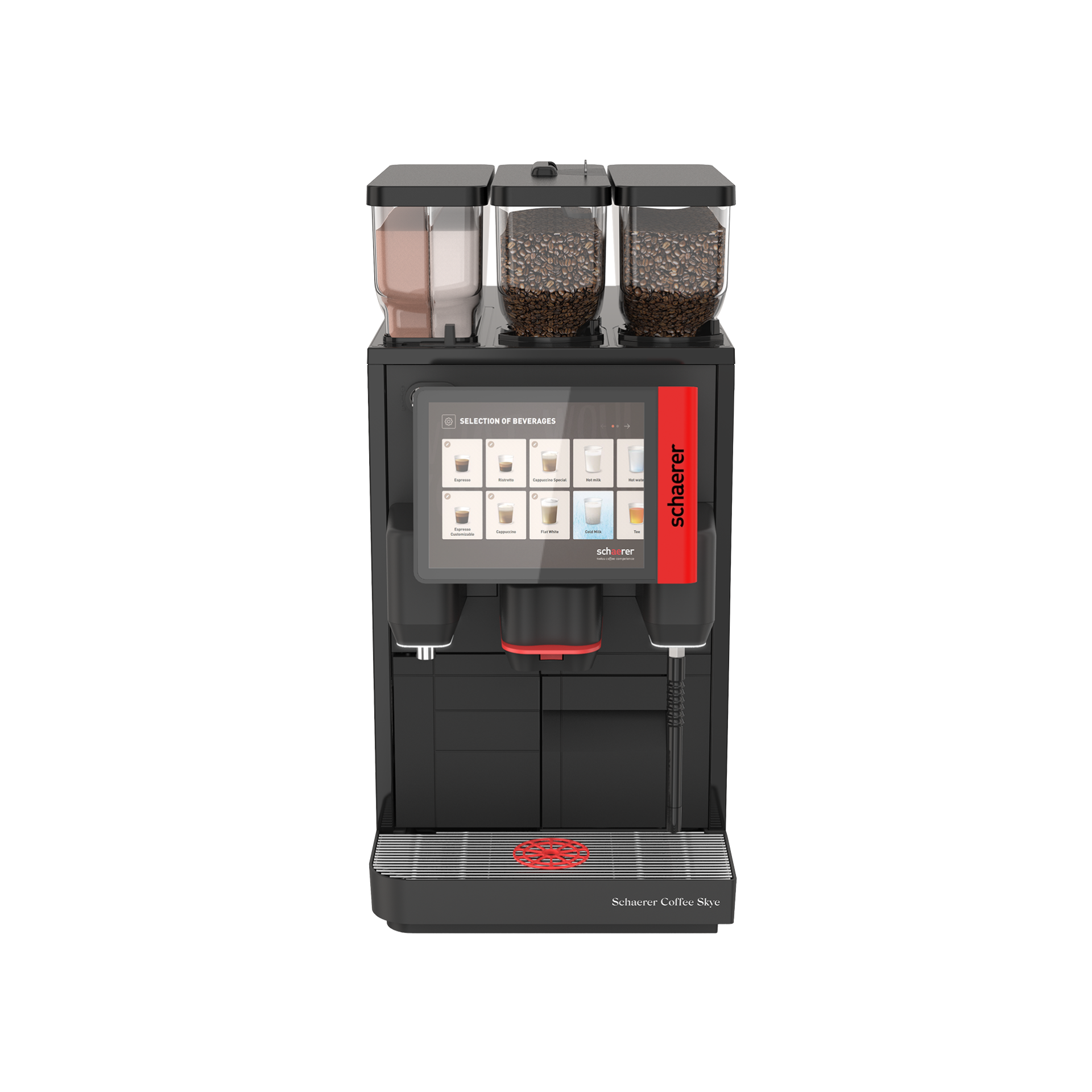
Franke A800 — Frontansicht · Quelle: assets.franke.com

5 photos · Franke A800

Use cases

Where this machine fits, and where it does not.

Best fit

Office & Enterprise

Engineered for daily coffee delivery to 100–250 employees.

Best fit

Hospital & Clinic

High throughput and separate milk lines support large teams and visitor traffic.

Best fit

Retail & Convenience

Handles peak demand under sustained high-volume self-service vending.

Conditional

Hotel & Breakfast Buffet

Suitable only if daily demand substantially exceeds 100 cups.

Best fit

Bakery & Foodservice

Central remote management of recipes and pricing saves time across multiple outlets.

Conditional

Schools & Universities

Deployable in canteens with consistently high sustained throughput.

Not suitable

Small Sites <50 Persons

❌ Oversized and economically unjustifiable.

Conditional

Fitness Studio

Viable as central unit where protein shakes and hot beverages peak during rush hours.

Our rating in detail

Five public rating axes, weighted against the available evidence.

Design & build
8,2 / 10
Technology & features
8,4 / 10
Operation & maintenance
8,7 / 10
Capacity & range
9,2 / 10
Value for money
8,6 / 10

Our verdict

8.6Very good

The Franke A800 sets a new standard as a modularly configurable professional fully automatic coffee machine for sites serving approximately 100 to 250 users. Three independently controlled boilers deliver coffee, milk and hot water simultaneously—enabling large offices, hospitals and retail outlets to achieve up to 250 vends per day during peak hours. A 10.4-inch touchscreen and remote maintenance via FrankeConnect streamline operation and service, while the brew module capable of handling up to 29 g of coffee and the ultrasonic-controlled FoamMaster milk system deliver espresso-bar quality even at high throughput. The investment of €12,330 to €15,020 net (depending on configuration) becomes economical where high volumes of specialty coffee drinks are required daily and labour costs for machine operation are to be minimised. Weaknesses include high electrical demand (7.4–8.8 kW connected load) and technician-dependent initial setup. For sites with highly variable user numbers or small headcounts, the machine is oversized. Overall, the A800 offers operators a low-maintenance, future-proof system that becomes economically viable at approximately 120 cups per day.

At a glance

Model
Franke A800
Manufacturer
Franke
Category
Hot Drink Machines
Type
Bean-to-Cup
Price range
ca. 12,330 – 15,021 €
Overall score
8.6 / 10
Origin
Franke (CH)

Pros & cons

Pros

  • Capacity of 250 cups per day and up to 240 espresso per hour at parallel vend.
  • FrankeConnect supports remote configuration, monitoring and over-the-air updates (with documentation).
  • Three independently controlled boilers enable simultaneous coffee, milk and hot water dispensing.
  • 10.4-inch touchscreen with user/operator separation speeds drink selection.
  • FoamMaster milk system uses ultrasonic measurement for variable foam consistency.
  • Modular brew system (4 variants); most powerful version handles up to 29 g ground coffee per vend.

Cons

  • Coin acceptor rather than fully integrated cashless system as standard; card payment is optional only.
  • High connected load: 7.4–8.8 kW, requiring a 16 A three-phase connection.

Review

Design & Build

At 340 mm width, 831 mm height and 602 mm depth, the new A800 claims significantly more vertical clearance than many compact fully automatic machines. Tare weight of 63 kg and a solid housing require a dedicated footprint. The machine is designed as a countertop unit; installation does not protect against relocations or frequent repositioning—setup demands precise planning and, under continuous operation, typically becomes effectively permanent. Placement and service access are classic pain points in large-capacity machines. The manufacturer provides no specific installation requirements for the new generation; the previous model's manual specifies at least 200 mm clearance above and 100 mm to the right. Without these tolerances, access to service areas, bean hoppers and technical modules becomes restricted. For compact tea pantries, bar counters or confined utility spaces, the A800 is too bulky.

The touchscreen at 10.4 inches spans the full width of the machine. It serves both end-user drink selection and operator and service functions. FrankeOS partitions the interface into customer-facing and operator-facing layers—functionally sound but requiring familiarisation. Button response and navigation target professional users, not casual operators. In environments with high staff turnover or open service areas, usability depends entirely on interface configuration. Automatic height adjustment of the outlet eases self-service station use, though manual access to cup nests may require explanation. Material quality remains vague: the manufacturer specifies only chassis colours—Onyx, Granite, Mahogany—without detailed material descriptions. The target market is visible indoor locations, not production areas subject to moisture and airborne dust.

The modular brew system is accessible from the front. Four brew unit variants are offered, permitting different coffee profiles; repairs and module replacement are mechanical rather than tool-free. Component failure blocks normal service if spare modules are unavailable. Bean hopper integration (1 × 2.0 kg, or up to 3 × 1.2 kg maximum) is engineered for high throughput; each chamber size prevents frequent refilling but demands full access to the hopper stack even at raised counters. Combined syrup modules and optional powder dispensers increase overall height, making the entire system more sensitive to spatial constraints. Technically, the A800 can be modularly tailored to assortment wishes, yet demands precise advance planning of infrastructure and working space. Visually, the device signals clear separation of user and service points—though at the cost of dominant presence in any room.
Technology & Functions

Three boilers run in parallel—coffee, milk and hot water dispense simultaneously. This creates buffering for peak periods and reduces wait times for milk-based or tea beverages. The modular brew technology is available in four configurations. The most powerful variant processes up to 29 g of ground coffee per vend, according to the A-Line brochure. Smaller machines cannot deliver this; it matters only for large cups or double espressos.

iQFlow regulates the brew process digitally: brew pressure and flow rate are individually mapped per drink profile. Per manufacturer claim, this delivers consistent cup quality for bean coffee in petrol stations and hospitality. Regulation details or demonstrated advantages over classical valve systems remain undisclosed—independent validation is absent. PrecisionTemp technology controls brew temperature per bean type or drink. For variants featuring tall cups and cold-brew components, the multi-boiler system provides necessary flexibility.

The integrated touchscreen measures 10.4 inches and clearly partitions the user interface and operator view, as detailed in the official brochure. Menu layout can be customised; specialist options—for example advertising displays or coin acceptor integration—are provided. Cashless payment is hinted at in the product sheet, yet the standard specification lists the coin acceptor only. Features such as QR, NFC or app-based payment are not clearly documented in the datasheet—a gap for operators expecting full payment flexibility. External costs for payment module updates or networking require clarification.

FrankeConnect provides remote access to menus, pricing and recipe parameters. Remote configuration, monitoring and OTA updates are included by default in the new A800 series, per brochure. The machine transmits operational data to a central server for fault analysis. Control runs via the FrankeOS platform. Predictive maintenance and live fault alerts are promoted; concrete response times are absent. These capabilities are relevant for larger operators managing machine fleets. For single-site deployment, the administrative overhead of comprehensive remote functions may be excessive.

Milk systems vary: FoamMaster prepares milk froth without steam wands, using ultrasonic measurement—notably practical for service-intensive environments. IndividualMilk separates two milk types via independent pathways. The DualMilk option auto-rinses between milk types—no staff intervention required. In contexts offering vegan or lactose-free options, this is essential.

The A800's technical design mandates mains water connection and 400 V three-phase power; commercial kitchen or technical plant infrastructure is prerequisite. Craft workshops or solo offices with small groups gain no benefit—under-counter and tank-fed variants do not exist. Telemetry with online management attracts multi-location or franchise networks; utility diminishes unless at least several sites are networked.

Key weaknesses: payment expansion only with clearly documented modules; no disclosure of data security architecture and no published standard for third-party configuration. Operators juggling multiple brands or payment providers remain dependent on manufacturer support. Sources: Product sheet new A800, p. 2–4, A-Line brochure p. 10–18, FrankeOS press release.

Capacity & Assortment

Franke specifies up to 250 cups per day as maximum recommendation for the new A800. Compared to the classical version, throughput profile ranks even higher: 240 espresso per hour at parallel output or 150 in single-vend mode per DIN 18873, plus 114 or 186 cappuccino and 111 or 150 plain coffees. The machine class targets larger office units, canteens, shop-in-shop areas or high-traffic bakeries without straining typical office fully automatic limits. A 6-litre or 12-litre cooler, up to three simultaneously usable bean hoppers (variant: 1 × 2.0 kg, 2 × 1.2 kg or 3 × 1.2 kg) and optionally one or two powder canisters at 0.6 or 1.2 kg per chamber define the assortment.

Assortment design is modular: the integrated Flavor Station adds three or six syrup varieties as elected, specialised brew units let peak ground-coffee load per cycle rise to 29 g. For milk and milk froth output, the machine employs FoamMaster technology with ultrasonic measurement or the IndividualMilk system depending on configuration, segregating two milk types completely. Operators wishing to offer varying milk types (e.g. dairy and oat drink) can auto-rinse between variants (DualMilk). The drink menu is quantity- and variety-specific controllable, yet remains hardware-constrained: batch-brewed or pot-served filter coffee is not supported.

Throughput metrics versus lower price tier units are well above average. 240 espresso and 186 cappuccino per hour in parallel mode avoid queuing during peak demand. Yet limitations surface: hot-water output is 120 portions per hour—lower than purpose-built water boilers in canteens. Powder canisters at 0.6 or 1.2 kg capacity limit count and variety of cocoa and instant products; refill intervals should be calculated by the operator based on actual assortment mix.

In-house operation poses a threshold: sites under 100 persons find the machine class organisationally and technically oversized. Small offices absorb higher fixed costs for cleaning and maintenance without utilising available capacity. Moreover: commercial cleaning demands daily operation by trained personnel. Operators needing regular assortment changes or bespoke customer preferences should factor peak product capacity and logistics overhead into planning.

Operation & Maintenance

FrankeOS strictly partitions the user interface into two layers: guests select drinks; operators centrally configure recipes, pricing and system data on the touchscreen. Navigation assumes different user groups need access—for instance, recipe tweaks per catering specification or pricing adjustments per head office. Clear guidance minimises input error. Additional languages can be set for the guest interface. Remote configuration via FrankeConnect simplifies menu and price management across multiple sites, yet depends on cloud connectivity and contractual terms (product sheet and A-Line brochure, source: Franke A800 – offizielle Produktseite, Franke neue A-Line – Broschüre DE).

IndividualClean optimises the cleaning schedule: the machine evaluates drink throughput and usage to time cycles per load. Lower milk-drink sales trigger less frequent cleaning than a canteen with high cappuccino volume. Cleaning follows HACCP principles, implemented per manufacturer statement (brochure p. 16). Bespoke timing for breaks, weekends and closures is not provided. Actual cleaning cycle duration is not named in the datasheet. The coffee path requires daily tablet cleaning per the classical manual; milk paths show different steps per system (EasyClean, CleanMaster, IndividualMilk), ranging from automated dosing to manual supplement to segregated loops. One litre of milk cleaner costs €17.20 net in the Franke shop for the classical A800; one cleaning tablet €0.271 (Franke Shop – Reiniger für A800 EasyClean mit SU05/SU12).

Milk systems such as DualMilk and IndividualMilk incur extra care labour through milk-type separation, especially when switching between types. DualMilk auto-rinses between two milk types, reducing contamination yet remaining non-self-service. A benefit for allergy-sensitive sites and operations offering vegan assortment. The classical operating manual demands daily emptying of the grounds container and daily cleaning of all milk lines.

Spare-part list prices are published: brew module €247.80–€257.50 net, brew piston group €112.90–€135.80, individual outlet fittings from approximately €22. Pricing and service intervals for the new generation require separate calculation, as details on wear rates and replacement schedules under IndividualClean remain undisclosed (Franke Shop – Ersatzteile für A800).

Maintenance contracts and on-site service for the new A800 must be requested individually. Unlike many stationary machines, no public service-network roster or guaranteed response times are published. Faults outside wear—for instance in telemetry or display—can sometimes be resolved rapidly via remote service, provided the cloud solution runs stably. For sites without in-house technical staff, availability of on-site service is the central TCO driver.

Notable: no detailed operating manual is publicly accessible for the new A800 generation. The cited manual explicitly covers the predecessor model FCS4050. Thus details on daily, weekly and monthly maintenance, actual step count, detergent demand and time budgets remain unspecified, even though tablet and milk-cleaner principles likely carry forward. Operators should specifically request the current, applicable manual for their configuration at purchase and review maintenance schedules before ordering.

Publicly verifiable operator feedback on maintenance, repair duration and service availability for the new A800 is absent.

Performance & Energy

The electrical demand of the new Franke A800 ranges between 7.4 and 8.8 kW per product sheet. Connection is via 380–415 V, 3L N PE, requiring a 16 A circuit breaker. For office-only use, this is substantial. Smaller sites serving under 100 cups daily will rarely reconcile running energy costs. Manufacturer data on typical annual consumption or standby draw is entirely absent. Operators calculating TCO must conduct own measurements or demand binding figures in quotation. Power draw depends on selected configuration: three independent boilers for coffee, milk and hot water cost more in continuous standby than single-element machines. For operators: without continuous vend, standby idle periods lengthen, during which power consumption persists.

The product sheet specifies 0.8–8.0 bar water pressure and inlet water temperature below 25 °C. Minimum flow rate is 0.1 l/s. Beyond operational setup, the supply network determines stable energy and water demand. If daily vending occurs in short bursts, extra switching cycles on boilers and electronics occur. Warm-up time from cold start or warm-standby mode is not documented in any accessible source. Parallel espresso production yields peak throughput of 240 cups per hour, yet this is rarely fully exploited in practice. Infrequent peak-load operation keeps consumption low over large time windows—concrete figures are missing.

Noise levels are not provided. For a fully automatic machine series of this size, acoustic impact should be tested beforehand. Experience with comparable units typically ranges 55 to 65 dB(A) during grinding and frothing, which can disturb tea pantries and open office settings. Without specific manufacturer data, this remains unquantified. Operators wishing side-by-side comparison with other systems lack an official noise baseline. Quiet operation cannot be assumed.

Energy-saving features remain undisclosed. The platform offers at minimum remote configuration via FrankeOS, yet concrete settings—for example Eco mode, time-based shutdown or heat-hold states—are not openly named. No automatic night shutdown is documented for HACCP compliance. Hot-water output up to 120 portions per hour delivers canteen scale benefits, yet can drive high base consumption. Operators seeking savings potential from a new generation receive no reliable comparison values—even the published energy saving of up to 44 % refers exclusively to the smaller A600 and does not apply to the new A800. In plain terms: operators must calculate energy and operating costs themselves; large-scale manufacturer benchmarks do not currently exist.

Sources: Franke new A800 – product sheet EN, Franke new A-Line – brochure EN, Franke A800 – official product page.

Prices & Operating Costs

Operators must budget for net purchase prices between €12,330 and €15,020.64 for the Franke A800. The spread reflects publicly listed dealer offers for both the new and classical A800 model; the difference is attributable to variations in milk system, cooler and delivery scope, and does not represent a matched-configuration price quote (see sources in product sheet and comparative quotes from Gastroshark, Coffee Lady and Coffeeology). Leasing or financing options are not publicly listed in these offers. Entry pricing thus sits at the upper end of what is charged for fully modular coffee systems with target capacity >200 cups per day.

Wear-part costs accrue separately. Replacement brew modules for the classical A800 cost €247.80–€257.50 net per list price; brew piston groups €112.90–€135.80; individual outlet fittings each exceed €20. Whether the new generation carries different part pricing is undisclosed. Planned maintenance or full-service contract costs remain publicly opaque. Service intervals and labour rates require negotiated agreement and weigh more heavily at high utilisation than at low-output sites.

Operating consumables cost approximately €0.271 per cleaning tablet used (100-tablet pack at €27.10 net from Franke shop). Milk-system cleaner is listed at €17.20 net per litre. Consumption depends directly on system variant (e.g. CleanMaster vs. EasyClean) and drink-sales mix. Electricity and water costs must be estimated from published connection data, as no audited annual consumption figure exists (8.8 kW max connected load; actual yearly sum varies with vend volumes and standby regime). Cost-per-cup calculation remains incomplete while energy and maintenance must be allocated lump-sum.

Users potentially benefit from extended service intervals if the cleaning system performs efficiently. Real total-cost ratio is decided by location, daily utilisation and service agreement. Particularly small sites under 100 users risk slow capital payback. For vending integrations, optional coin acceptor or cashless solutions add cost; per current datasheet, only the coin acceptor is listed continuously as standard.

Spare-part sourcing should reference the Franke shop as baseline; other dealers may quote differently. Chief cost drivers remain: high upfront investment, undisclosed maintenance and energy costs, consumables, service contracts and occasional brew module and outlet part replacement. Without contract context and site-specific conditions, detailed 5-year budgeting remains imprecise. Operators needing a valid ROI scenario for the A800 must request site-specific quotation.

Technical data

All recorded data points at a glance.

Use & operations

Use cases / locations
Hospitality / foodservice, Retail
Installation type
Counter unit

Payment & connectivity

Telemetry / remote monitoring
Full (sales+stock+remote)
Connectivity
Ethernet/LAN, Wi‑Fi

Technology

UI / display type
Touchscreen

Heißgetränke

Milk system
Integrated chilled system
Brewing technology
Bean-to-cup

Service & compliance

Price segment
Premium
HACCP compliance
Fully HACCP-compliant

Abmessungen & Gewicht

Dimensions (W × H × D)
340 × 831 × 602
Weight (unpacked)
63 kg
Rated power consumption
7,4–8,8 kW je nach Konfiguration
Power connection
380–415 V, 3L N PE, 16 A

Kaffee-Technik

Mains voltage
400 V
Drink menu size
30
Approx. daily capacity
250 Tassen/Tag
Espresso throughput
240 Tassen/h
Coffee dose range
6–14 g, mit dem stärksten Brühmodul bis 29 g
Required water pressure
0.8–8.0
Bean hopper
1 × 2,0 kg

User reviews

Verified community reviews and clearly labelled external operator sources, separate from our 0–10 editorial score.

There are no confirmed community reviews for this model yet. You can submit your experience below.

Have experience with this machine?

Share your assessment. Your review helps other operators make purchasing decisions.

Share your experience with Franke A800

4 / 5

0/5000 characters (min. 100)

Only your first name and selected use case will be shown publicly.

Useful Links and Documents

Further sources

  1. 1.Franke A800 – offizielle Produktseitefranke.com/de/de/coffee-systems/products/fully-automatic-coffee-machines/Vollautomat-A800.html
  2. 2.Franke – Archiv der Maschinenanleitungenfranke.com/de/de/coffee-systems/resources/machine-manuals.html
  3. 3.Franke Classic A800 – offizielle Produktseite UKfranke.com/gb/en/coffee-systems/products/fully-automatic-coffee-machines/classic-a800-coffee-machine.html
  4. 4.Daudert – Franke neue A800daudert-kaffeemaschinen.de/produkte/kaffeevollautomaten/franke-neue-a800/
  5. 5.Coffee Lady – Franke A800 Coffee Machinecoffeelady.uk/product-franke-a800-coffee-machine/
  6. 6.Coffeeology – Franke A800coffee-ology.co.uk/products/franke-a800
  7. 7.Filtered Watercoolers – Franke A800filtered-watercoolers.co.uk/products/franke-a800?variant=40240805642325
  8. 8.EZB – Referenzkurs Euro/Pfund Sterlingecb.europa.eu/stats/policy_and_exchange_rates/euro_reference_exchange_rates/html/eurofxref-graph-gbp.en.html
  9. 9.Franke Shop – Reiniger für A800 EasyClean mit SU05/SU12shop.franke.coffee/reiniger/vollautomaten/a800/a800-easyclean-mit-su05-su12/
  10. 10.Franke Shop – Ersatzteile für A800shop.franke.coffee/ersatzteile/vollautomaten/a800/
Data review: AI-assisted research, editorially checkedLast checked: Redaktion AutomatenTests.deRating criteria documented transparently

Frequently asked questions about Franke A800

What is the electrical consumption of the Franke A800?

Connected load ranges from 7.4 to 8.8 kW depending on configuration. Actual electricity consumption varies significantly with usage duration and drink assortment. A 400 V three-phase connection is required.

How many users per day is the A800 rated for?

Up to 250 cups daily is recommended, typically corresponding to 100 to 250 employees. Peak throughput such as 240 espresso per hour is achievable at parallel vend.

Which payment methods does the machine support?

A coin acceptor is standard. Card or contactless payment are possible but require optional add-on modules and integration by the dealer.

How involved is daily cleaning and maintenance?

IndividualClean calculates cleaning intervals based on demand. Milk rinsing is automated (CleanMaster) or semi-automated (EasyClean); the coffee path is cleaned with tablets.

What does the machine cost with typical accessories?

Net list pricing for the new A800 begins around €12,330 and ranges to €15,020 depending on configuration and dealer. Syrup stations, coolers and cashless modules are quoted separately.

Franke A400

Franke · Hot Drink Machines

Franke A400

8.3Very good

The Franke A400 positions itself as a fully automatic coffee machine for medium commercial locations requiring up to 100 cups daily. Its CleanMaster system shortens daily cleaning to approximately 9 minutes and reduces manual effort to a minimum—a core argument for offices with 30 to 100 staff, cafes and self-service hotels. The FoamMaster variant delivers barista-level milk foam without requiring specially trained personnel. Capacity remains stable for constant use below the 100-cup threshold; sustained throughput beyond this level stresses grinding mechanisms and brew groups, shortening their operational life. Drawbacks include high acquisition costs in full configuration (up to €10,500) and regular service expenses. The Franke A400 amortizes within several years at high-traffic sites, provided that cleaning effort, service intervals and repair outages are factored into total cost of ownership. For sites requiring 120+ cups daily, upgrading to the larger A600 is recommended.

ca. 4,500 – 10,550 €

Melitta Cafina XT7

Melitta · Hot Drink Machines

Melitta Cafina XT7

8.3Very good

The Melitta Cafina XT7 is engineered for dense output peaks, not for a small location with low volume. The manufacturer specifies approximately 250 cups per day and 176 individual espressos per hour. Two grinding units, TopFoam for 2 milk types, an 8.4-inch touchscreen, CIP cleaning and optional telemetry form a robust feature set for hotels, bakeries or large self-service areas. The trade-offs remain substantial: 300 × 715 × 580 mm, 60 kg, 400 V, maximum 5700 W and daily cleaning demand prepared infrastructure and clear responsibilities. At approximately €13,000–16,000 net for the reviewed configuration, the machine is capital-intensive. Those not regularly requiring the stated capacity purchase expensive reserve capacity. Those using it should calculate accessories, service scope, water treatment and installation work as a complete bill of materials before placing an order.

ca. 13,000 – 16,000 €

No longer availableAnimo OptiBean XL Touch (V2)

Animo · Hot Drink Machines

Animo OptiBean XL Touch (V2)

8.6Very good

The Animo OptiBean XL Touch delivers 120 cups per hour, a 1.5 kg bean hopper, and dual instant modules, targeting mid-sized offices, clinics, and educational facilities with approximately 50+ employees. Strengths include high throughput, flexibility for multiple hot beverages, and a freely programmable 7-inch touchscreen. The optional MDB interface enables coin payment and change dispensing but is not standard-fit; cashless payment requires an additional module. Milk supply relies on instant powder only, which sets taste limits in clinical and premium office settings. List price in 2024 ranged from €4,060–4,470 net—for the machine alone without base unit or options. In comparison, the OptiBean offers a robust stainless-steel brew group with Ditting ceramic grinder, though telemetry is available only as an option without remote configuration. Service intervals align with practical use, requiring a maintenance kit after >25,000 vends. For high-volume sites dispensing ≥80 beverages daily, the investment yields mid-term returns; operators prioritising fresh-milk capacity, app payment, or remote service support will find broader feature sets in competing models.

ca. 4,064 – 4,468 €

Necta Kalea Plus

Necta · Hot Drink Machines

Necta Kalea Plus

8.5Very good

200–250 beverages daily, fresh-milk system with automated cleaning and touch operation: The Necta Kalea Plus targets larger offices, canteens and breakfast areas in hotels and foodservice venues with 60 to approximately 150 staff or high-volume guests. Testing confirms the robust Z4000 brew group and modular architecture for beans, instant and milk; the telemetry-capable platform enables straightforward monitoring without add-on modules. Operators praise reliability (with consistent cleaning), rapid beverage dispensing and parts availability (German warehouse: 1–3 days). Weaknesses: daily milk-system cleaning (5–8 minutes, mandatory) cannot be skipped, and every 10,000 vends requires brew-group service—at maximum throughput, this means every 2–3 months. Acquisition cost ranges from €6,800 to €9,400 net; maintenance and consumables are material. For high-throughput sites with professional oversight, the model justifies itself through minimal downtime and predictable follow-on costs.

ca. 6,798 – 9,439 €