Skip to content
|Necta· Vending Machines (Evoca Group)

Necta Orchestra R290

7.7/ 10

Recommended

Data review — researched from sources, not physically tested. How we rate

Design & build7.8
Technology & features7.0
Operation & maintenance7.4
Capacity & range9.0
Value for money7.4
ca. 10,428 – 10,840 €

Guide prices net (excl. VAT), project prices may vary

  • Office, Education, Healthcare, Public transport / stations, Industrial
  • Floorstanding
  • Indoor
  • Coins, Banknotes
🌿

No EU energy label
for this category

Refrigerant

R290 (propane)

Rated power consumption

630 W

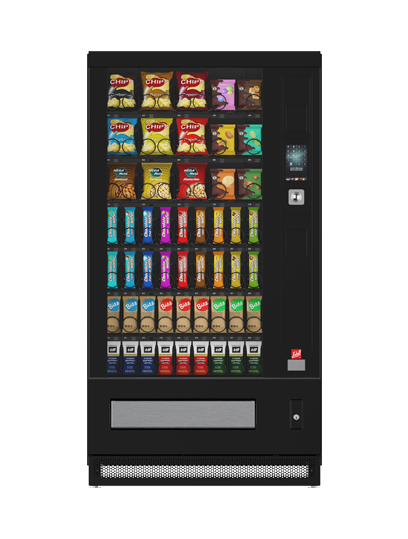
Necta Orchestra R290 — Frontansicht · Quelle: gussimovending.com

5 photos · Necta Orchestra R290

Use cases

Where this machine fits.

Suitable

Cafeteria, campus, clinic

The 0-to-4-degree zone enables sandwiches, salads and prepared meals — the range missing when the kitchen closes in the evening or on weekends. With 464 items, the machine lasts between refills.

Suitable

Railway station, airport, public location

Robust spiral mechanics, affordable spare parts in one to two days, and the touch interface for first-time users. Prerequisite: in-house service or a contract explicitly covering evenings and weekends.

Suitable

Not suitable: location without connectivity strategy

An operator wanting demand-driven routes and remote fill monitoring will find no documented telemetry for this machine. This must be clarified with the distributor before purchase, not after.

Our rating in detail

Five public rating axes, weighted against the available evidence.

Design & build
7,8 / 10
Technology & features
7,0 / 10
Operation & maintenance
7,4 / 10
Capacity & range
9,0 / 10
Value for money
7,4 / 10

Our verdict

7.7Good

Multi-temperature combi unit with three temperature zones that holds up to 464 items across 53 product selections, replacing two single-purpose machines at high-traffic locations. The limitation is not mechanical but connectivity-related: no public documentation exists for telemetry or remote reading.

At a glance

Model
Necta Orchestra R290
Manufacturer
Necta
Category
Snack & Combo Machines
Type
Combo Machines
Price range
ca. 10,428 – 10,840 €
Overall score
7.7 / 10
Origin
Necta (IT)

Pros & cons

Pros

  • Softvend product lift instead of free fall: fewer miscvends, fragile packaging possible
  • 464 items across 53 product selections — replaces two single-purpose machines at high-traffic sites
  • Single-phase 230 V connection, no three-phase power needed
  • Three temperature zones in one cabinet, including 0–4 °C for fresh food
  • Spare parts available through German distributors in one to two days; spiral motor 16–50 €
  • No boiler, therefore no descaling — the maintenance item that determines intervals on coffee units

Cons

  • Cashless payment is an option, not standard — terminal and integration add to the cost
  • No public documentation exists for telemetry or remote reading
  • Manufacturer specification for beverage zone (8–15 °C) conflicts with one distributor's specification (5–8 °C)
  • No annual consumption or standby power published; no EU energy efficiency class documented
  • The largest operator of these units publishes no fault response time; support line open weekdays 8 to 17 only
  • Door opening depth of approximately 1,495 mm requires a deep installation location

Review

Design & Build

A clarification must come first, and it precedes every purchasing decision: this machine is sold in the market as "Necta Orchestra R290" and "Orchestra Touch", but the manufacturer's catalogue lists it as Gusto 8 Pro. The name Orchestra does not appear on the Necta product page, verified 24 August 2026. Selecta, whose stickers appear on many of these machines, is an operator, not the manufacturer. Anyone searching for spare parts, manuals or service documentation will find more under "Gusto 8 Pro" than under "Orchestra".

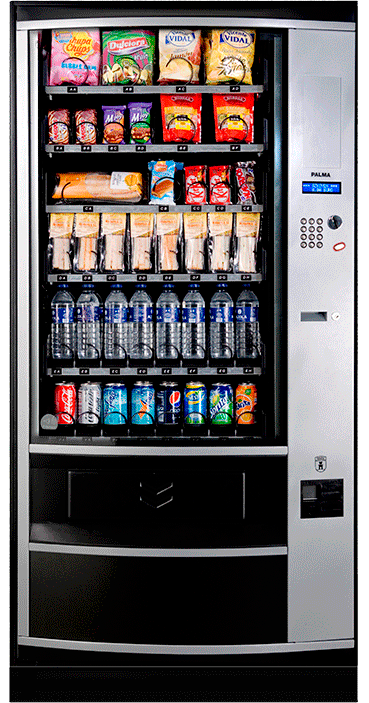
The machine is a floor-standing spiral vending unit with a glass front. Dimensions are 900 mm wide, 1830 mm high and 790 mm deep, with an empty weight of approximately 300 kilograms. The number that actually matters for site planning is different: with the door fully open, depth extends to roughly 1495 mm. A corridor designed to maintain one metre of passage requires approximately two-and-a-half metres total depth — otherwise the open door blocks the route during every fill cycle. This figure comes from research records, not the manufacturer's data sheet; anyone planning tight spaces should confirm it with the distributor.

Internally, the machine uses modular VisioShop trays, maximum seven rows. According to distributor specifications, each tray carries up to 53 kilograms, allowing cans and bottles on lower rows without mechanical strain. Modularity delivers practical value: rows can be adjusted in height and spiral pitch when product mix changes. For a machine that stands at the same location for five to eight years, this justifies itself more than any feature list, because product assortments shift twice during that period.

Two versions exist at the user interface, and the difference is material. The base version has a color graphic display with a capacitive numeric keypad — the customer enters a product number. The Touch variant adds an 800 × 480 pixel screen. At a location with regular users, the keypad is faster because experienced customers enter the number while walking past. At a railway station, where each customer sees the machine for the first time, the touchscreen provides clearer navigation through the range. The upcharge for the touch version is approximately 400 euros net, according to distributor pricing reviewed.
Technology & Features

Dispensing operates via spirals with Softvend product lift. The distinction from free fall is no luxury but a reduction in failure points: the lift removes the item from the spiral and sets it down, rather than dropping it. This enables fragile packaging and fresh products that would rupture in free fall — and the classic problem of "spiral turned, item hung up" becomes less frequent. It does not disappear entirely; the spiral motor remains the component replaced most often.

For payment integration, the manufacturer specifies Executive and MDB. This is the critical specification for any retrofitting, because it determines what a payment terminal can do on the machine. Executive is the older mode, where prices sit in the machine and the payment system only handles the register; MDB allows amount reservation and reversal on failed vend. Anyone taking cashless payment seriously should explicitly order MDB operation and request the version in writing — which MDB version is installed appears in none of the sources reviewed.

This points to the largest gap in this machine's specification: coin and banknote readers come standard, but cashless payment is an option. In a market where contactless payment is now the norm, this shifts the true purchase price upward, by the cost of terminal and integration. An operator running the machine at a public location should factor this into the budget from the start, not treat it as an accessory.

On refrigeration: the market calls this the "R290", signalling propane as refrigerant. The manufacturer's own site names no refrigerant; the designation rests on the market product name. Necta states it has shortened cool-down time versus the previous generation by 30 percent — a claim that cannot be checked without comparative measurement, but matters in operation when a long door opening must be followed by fast return to setpoint temperature.

What is missing on telemetry closes this section with the sentence that must conclude it: for remote reading, network connectivity and platform names, no documentation appears in any source reviewed. For a machine at this price point in 2026, this is a flag, not a detail. An operator wanting demand-driven routes must clarify connectivity with the distributor before purchase.

Capacity & Product Range

This is where the machine's strength lies, and it is documented in numbers: up to 464 items across up to 53 product selections, distributed across maximum seven rows. This is the capacity for which an operator would otherwise place two separate machines — with two floor spaces, two power connections and two payment systems.

The three-temperature architecture makes this possible. The manufacturer specifies 0 to 4 degrees for fresh food, 8 to 15 degrees for snacks, and 8 to 15 degrees for cans and bottles. At this point sources diverge: one distributor reviewed lists 5 to 8 degrees for bottles. We list both, because it is unclear whether this reflects configuration or delivery specification — and for temperature-sensitive products, the difference is not trivial. An operator offering fresh food should measure the actual zone temperature at handover and record it, not rely on the data sheet.

The 0-to-4-degree zone is what sets this machine apart from a snack-only vending unit. It enables sandwiches, salads and prepared meals — precisely the range absent from a cafeteria when the kitchen closes in the evening or on weekends. Operationally, it is also the most demanding: fresh goods have expiration dates, and unsold stock at end-of-day is loss, not inventory.

The manufacturer offers five base configurations: all fresh, all snack, all cold beverage, a 50-50 mix, and an unrefrigerated version. For sites where demand must prove itself, the mixed configuration is the safer entry point, because rows can be reconfigured later.

One figure is absent, and noticeably: the manufacturer gives no number for vends per day, and no operator-reported data was found. Capacity tells how long the machine lasts between restocks, not how much it sells. Anyone planning fill frequency must measure at their own location — 464 items is the upper bound, not the expectation.

Operations & Maintenance

The greatest daily advantage of this machine is something it lacks: a boiler. Nothing needs descaling. This eliminates the maintenance item that determines service intervals on coffee vending machines and drives costs on hard water.

What remains is refrigeration. According to reviewed documentation, condenser and refrigerant circuit should be inspected and cleaned by a qualified technician every three to six months; fans and condenser fins collect dust, and a fouled condenser first consumes power, then kills the compressor. Because propane is flammable, work on the circuit must be done by trained personnel — this is not a formality but determines who you must qualify under any service agreement.

For routine cleaning: the research indicates approximately seven minutes daily for exterior and dispensing area, and approximately twenty minutes at each fill cycle for interior surfaces, glass, seals and removal of expired stock. These times are derived from category experience and operator documentation, not from this machine's manual — usable for planning, not as a guarantee.

Spare parts availability is good, which is not automatic for an Italian machine. Spiral motors, the most common failure point, cost between 16 and 50 euros from German distributors; lock cylinders and lock sets range from 36 to 277 euros with one- to two-day delivery. A technician visit in the DACH region typically runs 80 to 150 euros per hour, meaning a standard spiral motor replacement stays under 200 euros total cost. An operator with in-house technical staff comes out ahead here.

One point affects not the machine but the largest operator of these units in Germany, and belongs in a procurement decision anyway: Selecta publishes no response time for faults, and its service line is, by their own statement, reachable Monday to Friday, 8 to 17 hours. An operator running a site with evening or weekend service must either cover the time outside this window themselves or negotiate it explicitly. A published customer account also describes refunds after a miscvend taking up to three weeks. This is a reader's account, not a measured metric — yet it serves as a negotiation point for the contract.

Performance & Energy

Connection specifications are straightforward: 630 watts rated power at 230 volts, 50 hertz, single-phase. A standard outlet on its own circuit is sufficient, eliminating the electrician question that regularly becomes a project with high-power coffee machines on three-phase supply.

Rated power is not consumption, however. A refrigerated unit draws energy continuously via the compressor, not in spikes. And here is where documented data ends: standby power appears in no source reviewed, and Necta publishes no annual consumption for this model.

Consumption data sheets exist for related machines in the same series — the Gusto 8 Classic Food is listed at 1447 kilowatt-hours per year, the Gusto 8 Lift at 1056. We do not transfer these figures to the Orchestra. They are different machines with different cooling architecture, and the spread between the two cited values alone is 37 percent. An operator needing a solid figure for economic calculations should request the consumption data sheet for the ordered configuration from the distributor; on a machine that refrigerates continuously, this is the line item with the largest lever over five years.

On refrigerant: propane carries a global warming potential orders of magnitude lower than older fluorinated refrigerants, and European regulation drives the industry in this direction. For the operator, the practical consequence is less climate impact than future spare parts availability: a propane machine is on the right side of regulation. Refrigerant charge is not specified in any source reviewed.

We could not confirm an EU energy efficiency class. Neither the manufacturer's site nor the two distributor sites reviewed cite a class or the underlying test method. So long as that is the case, we do not report one.

Prices & Operating Costs

For the base version with numeric keypad, a German specialist distributor asks 12,409.32 euros including VAT, equivalent to approximately 10,428 euros net. The touch version is listed by a second distributor at 12,900 euros including VAT, or approximately 10,840 euros net. Both prices were verified on distributor websites on 24 August 2026. The touch-screen upcharge thus sits at roughly 400 euros net — trivial as a proportion of total cost, well-justified by the benefit at a walk-up location.

For context: for 464 items in three temperature zones, this is a rational price. Two single machines with the same total capacity cost more together, require two floor spaces and two payment systems.

On operating costs, the critical missing line is in the quote itself: cashless payment is an option, not standard. Terminal and integration belong in the calculation, or the price comparison is skewed. Lead time for new machines is four to six weeks per distributor; warranty is twelve months on manufacturing defects — the latter from a single source, and official warranty terms from the manufacturer could not be verified.

Used-market data is thin. We found exactly one listing: a touch version first registered May 2024 for 8,100 euros. One ad cannot establish a market price, and we do not. For a used refrigerated vending unit, two factors outweigh price: the age of the cooling circuit and whether the controller supports an MDB version that modern terminals understand.

Leasing remains. The largest operator offers such machines under contract at ranges we found of approximately 80 to 400 euros per month depending on model and agreement. This is not a price list, but a reference. The calculation that counts is different: at 10,400 euros net purchase cost over five years, pure depreciation is roughly 173 euros monthly before power, stock, restocking and service. A leasing offer at the high end of this range is cheaper only if service and restocking are included — that is the question to ask the provider.

Technical data

All recorded data points at a glance.

Use & operations

Use cases / locations
Office, Education, Healthcare, Public transport / stations, Industrial
Installation type
Floorstanding
Environment (indoor/outdoor)
Indoor

Payment & connectivity

Payment methods
Coins, Banknotes
Payment interface protocol
Executive / EXE
Telemetry / remote monitoring
Unknown

Technology

Delivery mechanism
Elevator / soft-drop
Total capacity
464 Einheiten
Shelves
7
UI / display type
Buttons
Supported product formats
Snack bars, Chips/bags, PET bottles, Can 330 ml, Can 500 ml, Fresh meals

Kühlung

Cooling
Multi-zone
Refrigerant
R290 (propane)
Temperature range
0–4 / 8–15

Service & compliance

Price segment
Mid-range
HACCP compliance
Unknown
Warranty
12 Monate

Abmessungen & Gewicht

Dimensions (W × H × D)
900 × 1830 × 790 mm
Weight (unpacked)
300 kg
Rated power consumption
630 W

User reviews

Verified community reviews and clearly labelled external operator sources, separate from our 0–10 editorial score.

There are no confirmed community reviews for this model yet. You can submit your experience below.

Have experience with this machine?

Share your assessment. Your review helps other operators make purchasing decisions.

Share your experience with Necta Orchestra R290

4 / 5

0/5000 characters (min. 100)

Only your first name and selected use case will be shown publicly.

Useful Links and Documents

Further sources

  1. 1.Necta (Evoca Group) — Gusto 8 Pro, offizielle Produktseitenecta.evocagroup.com/en/products/impulse-dispensers/gusto-8-pro
  2. 2.ECMShop.de — Necta Orchestra R290 (12.409,32 € inkl. MwSt.)ecmshop.de/p/necta-orchestra-r290
  3. 3.ECMShop.de — Necta Orchestra Touch R290ecmshop.de/p/necta-orchestra-touch-r290
  4. 4.Gussimo Vending — Necta Orchestra Touch (12.900 € inkl. MwSt., Garantie 12 Monate, Lieferzeit 4–6 Wochen)gussimovending.com/products/necta-orchestra-touch-1
  5. 5.Liberty Shop — Ersatzteile Necta Orchestra Spiralautomatlibertyshop.de/Ersatzteile-nach-Hersteller/Wittenborg--Necta/Verpflegungsautomaten-429/orchestra-spiralautomat/
  6. 6.Selecta Deutschland — FAQ technische Unterstützung (Hotline Mo–Fr 8–17 Uhr, keine veröffentlichte Reaktionszeit)selecta.com/de/de/unsere-dienstleistungen/faq-technische-unterstuetzung-und-selbstbedienung
  7. 7.Selecta International — Evoca Orchestra (Betreiber-Produktseite)selecta.com/int/en/products-and-solutions/vending-machines/evoca-orchestra
Data review: AI-assisted research, editorially checkedLast checked: Redaktion AutomatenTests.deRating criteria documented transparently

Frequently asked questions about Necta Orchestra R290

Is the machine called Orchestra or Gusto 8 Pro?

Both. In the Necta (Evoca Group) manufacturer's catalogue, it is listed as Gusto 8 Pro; the name Orchestra does not appear on the manufacturer's product page, verified 24 August 2026. The trade and the operator Selecta use Orchestra or Orchestra Touch. For searching spare parts and documentation, Gusto 8 Pro yields better results.

How often does the machine need maintenance?

Descaling is not needed because there is no boiler. Condenser and refrigerant circuit should be inspected by a qualified technician every three to six months — with propane as refrigerant, work on the circuit must be done by trained personnel. For routine cleaning, reviewed documentation cites approximately seven minutes daily and approximately twenty minutes at each fill cycle; these times are derived figures, not from this machine's manual.

What does it cost if the spiral turns and the item gets stuck?

Usually the spiral motor is the cause. The part costs 16 to 50 euros from German distributors and arrives in one to two days; a technician visit in the DACH region typically runs 80 to 150 euros per hour. For the standard case, total cost stays under 200 euros. The Softvend lift makes this problem less frequent than with free-fall machines, but does not eliminate it.

Can I retrofit cashless payment?

Yes, the machine supports Executive and MDB according to the manufacturer. The critical factor is the MDB version, because only it allows amount reservation and refund on miscvend. Which version is installed appears in no source reviewed — request it in writing before ordering.

Necta Tango

Necta · Snack & Combo Machines

Necta Tango

8.4Very good

The Necta Tango has been in active use for years as a versatile combo vending machine for snacks, cold beverages and food products, targeting office and educational facilities with 50 to 200 employees. Up to 48 different products (R290 variant; base model: 44 selections) across six levels, flexible compartment layouts and maximum capacity of 466 units serve mid-market consumption patterns. The machine offers low cleaning and maintenance effort—no milk system, no descaling required. Robust spiral mechanics with up to 48 individual motors minimizes total failure risk; spare parts are internationally available and repair costs are manageable. Weaknesses emerge around the outdated graphical display (no touch), missing standard telemetry and looming software support uncertainty as the Necta Swing succeeds the Tango. Annual operating costs of approximately 1,450–2,124 kWh align with market averages; new units cost from approximately € 3,000 net in DACH markets, used machines from € 800. The Tango suits cost-conscious operators valuing reliability and low maintenance burden who can forgo the latest connectivity features.

ab 5,200 €