This overview is based on the models editorially catalogued and reviewed by AutomatenTests for this manufacturer. It is not a complete manufacturer catalogue.
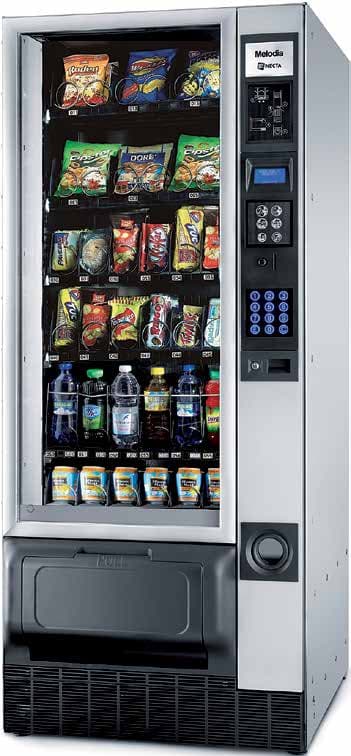
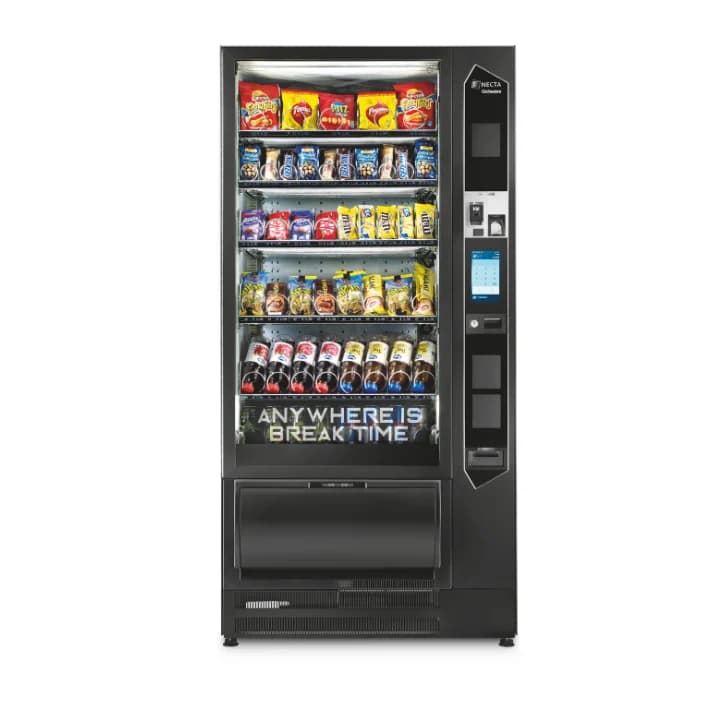
Seven-tier snack spiral machine with high capacity (50+ products), illuminated glass front, and reliable Evoca spiral mechanics. First choice for campus and office locations with broad assortment requirements.
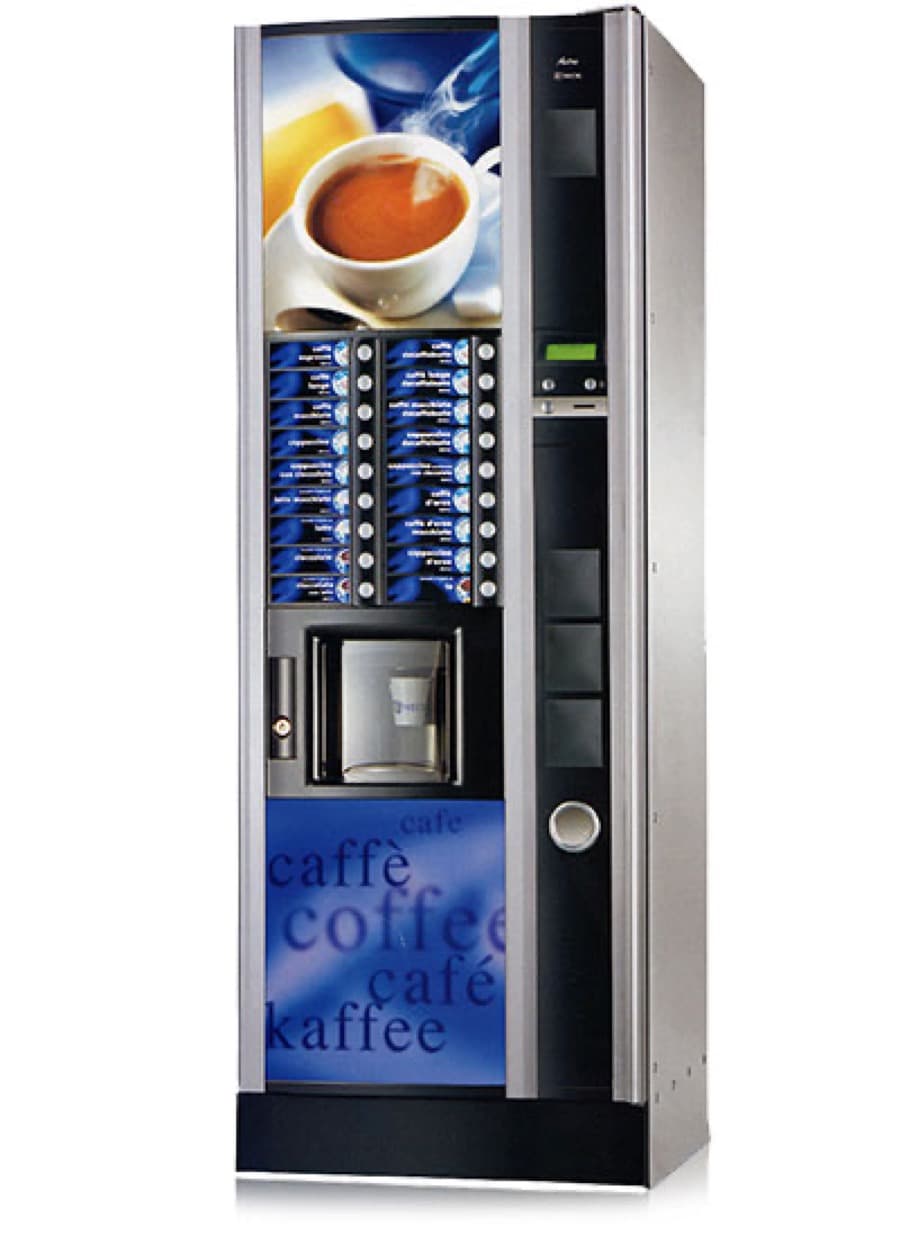
Up to 900 cup dispensings, 3.2 kg bean hopper and eight ingredient motors: the Necta Astro is a floor-standing automatic coffee machine designed specifically for mid-size sites with 100 to 300 employees. The machine combines a direct espresso system (piston brewing unit, disc grinder, dual boiler) with flexible instant modules for cocoa, toppings and soups. Operation is via key pad (18 direct-select buttons); payment is accepted via Executive, BDV, MDB or 24V validator. Critical for maintenance: daily cleaning is completed in 6.5 minutes without tools; however, boiler descaling requires external service technician appointment. Telemetry or online monitoring are entirely absent; cashless solutions can only be retrofitted via external hardware. Strengths include cost-effective spare parts supply (wear items mostly under €20) and high mechanical durability, making the Astro a highly economical choice on the used market. With used prices from €850 with full functionality, it suits both price-conscious operators and more demanding industrial and office locations, provided a technician service contract for maintenance and descaling is factored in.
200–250 beverages daily, fresh-milk system with automated cleaning and touch operation: The Necta Kalea Plus targets larger offices, canteens and breakfast areas in hotels and foodservice venues with 60 to approximately 150 staff or high-volume guests. Testing confirms the robust Z4000 brew group and modular architecture for beans, instant and milk; the telemetry-capable platform enables straightforward monitoring without add-on modules. Operators praise reliability (with consistent cleaning), rapid beverage dispensing and parts availability (German warehouse: 1–3 days). Weaknesses: daily milk-system cleaning (5–8 minutes, mandatory) cannot be skipped, and every 10,000 vends requires brew-group service—at maximum throughput, this means every 2–3 months. Acquisition cost ranges from €6,800 to €9,400 net; maintenance and consumables are material. For high-throughput sites with professional oversight, the model justifies itself through minimal downtime and predictable follow-on costs.
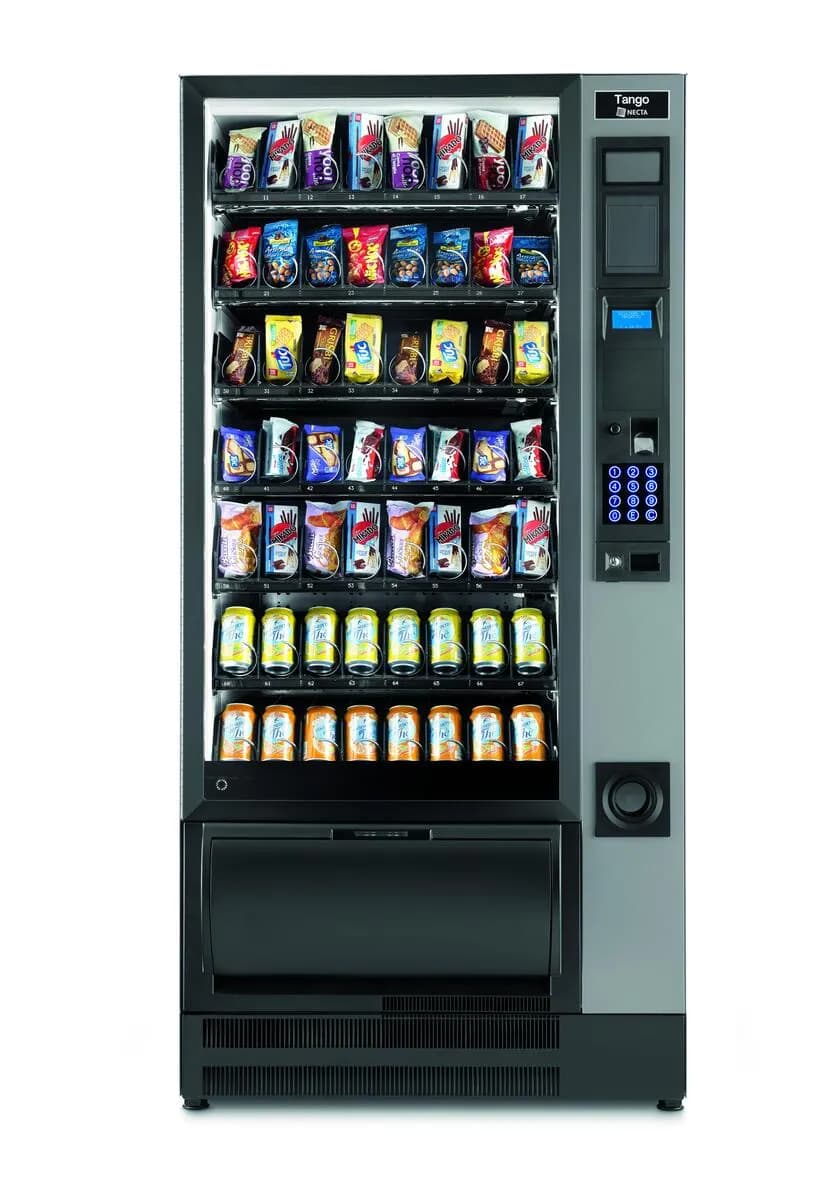
The Necta Tango has been in active use for years as a versatile combo vending machine for snacks, cold beverages and food products, targeting office and educational facilities with 50 to 200 employees. Up to 48 different products (R290 variant; base model: 44 selections) across six levels, flexible compartment layouts and maximum capacity of 466 units serve mid-market consumption patterns. The machine offers low cleaning and maintenance effort—no milk system, no descaling required. Robust spiral mechanics with up to 48 individual motors minimizes total failure risk; spare parts are internationally available and repair costs are manageable. Weaknesses emerge around the outdated graphical display (no touch), missing standard telemetry and looming software support uncertainty as the Necta Swing succeeds the Tango. Annual operating costs of approximately 1,450–2,124 kWh align with market averages; new units cost from approximately € 3,000 net in DACH markets, used machines from € 800. The Tango suits cost-conscious operators valuing reliability and low maintenance burden who can forgo the latest connectivity features.
The Necta Kikko is the most proven cold beverage vending machine in the German market – reliable, maintenance-friendly, and backed by the broadest service network (Evoca Group). It makes no technical leaps, but has solved the core challenge for decades: cans and bottles cooled, payment processed, immediately available. The Kikko ES version with touchscreen modernizes the user interface. For offices, factories and restaurants with 30+ vends per day, the first choice under €5,000.
Multi-temperature combi unit with three temperature zones that holds up to 464 items across 53 product selections, replacing two single-purpose machines at high-traffic locations. The limitation is not mechanical but connectivity-related: no public documentation exists for telemetry or remote reading.
The Necta Vismo is Evoca Group's entry-level offering in the snack segment—240 product slots, 7-inch touchscreen, and optional telemetry at one of the lowest price points in the category. Without R290 refrigeration (no cooling compartment), it is designed for dry goods only, but for bars, crisps, and nuts it is the most cost-effective option under €3,500.
The Necta Brio Up is a compact tabletop hot drinks machine with 14 selections, six ingredient canisters, an integrated Z3000 espresso brewer and an optional 20-litre water tank. Measuring 540 × 760 × 605 mm and weighing 65 kg, it fits in kitchenettes, reception areas and smaller retail outlets. Its capacity is generally suitable for an office with around 30 to 120 employees, provided daily demand does not consistently exceed the available cup supply. The design supports MDB and EVADTS connections, as well as master-slave connections to certain Necta snack machines. Its drawbacks include the powdered milk system and limited documentation on energy consumption, noise level and heat-up time. Fresh milk quality is therefore not established. The documented net purchase price for the ES-6 configuration is €4,939. A reliable ROI calculation depends on the selling price, utilisation, bean costs, maintenance and operating model. For in-house office use, the machine is most likely to be worthwhile when it serves many drinks each day without a separate cafeteria. Verified manufacturer figures for daily throughput are unavailable for high-traffic locations.
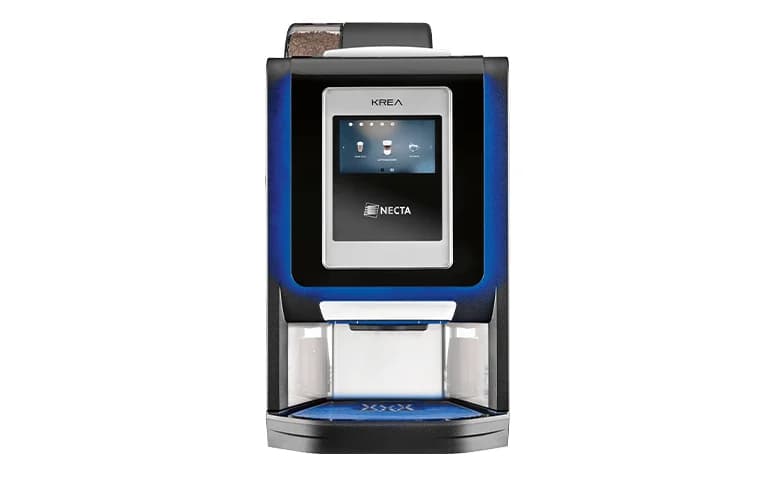
At 100 to 150 cups daily with a 7-inch HD touchscreen, the Necta Krea Touch is a solid bean-to-cup machine for offices with 30 to 100 employees, as well as hotel and lounge operations. The patented Z4000 brewing system from Evoca Group delivers reproducible espresso quality; the powdered milk system eliminates any cold-chain requirement, which significantly simplifies unattended locations. Weaknesses exist in the dosing mechanism, which appears in operator forums as a wear point after 12 to 18 months, and in the cold-start phenomenon of the first cup, which is reliably circumvented by running a flush cycle beforehand. The machine is end-of-life: Necta no longer lists the Krea Touch in its current catalogue; the successor is the Gaggia G300 Krea with a 10-inch display and EU energy class A. New prices range from €3,690 to €5,434 net; second-hand units are available on the German market for an estimated €900 to €2,200. For operators seeking a proven Evoca fully automatic machine at closeout prices, the Krea Touch is a defensible choice, provided limited long-term spare parts availability is factored into the investment decision.
The Necta Snakky Max is a classic snack vending machine for protected indoor locations and a straightforward entry point into unattended sales of packaged products. Necta specifies 703 × 1,700 × 853 mm, approximately 190 kg, and approximately 320 W installed power for the configuration reviewed here. Up to six levels and up to 36 selections provide capacity for candy bars, crisps, biscuits and similar products. However, success depends on the correct spiral choice, reliable payment processing and a fixed restocking route. The display remains alphanumeric and functional, not touch-based. This suits offices, workshops and waiting areas. For fresh goods, outdoor locations or unpredictable demand, the machine is less suitable. Our conclusion: solid technology for a defined product range, but not a machine that becomes profitable automatically without inventory and service planning.
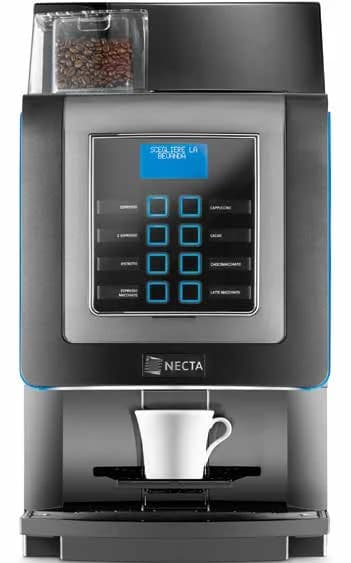
330 mm cabinet width, genuine espresso brewer (Z3000 L, maximum 12 g dose) and eight beverage options including chocolate: the Necta Koro Max Prime by Evoca (Varese, IT) is designed for offices with 30 to 80 employees and small food-service locations with moderate daily demand up to approximately 50 vends. Mains-fed variant from approximately €3,105 net (All4Vending DE); tank version up to €4,429 net (NL market). Two structural limitations: milk capability is restricted to powder, with no fresh-milk system. Telemetry and remote service are absent, as this device predates the 2020 product generation. Door opening for refilling triggers a complete device restart. Service infrastructure across the DACH region is sparse; spare parts arrive via specialist retailers with 3 to 10 days lead time. For office locations without high-throughput demands and with in-house cleaning staff, the device is a solid offering. Locations with more than 80 vends daily or requiring digital service interfaces should evaluate current OCS models with connectivity.