Skip to content
|Necta· Vending Machines (Evoca Group)

Necta Tango

8.4/ 10

Recommended

Data review — researched from sources, not physically tested. How we rate

Design & build8.0
Technology & features8.2
Operation & maintenance8.7
Capacity & range8.6
Value for money8.4
ab 5,200 €

Guide prices net (excl. VAT), project prices may vary

  • Office, Education, Industrial
  • Floorstanding
  • Indoor
  • Contactless (NFC), Mobile wallet (Apple/Google Pay)

Eco label

ABCDE

Energieklasse

C

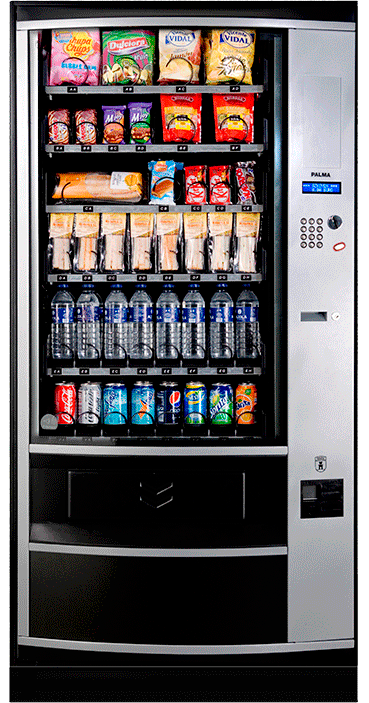
Necta Tango — Frontansicht · Quelle: goldvending.ie

3 photos · Necta Tango

Use cases

Where this machine fits, and where it does not.

Best fit

Office 50–200 Employees

Low cleaning effort and operating life for medium-sized workforce without full-time service.

Best fit

School & Campus

Robust mechanics, affordable used prices, simple operation for educational institutions.

Conditional

Factory / Shift Work

At high volume, plan for daily refilling and spare-parts logistics.

Best fit

Operator Fleet Strategy

Affordable entry cost, EU-wide parts availability, low TCO per unit.

Best fit

Canteen without Kitchen Staff

Refrigerator function, snacks and sandwiches available without staff.

Best fit

Retail / Waiting Area

Flexibly stocked with beverages, snacks and fresh goods.

Conditional

Sports Facility

No high-performance elevator – not optimal for very high volumes.

Best fit

Public Buildings

Preferred where reliability and user-friendliness outweigh high-tech.

Our rating in detail

Five public rating axes, weighted against the available evidence.

Design & build
8,0 / 10
Technology & features
8,2 / 10
Operation & maintenance
8,7 / 10
Capacity & range
8,6 / 10
Value for money
8,4 / 10

Our verdict

8.4Very good

The Necta Tango has been in active use for years as a versatile combo vending machine for snacks, cold beverages and food products, targeting office and educational facilities with 50 to 200 employees. Up to 48 different products (R290 variant; base model: 44 selections) across six levels, flexible compartment layouts and maximum capacity of 466 units serve mid-market consumption patterns. The machine offers low cleaning and maintenance effort—no milk system, no descaling required. Robust spiral mechanics with up to 48 individual motors minimizes total failure risk; spare parts are internationally available and repair costs are manageable. Weaknesses emerge around the outdated graphical display (no touch), missing standard telemetry and looming software support uncertainty as the Necta Swing succeeds the Tango. Annual operating costs of approximately 1,450–2,124 kWh align with market averages; new units cost from approximately € 3,000 net in DACH markets, used machines from € 800. The Tango suits cost-conscious operators valuing reliability and low maintenance burden who can forgo the latest connectivity features.

At a glance

Model
Necta Tango
Manufacturer
Necta
Category
Snack & Combo Machines
Type
Combo Machines
Price range
ab 5,200 €
Overall score
8.4 / 10
Origin
Necta (IT)

Pros & cons

Pros

  • 0–4 °C food and 8–15 °C snack chill zones individually adjustable
  • Accepts MDB, Executive and BDV payment systems (very broad compatibility)
  • Spiral motor repair is the most common case, cost only € 46–72 per unit
  • Cleaning requirement daily 3 min., weekly 12 min., no descaling needed
  • Up to 48 product selections across 6 levels for broad product range
  • Spiral mechanics with individual motors minimize complete failures

Cons

  • No touchscreen as standard, graphical display only at 128 × 64 or 188 × 64 pixels
  • Model officially discontinued, successor Necta Swing, long-term support unclear
  • Hardly available as new, second-hand market dominates supply
  • No telemetry as standard, BlueRed Kit retrofit required (optional, not always available)

Review

Design & Structure

890 millimetres wide, just under 1.83 metres tall, almost 80 centimetres deep: the Necta Tango demands dedicated floor space without compromise. Two people are required for delivery; unladen weight of 270 kilograms sits in the range of other combo snack machines, relocation without a floor plan is not recommended. Placement as a standard floor-standing unit is fixed. Wall clearance is required especially at the rear for compressor ventilation and service access. For small offices with tight infrastructure, the Tango makes limited sense without adequate placement area. On robust concrete or tiled floors, weight can be safely distributed. Service doors opening in one direction only further constrain placement options.

The cabinet consists of powder-coated steel; the front is shatter-resistant glass. Fingerprints are visible on the black glass surface; regular cleaning reduces these aesthetic issues. Random impact resistance as required in high-vandalism canteen settings is not explicitly documented. The mechanical product dispenser as a slide-out drawer is standard in this class and presents no design surprises. Interior construction is straightforward metal work—bolted mounting rails and support rails, no modular quick-build design as seen in high-end newer-generation machines. Faulty spiral motors can be removed individually; tray replacement is not tool-free. Material gauges are designed for continuous operation but not for vandalism-prone locations.

The display and control panel offer nothing novel. A purely graphical LCD ranging from 128 × 64 to maximum 188 × 64 pixels, variable by year of manufacture, suffices for plain-text displays and symbolic menus but appears dated in 2026 compared to current touch models. The adjacent button panel follows classic vending-machine logic: direct-selection buttons for up to 48 product channels are supplemented by numeric keypad and a correction key. Color-coded frames for allergen or price information are absent; larger price cards or dynamically rendered displays are not supported. Tactile cues for visually impaired users are missing; no ADA or DIN-compliant interface is documented. User guidance remains functional but assumes operator familiarity. Training videos and adhesive-label instructions are more common on the machine itself than differentiated software menus. Modern NFC or touch functions are completely absent; 'user-friendly' here becomes synonymous with 'proven and conventional'.

Material quality of hinges, buttons and spirals meets industrial standards; spare-parts dealers report above-average lifespan. Replacement of individual components is possible with a basic screwdriver. Replacement trays and front panels can be ordered separately, though the cabinet's modular design approach quickly reaches limits when planning errors occur. Compared to premium solutions with easily dismantled segments, the Tango remains grounded. For locations with low vandalism risk and calculable space, the design is fit for purpose. Those seeking high flexibility, lightning-fast tray changes or digital signage integration options are looking in the wrong place.

The manufacturer provides no indications of special humidity tolerance or IP certification. More aggressive environmental conditions—garage-like settings, workshops with elevated fine-dust levels or semi-public thoroughfares—will overwhelm the standard configuration over time. Only the food-area door gasket is highlighted in dealer descriptions as a separate spare part; food-compliant construction is not explicitly promoted. Little can be retrofitted; options are already limited at the factory. The classic design with spiral technology and mechanical operation targets operators who value proven mechanics and manageable interchangeability. For image-conscious locations, the exterior remains unnecessarily plain.

Sources: all4vending.de, goldvending.ie, cafepoint.co.uk, appetitevending.com.
Technology & Functions

Two separate temperature zones and spiral-dispensing technology define the technical foundation of the Necta Tango. Snacks and beverages are delivered via the so-called drop-spiral system. Each selection is driven by an individual motor, which concentrates typical wear on the spirally configured motor units. The Necta Tango range shows no documented technical revolutions in dispensing mechanics. The machine forgoes elevator systems as offered by some premium models. Instead, classic spiral-drop dispensing dominates, which is robust but does not completely exclude lost products due to misalignment. Service videos and parts documentation confirm that spiral motor replacement costs between € 46 and € 72.

The Tango's control system is based on a 16-bit electronics platform. A graphical display is used, either 128 × 64 or (per individual source) 188 × 64 pixels. The display size lags far behind modern touch surfaces. The user interface is thus functional but visually appears to be a product from the 2010s. Touchscreen, customization or multimedia interfaces are not documented in any datasheet or dealer offer. This is no longer contemporary for machines in this price class. Simple operation is not hindered by this, though the first impression at the market site remains conventional.

For payment transactions, established vending protocols are supported: MDB, Executive and BDV. It is possible to use classical coin and banknote readers, but external cashless terminals for card or mobile payment integration must be sourced and integrated separately. No contactless card payment module or QR scanning is offered as standard. A prospective buyer should keep in mind the resulting costs for equipment and any necessary integration services. Almost every dealer in Europe additionally points out that digital payment options can only be added as an upcharge package. In 2024, this is a clear disadvantage compared to the current generation of combo vending machines with plug-and-play cashless.

Telemetry is not included as standard equipment. An optional BlueRed Kit for remote monitoring (EVA-DTS protocol) can be retrofitted, though reliable German or manufacturer sources have provided no evidence that this is always readily available or fully supported throughout the entire lifecycle. Without retrofitting, the operator thus operates 'blind': fill level, error conditions or sales monitoring cannot be viewed remotely, which limits suitability at distributed or remote locations. Only after installation of the add-on module are basic telemetry functions available; push notifications or extensive remote configuration are not documented as standard.

The cooling system of the Tango Food and R290 variants is based on climate-friendlier propane. The description in the R290 export brochure suggests a dedicated chiller cabinet for fresh food. Depending on the region, a technician with refrigeration certification is required for maintenance and repair work on the cooling circuit. Rated and standby consumption are separately listed in the datasheet, but no measurement value for acoustic output exists for the complete system. Energy label information remains as of 2021 due to inaccessible PDFs; official energy efficiency classes have not been found.

Software updates and enhanced functionality (such as app integration, statistics export) are not offered publicly. Native integration into inventory management systems is not documented. As of 2024, this presents the following picture: the Tango platform is solid but technologically conservative, particularly regarding display, telemetry and payment connectivity. Those expecting innovation are better served by the successor generation Swing. Clear recommendation: for new installations, check telemetry retrofit options and cashless integration costs in advance to avoid budget surprises.

Sources: appetitevending.com, all4vending.de, cafepoint.co.uk, pre-research R290 brochures.

Capacity & Product Range

Up to 466 products fit in the Necta Tango, depending on the specific tray and spiral configuration. Configuration differences lead to significant variations depending on the operator: Goldvending.ie cites 360 units (data entry errors with small snack trays cannot be ruled out), but most dealers and datasheets refer to 390 to 466. The critical bottleneck is always the product mix—bottles, cans, fresh sandwiches and confectionery compete for limited space across six levels. Manufacturer-documented maximum figures are: 246 snack or food units, 48 cans (0.33 l) and 96 bottles (0.5 l). Those wanting a high beverage mix lose snack slots. This is not a special case but a typical trade-off in this class of vending machines. Source: Cafe Point UK — Necta Tango MDB/Executive/BDV, 466 Produkte and Gold Vending IE — Necta Tango R290.

Up to 48 different products (so-called selections) can be offered in parallel. In older configurations, the maximum is 44; newer R290 variants offer up to 48, as noted at H2O Vending Solutions UK — Necta Tango 48 Selections, 793mm Tiefe. Whether the top two levels can continuously be used as 0–4 °C fresh zones or only individual zones depends on the chosen configuration variant. Standard dual-zone cooling is a purchase criterion if filled sandwiches or dairy products are in the range. In snacks-only operation, these reserves remain unused.

According to operator reports, average daily throughput in office environments is typically 30 to 80 transactions per day, depending on location, product selection and refill frequency. In canteens or at factory exits with shift work, usage rises to 100 to 200 transactions daily. Once bottles and food products are in high demand, daily refilling is mandatory. Small or infrequently visited locations, however, never reach full capacity; the machine then remains partly empty, which affects revenue and hygiene.

These figures impose a clear inventory-monitoring obligation on operators. The high unit capacity only pays off if actual sales volume is present. If products remain in the machine too long, fresh-product write-offs are at risk. The Tango achieves full product-mix flexibility through its purely mechanical spiral discharge; it is technically impossible to dispense beverages from a different channel than snacks. Those who value an elevator-dispensing mechanism or product-specific conveyance systems must look to other product lines. Spiral technology has limits with fragile goods.

The Tango's capacity advantages are most apparent in medium-sized office or school locations with 50+ employees. Retail, small practices or locations with fewer than 30 daily sales often fare cheaper with a smaller machine. Operators with multiple Tangos at different locations report that consistent refill cycles and balanced product selection are crucial for profitable capacity utilization. For anything less than this, the model is too large and inflexible.

Operation & Maintenance

Daily cleaning mainly consists of removing crumbs and sticky residue from the product chute. According to a service video on YouTube (ZFDFocD7sIc), it suffices to wipe the product flap and glass from inside dry or slightly damp. The button panel and coin slot should also be wiped daily with a dry cloth. Three to five minutes are sufficient for these steps, provided no spillage from leaked beverages has occurred.

Weekly maintenance requires more effort. All product channels are inspected, rails and spirals are cleared of crumbs, containers or shelves are wiped out. The chill compartments—if the Tango is operated in Food/R290 variant—receive a visual check for condensation and mould. Including door gasket inspection, this takes a maximum of 12 to 15 minutes depending on the level of soiling. Don't forget the drip tray under the product area: contamination there leads to odour and technical problems over time.

No descaling or milk dispensing system exists, since the Tango does not prepare hot beverages. The only additional maintenance in food mode: vacuum or blow compressed air through the condenser fins on the chiller block every few months, otherwise power consumption rises noticeably. A three-month interval is recommended in maintenance videos, but no binding manufacturer specification exists in the documentation.

Wear-related repairs can often be planned. The spiral motor remains the most common failure part. Replacement costs € 46 to € 72 per unit according to Horecatiger.eu; replacement takes less than 30 minutes if the motor is in stock. Spiral discharge elements cost € 20 to € 45 (at international spare-parts shops such as yourspares.co.uk). The cooling compressor is a rare failure; budget € 300 to € 600 for parts, excluding installation. Service terms and call-out costs vary widely as no central factory service exists. Specialist workshops for Necta equipment are available EU-wide; delivery times for spare parts from warehouses such as Libertyshop.de or Horecatiger.eu are typically 3 to 7 days.

Unfortunately, officially quoted maintenance fees from German Necta dealers such as Flavura or Dhünn are not publicly available ('Service on request'). Thus, ongoing availability and response speed in a service case depend on your own network or chosen full-service provider. With the Tango's end-of-life status, operators must monitor spare-parts availability in the medium term; the successor Swing is increasingly displacing the Tango in workshops and parts warehouses.

Performance & Energy

500 watts rated power is shown in most Necta Tango datasheets. However, a separate standby consumption figure is not provided in publicly available sources. Those looking for modern energy-efficiency classes or load management will find no precise manufacturer specifications. Instead, one must rely on an EU energy label PDF which is on the Evoca server but was not directly accessible in testing.

Based on preliminary research, annual consumption for the standard model is approximately 2,124 kWh, for the Food model even 2,700 kWh, while the R290 variant is listed at 1,447 kWh/year (Class E, source: preliminary research from EU energy documentation). These values should be read without reference to cups or cups per transaction, as these are snack and cold-beverage combo units with 44–48 selections, not coffee machines.

Placing these consumption values is difficult. At an assumed 350 operating days per year and medium usage, this results in monthly electricity costs of around € 32 to € 51 (at € 0.28/kWh, as of 2026 in DACH). For low-usage locations or as a secondary unit, these operating values may be too high, as consumption occurs continuously due to the compressor.

The exact sound pressure level remains unknown. Modern snack & food combo units typically range from 45 to 55 dB(A), however no verified manufacturer specification exists for the Necta Tango. In office corridor use, operating noise typically falls below the perception threshold as long as the compressor is not damaged.

There is no practical warm-up time due to the absence of a hot-water tank. However, the cooling system requires time after power connection to reach both temperature zones (0–4 °C for food, 8–15 °C for snacks). Manufacturer information on initial setup time is lacking; operators must calculate this time themselves when setting up a new unit.

Relevant detail for energy managers: the Food and R290 models use refrigerant R290 (propane). A low GWP value (Global Warming Potential = 3) speaks to environmental friendliness. However, cooling maintenance requires technicians with certification whenever work on the refrigeration circuit is needed.

No comparison to modern models with energy recovery or adaptive standby such as with the successor Necta Swing. For energy-optimized buildings, the Tango lacks exact performance documentation. In classic canteen or office use, this plays a secondary role in everyday operation as long as the organization has no special energy targets.

In summary: energy consumption is solidly in the mid-range of combo units from 2018–2022. For high-transaction locations, this matters less. Cost pressure arises when utilization remains low or the location is not used for extended periods. In such cases, power-managed and retrofittable alternatives should be considered.

Sources: Gold Vending, All4Vending, [Necta EU energy label PDF, preliminary research, evocagroup.com].

Pricing & Operating Costs

The Necta Tango costs € 2,274 to € 3,500 new on the British and European market, with German dealers publishing no public list prices and typically quoting only on request. Used units currently range from approximately € 800 to € 4,658, depending on condition, age and equipment. Particularly notable is the wide price spread: a refurbished unit with twelve months on-site warranty was offered by Oldham Vending UK for £ 3,995 (approximately € 4,658; as of August 2026), while kleinanzeigen.de occasionally lists entry prices from € 800 for serviced machines. This discrepancy shows: market conditions are shaped by the model changeover to successor Necta Swing and the increasingly growing second-hand market. Premiums for rarer Food variants or models with chilled zones should be factored in. New units under € 2,500 are UK imports; DACH new prices will already be 20 to 40 percent higher for tax and warranty reasons (Source: price comparison and import calculations, see Oldham Vending UK — Necta Tango Combi aufbereitet, £3.995 inkl. MwSt., Dhünn Automaten — Necta Tango Snackautomat DE-Händler, flavura.de).

For those calculating 5-year total cost of ownership, add energy costs, spare parts and service to the purchase price. According to manufacturer data drawn from a not directly readable EU energy label PDF, annual consumption for the standard version is approximately 2,124 kWh. At average commercial electricity rates (e.g. € 0.28/kWh in Germany, as of mid-2026), costs of approximately € 595 per year accrue, totalling € 2,975 over 5 years – electricity only (see: all4vending.de/…/product-ger-12335-NECTA-TANGO.html). Spare parts are not a cost driver in the first cycle, as long as cooling components or control elements do not fail. A single spiral motor (the most common wear part) costs € 46–72 per unit; even with 2 to 3 replacements per machine over 5 years this adds up to barely more than approximately € 200 (Spare parts pricing: Horecatiger — Necta Tango SL Ersatzteile inkl. Spiralmotorpreise). Those needing compressor replacement (cooling version) should budget an additional € 300–600; but this is not expected before 8–10 years of operation. Maintenance contracts are not publicly priced by German distributors; cleaning can be done without specialist staff in 12–15 minutes per week, according to operator reports – lower costs than with hot-beverage full-service machines with milk systems.

A sample calculation for a typical usage scenario: new purchase (realistically budgeted at approximately € 3,000 in the German market), 5 years electricity (around € 3,000), spare parts and maintenance flat rate € 400. Total approximately € 6,400 over 5 years, spread across 50 selections gives approximately € 2.56 per selection per month – or approximately € 107 per month in total costs. Significant variations are possible with higher utilization, climate surcharges or spare-parts risks. Lack of full transparency in service fees and spare-parts logistics is a weakness. Succession by Necta Swing further depresses residual value, which should be considered in the planning horizon for business-case calculations.

No intelligent telemetry module as standard. Only manual inventory monitoring and on-site maintenance is possible as standard. A BlueRed Kit for telemetry retrofit exists but is a separate cost and not integrated (Cafe Point UK — Necta Tango MDB/Executive/BDV, 466 Produkte). Those requiring digital fill-level monitoring and automated error alerts must upgrade to newer models or retrofit – this noticeably affects operator ROI. In short: makes financial sense at medium utilization with good maintenance strategy, however loses ground significantly in highly digitalized fleets compared to newer machines in terms of total cost per product dispensed.

Technical data

All recorded data points at a glance.

Use & operations

Use cases / locations
Office, Education, Industrial
Installation type
Floorstanding
Environment (indoor/outdoor)
Indoor

Payment & connectivity

Payment methods
Contactless (NFC), Mobile wallet (Apple/Google Pay)
Payment interface protocol
MDB (Multi-Drop Bus)
Payment features
Receipts, Remote price updates
Telemetry / remote monitoring
Basic (sales/faults)
Connectivity
Cellular 4G/LTE, Wi‑Fi

Technology

Sensors
Temperature
UI / display type
LCD

Kühlung

Cooling
Chilled

Service & compliance

Age verification
Not required
Price segment
Mid-range

User reviews

Verified community reviews and clearly labelled external operator sources, separate from our 0–10 editorial score.

There are no confirmed community reviews for this model yet. You can submit your experience below.

Have experience with this machine?

Share your assessment. Your review helps other operators make purchasing decisions.

Share your experience with Necta Tango

4 / 5

0/5000 characters (min. 100)

Only your first name and selected use case will be shown publicly.

Useful Links and Documents

Further sources

  1. 1.Necta offizielle Produktseite (Evoca Group) — Tango nicht mehr gelistetnecta.evocagroup.com/en/products
  2. 2.Necta Tango R290 offizielle URL — leitet 301 auf Gusto 8 Classic umnecta.evocagroup.com/en/products/impulse-dispensers/tango-r290
  3. 3.Gold Vending IE — Necta Tango R290goldvending.ie/necta-tango/
  4. 4.Oldham Vending UK — Necta Tango Combi (aufbereitet, £3.995 inkl. MwSt.)oldhamvending.com/product/necta-tango-combi/
  5. 5.Cafe Point UK — Necta Tango (MDB/Executive/BDV, 466 Produkte)cafepoint.co.uk/product/necta-tango/
  6. 6.H2O Vending Solutions UK — Necta Tango (48 Selections, 793mm Tiefe)h2o-vendingsolutions.co.uk/product/necta-tango-snack-vending-machine/
  7. 7.Appetite Vending — Necta Tango (Display 188×64px, 16-Bit-Elektronik)appetitevending.com/tango.html
  8. 8.Horecatiger — Necta Tango SL Ersatzteile inkl. Spiralmotorpreisehorecatiger.eu/device/D0471449
  9. 9.Yourspares — Necta Tango Ersatzteile Übersichtyourspares.co.uk/parts/necta-vending-evoca/vending-machines/tango.aspx
  10. 10.Dhünn Automaten — Necta Tango Snackautomat (DE-Händler)dhuenn.com/automaten/snacks-suessigkeiten/tango/
  11. 11.Libertyshop DE — Necta Tango Ersatzteilelibertyshop.de/Ersatzteile-nach-Hersteller/Wittenborg--Necta/Verpflegungsautomaten-429/tango/
  12. 12.Sell-a-Vend — Necta Swing ersetzt Tango (Modellabkündigung)sell-a-vend.co.uk/snack-and-combi/necta-swing-replaces-tango/
  13. 13.YouTube — Necta Tango R290A Cleaning Maintenance and Removalyoutube.com/watch?v=ZFDFocD7sIc
  14. 14.flavura.deflavura.de
  15. 15.all4vending.de/…/product-ger-12335-NECTA-TANGO.htmlall4vending.de/product-ger-12335-NECTA-TANGO.html
Data review: AI-assisted research, editorially checkedLast checked: Redaktion AutomatenTests.deRating criteria documented transparently

Frequently asked questions about Necta Tango

How many products fit maximum in the Necta Tango?

Depending on configuration, up to 466 individual products are possible. Typical capacity is 360–390 units, distributed across snacks, bottles and cans. Exact quantity varies by product selection and compartment layout.

What are annual energy costs at 24/7 operation?

Depending on variant and cooling function, power consumption ranges from 1,447 to 2,124 kWh/year. At € 0.32/kWh, annual energy costs amount to approximately € 460–680. Source: EU energy label and dealer information.

Is the Tango still available as a new unit?

According to the official Necta website, the Tango is no longer listed as a new unit and is being replaced by the Necta Swing. Used and refurbished units are still available from specialist dealers, new offerings are rare.

How often must it be cleaned and what needs to be done?

Daily, the product chute, button panel and front glass should be wiped (3 min.). Weekly, thorough interior cleaning and cooling inspection is recommended (12 min.). Descaling is not required as no hot beverages are dispensed.

What are typical repair costs?

Spiral motor replacement costs € 46–72, compressors (cooling) cost approximately € 300–600. Spare parts are readily available, simple repairs have minimal downtime. For complex work, a certified technician should be scheduled.

Necta Orchestra R290

Necta · Snack & Combo Machines

Necta Orchestra R290

7.7Good

Multi-temperature combi unit with three temperature zones that holds up to 464 items across 53 product selections, replacing two single-purpose machines at high-traffic locations. The limitation is not mechanical but connectivity-related: no public documentation exists for telemetry or remote reading.

ca. 10,428 – 10,840 €