Skip to content
Tomra· Reverse Vending & Recycling

Tomra R1 Series

7.9/ 10

Recommended

Data review — researched from sources, not physically tested. How we rate

Design & build7.5
Technology & features8.0
Operation & maintenance7.5
Capacity & range8.5
Value for moneyNot rated

Overall score covers four rated criteria; price/value is excluded because no verified purchase price is available.

On request
  • 90 %
  • 1.300 × 1.800–1.940 × 3.350 mm (B × H × T, Höhe verstellbar)
  • 601 kg
  • 576 W
🌿

No additional eco rating

Electrical power input

576 W

Standby power

80 W

Power supply / connection

R1: 400 V AC, 3-phasig mit Schutzleiter, 50 Hz, 16 A; Luftkompressor: 2x 230 V AC, 1-phasig mit Schutzleiter, 50 Hz, 10 A

Tomra R1 Series – product view · Source: media.tomra.com

1 photo · Tomra R1 Series

Use cases

Where this machine fits, and where it does not.

Best fit

Supermarkets & hypermarkets

Manufacturer states bulk loads above 100 containers and up to 120 per minute.

Conditional

Redemption centres & depots

The modular backroom (up to 7 cabinets per the tomra.com page) scales storage with volume. However, the R1 product page names only large supermarkets and hypermarkets as the target, so suitability for redemption centres is not confirmed by a model-specific source. Check it with Tomra.

Conditional

Small convenience stores

4.42 m² front-unit footprint plus backroom needs dedicated floor space.

Not suitable

Glass deposit schemes

❌ No glass accepted in the R1 configuration.

Not suitable

Unheated or outdoor sites

❌ Indoor use only, +10 to +40 °C, maximum 90 % humidity.

Conditional

Sites without three-phase power

Needs 400 V three-phase 16 A plus two 230 V 10 A feeds.

Conditional

Buyers needing a public price

No public price, Tomra quotes individually per financing model.

Our rating in detail

Five public rating axes, weighted against the available evidence.

Design & build
7.5 / 10
Technology & features
8.0 / 10
Operation & maintenance
7.5 / 10
Capacity & range
8.5 / 10
Value for money: Not rated (no verified purchase price)

Our verdict

7.9Good

The Tomra R1 is a consumer-facing multi-feed reverse vending machine. According to the manufacturer, it takes more than 100 plastic bottles and cans in one load and processes up to 120 containers per minute. The Tomra R1 product page names large supermarkets and hypermarkets as the target. These sites need to be able to give it 4.42 m² of floor space for the front unit (601 kg) plus a backroom. It accepts no glass in the R1 configuration, runs indoors only at +10 to +40 °C, and needs a 400 V three-phase supply. Tomra publishes no price, only individual quotes, so the price axis is not rated and the overall score covers the four other axes. All performance figures are manufacturer claims. This is a desk review of Tomra documentation, not a hands-on test.

At a glance

Model
Tomra R1 Series
Manufacturer
Tomra
Category
Specialty & Niche Machines
Type
Reverse Vending
Price range
On request
Overall score
7.9 / 10
Origin
Tomra (NO)

Pros & cons

Pros

  • TOMRA Flow Technology combines 360-degree recognition, barcode recognition and metal detection. Security mark recognition is optional and market specific.
  • Modular backroom with MultiPac Air or MaxiPac. The tomra.com page mentions up to 7 cabinets.
  • Multi-feed input accepts more than 100 plastic bottles and cans in one load (manufacturer claim, up to 5 times faster than traditional reverse vending machines).
  • LAN (Ethernet TCP/IP) and POS compatibility are listed in the datasheet. The drop-and-go function requires the Consumer Engagement API.
  • Throughput of up to 120 containers per minute (manufacturer figure, depends on market, deposit rules and backroom type).

Cons

  • No public price, no warranty period and no annual energy figure. Tomra quotes individually, and the 75.4 dB LAeq noise level is a manufacturer figure.
  • Front unit alone measures 1,300 × 3,350 mm (4.42 m²) and weighs 601 kg, before any backroom cabinet.
  • No glass in the R1 configuration. Indoor use only at +10 to +40 °C and up to 90 % humidity, non-condensing.

Review

Design & Build

1,300 mm wide, 3,350 mm deep, 1,800–1,940 mm high: those are the front-unit dimensions in the Tomra R1 datasheet (manufacturer figures). Height adjusts by 140 mm. The footprint is 4.42 m², the weight 601 kg, and the infeed cone starts 1,200 mm above the floor.

The 3,350 mm depth drives the site planning. Front unit, infeed and backroom form one system, so floor loading and routing need checking for the whole installation. A single MultiPac Air backroom cabinet adds 1,400 × 1,000 mm and 390 kg according to the German Tomra product page. That figure belongs to the backroom, not to the R1.

Customers use a 21.5-inch touch display. Staff use a separate 10.4-inch operator touch display. A thermal receipt printer is part of the front unit. Standard colours are light grey NCS S3005-R80B, dark grey NCS S7005-R80B, red NCS S1580-Y90R and black, with glossy or matte front doors. Custom colours and decor print are available on request.

Indoor use only. The datasheet specifies +10 to +40 °C and a maximum of 90 % relative humidity, non-condensing. An unheated store entrance in winter falls outside that range. An IP protection rating is not published.

Optional configurations are a power socket, a drain collector, an express mode lock and a loyalty reader. Whether these are fitted has to be specified in the quote.

Rationale for the Design & Build axis: the rating rests only on the documented dimensions, colour and configuration options and environmental limits. The large footprint, the indoor-only limit and the missing IP rating are named as constraints. Build quality, materials and durability were not assessed hands-on.
Technology & Features

Recognition runs on TOMRA Flow Technology. According to the datasheet, it combines 360-degree instant recognition, shape recognition, full container detection, barcode recognition and metal detection. Security mark recognition is optional and depends on the market.

The machine is a multi-feed unit. Customers load more than 100 plastic bottles and cans in one go, which Tomra says is up to 5 times faster than traditional reverse vending machines (manufacturer claim, per the R1 product page). The stated peak is up to 120 containers per minute. Tomra notes that this varies with market, deposit rules, system requirements and backroom type.

Connectivity is limited to what the datasheet lists: LAN (Ethernet TCP/IP), POS compatibility, and compatibility with TOMRA digital solutions and APIs. The drop-and-go function requires the Consumer Engagement API. WiFi, Bluetooth and payment features are not listed in the sources reviewed and are therefore not claimed here.

Power supply is split. The front unit needs 400 V AC three-phase with ground, 50 Hz, 16 A. The air compressor is fed separately by 2x 230 V AC single-phase, 50 Hz, 10 A. Active power of the front unit is 576 W and idle power is 80 W. The backroom has its own figures and is not included.

Noise is stated as LAeq 75.4 dB for the front unit (manufacturer figure, not measured by us). That is a continuous level, so a position next to a checkout lane or seating area needs a sound check on site.

Tomra also publishes promotional results. Stores switching to the R1 collect on average 85 % more volume and 33 % more customer sessions, across 600 installations in 16 markets. In 2021, 100 % of 119 respondents in Norway, Sweden and Finland preferred the R1 over single-feed machines. These are manufacturer claims and are not independently verified.

Rationale for the Technology & Features axis: the rating rests only on the documented feature set, namely multi-feed input, 360-degree recognition, LAN and POS connectivity, and the optional configurations. Throughput, recognition accuracy and the promotional results are manufacturer claims. Connectivity beyond LAN and POS is not documented. No hands-on testing or independent measurement was performed.

Operation & Maintenance

Tomra describes proactive remote monitoring and a network of field technicians on the English product page. The German page names TOMRA Systems GmbH in Langenfeld as the local office. The range of service contracts in Germany is not itemised publicly.

Cleaning steps and intervals are not given in the datasheet or product pages reviewed. Daily time effort, wear parts and repair costs are not published either. Operators should obtain these from the service contract before signing.

Warranty: not published on the product page or the datasheet. It has to be settled in the offer.

Rationale for the Operation & Maintenance axis: the score rests only on what Tomra documents, namely remote monitoring, a field technician network and a named local office in Germany. The unpublished items (cleaning steps, wear parts, repair costs, warranty and service-contract scope) are not credited and could not be verified, so the axis reflects a desk review of manufacturer statements, not measured maintenance effort.

The front unit is one half of the daily workload. The backroom bins fill with compacted containers and need emptying. How often depends on volume and bin capacity, covered in the next section.

Conformity works differently from standard machines. Per the datasheet, CE marking is applied at the installation site once the configurable system is assembled and tested (Directives 2006/42/EU, 2014/30/EU, 2011/65/EU, 2012/19/EU). Buyers should therefore ask for the declaration covering their specific configuration. The datasheet cites ISO 9001:2015 and ISO 14001:2015 with Nemko for TOMRA SYSTEMS ASA (manufacturer statement, certificates not checked by us). That refers to company management systems, not a product certificate.

The three-phase 400 V connection plus two separate 230 V feeds for the compressor mean an electrician has to prepare the site. Installation effort and cost are not published.

Capacity & Product Range

Up to 1,500 compacted PET bottles, up to 6,000 compacted cans, or 2,000 containers in a 50/50 PET and can mix with the mix crusher: these are the storage figures per MultiPac Air bin in the R1 datasheet. Tomra notes that they vary by country and packaging.

At the stated maximum of 120 containers per minute, a bin of 1,500 PET bottles would fill after 12.5 minutes of uninterrupted feed (1,500 ÷ 120). That is a theoretical upper bound, not a measured operating figure. It shows why bin size and emptying frequency matter at busy sites.

Backroom options are MultiPac Air and MaxiPac. The tomra.com page text mentions up to 7 cabinets, which scales storage but also floor space and weight.

The R1 accepts non-refillable and refillable plastic bottles and cans. Glass is not accepted in this configuration. Bottles must measure 50–130 mm in diameter and 85–380 mm in height. Cans must measure 50–100 mm in diameter and 80–200 mm in height. Larger multi-litre bottles above 380 mm are outside the range.

The German product page lists these countries: United Arab Emirates, Czech Republic, Denmark, United Kingdom, Ireland, Spain, Finland, Italy, France, Norway, Portugal, Sweden, Germany, Austria, Greece, Hungary, Poland, Romania, Serbia and Turkey. The list sits in the MultiPac Air block, so it is a system-level indication. Which deposit schemes and security marks are supported in a given market has to be confirmed with Tomra.

Rationale for the Capacity & Product Range axis: the rating rests only on the documented per-bin storage figures, the modular backroom options, the accepted plastic bottle and can size ranges, and the missing glass acceptance. All figures are manufacturer values that vary by country and packaging. No measured throughput or bin-fill data exists.

Price / Value

Price on request: no public net purchase price for the exact model was found, and no seller listing was found. The official Tomra R1 product page offers only a quote request via contact. Searches on 2026-11-06 found no verifiable seller listing. Generic marketplace listings are not this machine and were not used.

Tomra's pricing page says prices are agreed individually per retailer or redemption centre. It names the financing model (purchase, all-inclusive rental, throughput lease), size, technology and customisation as price drivers. No market range or list price is claimed here, and no used or leasing price is used as a substitute.

The price axis is therefore not rated. The overall score is the mean of the four rated axes, and the missing price is not counted as a score of zero.

Running costs can only be partly assessed. The front unit draws 80 W at idle and 576 W when active (manufacturer figures). The air compressor and the backroom are extra. Per the German product page spec table, a MultiPac Air cabinet idles at 25 W and draws up to 400 W when active. Annual energy consumption is not published, so no full cost per container is calculated. Purchase price is expressly excluded from any cost view here.

Value depends on volume. A machine with a stated peak of 120 containers per minute, a 4.42 m² front footprint and a separate backroom only makes sense where bulk returns are frequent. The manufacturer's 85 % volume uplift is a promotional average and is not independently verified.

Before requesting quotes, operators should compare the financing models, the number of backroom cabinets, optional configurations, service contract scope, warranty period and installation work in writing.

Technical data

All recorded data points at a glance.

Use & operations

Max. operating humidity
90 %

Dimensions & weight

Dimensions (W × H × D)
1.300 × 1.800–1.940 × 3.350 mm (B × H × T, Höhe verstellbar)
Weight (unpacked)
601 kg
Electrical power input
576 W
Standby power
80 W
Power supply / connection
R1: 400 V AC, 3-phasig mit Schutzleiter, 50 Hz, 16 A; Luftkompressor: 2x 230 V AC, 1-phasig mit Schutzleiter, 50 Hz, 10 A
Noise level
75.4 dB(A)

Top-rated machines

All reviews →
Livello Smart Kiosk

Livello · Fresh Food & Smart Fridges

Image: Livello (Herstellerfoto)

Livello Smart Kiosk

8.9Very good

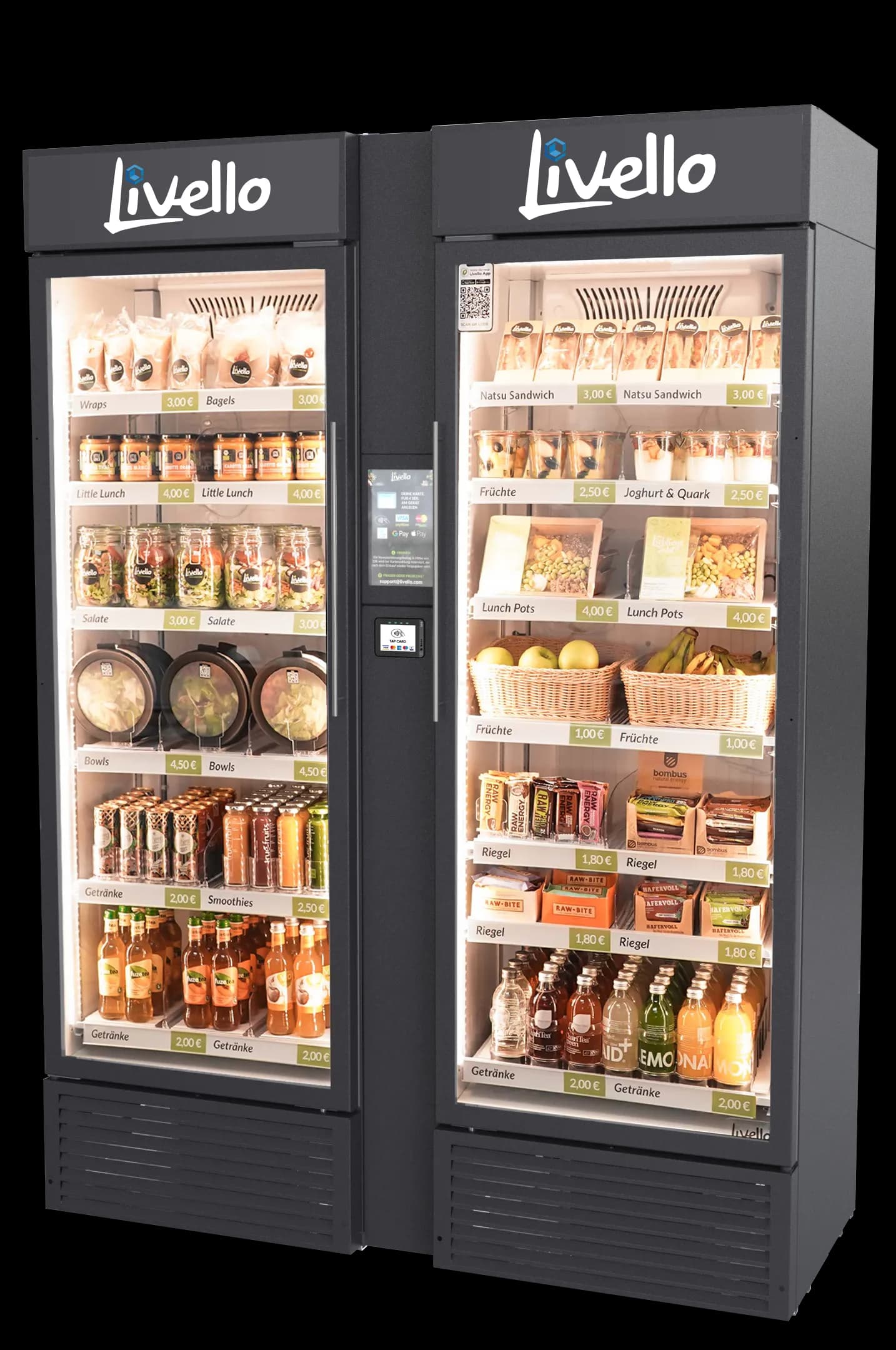
The Livello Smart Kiosk replaces the dispensing mechanism of a vending machine with scales under the goods: a card authorization opens the door, and the customer is charged for what is missing when it closes. That suits locations that need fresh food available outside canteen or reception hours. The [Chefs Culinar 2025 catalog](https://media.chefsculinar.com/bk/catalogs/2025-spezial-vending-konzepte/pdf/complete.pdf) lists the single refrigerator at a base price of €7,500, with delivery, installation and training charged by effort; nobody publishes a price for the Livello Cloud license. Manufacturer claims cite up to 700 items, 295 watts of power consumption and a restocking time under 5 minutes. Three points limit its use: according to the published documents, payment is cashless only, dimensions and weight contradict each other between the brochure and the product page, and the product documents name no camera (the patent describes imaging means) and say nothing about connection loss and maintenance intervals. The concept and the catalog price are documented; operation and data protection remain open or rest only on manufacturer claims.

from €7,500

Franke A600

Franke · Hot Drink Machines

Franke A600

8.7Very good

The Franke A600 positions itself as a versatile fully automatic coffee machine for demanding offices, canteens and large sites with daily demand of up to 200 cups. Through its 10.4-inch touchscreen, modular brew groups and a powerful milk system, the machine is designed for both attended dispensing and pure self-service. Businesses with 60 to 200 employees particularly benefit from the high hourly throughput (e.g. 240 espressos/hour) and central fleet management via FrankeConnect. Weaknesses lie in non-publicly accessible purchase prices in Germany for the new generation and in the complexity of cleaning with IndividualMilk or CleanMaster variants. The investment pays off for locations with a broad hot beverage range, high dispensing frequency and digitalized administration. In used condition, a classic A600 is available from approximately 4,000 € net; for the current generation, German dealers do not quote list prices. The range stated here of approximately 9,700 to 10,800 € comes from two British dealers, applies to the classic A600 and has been converted at the ECB reference rate. Lower total cost of ownership results primarily through central control and reduced downtime during malfunctions or service.

approx. €8,500 – €10,809

JURA GIGA X8

JURA · Hot Drink Machines

JURA GIGA X8

8.7Very good

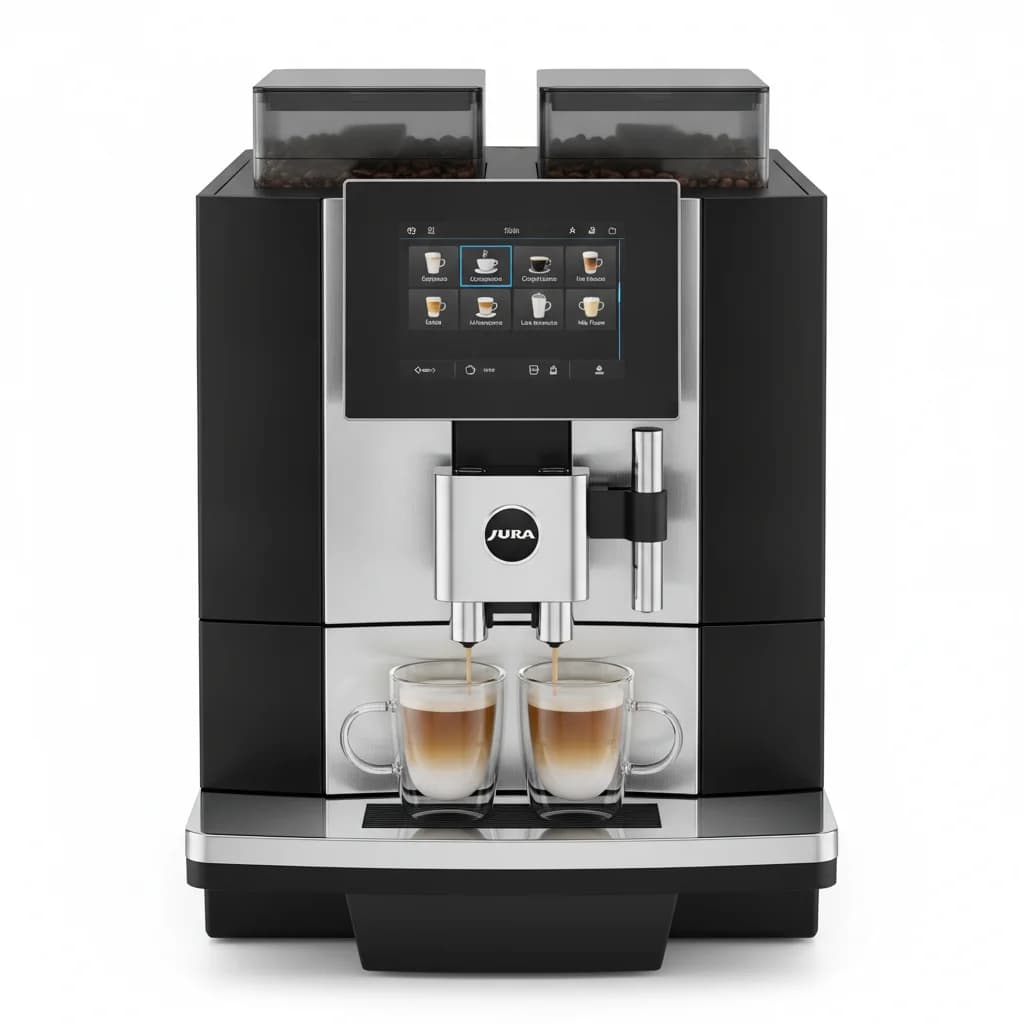
JURA's dual-grinder flagship for continuous commercial operation – 32 specialities, TÜV-certified hygiene and P.E.P. brewing method. The revised Generation II (2023, Type 748/749) increases to 2700 W and 32 specialities; any buyer should always verify the generation. Strongest argument: turnkey package combining quality, hygiene and an active JURA service network – a genuine investment that pays off at ≥ 80 cups/day.

from €5,700

Necta Melodia

Necta · Snack & Combo Machines

Necta Melodia

8.7Very good

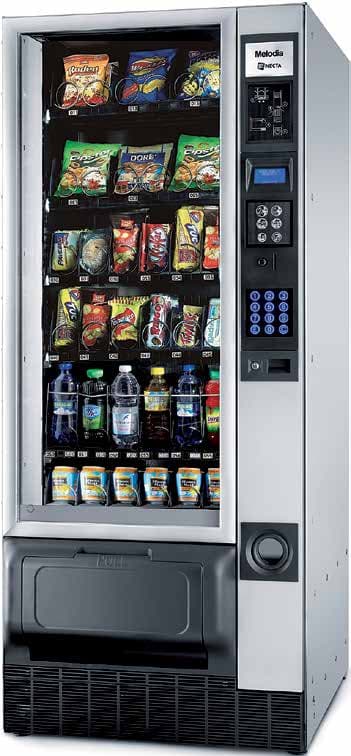
Seven-tier snack spiral machine with high capacity (50+ products), illuminated glass front, and reliable Evoca spiral mechanics. First choice for campus and office locations with broad assortment requirements.

from €5,490

User reviews

Verified community reviews and clearly labelled external operator sources, separate from our 0–10 editorial score.

There are no confirmed community reviews for this model yet. You can submit your experience below.

Have experience with this machine?

Share your assessment. Your review helps other operators make purchasing decisions.

Share your experience with Tomra R1 Series

4 / 5

0/5000 characters (min. 100)

Only your first name and selected use case will be shown publicly.

Useful Links and Documents

Further sources

  1. 1.TOMRA R1 and T9 with MultiPac Air reverse vending machine — tomra.com/reverse-vending/our-offering/reverse-vending-machines/tomra-r1-and-t9-with-multipac-air
  2. 2.TOMRA R1 und T9 Leergutrücknahme-Automaten mit MultiPac Air — tomra.com/de-de/reverse-vending/our-offering/reverse-vending-machines/tomra-r1-and-t9-with-multipac-air
  3. 3.Reverse vending machine price — tomra.com/reverse-vending/our-offering/reverse-vending-machine-price
  4. 4.TOMRA: Sustainable Recycling & Resource Recovery Solutions — tomra.com
Data review: AI-assisted source analysis, no hands-on test by usLast checked: VendingTests.com editorial teamRating criteria documented transparently

This article was created with AI assistance. Responsible for the content: the publisher named in the imprint.

Frequently asked questions about Tomra R1 Series

How many containers can the Tomra R1 process per minute?

Tomra states up to 120 containers per minute. The manufacturer adds that the figure varies with market, deposit rules, system requirements and backroom type. No independent throughput measurement was found.

Which containers does the R1 accept?

The R1 configuration takes non-refillable and refillable plastic bottles and cans, but no glass. Bottles may be 50–130 mm in diameter and 85–380 mm high. Cans may be 50–100 mm in diameter and 80–200 mm high.

What power connection does the R1 need?

The front unit runs on 400 V AC three-phase with ground at 50 Hz and 16 A. The air compressor needs a separate 2x 230 V AC single-phase supply at 10 A. Active power is 576 W and idle power is 80 W for the front unit, excluding the backroom.

How much does a Tomra R1 cost?

Tomra publishes no price for the R1. Prices are agreed individually per retailer or redemption centre and depend on the financing model, size, technology and customisation. A quote has to be requested directly from Tomra.

Can the R1 be used outdoors?

No. The datasheet specifies indoor use only, at +10 to +40 °C and a maximum of 90 % relative humidity, non-condensing. An IP protection rating is not published.

All reviews →
Bibliotheca SelfCheck 1000

Bibliotheca · Specialty & Niche Machines

Bibliotheca SelfCheck 1000

6.7Good

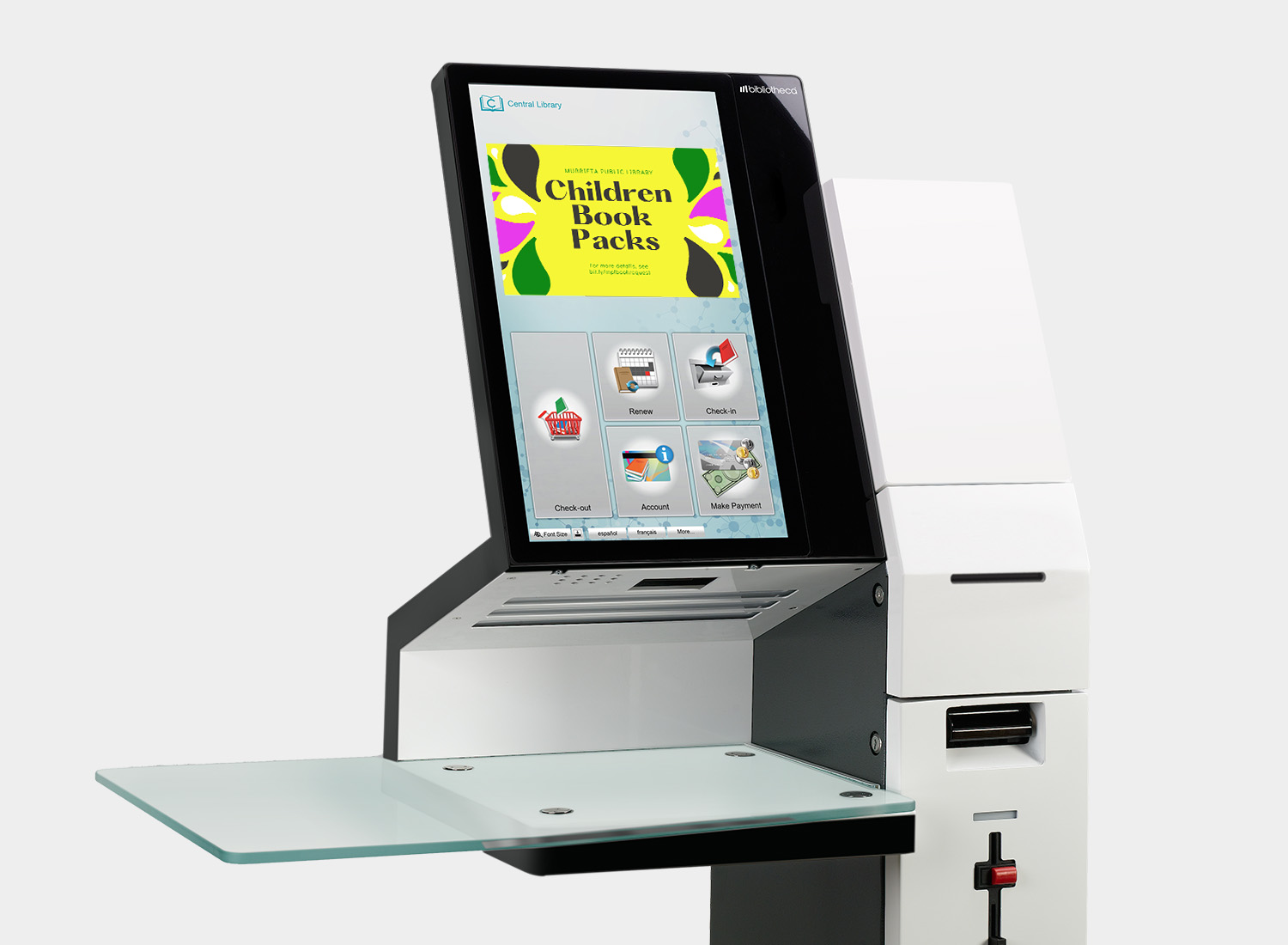
The hybrid selfCheck 1000 has one argument that no other model in the lineup has: it reads electromagnetic security tags and RFID simultaneously. For a library with both collections in circulation, that is the reason to purchase it. The specification sheet is comprehensively detailed — three form factors with dimensions and weights ranging from 88.5 to 165.5 kilograms, 268 millimetres of height adjustment during operation, 130 watts, operation from 0 to 40 degrees, connectivity via SIP2. Two specifications in it, however, are warning signs: 225 candelas without anti-glare coating is marginal for bright rooms, and the computing platform is listed as Windows 7 Embedded, whose security updates ended in 2021. Anyone procuring today should have the current platform confirmed in writing. Anyone who has completed the RFID transition should evaluate the 2500 or 3000 instead.

On request