
 AI MODIFIED
Market Analysis
BFSG from 28 June 2025: What vending machine operators should check about operation and payment
On this page
This article was created with AI assistance and checked automatically. A human review before publication is not documented.
The BFSG has applied since 28 June 2025, but that date does not create a blanket rule for every vending machine. The law expressly lists payment terminals and certain self-service terminals; it does not list ordinary goods vending machines as a product category. That does not establish a general exemption for every machine or its components. Operators should assess the payment terminal, the vending machine, and any digital ordering route separately.
Three questions guide that review: Is a covered payment terminal being placed on the market? Can consumers order or pre-order through a website or app? Does a transition rule apply to an existing self-service terminal? A qualifying terminal already used by a service provider before 28 June 2025 to provide services in compliance with the applicable rules may continue to be used for comparable services until the end of its economic life, but no longer than 15 years after it was first put into use. The microenterprise exemption applies to certain service obligations; it does not remove product obligations for products the business places on the market. These checks help organize the review, but do not replace legal advice on a specific setup.
Which parts of a vending operation does the BFSG cover?
Section 1 BFSG expressly names payment terminals, but does not list vending machines as complete devices. Websites and apps need a separate assessment based on their ordering and contracting functions. A vending operation can include several components with different legal classifications.
The law lists certain self-service terminals, including cash machines, ticket machines, check-in machines and specified interactive information terminals. The Federal Accessibility Agency explains that not every consumer product or service automatically falls within the law’s scope. The statutory list of covered products and services is exhaustive. Section 1 BFSG · Federal Accessibility Agency FAQ
For payment terminals, Section 2 BFSG focuses on the device’s main purpose: accepting payments using payment instruments at a physical point of sale. The law also expressly refers to related hardware and software. Operators should therefore record the terminal and its associated components, then clarify who is responsible for them across the supply chain. The operator’s obligations depend in part on its role, such as manufacturer, importer, distributor or service provider. Section 2 BFSG
A digital ordering route is a separate issue. Services provided through electronic commerce may be covered even when the products being sold are not covered products. Whether a particular vending operator’s website or app qualifies depends on what consumers can do there and how the order and contract process works. An information-only website is not automatically equivalent to a service through which a consumer can initiate or conclude a contract.
For a pre-order route, document the steps consumers complete online, when a contract is formed, and what service the operator provides. The label “app” or “shop” alone does not settle the legal classification. The Federal Accessibility Agency’s guidance generally points to accessibility across the entire website or app when the electronic-commerce service requirements apply. Federal Accessibility Agency guidance on electronic commerce
What should operators check when buying or replacing payment terminals?
Section 2 BFSG defines a payment terminal by its main purpose: taking payments using payment instruments at a physical point of sale. The law expressly lists payment terminals and related hardware and software. Since 28 June 2025, requirements apply to covered products placed on the market after that date. Operators should identify the specific terminal and its associated components before assessing what applies.
For a new purchase, record the terminal’s manufacturer and model, the hardware and software included, and the vending machine or site where it will be installed. Ask the supplier in writing whether the specific terminal falls within the BFSG’s scope and request the conformity documents for the exact product being offered. Documentation tied to the delivered model and configuration is more useful than a general statement about a product family.
The Federal Accessibility Agency describes the relevance, where applicable, of conformity assessment procedures, an EU declaration of conformity and CE marking for covered products. A supplier’s response should make clear which documents relate to the unit being purchased. Federal Accessibility Agency FAQ
Record replacements and technical changes in the procurement file too. Note when the replacement unit is supplied and which documents accompany it. The reviewed sources do not provide a verified technical checklist for individual payment functions or establish the conformity of specific vending machine models. Do not infer conformity from a product description or from the mere availability of a function. Missing documentation is an open supplier question, not proof that a product complies or fails to comply.
Responsibility also depends on the operator’s role in the particular transaction. The statutory definition of an economic operator includes, among others, manufacturers, importers, distributors and service providers. A company should document its role for the specific terminal and vending setup rather than assign one blanket role to its entire business. Section 2 BFSG
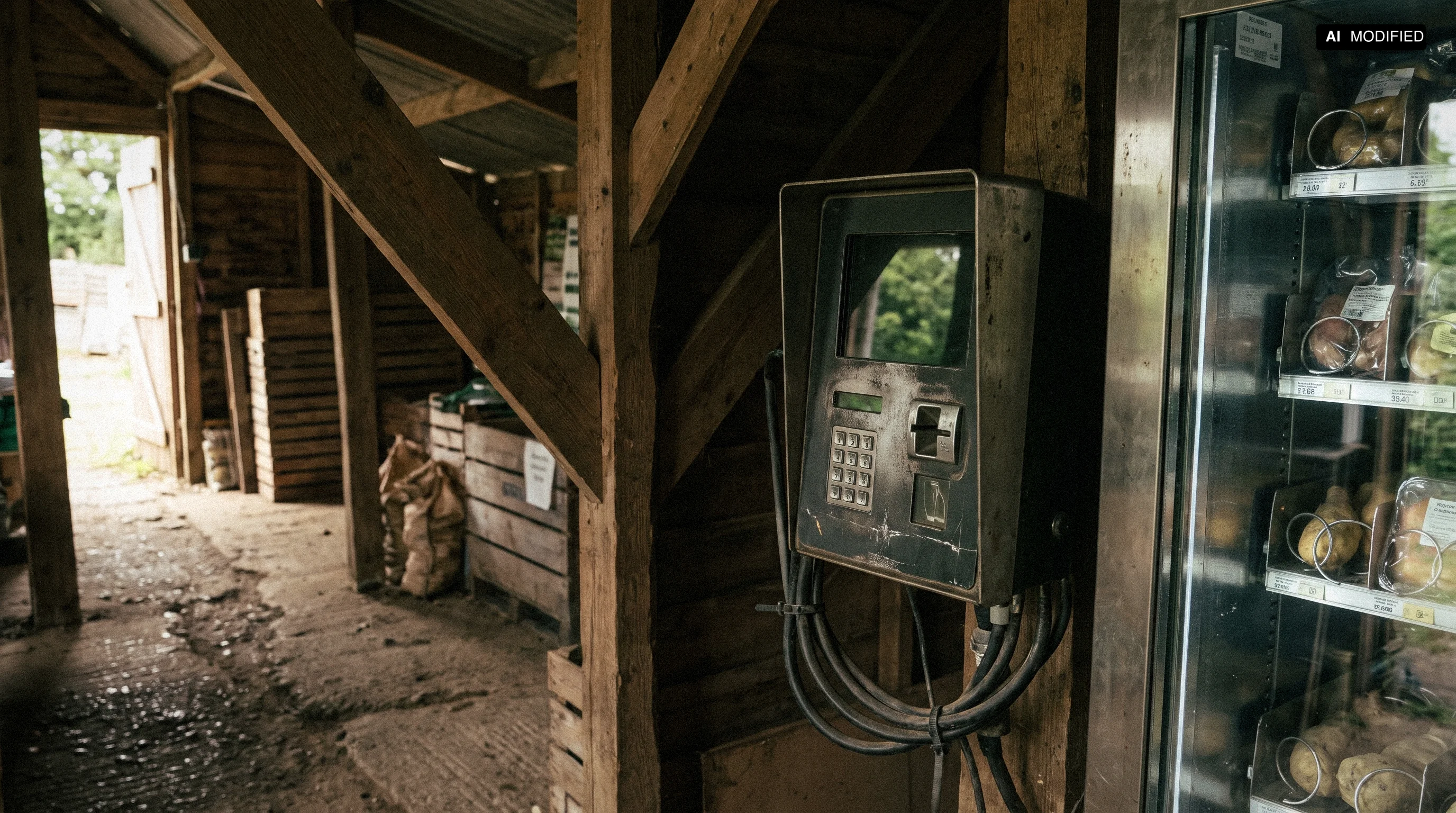
When can existing terminals continue to be used, and what does the microenterprise exemption cover?
Under Section 38(2) BFSG, a service provider may continue using a covered self-service terminal for comparable services until the end of its economic life, but no longer than 15 years after it was first put into use. The transition rule applies only if the service provider was already using that terminal before 28 June 2025 to provide services in compliance with the applicable legal requirements. It is not a blanket exemption for every vending machine.
Operators should establish the terminal’s first-use date, how it was used before the cutoff, and whether the continuing service is comparable. Procurement records, site and equipment registers, and maintenance records may help where they show relevant dates and use. The reviewed sources do not prescribe a particular documentation format. The important point for an internal review is that the prior compliant use and first-use date can be traced. Section 38 BFSG
For a site move or component replacement, record which unit remains in service and whether the change affects the legal assessment. Check the transition conditions before treating continued use as established. The statutory allowance ends at the earlier of the terminal’s economic end of life or 15 years after first use.
The microenterprise definition in Section 2 BFSG sets the threshold at fewer than ten employees and either annual turnover of no more than €2 million or an annual balance sheet total of no more than €2 million. Meeting those criteria does not answer by itself which obligations are exempt. The Federal Accessibility Agency explains that qualifying microenterprises are exempt from service obligations. That exemption does not apply to product obligations for products the business places on the market. Section 2 BFSG · Federal Accessibility Agency FAQ
Operators should therefore identify whether each obligation concerns a service or a product, and determine the company’s role in relation to that product. Adding a vending machine to the company’s inventory does not automatically mean the operator placed it on the market. Likewise, being a microenterprise is not enough to rule out possible product obligations without further assessment.
What should operators document now?
Create three separate inventories: payment terminals, digital ordering routes, and existing self-service devices. For each payment terminal, record its model, manufacturer, site, associated hardware and software, and supplier. For each website or app, note whether consumers can only view information or can also order or pre-order goods, and describe the steps through which a contract may be formed.
For new purchases, add a procurement check before ordering. Ask the supplier to assess the specific payment terminal and provide the relevant conformity documents. File those documents against the delivered model and configuration. If the supplier’s response is incomplete, record the unresolved question and whether a supplier reply or legal assessment is still outstanding.
For digital ordering, write down the user journey: what consumers can do, which ordering steps follow, whether a contract is initiated or concluded online, and who provides the service. Base legal review on that concrete flow. The available sources do not support a blanket classification for every vending machine app.
For existing devices, keep evidence of the first-use date and of compliant use by a service provider before 28 June 2025. Also document whether the device is being used for comparable services. The transition period for covered self-service terminals ends with their economic life, subject to the maximum of 15 years after first use. Equipment registers, procurement files and maintenance records can be checked for information relevant to those conditions.
Use unresolved cases to frame specific questions: Is this device a covered self-service terminal? Does the transition rule apply to this use? Does the obligation relate to a product or a service? What role does the company have? Keeping those questions separate helps prevent an exemption for one part of the operation from being applied to other components without review.
Conclusion
Since 28 June 2025, vending operators need to assess their obligations against the products and services covered by the BFSG. The reviewed sources do not support a blanket conclusion for vending machines as complete devices. Payment terminals are expressly named in the law, while websites and apps require assessment based on their function and ordering or contracting process. Operators should therefore document each part of the sales setup and resolve open classifications on their specific facts.
Three practical steps support that review: record payment terminals and their hardware and software, request documentation for the specific product when buying or replacing a terminal, and map the function of digital ordering routes. For existing covered self-service terminals, Section 38(2) BFSG requires prior compliant use by a service provider before 28 June 2025. Continued use is limited to comparable services and ends at the end of the terminal’s economic life, with an absolute maximum of 15 years after first use.
Small operators should also distinguish service obligations from product obligations. The microenterprise exemption covers certain service requirements when the legal conditions are met; it does not automatically remove product obligations for products the business places on the market. Where the device type, company role or contract process remains unclear, the next step is a legal assessment of that specific case.
Go deeper: related guides
- Cup cost at coffee machines: What a cup really costs the operatorEconomics & TCO · 14 min read
- Reducing Vending Machine Electricity Consumption: Selection and OperationFundamentals & Getting Started · 12 min read
- Retrofit cashless payment to a vending machine: MDB 4.3, costs and selection criteriaFundamentals & Getting Started · 17 min read
More news
EU Data Act from 12 September 2025: What changes for connected vending machines?
The EU Data Act has applied in general since 12 September 2025, with some obligations phased in later. Here is what vending operators should check about machine data, access rights, and sharing data with third parties.
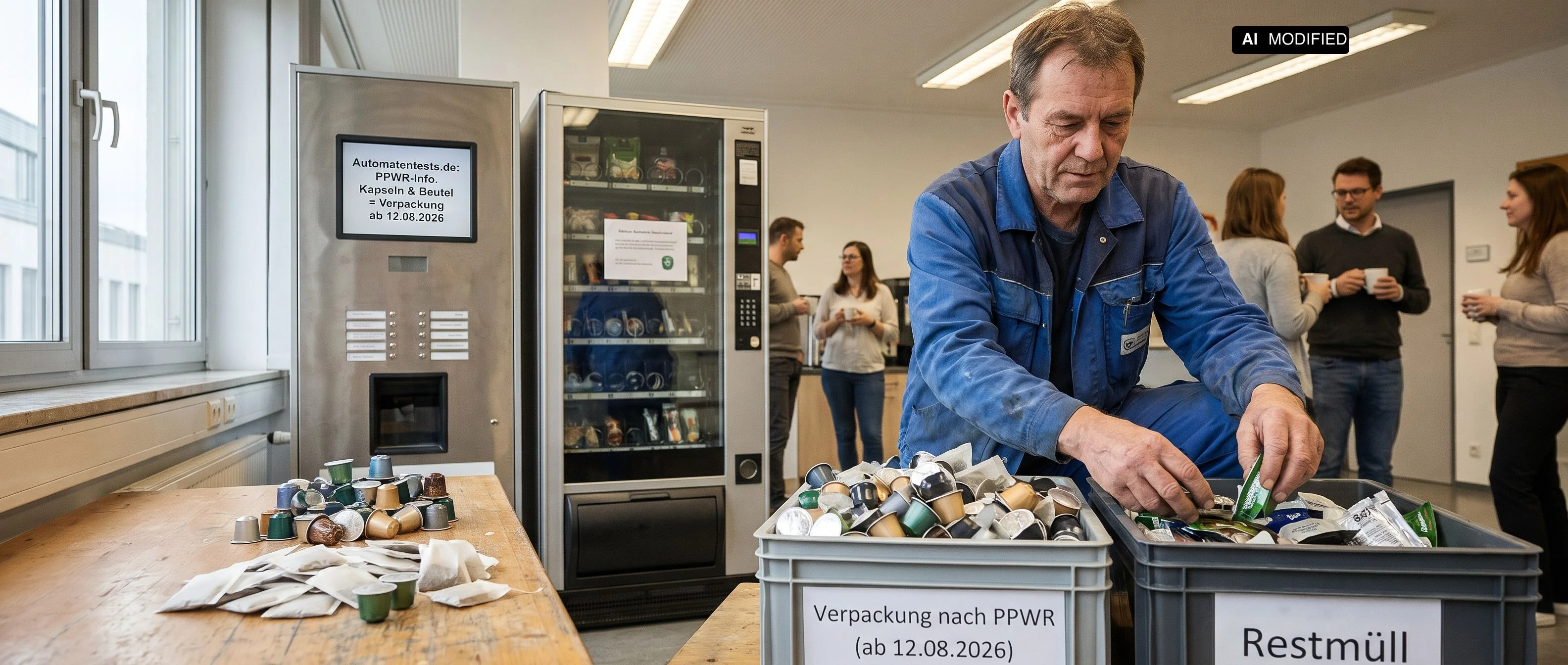
PPWR and Germany’s Packaging Rules: What Vending Operators Should Check
The PPWR and Germany’s current VerpackDG took effect on 12 August 2026, with EU requirements applying in phases. Here is what vending operators should check about reusable offers, employee-only machines and customer-provided containers.
EUDR and coffee vending machines: what the EU Deforestation Regulation requires before it applies
Preparing for the EUDR affects coffee vending operators mainly through coffee products, supply chain evidence and business roles—not the machines themselves. This article explains the deadlines from 30 December 2026 and 30 June 2027, and outlines the data operators should start collecting now.