
Fundamentals & Getting Started
Reducing Vending Machine Electricity Consumption: Selection and Operation
 AI MODIFIED
On this page
- Reducing Vending Machine Electricity Consumption: Selection and Operation
- How can you compare vending machine energy use?
- Which standards and measurement methods apply?
- How should you choose a machine for its energy use?
- Which operating measures can reduce consumption safely?
- How can operators assess savings without overstating them?
- Practical recommendations
- Conclusion
- Sources
This article was created with AI assistance and checked automatically. A human review before publication is not documented.
Reducing Vending Machine Electricity Consumption: Selection and Operation
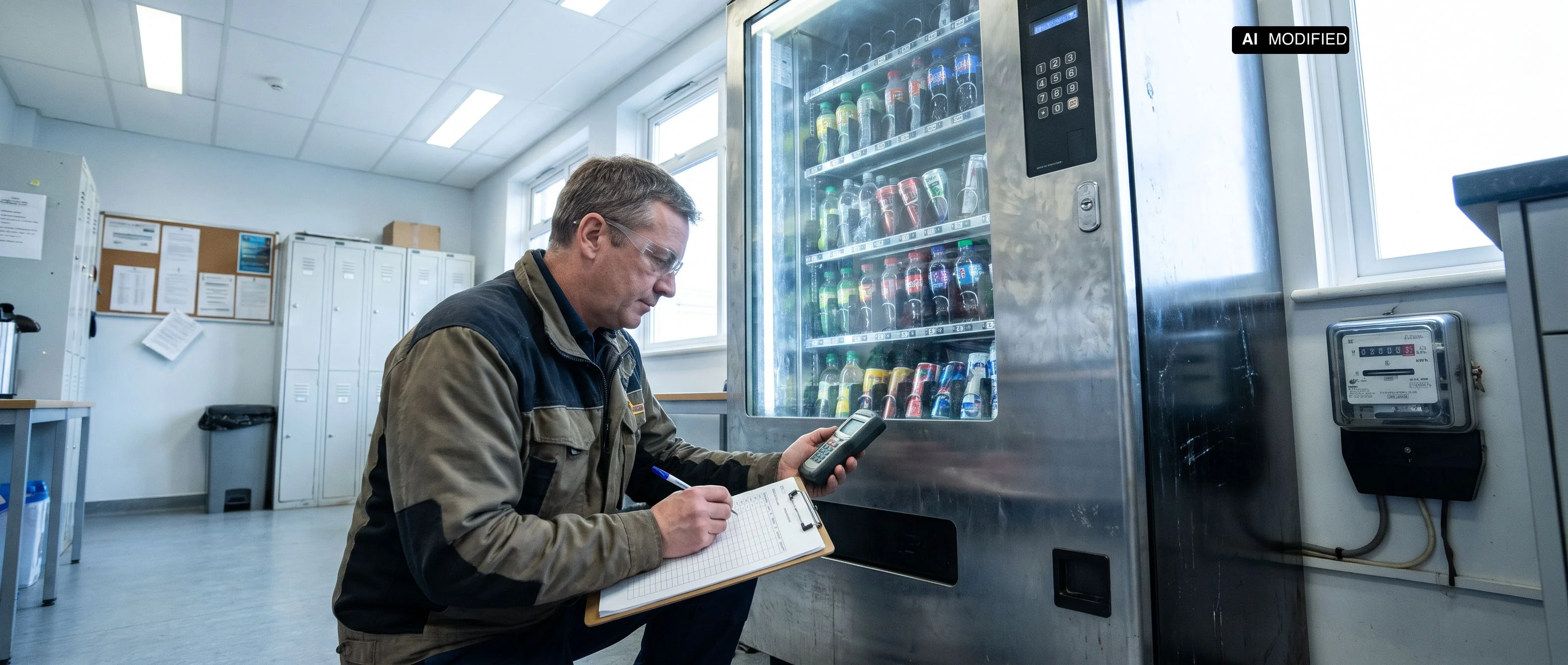
For operators, the most reliable way to reduce vending machine electricity use is to compare measured or published figures for machines doing the same job, then track consumption under documented operating conditions. Refrigerated vending machines have an EU energy label that includes an A–G class and annual consumption in kWh. Professional coffee machines are assessed differently in the cited Topten criteria: their daily energy loss is measured under DIN 18873-2, including standby-related processes such as heating, cleaning, rinsing and shutdown. These figures describe different machine types and operating patterns, so they cannot be compared directly.
The evidence also sets limits on what can be claimed. The research found no current, aggregated Germany-specific benchmark for vending machine consumption. A 2012 US trade article discusses measures such as efficient lighting and compressor controls, but its savings, energy rates and percentages are not German results. Any change to a refrigerated machine’s temperature settings must follow product-safety requirements and the manufacturer’s instructions.
A sound purchasing and operating decision therefore starts with the machine’s purpose, the applicable measurement method and the conditions behind each number. Record the selected machine’s published or measured consumption, note what the figure includes, and compare it with alternatives under equivalent conditions. After installation, measure actual use before and after any operational change. Report the observed difference with its dates and operating context. Without that evidence, a specific saving or percentage remains unsupported.
How can you compare vending machine energy use?
Start by identifying the type of machine. For refrigerated vending machines, the EU energy label uses an A–G scale and shows annual energy consumption in kWh. The regulations cover refrigerated vending machines and other refrigerating appliances with a direct sales function. The European Commission says the new labels for this group, including vending machines, became visible in shops and online from 1 March 2021. The label gives a standardised point of comparison for machines within its scope, but it should not be treated as a universal prediction of the electricity bill at every location.
For professional coffee machines, the cited Topten listings use daily energy loss under DIN 18873-2. Topten’s criteria describe this as standby consumption and include processes such as heating, cleaning, rinsing, shutdown and standby. They do not include the energy used to prepare drinks. That distinction matters for sites where beverage volume is high: a daily energy-loss figure is not the machine’s complete energy use when drinks are being prepared.
The two types of figures answer different questions. Annual kWh on a refrigerated vending machine’s label refers to an annual consumption value under the applicable labelling framework. Daily energy loss for a professional coffee machine covers specified losses and processes, not drink preparation. Converting one into the other would require assumptions about operation and measurement that the cited information does not provide.
When comparing options, keep each comparison within its measurement category. For refrigerated machines, record the A–G class and annual kWh shown on the label. For professional coffee machines, record the daily energy-loss figure and confirm the boundary of the method. If a supplier gives a consumption number without its method or operating conditions, ask for the underlying documentation before using it in a procurement comparison.
A label is useful evidence, not a guarantee of a particular site’s consumption. Placement, usage and operating schedules can affect measured results, but the dossier does not provide a current German benchmark or a model-specific estimate for those effects. Keep the published figure intact, document its source, and use a site measurement for operational decisions.
Which standards and measurement methods apply?
The European Vending and Coffee Service Association (EVA) identifies EN 50597 and IEC 63252 as standards for measuring energy consumption of refrigerated vending machines. It also supports Energy Measurement Protocol (EMP) 3.1b for hot and cold drinks machines. These references are not interchangeable labels for one general vending-machine test. Before comparing figures, establish which machine category and method produced each result.
EVA reports that the older refrigerated-machine protocol, EMP 3.1a, was withdrawn on 1 July 2019 after EN 50597 replaced it. That date matters when reviewing older product literature or historic comparisons. A result presented under EMP 3.1a should not be assumed to have been measured under the later standard. Ask the supplier to identify the protocol and version associated with a quoted figure, and retain that information with the quotation or specification.
For a refrigerated vending machine, a documented figure under EN 50597 or IEC 63252 gives a clearer basis for comparison than a number with no method attached. The EU label provides another structured reference for machines in its scope, showing the energy class and annual kWh value. A buyer should retain both the label information and any test documentation supplied, so the comparison can be checked later.
For hot and cold drinks machines, EVA’s support for EMP 3.1b identifies a relevant protocol in the dossier. A professional coffee machine’s daily energy-loss figure under DIN 18873-2, as used in Topten’s criteria, has its own stated boundary: standby-related processes are included, while energy used to prepare drinks is excluded. That boundary should appear in any internal comparison or procurement note.
These method details are practical safeguards against misleading comparisons. Two figures may both be expressed in energy units yet represent different equipment, test procedures or included processes. Preserve the original units, method name and date. If a supplier cannot provide those details, mark the figure as insufficiently documented rather than ranking it alongside verified values.
How should you choose a machine for its energy use?
Compare machines that perform the same role and use the same kind of evidence. For refrigerated vending machines, begin with the EU label’s A–G class and annual consumption in kWh. Check that both candidates fall within the same labelling scope and retain the label or product documentation. For professional coffee machines, compare daily energy-loss figures under the same stated method, and remember that Topten’s DIN 18873-2 figure excludes energy used to prepare drinks.
Do not rank a refrigerated machine’s annual label value directly against a coffee machine’s daily energy-loss value. The time basis, equipment and included processes differ. Even within one category, a figure without its method, conditions or source is weaker evidence than a documented result. Ask suppliers to identify the applicable standard or protocol and explain what the published value covers.
The research did not verify a current aggregated benchmark for vending machine electricity consumption specific to Germany. That means operators should avoid describing a particular kWh value as typical for the German market on the basis of this dossier. It also means there is no verified national reference here against which an individual site can claim to be above or below average.
Instead, set a comparison baseline for the purchasing decision. Record each candidate’s machine type, method, value, unit and source. Note whether the number covers annual consumption, daily energy loss or another boundary. For equipment used in a different way, request additional evidence that matches the intended operating pattern. If only one candidate has a traceable figure, report that limitation rather than presenting the available figure as a like-for-like comparison.
Energy is one part of selection. The evidence here does not provide machine-specific purchase prices, capacity requirements or site forecasts. Keep those matters in their own documented comparison, and avoid converting a label value into a cost or saving unless the applicable tariff and measured consumption are available. A transparent decision shows which figures are verified and where evidence is missing.
Which operating measures can reduce consumption safely?
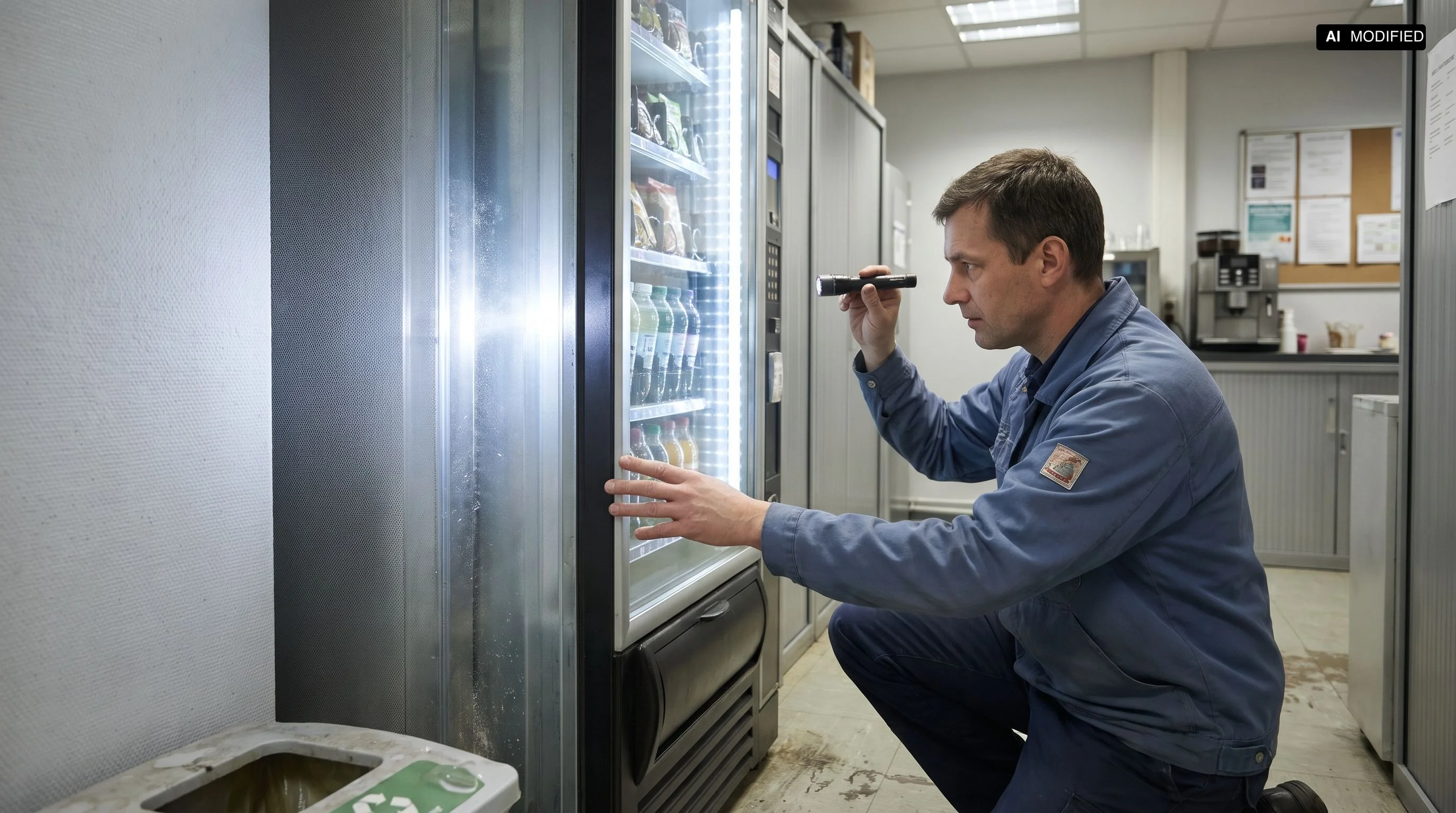
A 2012 article in the US trade publication Buildings discusses measures that include efficient lighting, removing unnecessary lighting, compressor controls and allowing a small rise in product temperature for suitable bottled drinks. It also cautions against changing controls for products that could spoil, including dairy and deli products. This is historical US-market evidence. Its dollar savings, electricity rates and percentages do not establish German results, and should not be quoted as expected savings for a German site.
The article can inform questions to investigate, not provide a local savings forecast. An operator considering lighting or compressor-control changes should check that the equipment and proposed measure are compatible, follow the machine manufacturer’s instructions, and measure the result at the site. The dossier contains no verified German savings figure for these interventions.
Temperature changes need particular care. The cited article distinguishes suitable bottled drinks from products that could spoil, but it does not validate a setpoint change for every machine or product. Follow applicable product-safety requirements and the manufacturer’s instructions. Where the product mix or safe temperature limit is uncertain, do not treat a warmer setting as an energy-saving measure.
The research dossier does not independently verify the underlying BDV documents mentioned in its notes. It therefore does not support attributing specific night-setback or ventilation-clearance recommendations to publicly accessible BDV guidance. Operators should consult the relevant machine documentation and any applicable installation requirements directly, rather than treating an inaccessible reference as proof of a particular clearance or schedule.
A safe operational review separates a proposed action from a verified outcome. Record the change, the date and the machine’s operating conditions. Compare consumption before and after using a consistent method, and note any change in product range, usage or schedule that could affect the result. If those conditions differ, describe the observation cautiously rather than assigning the entire difference to the intervention.
How can operators assess savings without overstating them?
Begin with a baseline that can be reproduced. Record the machine identifier, machine type, measurement period, meter or source used, and the operating conditions during that period. For a refrigerated vending machine, retain the label’s annual kWh and A–G class as published evidence. For a professional coffee machine, note whether the available figure is daily energy loss under DIN 18873-2 and that drink preparation is excluded.
For an operational measurement, use the same measurement boundary before and after a change. Document dates, operating schedule and relevant changes to the machine or products. The research does not prescribe a particular metering interval or provide a universal German consumption benchmark, so do not present a chosen interval as a standard requirement. The purpose is to make the comparison transparent and repeatable.
Separate observed consumption from projected savings. If a meter records lower use after a change, report the values, periods and conditions that were actually observed. Do not turn a short observation into a year-round estimate unless the method and assumptions are stated and supported. Do not apply US electricity rates or savings percentages from the 2012 Buildings article to a German site.
Keep energy and cost calculations tied to their inputs. A cost estimate requires a documented consumption quantity and the relevant electricity rate. A claimed percentage reduction requires comparable before-and-after values and a stated calculation basis. The dossier supplies no German tariff, machine-specific consumption baseline or verified intervention result, so it cannot support a numerical saving or a cost-per-year claim for a particular operator.
Finally, distinguish a measured result from a supplier specification or label value. A label helps compare products under its framework; a site meter records the conditions of that site. Both can be useful, but they answer different questions. In reports, label each number by source and method, preserve its unit, and state what is excluded. This makes the evidence useful to procurement and facilities teams without implying more certainty than the measurement supports.
Practical recommendations
- Classify the equipment first. Separate refrigerated vending machines from professional coffee machines. Their cited energy measures cover different processes and cannot be directly ranked against one another.
- Collect traceable product evidence. For a refrigerated vending machine, record the EU A–G class and annual kWh value. For a professional coffee machine, record the daily energy-loss figure and the stated DIN 18873-2 boundary. Keep the supporting label or documentation.
- Ask suppliers how figures were obtained. For refrigerated equipment, check for EN 50597 or IEC 63252 documentation. For hot and cold drinks machines, ask whether EMP 3.1b applies. Treat older references to EMP 3.1a carefully because EVA reports its withdrawal on 1 July 2019.
- Compare like with like. Keep annual kWh values with annual kWh values, and daily energy-loss figures with figures measured under the same method. Mark undocumented numbers as unverified rather than using them to rank products.
- Check every operational change against product and machine requirements. The historical Buildings article discusses lighting and compressor controls, but its US savings figures are not German estimates. Follow manufacturer instructions and product-safety requirements before considering any temperature adjustment.
- Measure site outcomes. Record the baseline, measurement period, operating conditions and any intervention. Repeat under comparable conditions, then report only the observed result. State separately any assumptions used for a projection.
- Avoid unsupported benchmarks. The research did not verify a current aggregated Germany-specific consumption benchmark. Do not call a value a German average or promise a percentage saving without suitable evidence.
Conclusion
Energy comparisons are useful only when the machine category, measurement method and included processes are clear. Refrigerated vending machines can be compared using their EU A–G labels and annual kWh figures. Professional coffee machines require attention to the boundary of the daily energy-loss measure: the cited DIN 18873-2 criteria include standby-related processes but exclude drink preparation. These are different measures, so preserve that distinction in procurement and reporting.
The evidence supports careful evaluation, not a universal savings promise. EVA identifies EN 50597 and IEC 63252 for refrigerated vending machine measurement and supports EMP 3.1b for hot and cold drinks machines. It reports that EMP 3.1a was withdrawn on 1 July 2019. Historical US guidance on lighting and compressor controls can suggest questions to investigate, but it does not establish German savings or safe temperature settings for every product.
For operators, the practical next step is to gather method-specific product figures, compare equivalent machines and document site consumption before and after any change. Follow manufacturer instructions and product-safety requirements. Since no current Germany-specific benchmark was verified, report measured results with their conditions and avoid unsupported averages, costs or percentages.
Sources
- Delegated regulation - 2019/2018 - EN - EUR-Lex
- Ecodesign/Energy Labelling Review - Refrigerating appliances with a direct sales function
- Clearer and simple energy labels will help consumers save money and contribute to the Energy Union’s objectives
- TECHNICAL & STANDARDS - European Vending and Coffee Service Association (EVA)
- EVA withdraws the Energy Measurement Protocol (EMP) for refrigerated vending machines
- Die besten gewerblichen Kaffeemaschinen der Schweiz (2026)
- 5 Ways to Green Your Vending Machines
- Bundesverband der Deutschen Vending-Automatenwirtschaft (BDV)
Latest on this topic
- EU Data Act from 12 September 2025: What changes for connected vending machines?Market Analysis · October 27, 2026
- PPWR and Germany’s Packaging Rules: What Vending Operators Should CheckMarket Analysis · October 24, 2026
- EUDR and coffee vending machines: what the EU Deforestation Regulation requires before it appliesMarket Analysis · October 13, 2026
More guides
Retrofit cashless payment to a vending machine: MDB 4.3, costs and selection criteria
What do you need to retrofit a vending machine for cashless payment? This guide explains MDB 4.3, compatibility, terminal selection, installation, ongoing costs and typical checks, without making unsupported price promises.
The Ideal Vending Machine Mix: Combining Hot Drinks, Snacks and Water
Which combination of hot drinks, snacks and water is right for an office, a public venue or a small site? This guide helps operators assess sales mix, site requirements, hygiene, refrigeration, replenishment and cashless payments.
Hygiene plan for hot drinks vending machines: cleaning, HACCP and records
What cleaning obligations apply to hot drinks vending machines, which intervals must operators set themselves based on risk, and what records should the hygiene plan include? This guide distinguishes legal requirements, HACCP practice and standards guidance without prescribing blanket cleaning intervals.