
Fundamentals & Getting Started
The Ideal Vending Machine Mix: Combining Hot Drinks, Snacks and Water
 KI Modified
On this page
- What roles do hot drinks, snacks and water play in the vending mix?
- Which combination suits which type of site?
- When do separate machines or a combination machine make sense?
- Hygiene, drinking water and the cold chain in operation
- How can the vending machine combination be planned commercially and operationally?
- Practical recommendations
- Conclusion
This article was created with AI support and checked automatically. No human review before publication is documented.
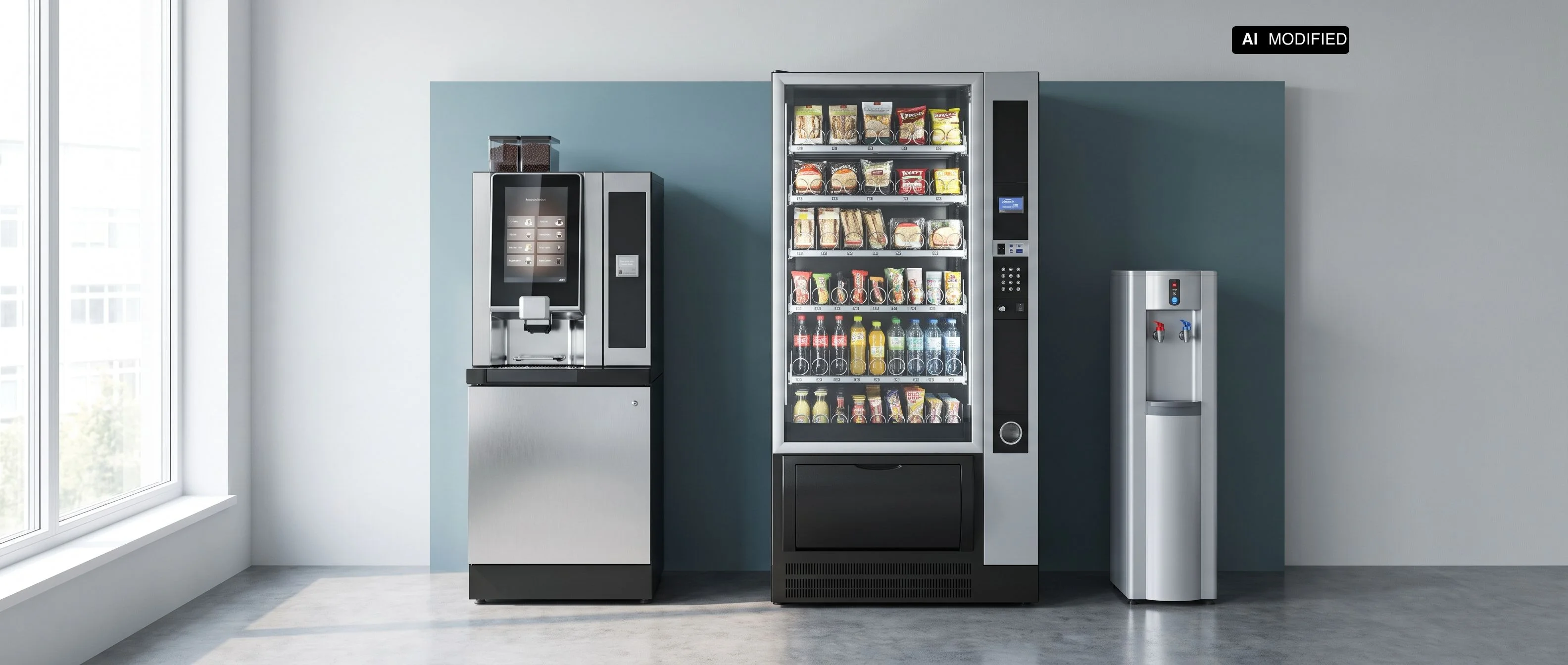
The right vending machine combination depends on usage, location and operating procedures, not on a blanket percentage formula. BDV market reports classify hot drinks, cold drinks and snacks or food as separate segments. They do not support a fixed product mix for an individual site. Water, snacks and hot drinks serve different purposes. (Source context: BDV Market Overview 2023)
At an office with regular staff attendance, a hot drinks machine as the main unit, a mains-connected water dispenser and a small snack offer may make sense. At a railway station, clinic or educational institution, however, fast service, contactless payment, chilled drinks and a wider product range matter. On smaller sites, a combination machine can reduce the number of units. That does not automatically make the setup simpler. Refrigeration, replenishment, cleaning and service access still need to work.
A reliable unit count cannot be set without knowing the number of users, opening hours, attendance days, shift pattern and replenishment schedule. Nor is there evidence for a universally applicable product mix within a machine. Planning should therefore start with consumption data and operating conditions. Hot drinks often generate the highest sales frequency. Water meets a recurring basic need. Snacks and food can increase basket size, but also raise the requirements for shelf life, temperature control and stock monitoring. The right combination is one whose demand, hygiene and logistics fit the specific site.
What roles do hot drinks, snacks and water play in the vending mix?
The available BDV and EVA market reports classify hot drinks, cold drinks and snacks/food as separate segments. The sources differ in reporting period and market definition, so I have not used them to infer a current percentage mix for individual sites. For operational planning, sales volumes, revenue by product range, spoilage and basket impact should be analysed separately. The BDV Market Overview 2023 provides industry context.
In many setups, hot drinks act as a traffic driver. BDV describes a shift from instant coffee alone to freshly brewed whole-bean offerings and greater premiumisation in the segment, for example in the vending market report by BDV and EVA. A wider drinks selection can broaden demand. At the same time, it increases cleaning and maintenance requirements, especially for milk systems, fresh milk components or multiple ingredients.
Water serves a different purpose. It is consumed not only during breaks but also regularly throughout the working day. BDV reports growth in mains-connected water systems offering still and sparkling water as well as flavoured or mineralised options, including in its review of VENDTRA 2025. A water dispenser needs a suitable installation, a hygiene plan and clear responsibilities. It is therefore not a straightforward replacement for a cold drinks machine.
Snacks and food complement drink purchases. Small meals, filled products, bars or savoury snacks can serve a different need from coffee at sites with short breaks. Chilled products, however, add requirements for temperature monitoring, use-by dates and replenishment planning. The mix should therefore not follow a one-third coffee, one-third water and one-third snacks formula. The available market data do not support such a standard allocation.
A sound basic principle for product planning is that hot drinks bring repeat traffic, water meets ongoing demand and snacks broaden the offer. The specific weighting depends on attendance, time of day and site type. An office with many short morning breaks needs different product groups from a public waiting area with changing footfall. Industry reports provide context but do not replace local analysis.
Which combination suits which type of site?
Offices and workplaces are an important setting for vending machines. The BDV report on the VENDTRA 2025 industry gathering also points to changes driven by hybrid working. For an office with, for example, 50 to 200 people regularly on site, the nominal employee count alone is not decisive. On-site days, shift times and how breaks are spread out determine whether a machine will be used to capacity.
One possible office setup is a hot drinks machine as the main unit, a mains-connected water dispenser and a small snack machine. Coffee and tea meet the most frequent demand. Water is available throughout the working day. Snacks complement short breaks without requiring a large food range with a high spoilage rate. Where attendance varies considerably, stock should be adjusted regularly based on actual sales.
Public sites such as railway stations, clinics, universities or government offices serve several types of demand at once. A hot drinks machine with contactless payment may sit alongside a chilled snack and cold drinks machine. A separate water offer or dispenser can complete the setup. Separate machines make it easier to manage the product range because drinks, snacks and hot drinks have different replenishment and maintenance routines. The EVA market study reports around five million vending machines, about five billion sales and industry revenue of 26.4 billion euros in Europe for the market period assessed through the end of 2024. These figures apply to Europe and do not promise a particular level of sales at any one site.
Small sites have different requirements. A table-top hot drinks machine, combined with a water solution and a small snack module, can take up less floor space than several large freestanding machines. A combination machine can also save space. The operator still needs to check that doors, refrigerated areas, refill hatches and service areas remain accessible. A machine that fits the space but makes restocking awkward creates extra work during operation.
For production sites and shift-based workplaces, the timing of demand matters. When several shifts share the same break time, short-lived peaks can occur. In that case, payment needs to be quick and replenishment should be possible outside peak periods. At schools or universities, price level, product size and break windows may matter more than a broad premium range. Clinics also serve visitors and staff, and may need to offer products around the clock.
These site types do not provide a basis for setting specific capacity. There is no shared reference for user numbers, opening hours, sales data and replenishment intervals. Planning should therefore start with a base setup and be adjusted after a few weeks of operation using actual sales, out-of-stocks and write-offs.
When do separate machines or a combination machine make sense?
According to BDV, demand for combined snack and drinks solutions has increased. The association reports that combination vending machines have grown by 30 percent since 2019, including in its vending market report. This trend points to a practical need for space-saving setups. It does not prove that a combination machine is the better choice at every site.
The first scenario is an office with limited floor space and regular daytime use. A combination machine can bring hot drinks, chilled products or snacks closer together. Its advantages are a compact footprint and a shared point of use. Operational planning still needs to establish whether the machine has enough refrigeration capacity, how often it will be replenished and whether service staff can access every module. A breakdown could affect several product groups at once. With separate machines, part of the offer remains available if another machine is being serviced.
The second scenario is a public site with high and variable footfall. Separate machines often make product range management easier here. Cold drinks and snacks can be stocked according to demand and temperature requirements. The hot drinks machine can be configured for fast service and a clearly limited selection. A combination machine reduces the number of cabinets but brings different operating requirements together in one system. Service access, waste bins, refrigeration and payment module need to be considered together.
The third scenario is a small site with irregular demand. A table-top hot drinks machine, water dispenser and small snack offer may be sufficient. A large combination machine could hold more products than the site can sell. Unsold chilled products lead to write-offs and tie up capital. A small range with frequent checks may make better commercial sense than fully stocking the machine.
Replenishment logistics are often an underestimated factor in the decision. With separate machines, staff can visit only the machine that is low on stock. A combination machine centralises access but requires orderly stock checks across multiple product zones. Replenishment time depends on the route, storage location, compartment layout and access arrangements. The research found no reliable standard figures for minutes per refill.
Refrigeration also needs careful consideration. Hot drinks require different components and cleaning routines from chilled snacks. A water dispenser, in turn, needs a suitable connection and its own hygiene and maintenance plan. The decision should therefore account for more than the floor space. It needs to cover the entire process: storage, transport, loading, temperature checks, cleaning, repairs and machine access.
Hygiene, drinking water and the cold chain in operation
Selecting a chilled machine is not enough when offering snacks and food. Regulation (EC) No 852/2004 on the hygiene of foodstuffs requires food businesses to implement procedures based on HACCP principles. These include hazard analysis, appropriate control measures, temperature management, cleaning and record-keeping. For vending operations, this means planning the product range and operating process together.
The cold chain does not begin only when products are loaded. Storage, transport, loading, the dispensing area and monitoring all need to be considered. The temperature required for a particular food depends on the product and applicable requirements. A blanket temperature figure for all snacks would therefore not be reliable. Instead, the operator needs documented limits for each product group and a procedure for handling deviations.
Chapter III of Annex II to the regulation sets requirements for vending machines. They must be sited, designed, cleaned and maintained in a way that prevents contamination. Food contact surfaces must be in good condition and easy to clean or disinfect. The German version of the regulation is therefore relevant when checking compartments, dispensing areas and contact surfaces in practice.
Hot drinks machines also involve drink residues, milk components, powders and water circuits. A cleaning plan should specify tasks, responsibilities and records. General statements such as clean daily are not enough for reliable operational planning. Specific intervals depend on the machine, product, usage and manufacturer instructions. The research found no universally applicable filter replacement or inspection intervals for water dispensers.
Mains-connected water systems are also subject to drinking water law. The German Drinking Water Ordinance defines the operator of a water supply system as an entrepreneur or other holder and sets requirements for supplying drinking water, as well as for treatment substances and disinfection procedures. Before commissioning, responsibilities, connection, materials, treatment, maintenance and records must therefore be clarified.
The German Environment Agency describes the safe management of drinking water supplies as a risk-based approach from abstraction or treatment through to the point of use. For a water dispenser, this includes pipes, filters, fittings, periods of stagnation, cleaning and maintenance. The German Environment Agency also points out that drinking water quality requirements apply regardless of the size, volume supplied or organisational form, as shown in its guidance on small drinking water supplies.
Stagnation may warrant particular attention at sites with low footfall. For food use and drinking directly, the German Environment Agency recommends fresh, cool tap water rather than water that has been standing, see its guidance on the final metres of the drinking water supply. A water dispenser should therefore be selected on more than its dispensing capacity. Flushing procedures, water use, connection and maintenance must suit the site.
How can the vending machine combination be planned commercially and operationally?
The BDV Market Overview 2023 provides industry context on vending machines and product ranges, but no direct sales forecast for an individual business. For site planning, what matters is the business's own sales data, attendance, opening hours and the number of actual usage occasions.
A commercial assessment should start by reviewing the product range. Which hot drinks are selling? Which type of water is in demand? Which snacks sell regularly? Sales, out-of-stocks, write-offs and time of day should be analysed separately. A product with high sales can secure footfall. A product with a higher unit price can increase revenue. A slow-moving snack still carries stock and spoilage risk.
Cashless payment should be part of the technical assessment for new setups. The EVA reports that 85 percent of pay-vend machines in Europe are equipped with cashless payment systems. An older German BDV market overview put the share of cashless vending machines at around 50 percent; see the BDV 2023 data overview. These figures relate to different markets and reporting periods. They must not be combined to calculate a single German market share. Before purchase, establish which payment methods the specific system supports, what fees apply and who is responsible for technical support.
Replenishment should be costed as a work process. This includes travelling or walking to storage, collecting stock, checking use-by dates, loading products, cleaning visible areas and keeping records. Chilled products also require temperature checks. For water dispensers, connections, filters and hygiene records are central. A combination machine does not automatically reduce the effort involved in these tasks.
Maintenance costs cannot be reliably estimated as a flat rate without machine data, a service contract and usage information. Grinders, brewing units, milk systems or water circuits may be relevant for hot drinks machines. Chilled machines also require attention to refrigeration systems and temperature monitoring. Depending on the installation, a water dispenser needs filters, fittings and hygienic maintenance. Quotes should therefore itemise service, consumables, spare parts, payment modules and call-out charges separately.
No percentage-based product mix is supported by evidence. Nor is there a universally applicable capacity recommendation for a combination of hot drinks, snacks and water. The data required differ significantly between a 24-hour site, an office with hybrid attendance and a small workshop. A combination becomes commercially manageable only when the operator monitors utilisation and adjusts the product range, replenishment and number of machines based on actual results.
Practical recommendations
- Collect site data before selecting equipment. Record the number of users, actual attendance, opening hours, shifts, break times and expected peaks. Nominal employee numbers are not enough, because hybrid working and changing occupancy affect demand.
- Assess hot drinks as a starting point. Hot drinks can be assessed as a starting point for site planning. A blanket market share is not a sales guarantee. For the specific site, use existing sales data or run a time-limited trial.
- Assess water separately. For a mains-connected water dispenser, clarify the connection, responsibilities, filters, stagnation periods, cleaning and maintenance before commissioning. The requirements of the German Drinking Water Ordinance and the risk-based approach of the German Environment Agency belong in the operating plan.
- Start with small quantities of snacks. A limited range reduces write-offs and makes it easier to monitor use-by dates and the cold chain. Expand the selection only once individual product groups are selling regularly.
- Compare separate machines with a combination machine based on workflows. Floor space is not the only factor. Check replenishment routes, access to chilled areas, service hatches, breakdown risk and whether maintenance can be carried out separately.
- Agree cashless payment terms in the contract. Before ordering, document supported payment methods, fees, data connection, settlement and fault handling in writing. The EVA figure of 85 percent for Europe describes cashless payment penetration among pay-vend machines; it does not automatically describe the equipment in every machine on offer.
- Document HACCP-related procedures. For snacks, the operating plan should cover temperature monitoring, cleaning, use-by dates, the cold chain and corrective actions. For water dispensers, flushing, filters, maintenance and responsibilities must be traceable.
- Review performance after a few weeks of operation. Sales by product, out-of-stocks, write-offs, cleaning effort and faults provide a better basis for decisions than a general product mix formula. Adjust the combination based on these data.
Conclusion
A balanced vending machine combination does not automatically consist of three equal categories. Hot drinks, water and snacks serve different use cases. Which category will drive the site needs to be established using local sales, attendance, opening hours and product losses. Industry reports provide context but do not replace measurement at the site.
An office may suit a hot drinks machine with a water dispenser and a small snack offer. Public sites often need easily accessible, cashless and chilled options. Small sites may benefit from a combination machine or a table-top solution. The decision still depends on replenishment, refrigeration, service access and breakdown risk.
Hygiene cannot be added as an afterthought. HACCP, the cold chain and easily cleaned food contact surfaces must be addressed when offering snacks. Water also brings requirements under the Drinking Water Ordinance, operator responsibilities and risk-based management through to the point of use.
Reliable planning starts with site data, not a blanket percentage mix. By regularly reviewing sales, attendance, maintenance and write-offs, operators can adjust the combination step by step. This creates an offer that brings together footfall, supply and operating effort at the specific site.
Latest on this topic
- EUDR and coffee vending machines: what the EU Deforestation Regulation requires before it appliesMarket Analysis · October 13, 2026
- Commodity Monitor October 2026: Coffee eases, cocoa and sugar in focusMarket Analysis · October 13, 2026
- AI in Vending in 2026: Predictive Maintenance and Assortment Optimisation — How to Use the TechnologyMarket Analysis · October 2, 2026
More guides
 KI Modified
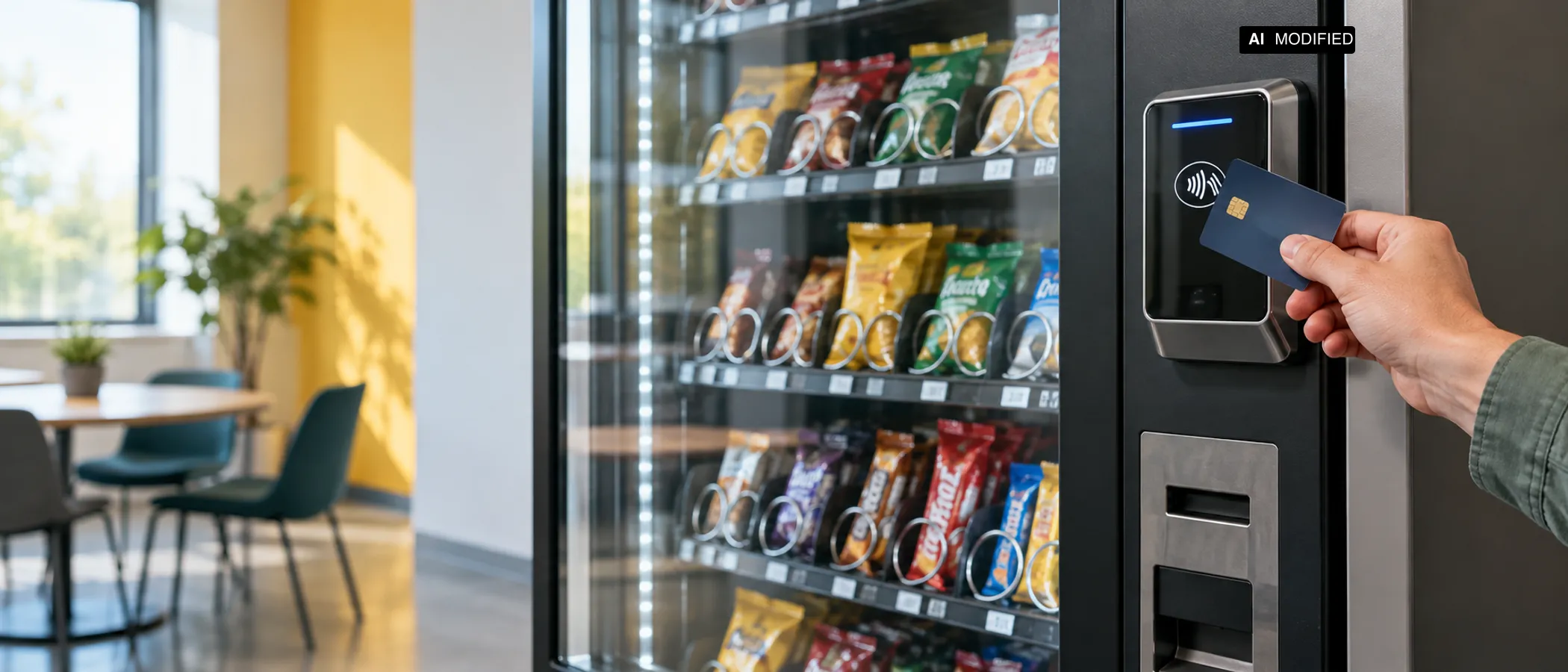
Retrofit cashless payment to a vending machine: MDB 4.3, costs and selection criteria
What do you need to retrofit a vending machine for cashless payment? This guide explains MDB 4.3, compatibility, terminal selection, installation, ongoing costs and typical checks, without making unsupported price promises.
 KI Modified
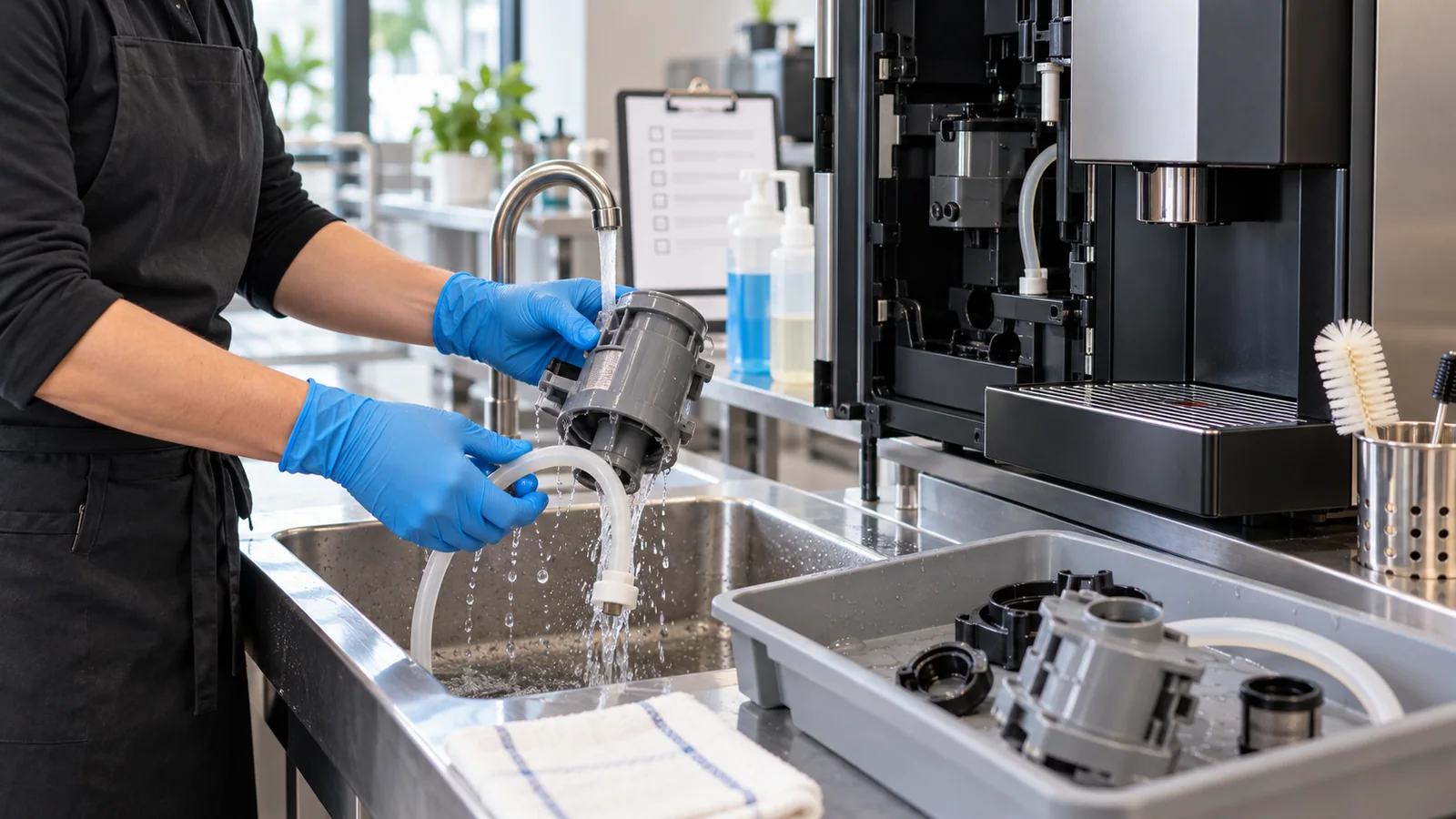
Hygiene plan for hot drinks vending machines: cleaning, HACCP and records
What cleaning obligations apply to hot drinks vending machines, which intervals must operators set themselves based on risk, and what records should the hygiene plan include? This guide distinguishes legal requirements, HACCP practice and standards guidance without prescribing blanket cleaning intervals.
 KI Modified
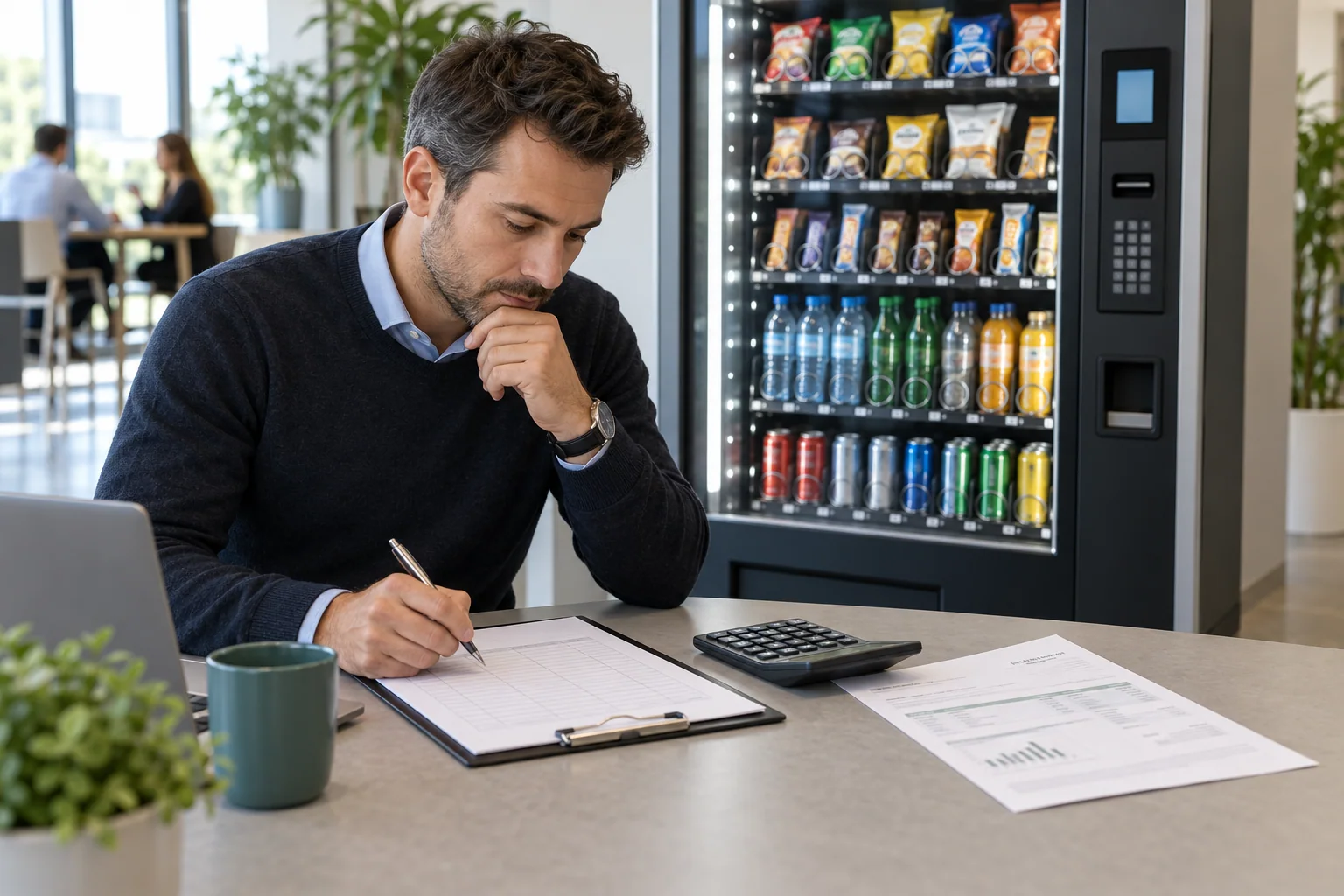
Calculating the Total Cost of a Vending Machine: TCO, Operating Costs and Payback
What is the total cost of a vending machine? This guide shows how to calculate acquisition, goods, electricity, payment, maintenance and location costs as TCO, and how three scenarios provide a realistic picture of payback.