
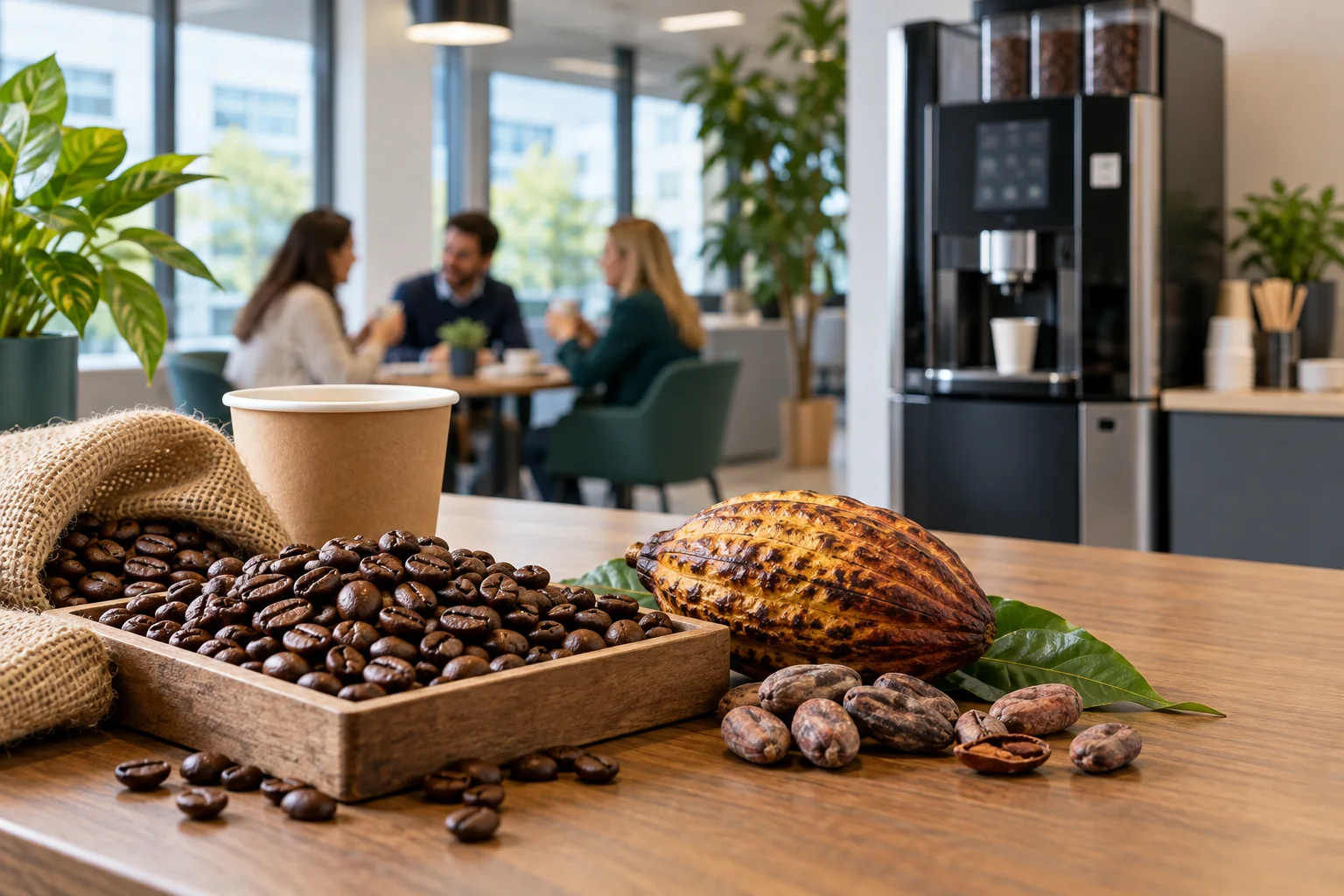
 KI Modified
Market Analysis
Commodity Monitor October 2026: Coffee eases, cocoa and sugar in focus
On this page
This article was created with AI assistance and checked automatically. A human review before publication is not documented.
The latest ICO monthly report shows a decline in the international green coffee benchmark price. For operators, this is a reason to review supplier offers and pricing formulas, but it is not evidence that roasted beans or drinks from vending machines will automatically become cheaper. This article distinguishes green coffee indicators, Fairtrade cocoa minimum prices and the costs of a specific vending offer.
Coffee: benchmark price lower in September
The International Coffee Organization (ICO) puts the Composite Indicator Price (I-CIP) at an average of 262.18 US cents per pound for September 2026. That is 8.7 per cent lower than in August. According to the ICO, all four group indicators also fell month on month. Robusta stood at 167.49 US cents per pound, 7.3 per cent below the August figure. The report cites factors including the increasing availability of coffee from Brazil’s harvest and expectations of greater supply.
These are green coffee benchmark prices. Vending operators typically buy roasted blends or other processed products. Their purchase price also depends on the proportion of each variety, quality, roasting, packaging, logistics, exchange rates, financing, the supply contract and the supplier’s margin. Without knowing these factors, the I-CIP cannot be used to calculate a specific per-kilogram price for your blend or a price per cup. A decline in the commodity market is also not necessarily passed on immediately or in full.
The ICO reports that 10.94 million bags of green coffee beans were exported worldwide in August 2026, 15.6 per cent more than in August 2025. For the first eleven months of the 2025/26 coffee year, Arabica accounted for 59.6 per cent of green coffee exports; in the comparable period a year earlier, the figure was 63.5 per cent. That is a difference of 3.9 percentage points. These figures describe the global market and the composition of exports, not the recipe or price of a particular vending blend.
Cocoa: consider Fairtrade minimum prices separately
For deliveries from 1 October 2026, Fairtrade International lists a minimum price of 3,500 US dollars per tonne for Ghana and 3,200 euros per tonne for Côte d’Ivoire within the scope described there. These are Fairtrade minimum prices for conventional cocoa beans from certified small producer organisations, not exchange prices or general market prices. The announcement lists Fairtrade premiums and Organic Differentials separately. Whether these figures apply to a specific offer depends on the origin, certification, product and contract chain.
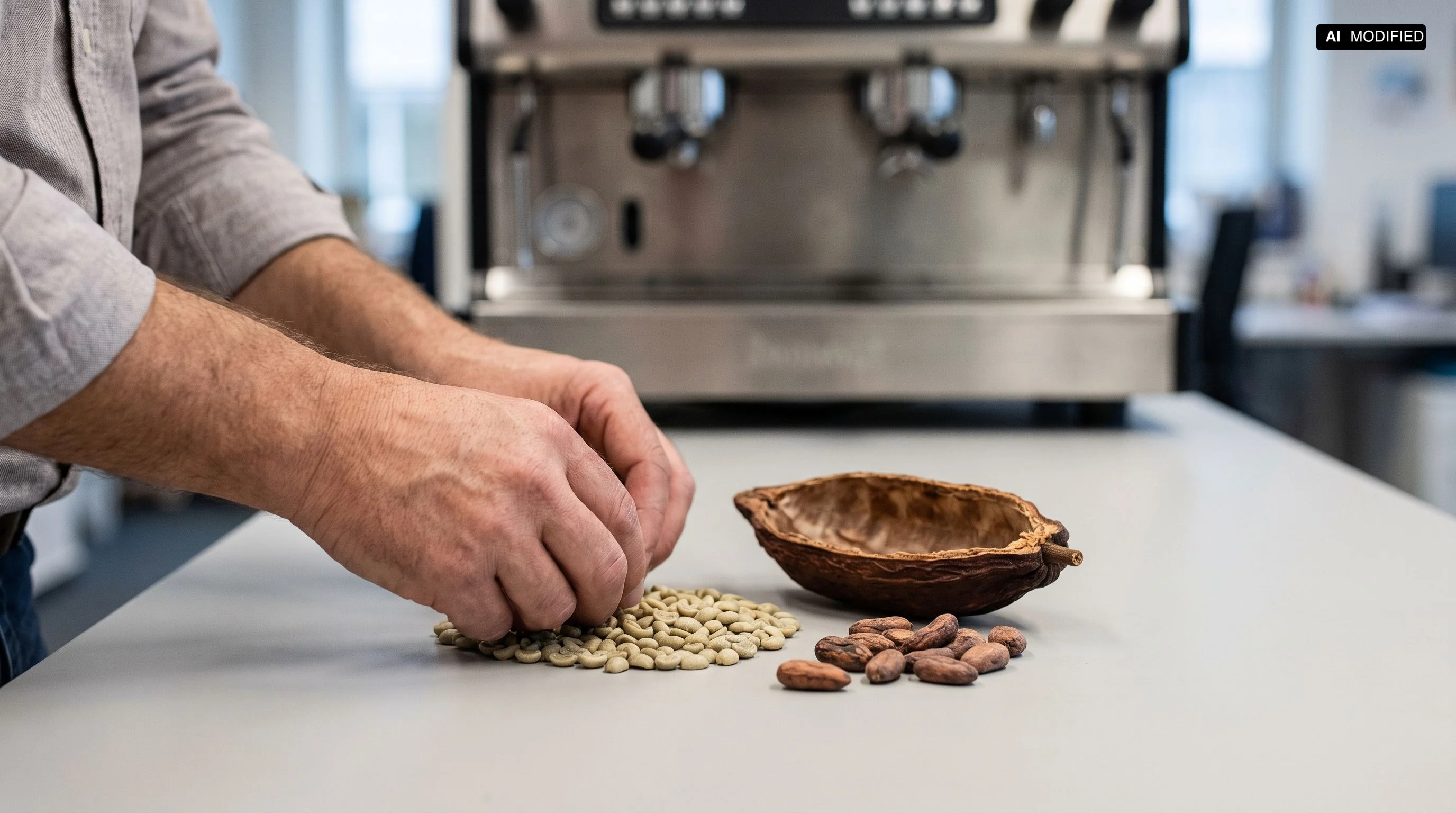
Operators should therefore avoid combining these price types into a single figure. When purchasing cocoa or chocolate products, check the country of origin, certification status, currency, product form and any separately listed surcharges in the offer. A minimum price in the Fairtrade system does not directly indicate the selling price of a snack or hot drink from a vending machine.
What procurement and operations can check now
- Pricing formula and term: Is the supply price fixed, linked to an index or renegotiated regularly? Which index and period are actually used?
- Blend and product: Are the Arabica/Robusta proportions, cocoa content, quality and recipe documented? Compare only offers with the same product specification.
- Origin and certification: For cocoa, Ghana and Côte d’Ivoire, Fairtrade status and any premiums should be listed separately.
- Additional costs: Packaging, freight, payment terms and minimum order quantities can outweigh changes in a commodity indicator.
- Impact per cup: Calculate using the actual grams used per serving and the contracted price per kilogram. The exchange or benchmark price alone is not a reliable cost-per-cup figure.
- Pass-through to selling prices: Review contribution margin and sales data before changing vending machine prices. A falling benchmark alone does not justify an automatic price cut or increase.
The European Vending and Coffee Service Association (EVA) published figures for the European vending and office coffee service market based on data at the end of 2024: around five million machines, approximately five billion sales and industry revenue of 26.4 billion euros. EVA also notes that the figures come from an industry report; they are neither current Germany-specific statistics for October 2026 nor evidence of the cost trends facing an individual operator. They simply show why small changes in recipes and terms can have commercial significance across a large installed base of vending machines.
Context
The ICO I-CIP fell in September 2026 compared with August, but the data do not show that purchasing roasted vending blends has automatically become less expensive. Fairtrade cocoa minimum prices vary by origin and apply only within the certified scope described. This article does not cite a current, verifiable primary source for sugar, so no sugar figure is given.
A sound procurement decision requires reviewing the index, contract formula, product data, origin, currency and additional costs together. Only the specific supplier price, combined with consumption per serving, makes it possible to calculate a verifiable cost per cup. Last updated: 14 October 2026.
Sources
Go deeper: related guides
- Cup cost at coffee machines: What a cup really costs the operatorEconomics & TCO · 14 min read
- Retrofit cashless payment to a vending machine: MDB 4.3, costs and selection criteriaFundamentals & Getting Started · 17 min read
- The Ideal Vending Machine Mix: Combining Hot Drinks, Snacks and WaterFundamentals & Getting Started · 14 min read
More news
 KI Modified
EUDR and coffee vending machines: what the EU Deforestation Regulation requires before it applies
Preparing for the EUDR affects coffee vending operators mainly through coffee products, supply chain evidence and business roles—not the machines themselves. This article explains the deadlines from 30 December 2026 and 30 June 2027, and outlines the data operators should start collecting now.
 KI Modified
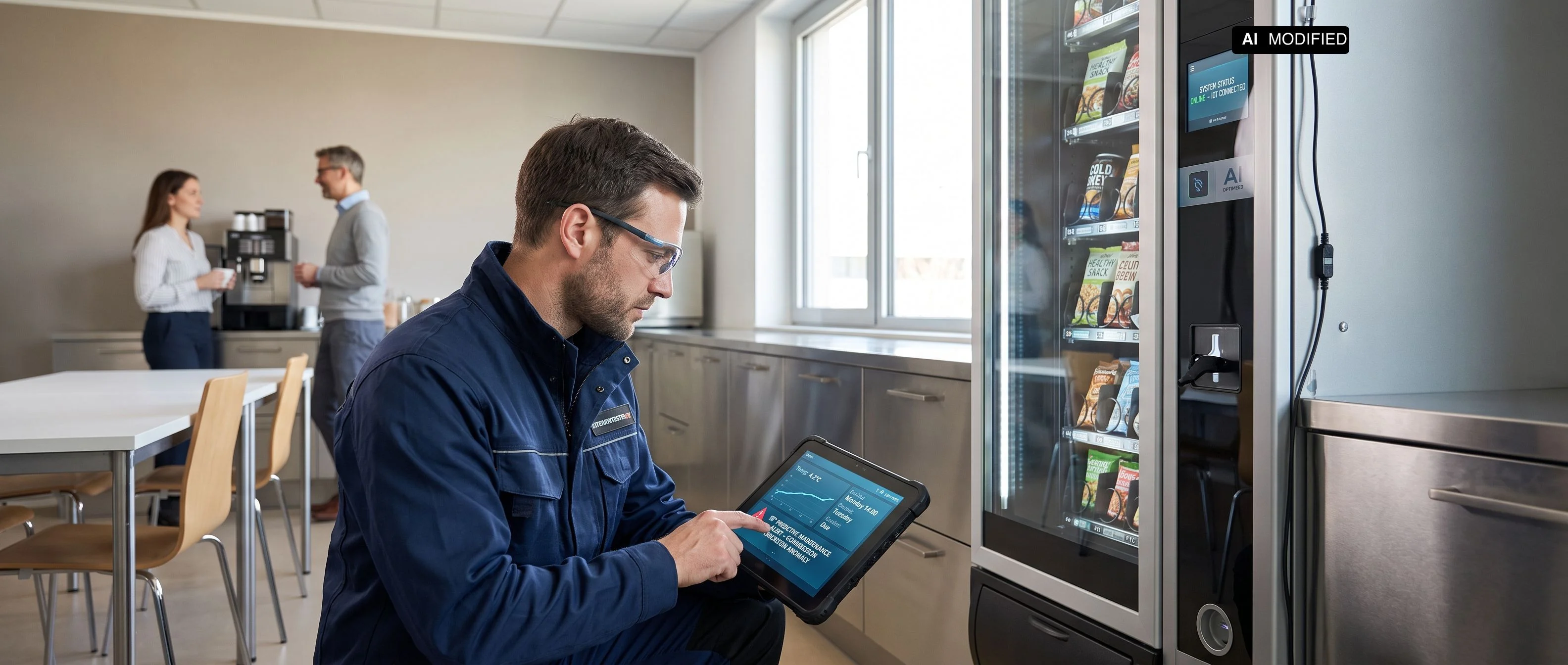
AI in Vending in 2026: Predictive Maintenance and Assortment Optimisation — How to Use the Technology
With 621,000 vending machines in Germany, revenue growth of 18.7% and the EU AI Act in force, AI applications in vending are no longer pilot projects in 2026. Find out which three areas are production-ready, what they deliver in practice and how to get started.
 KI Modified
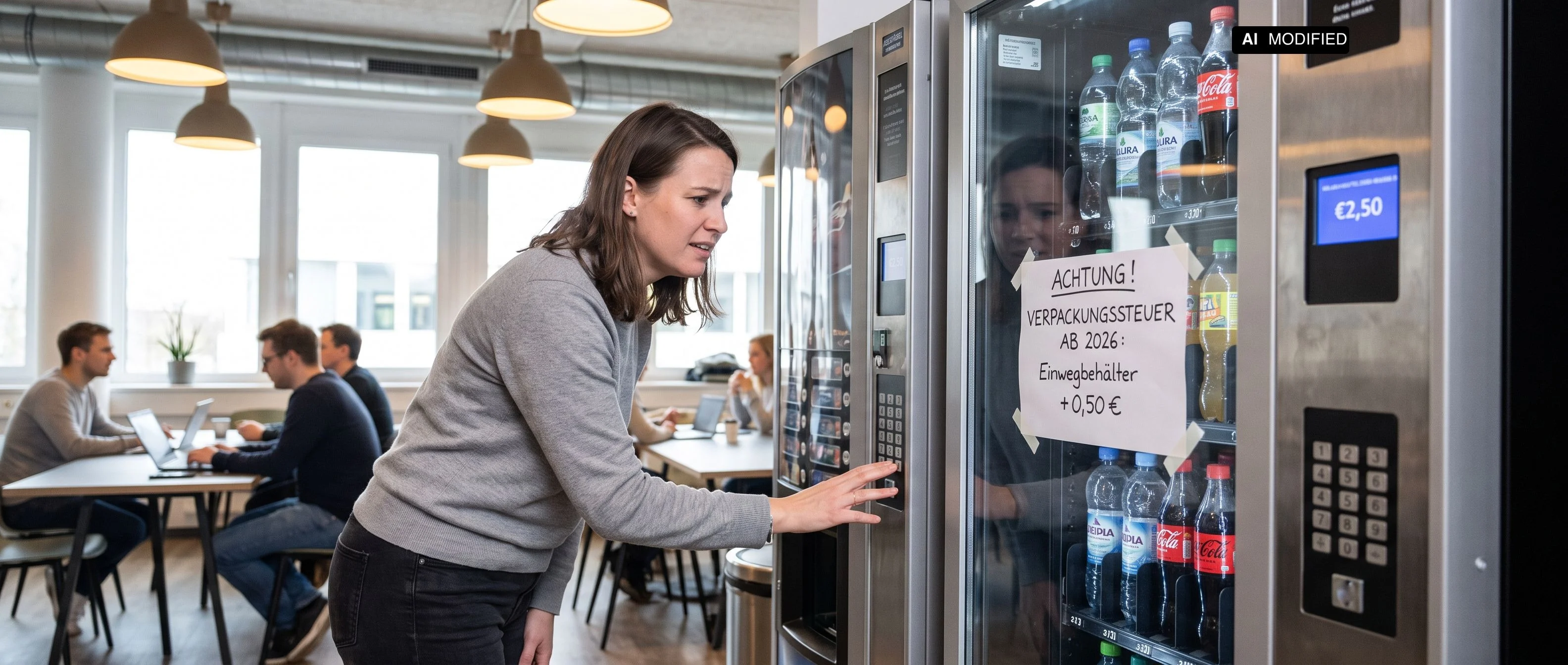
Packaging Tax 2026: Freiburg and Tübingen – where vending machines are getting more expensive
Since 1 January 2026, Freiburg has levied a packaging tax on single-use containers: 50 cents per cup, payable by the vending operator. Which machines are specifically affected, how much the tax adds per vend, and how the regulatory trend is developing across Germany.