
Compliance & News
EU deposit obligation until 2029: Why 2026 is the reference year
On this page
The EU Packaging and Packaging Waste Regulation has been in force since 12 August 2026. Article 50 requires Member States to establish deposit and take-back systems for single-use plastic beverage bottles and single-use metal beverage containers by 1 January 2029. Germany has had such a system for years. The regulation is nonetheless of interest here, for three reasons set out in paragraphs 4, 5 and 8.
We have read the regulation text, not the press releases about it.
What Article 50 requires
Paragraph 1 sets a collection target: by 1 January 2029, at least 90 per cent by weight per year, based on packaging placed on the market for the first time in a calendar year in that Member State. This covers single-use plastic beverage bottles with a capacity of up to three litres and single-use metal beverage containers up to three litres.
Paragraph 2 specifies the means: to achieve this target, Member States must ensure that deposit and take-back systems for these formats are established and a deposit is collected at the point of sale.
This has been the case in Germany for years. The requirement in Paragraph 2 is therefore not new here, but a confirmation.
Why 2026 is the reference year
The sentence that gives this regulation a date headline appears in Paragraph 5 Letter a. A Member State may be exempted from the obligation in Paragraph 2 if the separate collection rate reported to the Commission for the packaging format in question is, by weight, 80 per cent or more of the corresponding packaging placed on the market for the first time in that Member State's territory in calendar year 2026.
This year is therefore the measurement year. What is collected in 2026 determines whether a Member State can manage without a mandatory deposit system. According to Letter b, the exemption request must be submitted to the Commission by 1 January 2028, together with an implementation plan containing a strategy with concrete measures and a timetable to achieve the 90 per cent target.
One detail from Paragraph 1 deserves attention because it concerns the measurement basis. Member States may use the mass of packaging waste arising from packaging placed on the market to calculate the targets — in accordance with implementing acts that the Commission will issue under Article 56 Paragraph 7 Letter a. The target is thus set, but the procedure for calculating it is not yet complete. Whether an operator narrowly reaches or narrowly misses the 80 per cent threshold for 2026 therefore also depends on a calculation rule that was not definitively in place at the time of measurement.
For operators in Germany this is not a direct obligation, but market information. Countries that remain below 80 per cent in 2026 will need to build a deposit system by 2029 — and that means procurement of reverse vending technology on a scale the market has not seen in recent years. Anyone planning lead times for reverse vending machines should factor this effect into their calculations.
Paragraph 7 also introduces a fallback rule: if the rate falls below 90 per cent by weight in three consecutive calendar years, the Commission notifies the Member State that the exemption no longer applies. The deposit system must then be established by 1 January of the second calendar year following this notification. An exemption is therefore not a permanent state, but a provisional one.
The list few know about
Paragraph 4 exempts packaging for certain beverages from the deposit requirement. The list is precise and worth reviewing, since it covers product categories that do occur in the vending business:
- Categories of wine-sector products under Annex VII Part II of Regulation (EU) No. 1308/2013, and aromatised wine products as defined in Regulation (EU) No. 251/2014.
- Products similar to wine and aromatised wine products from fruits other than grapes and from vegetables, and other fermented beverages of CN code 2206 00.
- Alcohol-based alcoholic beverages of CN position 2208.
- Milk and milk products under Annex I Part XVI of Regulation (EU) No. 1308/2013.
There is also a technical exemption: Member States may exclude single-use plastic beverage bottles and single-use metal beverage containers with a capacity of less than 0.1 litres from participation if this is technically not feasible.
For food service operations, Paragraph 3 contains a separate exemption from the deposit requirement, but it depends on three conditions being met simultaneously: the deposit-bearing packaging is opened on the premises, product consumption takes place on the premises, and the empty deposit-bearing packaging is returned on the food service premises. If any one of these three conditions is not met, the exemption does not apply.
Glass and beverage cartons: intention, not obligation
Paragraph 8 directly affects equipment selection, and it is notably weakly worded. Member States shall endeavour to establish and maintain deposit and take-back systems, in particular for single-use glass beverage bottles and beverage cartons.
"Shall endeavour" is not an obligation. When procuring a reverse vending machine today, the decision about glass and beverage cartons is therefore driven by business considerations, not regulation — and this decision cannot be changed later via software, but is determined by the mechanical design.
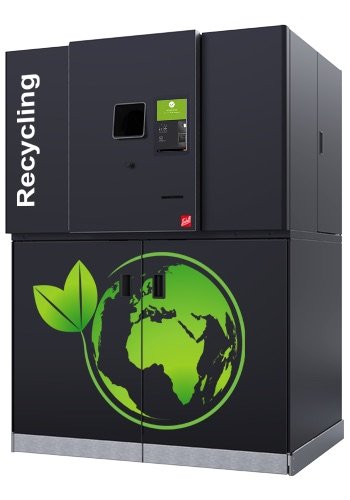
In our test reports, the difference can be seen in two machines. The Sielaff SiCompact 2020 base model accepts single-use PET and cans, but no glass; only the XL version additionally accepts reusable containers, glass, beverage cartons and coded cups. The TOMRA T9 accepts cans, plastic bottles, glass bottles and crates according to its datasheet, although crate handling is tied to the BC model. If you need that material category later, you buy a different machine, not an update.
What to do now
- Review which of the beverage categories listed in Paragraph 4 are in your product range. For wine, spirits and milk products, the deposit requirement does not apply under the regulation.
- For food service locations, check whether all three conditions from Paragraph 3 are actually met. Two are not enough.
- When making upcoming procurement decisions, consciously decide on glass and beverage carton acceptance, as this depends on mechanical design.
- Request lead times for reverse vending technology earlier than usual. The build-up requirement in other Member States by 2029 affects the same manufacturers.
Frequently asked questions
- Does anything change for operators in Germany now?
- Not the deposit requirement itself. Germany already collects a deposit at the point of sale and thus meets Paragraph 2. What is new is the uniform exemption list for all of Europe in Paragraph 4, the food service exemption in Paragraph 3, and the clarification in Paragraph 8 that glass and beverage cartons are only a best-efforts obligation.
- Why is 2026 important if the deadline is 2029?
- Because 2026 is the reference year for the exemption. Under Paragraph 5 Letter a, a Member State may only be exempted from the requirement if its reported separate collection rate for the respective format reaches at least 80 per cent by weight for packaging placed on the market for the first time in 2026. The request must be submitted by 1 January 2028.
- Does the deposit requirement also apply to glass bottles?
- Not according to Paragraphs 1 and 2. What is mandatory is single-use plastic beverage bottles and single-use metal beverage containers, each with a capacity of up to three litres. For single-use glass beverage bottles and beverage cartons, Paragraph 8 merely states that Member States shall endeavour to establish appropriate systems.
Go deeper: related guides
- Reusable cups at coffee vending machines: what §60 VerpackDG requires from the deviceLegal & Compliance · 11 min read
- Accessibility at vending machines: what the BFSG requires — and what it doesn'tLegal & Compliance · 11 min read
- Single-use plastic levy on coffee vending machines: Who really pays itLegal & Compliance · 14 min read
More news
 KI Modified
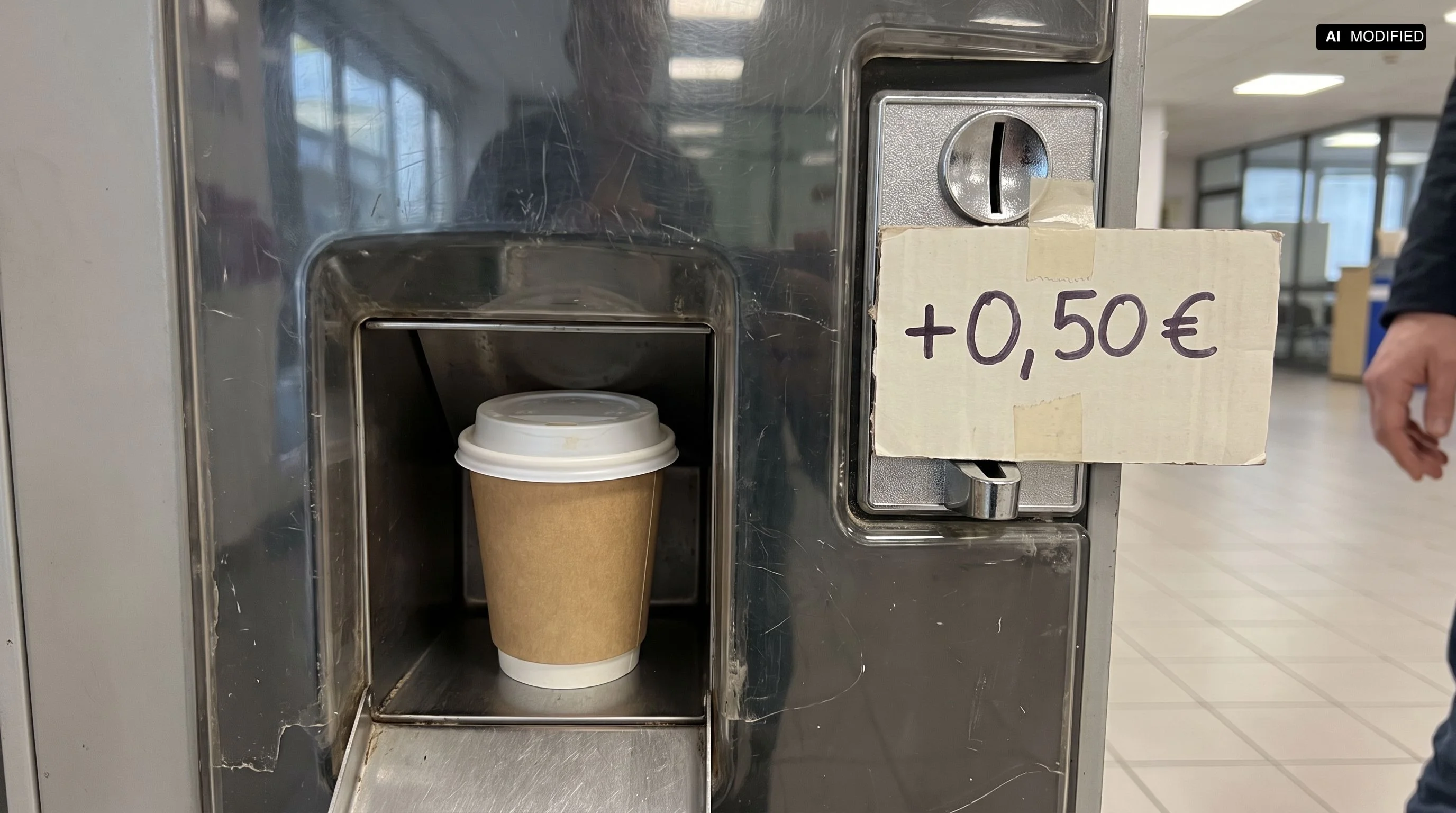
Packaging tax Freiburg 2026: 50 cents per cup – also for vending machines
From 1 January 2026, every single-use cup and every single-use food container for immediate consumption in Freiburg is subject to a 50-cent tax, single-use cutlery 20 cents – for the first time, the city has explicitly clarified in its interpretation guidance that this also applies to coffee and snack vending machines. What this means in practice for operators, and why the legal dispute over the Tübingen model has since been settled.
 KI Modified
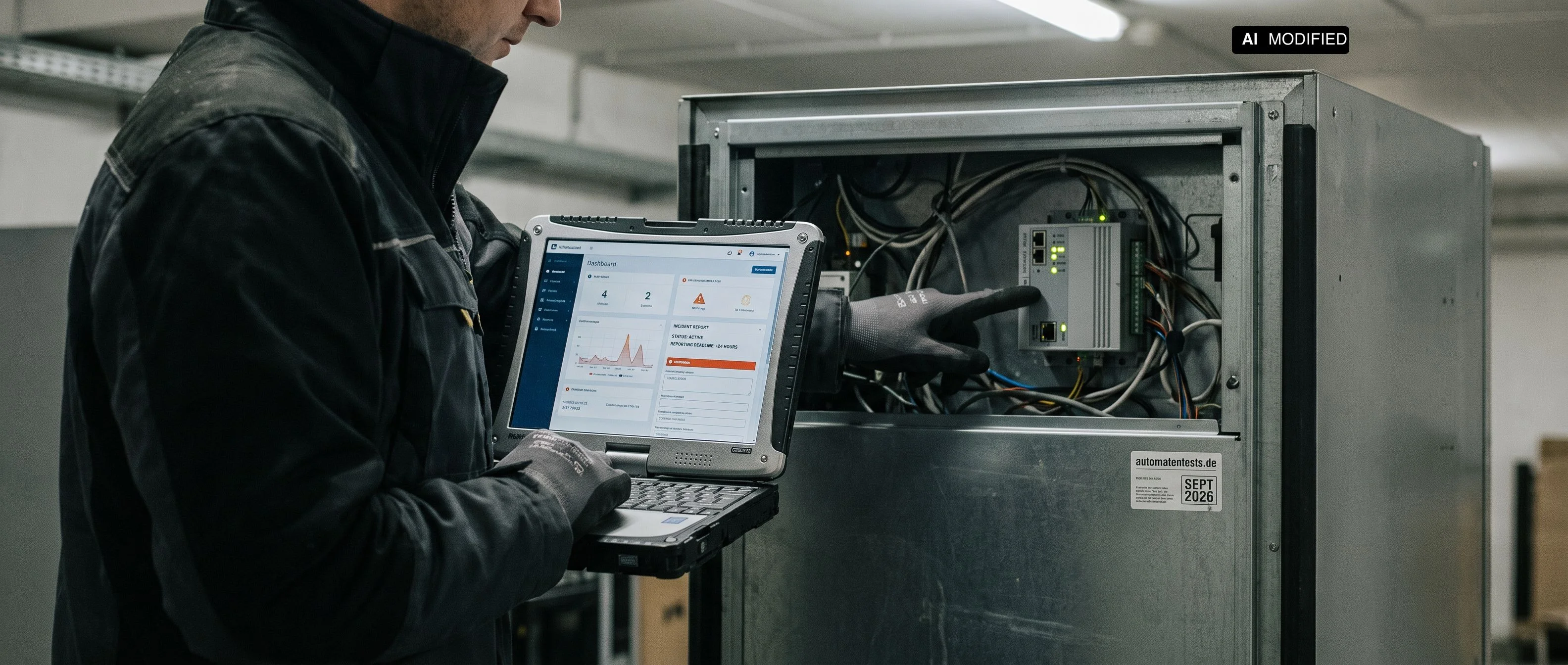
Cyber Resilience Act from 11 September 2026: What it means for connected vending machines
From 11 September 2026, the notification obligations of the Cyber Resilience Act apply. What this means for connected vending machines in the installed base — and what it does not.
 KI Modified
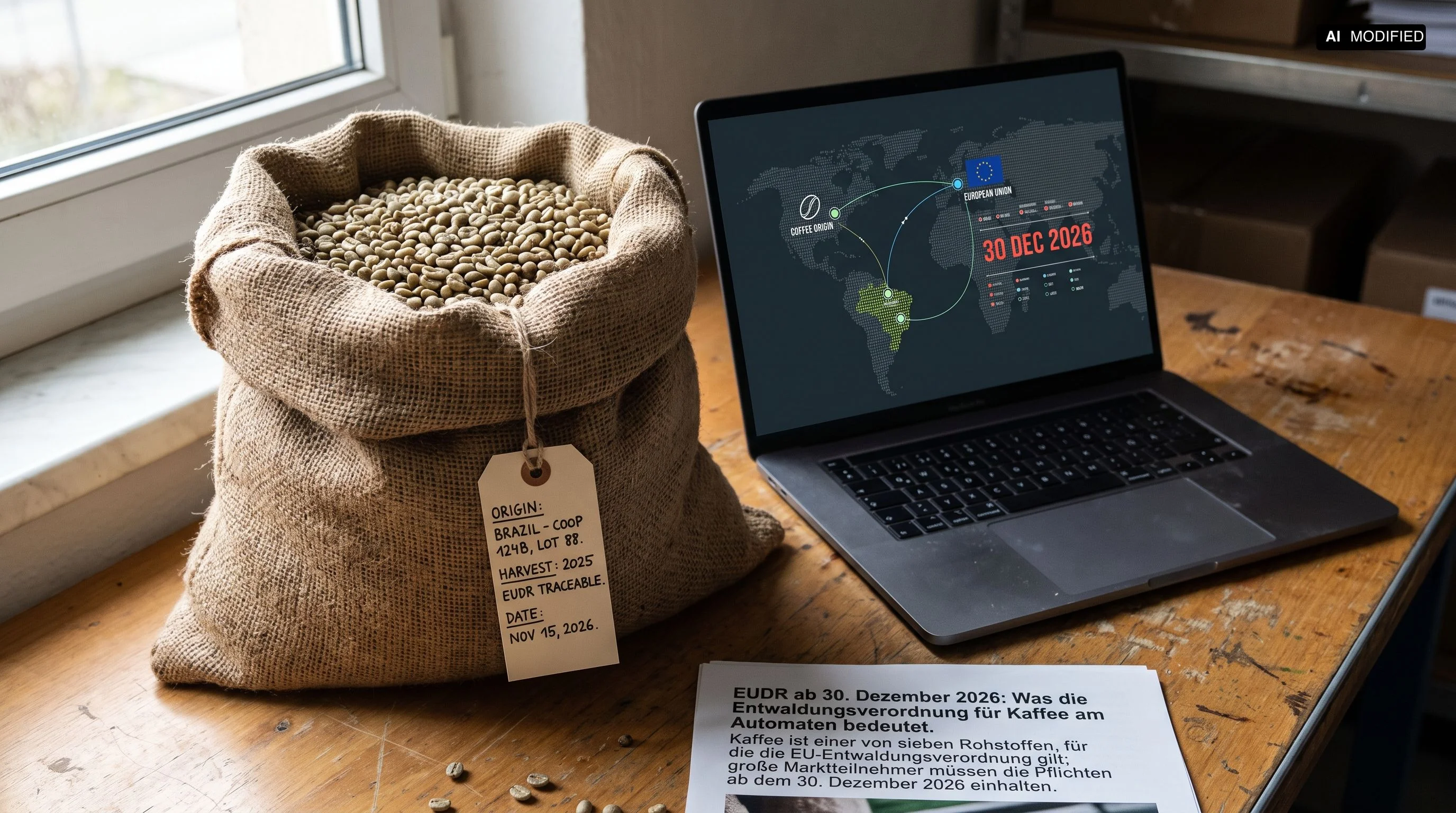
EUDR from 30 December 2026: What the Deforestation Regulation means for coffee in vending machines
The EU Deforestation Regulation takes effect on 30 December 2026 for coffee too. What vending machine operators need from their suppliers and what they don't need to do themselves.