
Legal & Compliance
Accessibility at vending machines: what the BFSG requires — and what it doesn't
 KI Modified
On this page
- The essentials at a glance
- What the law lists — and what it does not list
- The exception that affects nearly every operator
- What the regulation specifically requires
- The transition periods that are often cited incorrectly
- How to ensure this in your procurement
- The exit that costs more than it appears
- Where the law's wording does not help further
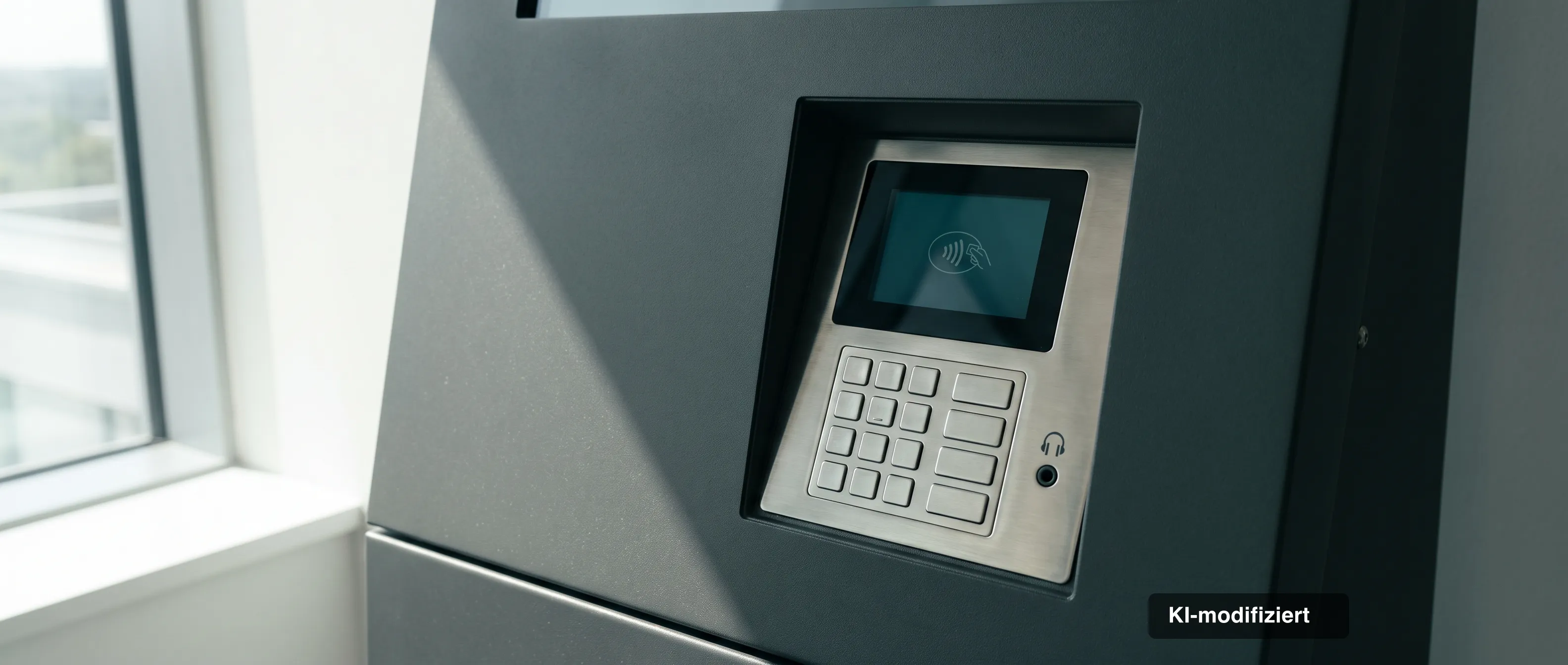
A coffee machine, snack machine, deposit return machine and parcel locker are not covered products under the Accessibility Enhancement Act (BFSG). The card payment terminal in the device is one. This distinction determines whether a procurement falls under the law, and it appears in almost none of the guides on this topic available online.
We therefore have not summarized what others write, but instead read the legislation and its associated regulation. What is presented here is anchored in the wording and cited by section number, so you can reference it in your procurement negotiations.
The essentials at a glance
- The BFSG exhaustively lists in § 1 section 2 number 2 which self-service terminals are covered: payment terminals, ATMs, ticket machines, check-in machines and interactive terminals for information provision.
- Vending machines, coffee machines, return machines and parcel lockers are not listed there.
- The integrated or retrofitted payment terminal is covered, including associated hardware and software.
- The reference date is placing on the market after 28 June 2025, not installation.
- The transition period for existing terminals does not end uniformly in 2040, but at most fifteen years after the individual device is put into service.
- Anyone who accepts public or private funding for accessibility improvements loses the right to claim disproportionate burden.
What the law lists — and what it does not list
§ 1 section 2 of the BFSG names five product groups for which the law applies, provided they are placed on the market after 28 June 2025. Number 2 concerns self-service terminals and is divided into two parts.
Letter a lists payment terminals and the hardware and software belonging to these.
Letter b lists self-service terminals intended for providing services covered by this law, and lists four: ATMs, ticket machines, check-in machines and interactive self-service terminals for information provision. Excepted are terminals that are built in as integral components of vehicles, aircraft, ships or rail vehicles.
This is the complete list. A hot beverage machine in the company cafeteria is not on it. A snack machine in a fitness studio is not either. A deposit return machine does not issue a ticket or information, but instead accepts containers. A parcel locker dispenses shipments.
Those searching online for this topic regularly find claims that vending machines and parcel pickup systems are covered. There is no basis for this statement in the law's wording. It likely stems from the fact that "self-service terminal" colloquially refers to anything operated without staff — but legally, the term in the BFSG is limited by the list in number 2.
The exception that affects nearly every operator
Letter a covers payment terminals and explicitly also the associated hardware and software. A vending machine that accepts cashless payment carries such a terminal — as a card reader in the housing, as an add-on module or as a retrofitted unit on the front panel.
This means: the machine as a whole does not fall under the law; the payment module inside it does. For procurement, this is the decisive point, because the module is often ordered separately, retrofitted separately and replaced separately. Each of these actions can constitute placing on the market after the reference date.
What matters is not when the vending machine was installed, but when the terminal was placed on the market. A twenty-year-old machine that receives a new card reader in 2026 has, from that moment on, a component within the scope of the law.
What the regulation specifically requires
The BFSG itself contains no technical requirements. § 3 section 1 defines accessibility generally: findable, accessible and usable for people with disabilities, in the customary manner, without particular difficulty and generally without assistance from others. The specific requirements are found in the Regulation on the Accessibility Enhancement Act.
§ 7 section 1 of this regulation names six requirements for self-service terminals:
- Speech output.
- The use of single earphones must be possible.
- If response time is limited, the device must indicate this over more than one sensory channel.
- Response time must be extendable.
- If buttons and controls are used, they must have sufficient contrast and tactile discernibility.
- If audio or acoustic signals are used, they must be compatible with hearing aid technology, such as hearing aids, telecoils, cochlear implants and technical hearing aids.
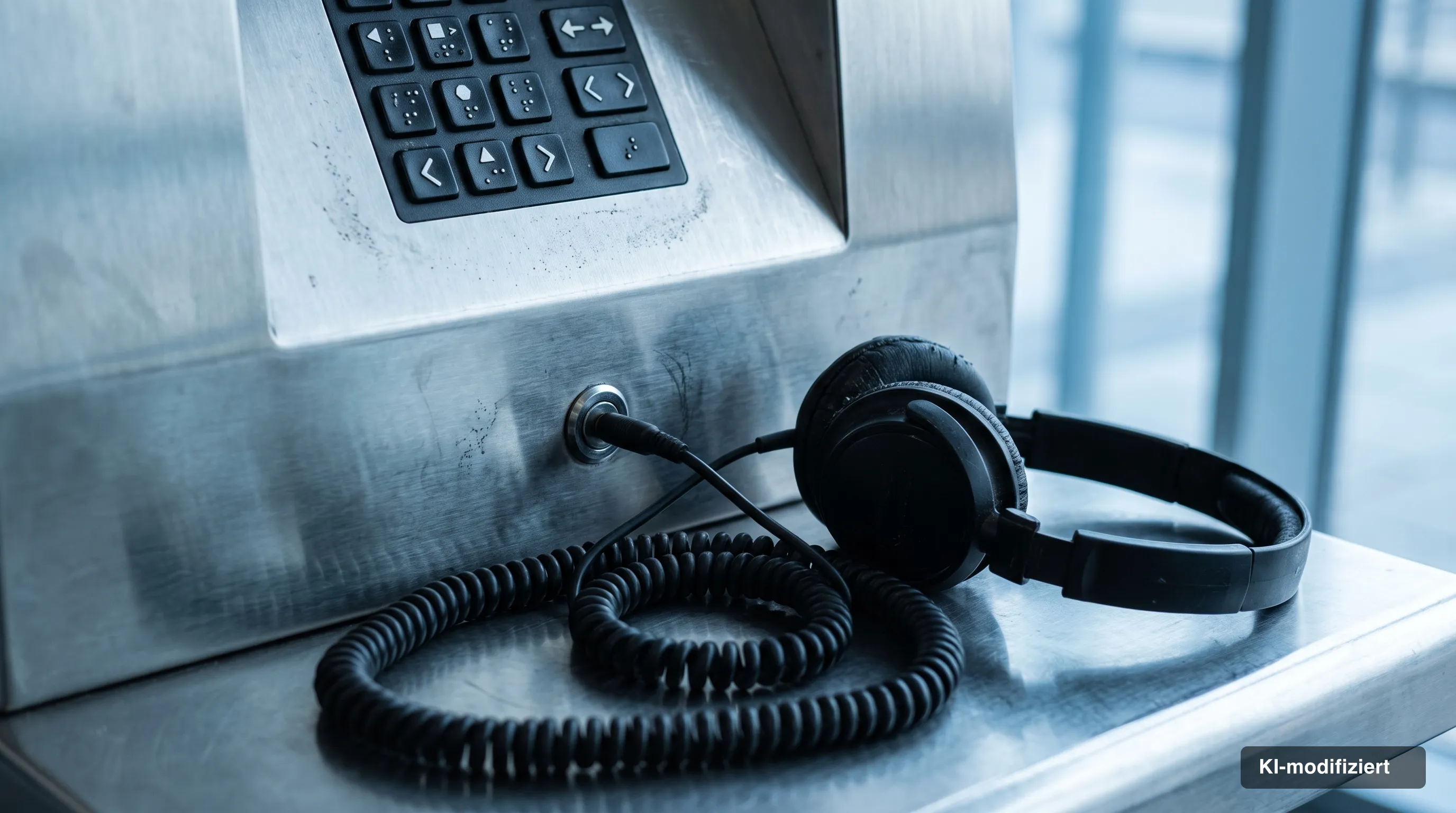
§ 7 section 2 makes clear that the accessibility features do not need to be activated first before people who depend on exactly these features can switch on the terminal.
In addition come the general product requirements from § 6 of the same regulation. They require, among other things, operation over more than one sensory channel, alternatives to colour information, alternatives to audible signals, adjustable volume and speed for audio elements, tactilely discernible parts for any mandatory manual operation, and avoidance of operation modes that demand significant reach or force.
In practice, it is numbers 1 and 2 from § 7 section 1 where existing terminals fail. Speech output and a headphone jack cannot be supplied via software update. Whoever selects a payment module prioritizes these two points — they determine whether the device can structurally meet the requirement at all.
The transition periods that are often cited incorrectly
A year appears in circulation regarding transition periods that is not in the law: 2040.
§ 38 section 2 BFSG regulates it differently. Self-service terminals that service providers had lawfully in use before 28 June 2025 may continue to be operated until the end of their economic useful life, but not longer than fifteen years after being put into service.
The deadline thus runs per device, calculated from putting into service, and is additionally limited by economic useful life. A terminal put into service in 2018 may continue to operate until 2033. One from 2012 until 2027. One only arrives at 2040 if their terminal was put into service precisely on the reference date and one assigns it an economic useful life of fifteen years.
For services, a second, shorter deadline applies. According to § 38 section 1, service providers may continue to use products they had lawfully in use before 28 June 2025 for these or similar services until 27 June 2030. Contracts for services concluded before the reference date may continue unchanged until the end of their term, but at most until 27 June 2030.
How to ensure this in your procurement
§ 4 BFSG contains a presumption of conformity: products and services that comply with harmonised standards, whose citations are published in the Official Journal of the European Union, are presumed to be conforming insofar as the standard covers the requirements. The applicable standard for accessibility of information and communication technology is EN 301 549.
In practical terms: a declaration of compliance with EN 301 549 is more valuable than the phrasing "accessible in accordance with BFSG" because it is verifiable and the presumption applies to it.
Noteworthy is that manufacturers cite this standard even where the law does not require them to. In our test database, the Cleveron 302 — a parcel retrieval system that under the BFSG wording is not covered — carries the notation EN 301 549 in the manufacturer data. Whoever specifies accessibility can thus also demand it for device types outside the scope of application.
Four points that belong in an offer:
- Declaration of compliance with EN 301 549 for the payment module, specifying the sections tested.
- Speech output and single earphone connection, explicitly listed as equipment, not as an option.
- The EU Declaration of Conformity and CE marking with reference to the accessibility requirements. The BFSG requires both in the sections on CE marking; without these documents, conformity is not documented.
- The date of placing on the market, in writing. It determines applicability and cannot be reconstructed later.
The exit that costs more than it appears
§ 17 BFSG allows claiming disproportionate burden. The requirements then apply only insofar as compliance would not result in such burden. This is not a free pass but a procedure.
The economic operator must perform the assessment themselves, document it and keep it for five years after the last supply or service delivery. On request, they present it to the market surveillance authority. Service providers must renew the assessment at least every five years, also in case of any change to the service and on request of the authority. Micro-enterprises engaged with products are exempt from the documentation and retention requirement, but must provide the authority with the relevant facts on request.
One paragraph deserves particular attention because it is easily overlooked in grant scenarios. According to § 17 section 4, an economic operator is not entitled to claim disproportionate burden if they receive third-party public or private funding for improving accessibility. Whoever accepts a subsidy for accessible retrofitting thereby waives this exception.
Where the law's wording does not help further
One device category leaves a genuine interpretation question open, and we do not resolve it here because we cannot.
§ 1 section 2 number 2 letter b covers interactive self-service terminals for information provision — but only those intended for providing services covered by this law. Which services these are is stated in § 1 section 3: telecommunications services, certain elements of passenger transport services, financial services for consumers, e-books and services in electronic commerce.
A parcel retrieval station in retail serves the conclusion of an order in electronic commerce. In doing so, however, it does not provide information but rather dispenses a shipment. Under the wording, it is thus not covered. Whether an authority or court sees it the same way, we do not know; we are not aware of a decision on this.
For practice, this follows from a business recommendation, not a legal one. A parcel system is depreciated over ten to fifteen years. In this time, the interpretation can change, and retrofitting speech output and headphone connection is expensive or impossible on an existing system. Whoever secures contractual commitment to these requirements at procurement removes this risk — at terms that are negotiable today.
Frequently asked questions
- Does my coffee machine fall under the BFSG?
- Under the wording, no. § 1 section 2 number 2 exhaustively lists the covered self-service terminals: payment terminals, ATMs, ticket machines, check-in machines and interactive terminals for information provision. A coffee machine is none of these. The integrated card payment terminal, however, falls under letter a if it was placed on the market after 28 June 2025.
- Does the 2040 deadline apply to my existing equipment?
- This year does not appear in the law. § 38 section 2 permits continued operation until the end of economic useful life, at most fifteen years after putting the individual device into service. For a terminal from 2018, the deadline ends in 2033. For services, the shorter deadline from § 38 section 1 additionally applies: 27 June 2030.
- What must an accessible payment module be able to do?
- § 7 section 1 of the Regulation on the BFSG requires speech output, the use of single earphones, an indication over more than one sensory channel for limited response times, the ability to extend this time, high-contrast and tactilely discernible buttons, and compatibility of acoustic signals with hearing aid technology. Section 2 additionally requires that these functions do not need to be activated first.
- Can I claim costs are too high?
- § 17 BFSG allows this, but requires its own documented assessment to be kept for five years and presented to the market surveillance authority on request. Service providers must renew it at least every five years. Importantly: section 4 states that whoever receives third-party public or private funding for improving accessibility may not claim this exception.
Latest on this topic
- EU deposit obligation until 2029: Why 2026 is the reference yearCompliance & News · September 14, 2026
- Packaging tax Freiburg 2026: 50 cents per cup – also for vending machinesCompliance & News · September 6, 2026
- Cyber Resilience Act from 11 September 2026: What it means for connected vending machinesCompliance & News · August 17, 2026
More guides
 KI Modified
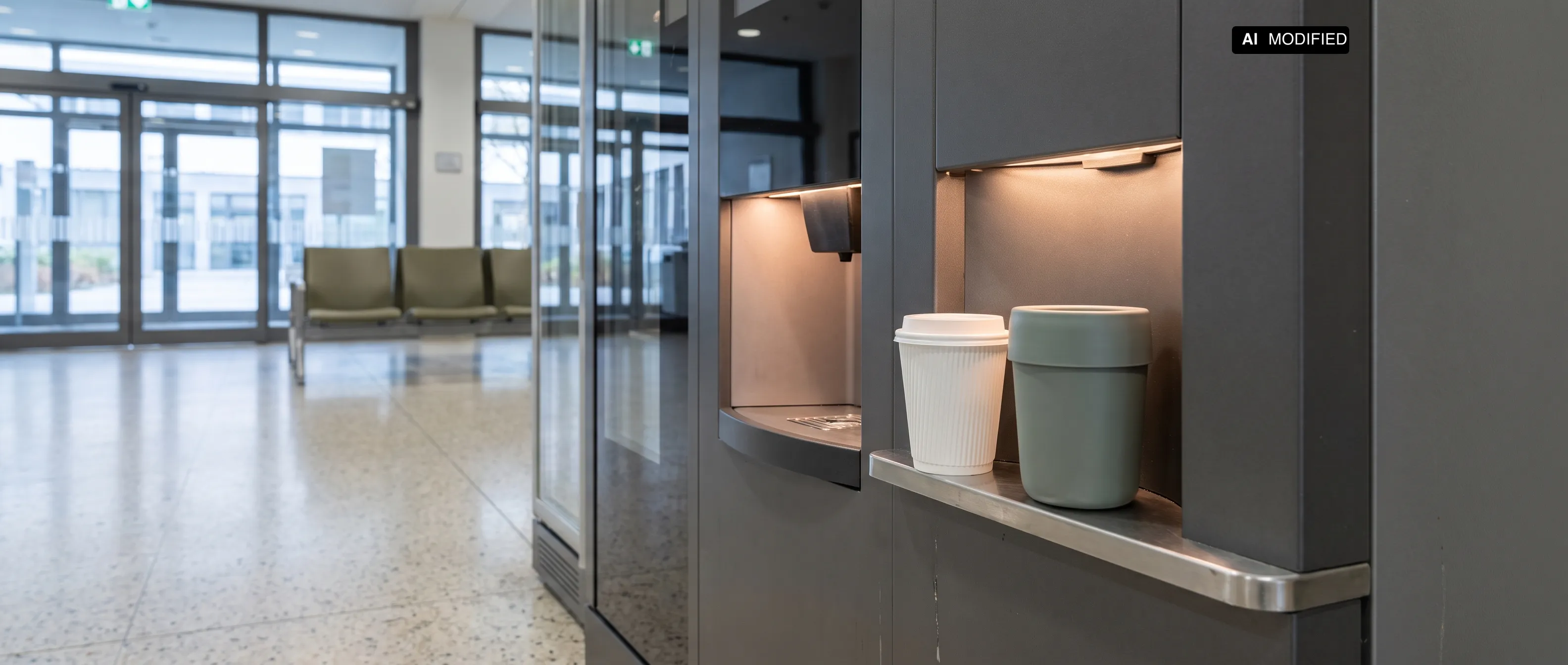
Reusable cups at coffee vending machines: what §60 VerpackDG requires from the device
Publicly accessible coffee vending machines must offer beverages in reusable packaging at no higher price. For vending machines, §61 subsection 2 permits offering customers the option to fill their own containers. The outlet height therefore determines viability: 65 to 185 millimetres per device.
 KI Modified
Single-use plastic levy on coffee vending machines: Who really pays it
Who pays the single-use plastic levy on coffee vending machines, what it costs per cup, and which deadlines apply in 2026 and 2027. With calculation for three locations.