
 KI Modified
Market Analysis
Card Beats Cash: 2025 Allensbach Study Reshapes Vending Strategy
On this page
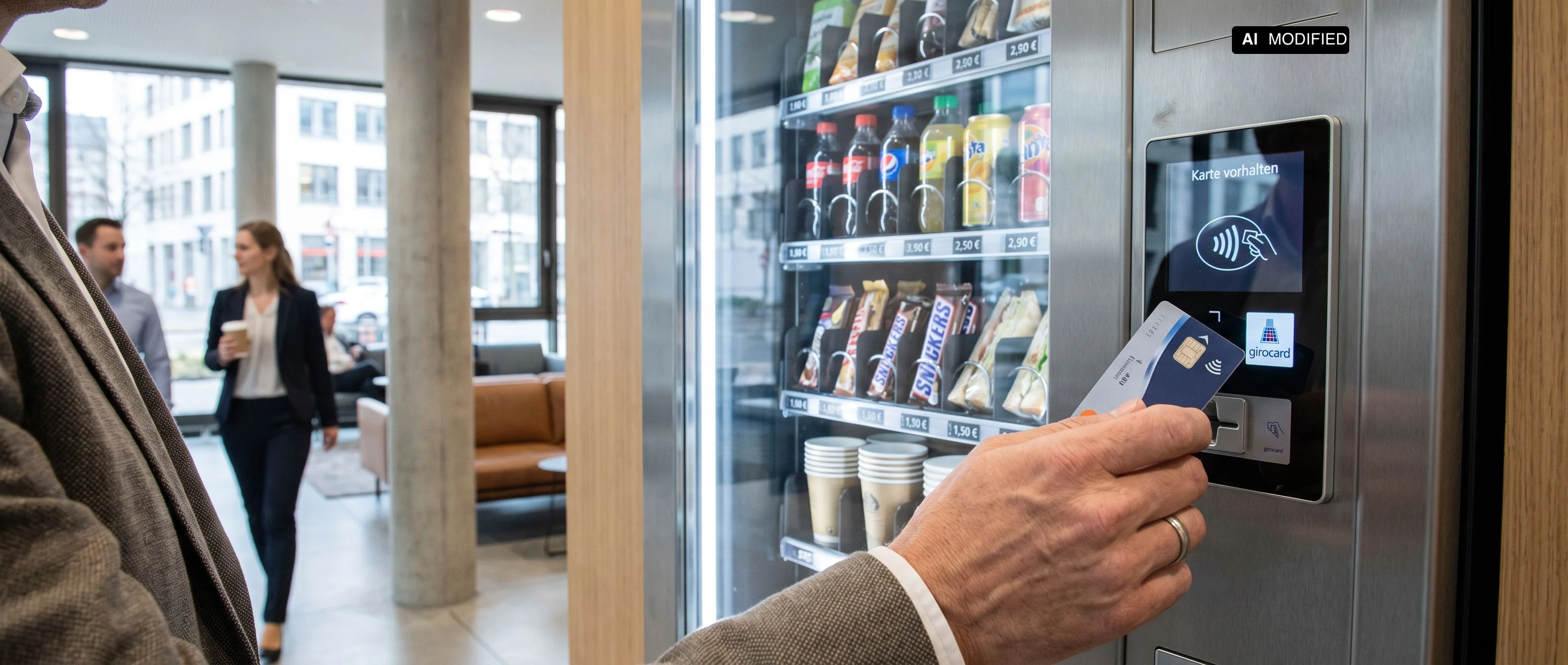
For the first time since surveys began in 2006, card payments have overtaken cash: For their most recent purchase before the survey, 47% paid by card and just 41% paid in cash. This is shown by the 2025 Allensbach study, conducted by the Allensbach Institute for Public Opinion Research (IfD) on behalf of the German Payment Systems Initiative (IDZ). For vending operators, the result has a direct impact: according to the BDV, operators who accept only coins and banknotes at their machines are turning away around 50% of customers willing to pay.
Study design and context
The study is based on 1,025 face-to-face interviews with people aged 16 and over, conducted from 4 to 16 July 2025. The survey methodology is robust: face-to-face interviews, representative of the German-speaking population aged 16 and over. These figures are no outlier. The Bundesbank study “Payment behaviour in Germany 2025” (Forsa, September to December 2025, n=6,070) confirms the trend: for the first time, more than 50% of all purchases were cashless. Cash fell to 45%, down 6 percentage points compared with 2023.
The EHI study 2026 (data year 2025) reaches the same conclusion: card payments account for 65.1% of German retail sales, up from 63.5% the previous year. Cash accounts for just 32.3% of sales. Three independent surveys, one conclusion: Germany is now predominantly cashless.
girocard leads as mobile payments gain ground
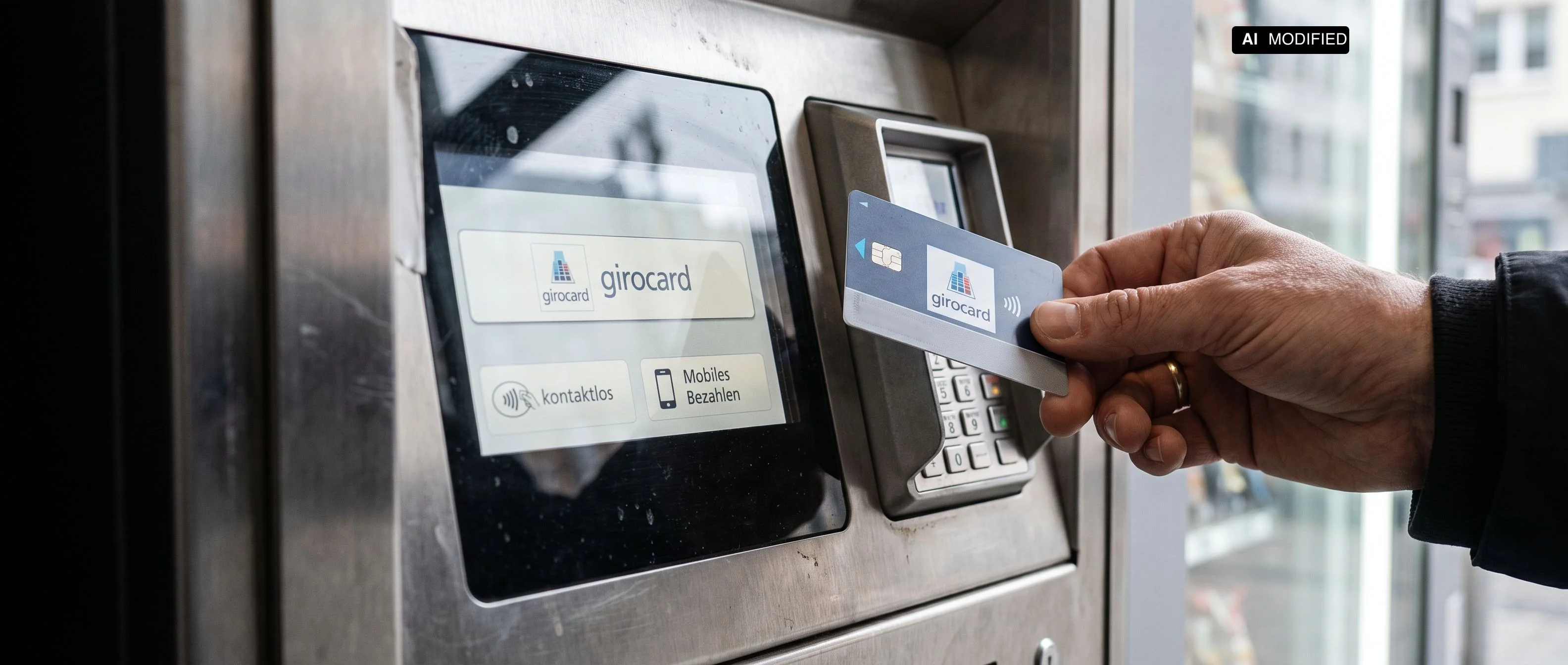
Among people who pay by card, girocard is the preferred choice: 52% of multi-card holders name it as their preferred payment method, compared with just 15% for credit cards. In 2025, girocard recorded a record 8.3 billion transactions. In the first half of 2026, there were already 4.21 billion (+4% compared with H1 2025), 92% of them contactless.
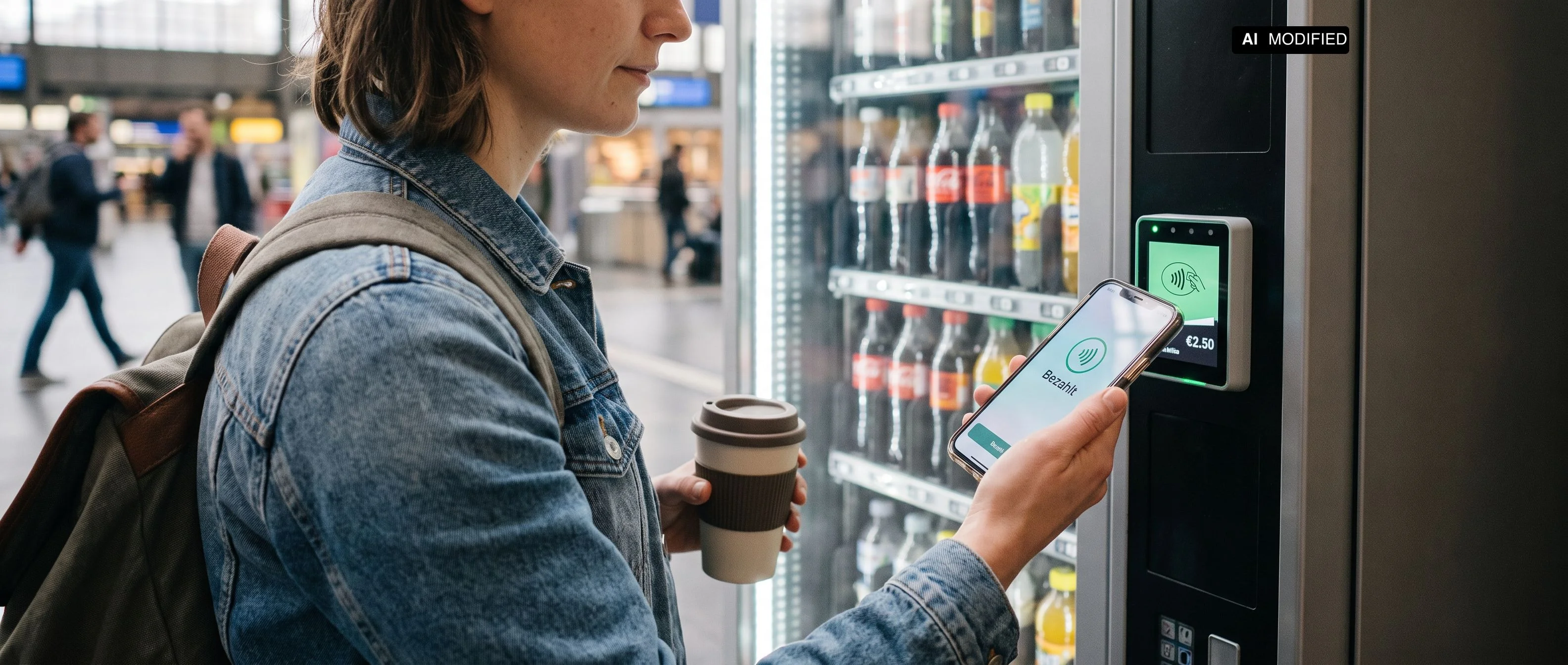
At the same time, mobile payments are gaining strong momentum. 25% of respondents use a smartphone or smartwatch, more than twice as many as in 2022 (12%). Among under-30s, 42% already choose mobile payments, almost matching the 45% who prefer a physical card. EHI confirms the momentum: in 2025, mobile payments already accounted for 19.3% of cashless payments in German retail, up from 12.8% in 2024.
According to the Allensbach study, 77% of respondents expect girocard to remain the most-used payment method through 2030. For vending operators, the takeaway is clear: contactless terminals that support girocard, credit cards and mobile payments are no longer an optional upgrade; they are a requirement for most locations.
Vending in Europe: 85% equipped for cashless payments
Across Europe, 85% of pay-vend machines are already equipped for cashless payments, according to the EVA Market Report 2025, up from just 58% in 2019. Only 15% accept cash only. Of cashless systems, 65% accept open payment methods (card, smartphone, app), while 35% use closed systems (company card, chip key).
The United Kingdom offers one possible direction of travel: according to EVA data, collected from Nayax-equipped machines and therefore not representative of the overall market, more than 80% of transactions there are already cashless (2017: 34%). 57% of those transactions are made by smartphone. In this dataset, cashless transactions have 90% higher basket values than cash payments.
What operators should check now
Terminal selection: girocard, EMV and TOPP
For most German locations, girocard is essential, not optional. It is the only debit card in Europe with integrated age verification (16+/18+), which is relevant for tobacco vending machines. Terminals without a PIN pad (TOPP terminals) make cashless upgrades more affordable, but do not support PIN entry and therefore exclude certain transaction types. The right terminal format depends on the product range and location.
In June 2025, IDZ and BDV jointly published the brochure “Card payments at vending machines”. It lists terminal types, certification requirements and entry requirements for the vending industry. For operators with multiple locations, it is the recommended starting point before any upgrade decision.
Market volume and revenue potential
According to the Bundesbank, 86% of all in-store transactions in Germany take place at locations that accept card payments. Locations that accept cash only lack this basic requirement. The BDV vending market report 2024 recorded total sales of €4.62 billion, up 18.7% compared with 2023. Operators who want to benefit from this growth need to offer customers’ preferred payment method at every location, not the operator’s.
The cost of upgrading to cashless payments varies by machine type, protocol and service provider and is not publicly standardised. Commercial terms need to be agreed in the contract.
Payment sovereignty as a selection criterion
60% of respondents consider access to German and European payment alternatives important, an increase of 15 percentage points since 2022. Operators who choose open middleware today that supports girocard, international credit cards and app-based payments can avoid future system changes as payment standards evolve.
Practical assessment
47 to 41: these figures are not going to reverse. All the structural drivers point in the same direction: mobile payment use rose from 12% (2022) to 25% (2025), and has already reached 42% among under-30s. In the Bundesbank study, cash alone lost six percentage points between 2023 and 2025.
The strategic conclusion from these figures is to offer cash as a supplementary option, not as the primary system. For operators who still accept coins only, the need to act is backed by three independent studies, not industry marketing.
Last updated: September 2026
Go deeper: related guides
- Cup cost at coffee machines: What a cup really costs the operatorEconomics & TCO · 14 min read
- Retrofit cashless payment to a vending machine: MDB 4.3, costs and selection criteriaFundamentals & Getting Started · 17 min read
- The Ideal Vending Machine Mix: Combining Hot Drinks, Snacks and WaterFundamentals & Getting Started · 14 min read
More news
 KI Modified
EUDR and coffee vending machines: what the EU Deforestation Regulation requires before it applies
Preparing for the EUDR affects coffee vending operators mainly through coffee products, supply chain evidence and business roles—not the machines themselves. This article explains the deadlines from 30 December 2026 and 30 June 2027, and outlines the data operators should start collecting now.
 KI Modified
Commodity Monitor October 2026: Coffee eases, cocoa and sugar in focus
The ICO coffee price fell by 8.7 per cent in September 2026 to 262.18 US cents per pound. The monitor puts the decline in context for vending procurement, presents Fairtrade cocoa minimum prices for Ghana and Côte d’Ivoire separately, and omits a sugar figure because no reliable primary source is available.
 KI Modified
AI in Vending in 2026: Predictive Maintenance and Assortment Optimisation — How to Use the Technology
With 621,000 vending machines in Germany, revenue growth of 18.7% and the EU AI Act in force, AI applications in vending are no longer pilot projects in 2026. Find out which three areas are production-ready, what they deliver in practice and how to get started.