
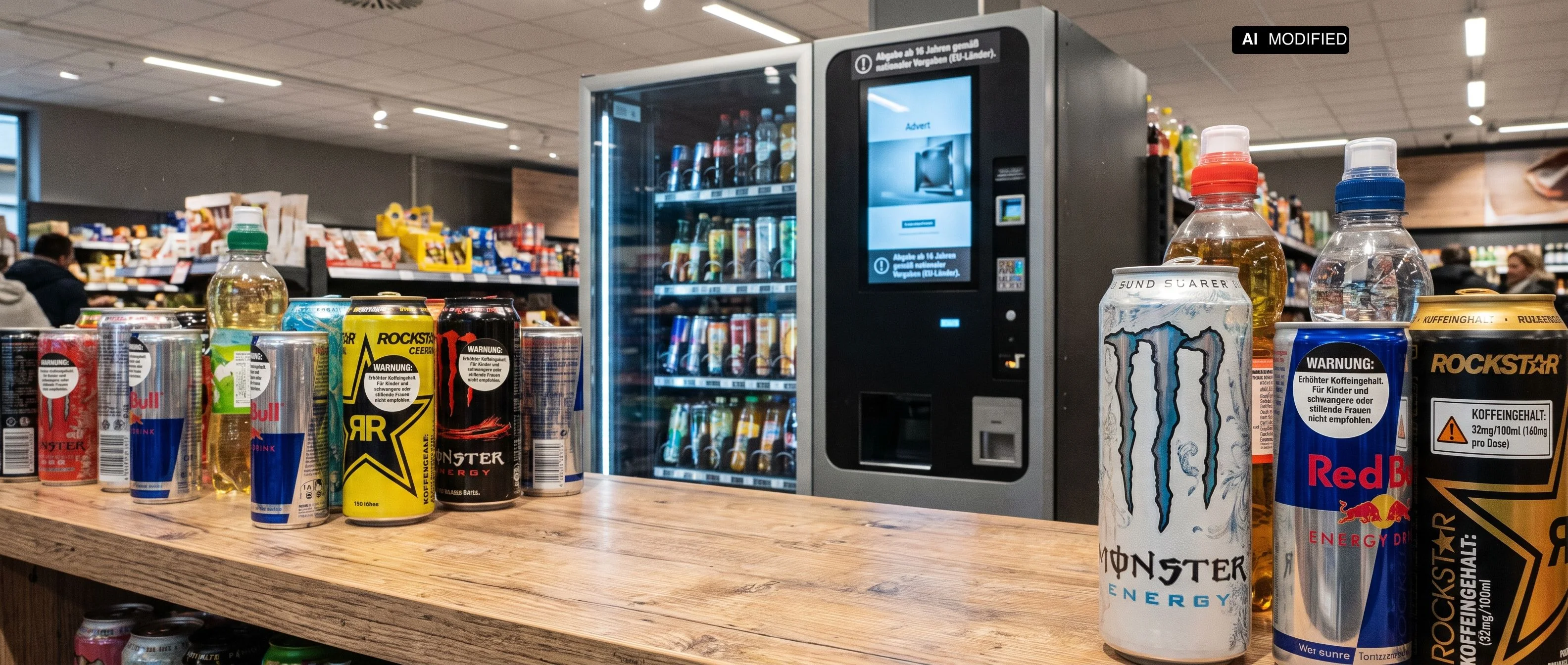
 KI Modified
Market Analysis
Energy drinks and sweet beverages 2026: What restrictions apply now for vending machines
On this page
Six EU countries take action, Germany continues to debate
Since January 2024, energy drinks in Poland have been prohibited from sale in supermarkets and vending machines to persons under 18 years of age. Romania, Hungary and Bulgaria followed in 2024 and 2025 respectively. Lithuania (since 2014) and Latvia (since 2016) were Europe's early adopters, as documented by the National Drug and Risks Action Programme (NADR).
In Germany, by contrast, as of September 2026 there remains no statutory minimum age for energy drinks. Children as young as 7 years can legally purchase these beverages, including from publicly accessible machines without age verification. Germany thus belongs to the minority of EU member states with no legal age restriction whatsoever for this product category, even though political pressure in 2026 is higher than ever before.
What rules actually apply at the machine?
The Youth Protection Act (JuSchG) distinguishes clearly by product category. Alcohol from publicly accessible machines is fundamentally prohibited under § 9 JuSchG. Tobacco and nicotine products require technical age verification to 18 years or a non-public location under § 10 JuSchG. Violations can be penalized under § 28 JuSchG with fines up to €50,000, as the Pulse Vending expert portal explains in its youth protection overview.
For energy drinks, there is no comparable legal basis in the JuSchG. A 250 ml can containing 80 mg of caffeine can be withdrawn from any public machine without age verification.
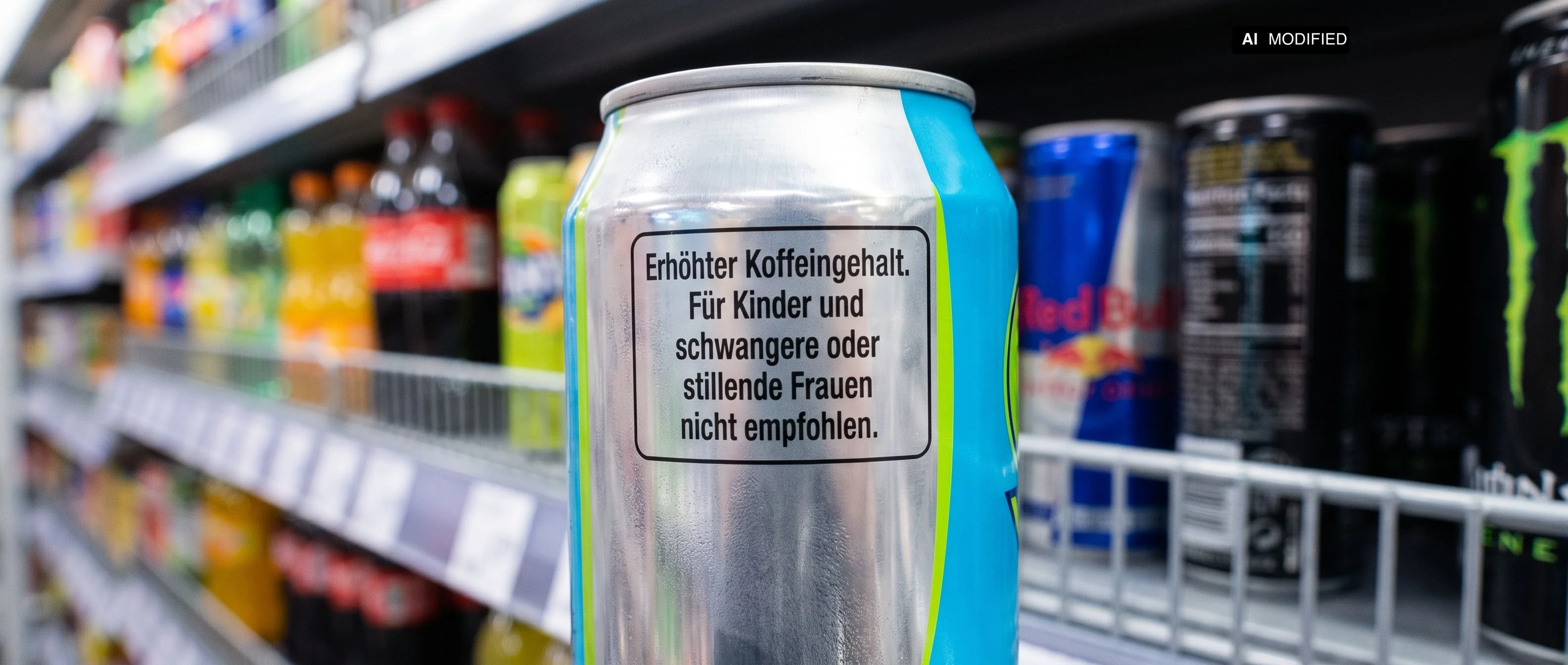
Only the EU labeling requirement applies: beverages with more than 150 mg caffeine per liter must carry the notice: "High caffeine content. Not recommended for children and pregnant or breastfeeding women." The legal basis is Annex III of the EU Food Information Regulation (Regulation 1169/2011). The EU-wide maximum level is 320 mg caffeine per liter. At the machine, this mandatory notice is barely perceptible before purchase.
Political chronology: 2024 to September 2026
The Citizens' Council on Nutrition of the German Bundestag recommended an age limit of 16 years for energy drinks in March 2024. For machines, it formulated a specific condition: where technical age verification is not possible, energy drinks must not be sold there. The Bundestag heard expert testimony on this on 10 September 2024.
In June 2024, the Conference of Consumer Protection Ministers (VSMK) passed a resolution calling on the federal government to examine an age limit of at least 16 years (date and wording from search engine snippet, not verified by direct page access). No federal law followed.
On 27 February 2026, the Schleswig-Holstein Landtag passed a resolution for a Bundesrat initiative: sales prohibition for under-16s and advertising ban for this age group. Only the FDP voted against. The initiative is announced, but as of the September 2026 editorial deadline has not yet been formally submitted.
Overall picture: No federal law in force. No binding implementation deadline.
Why health data drives the debate
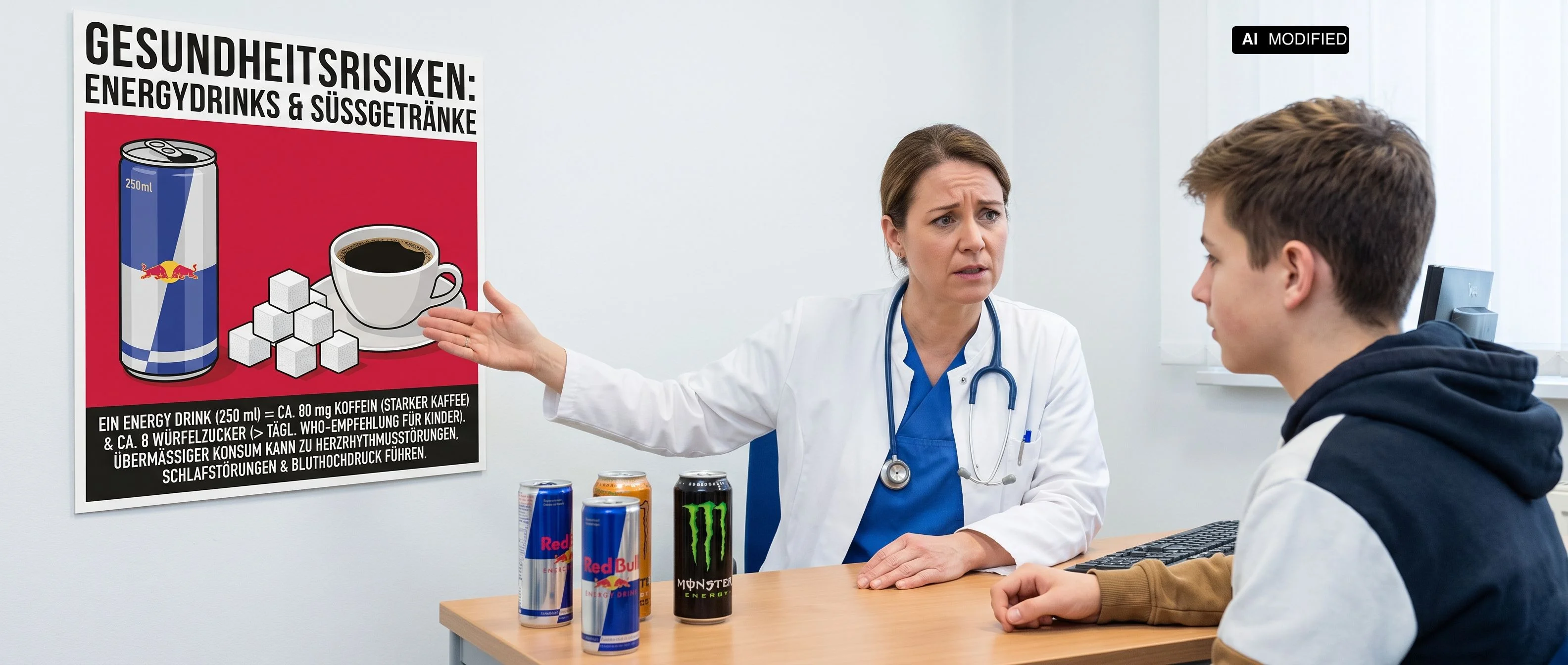
80 mg caffeine per 250 ml can is equivalent to approximately one strong coffee. The European Food Safety Authority (EFSA) recommends for children, adolescents and pregnant women a maximum of 3 mg caffeine per kilogram of body weight daily. For a 25 kg child, this means a daily maximum of 75 mg: a single commercial can already exceeds this value.
Added to this is sugar content: approximately 8 sugar cubes per 250 ml can. The WHO recommends children consume at most 25 g of free sugar daily. Sugar amplifies caffeine's stimulant effect through a combined mechanism, as the Hygiene Network describes in its overview of EU bans.
A study by BfR and Charité Berlin from August 2025 involving 97 adolescents with high, long-term consumption found no cardiac abnormalities. The result contextualizes published case reports. The study itself was not verified by direct page access; the EFSA daily limit of 3 mg per kilogram of body weight remains the valid reference for operator decisions.
What can operators do right now?
Three approaches are available, all currently without legal obligation:
Voluntary assortment restriction: Individual retailers already voluntarily limit energy drinks to age 16. British supermarket chains such as Aldi UK, Lidl UK and Tesco voluntarily stopped selling to under-16s in 2018, before the UK legislated. A comparable lead time is realistic for Germany.
Technical age verification: Systems such as the DCM5 card reader verify driver's licenses and national ID cards from 22 European countries. Girocards with a youth protection feature enable indirect verification. For alcohol and tobacco, these solutions are already mandatory. For energy drinks, deployment is voluntary, but the technology is market-proven.
Location-based assortment control: Vending management systems enable product-specific release per location without hardware modification. Of approximately 621,000 vending machines in Germany, around 5 percent are located in educational institutions (source: German Vending Machine Association (BDV), Vending Market Study 2024). Operators who block energy drinks by software at such locations respond to political development without waiting for a legal requirement.
Poland has shown: when a ban comes, implementation timelines are short. The Polish law came into force as of January 2024. Operators with locations in schools, training facilities or youth centers should evaluate the assortment and technology question now.
Editorial date: September 2026. Political initiatives known only from search engine snippets are marked in the text as not verified by direct page access.
Go deeper: related guides
- Cup cost at coffee machines: What a cup really costs the operatorEconomics & TCO · 14 min read
- Retrofit cashless payment to a vending machine: MDB 4.3, costs and selection criteriaFundamentals & Getting Started · 17 min read
- The Ideal Vending Machine Mix: Combining Hot Drinks, Snacks and WaterFundamentals & Getting Started · 14 min read
More news
 KI Modified
EUDR and coffee vending machines: what the EU Deforestation Regulation requires before it applies
Preparing for the EUDR affects coffee vending operators mainly through coffee products, supply chain evidence and business roles—not the machines themselves. This article explains the deadlines from 30 December 2026 and 30 June 2027, and outlines the data operators should start collecting now.
 KI Modified
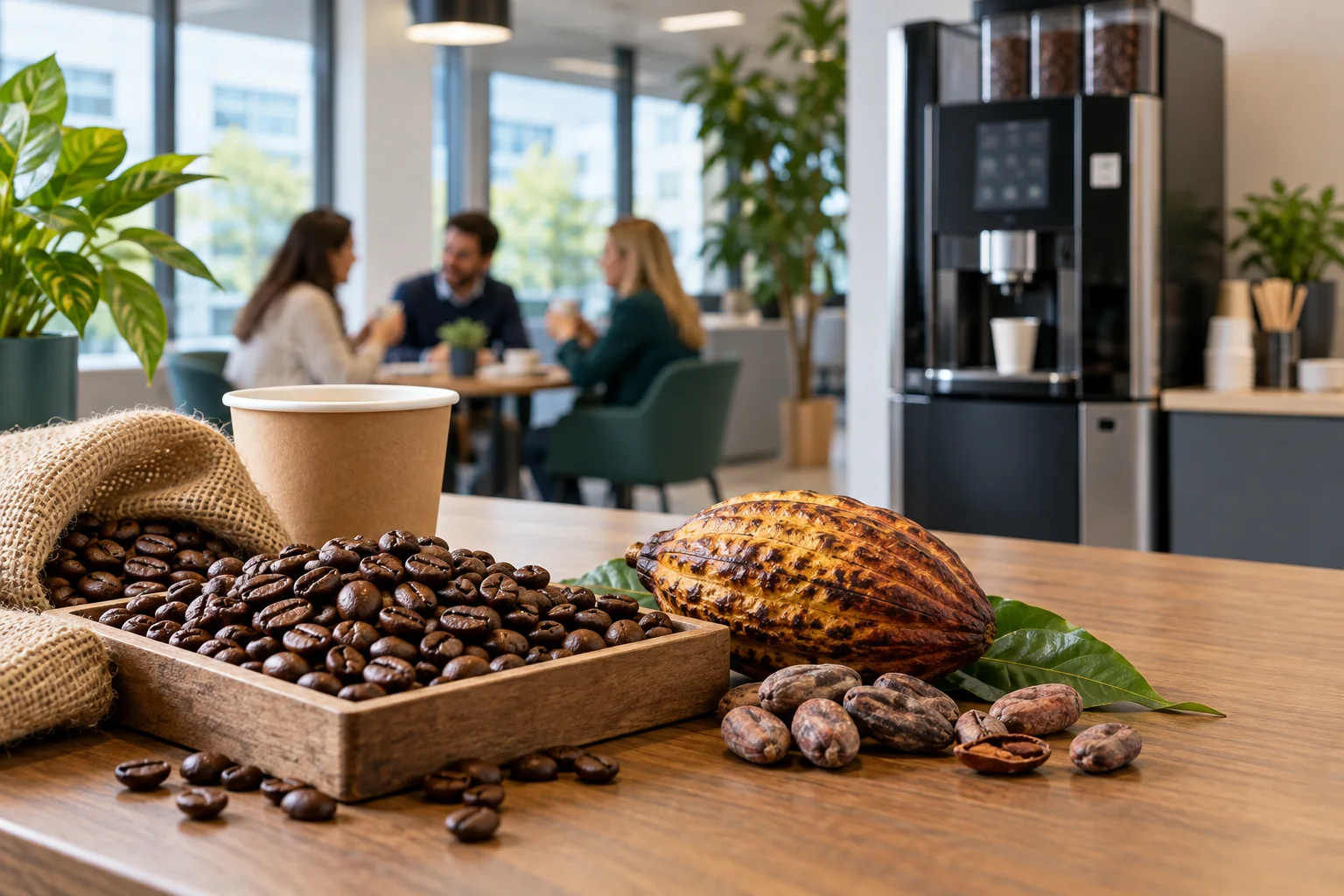
Commodity Monitor October 2026: Coffee eases, cocoa and sugar in focus
The ICO coffee price fell by 8.7 per cent in September 2026 to 262.18 US cents per pound. The monitor puts the decline in context for vending procurement, presents Fairtrade cocoa minimum prices for Ghana and Côte d’Ivoire separately, and omits a sugar figure because no reliable primary source is available.
 KI Modified
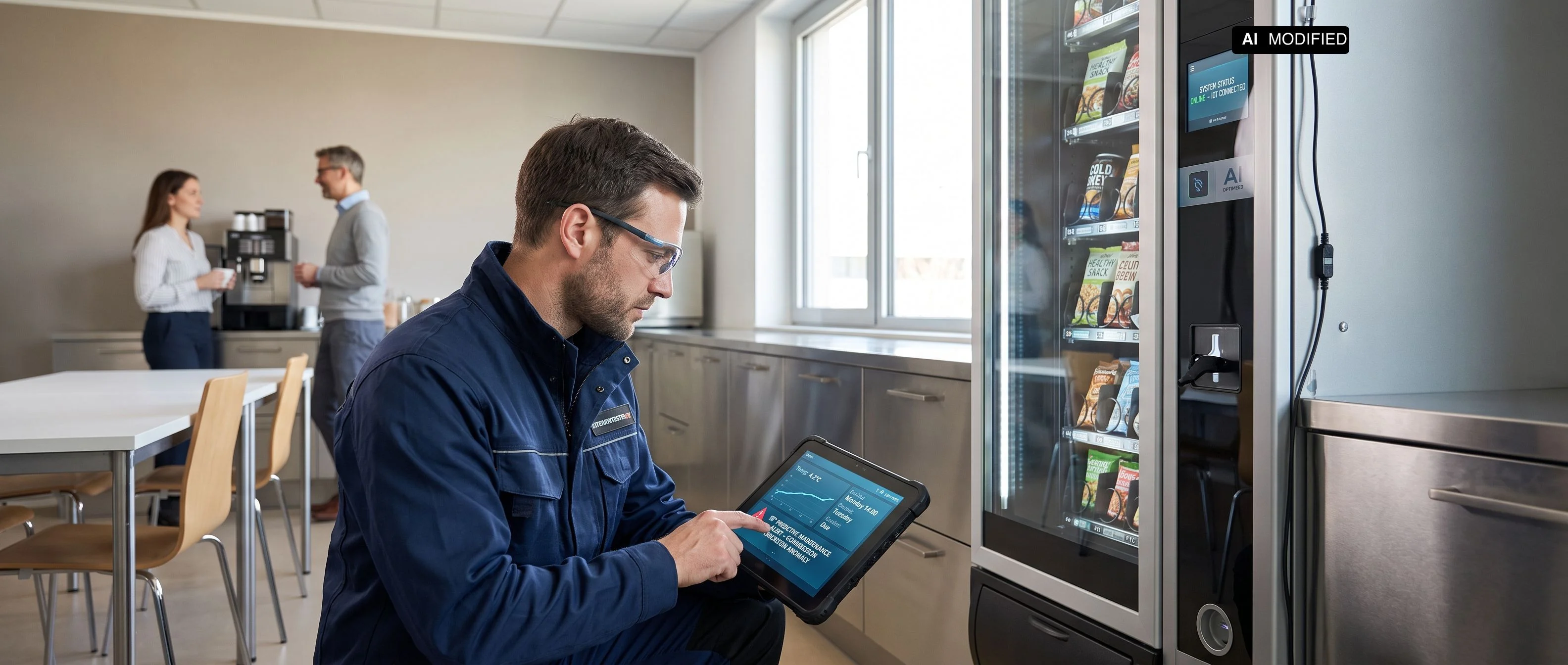
AI in Vending in 2026: Predictive Maintenance and Assortment Optimisation — How to Use the Technology
With 621,000 vending machines in Germany, revenue growth of 18.7% and the EU AI Act in force, AI applications in vending are no longer pilot projects in 2026. Find out which three areas are production-ready, what they deliver in practice and how to get started.