
 KI Modified
Market Analysis
MilchPQV 2025: These new hygiene requirements now apply to milk vending machines
On this page
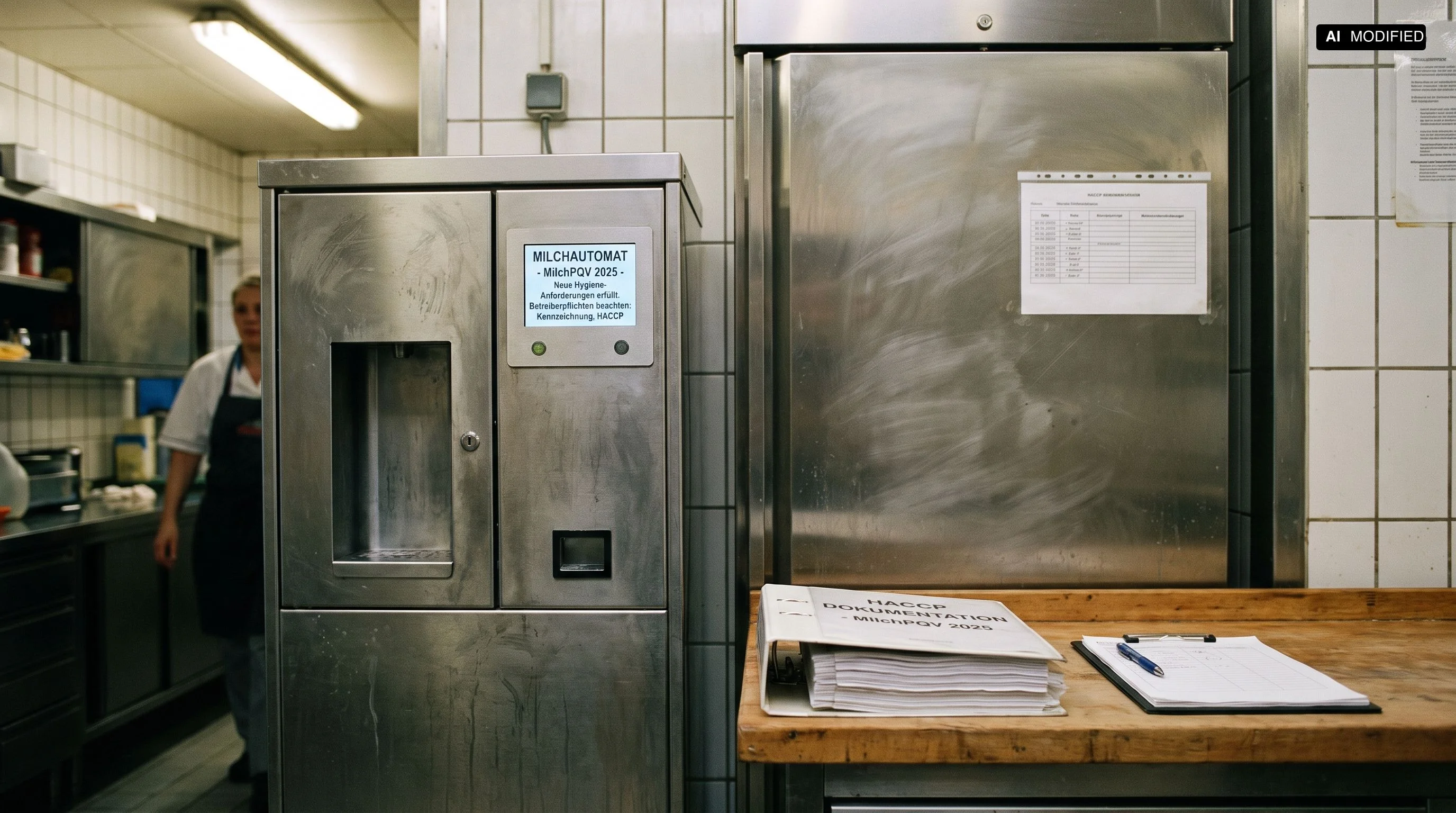
As of 14 June 2026, the Regulation on Quality Requirements for Milk Products (MilchPQV) applies as the authoritative national framework for milk, cheese, butter and yogurt in Germany. Published in the German Federal Law Gazette (BGBl.) I No. 280 of 27 November 2025, it replaces four previously separate regulations and creates a more unified legal landscape. For operators of milk and snack vending machines, this creates an urgent call to action: product labeling, vending machine displays and supplier contracts must be checked for compliance.
What the MilchPQV harmonizes
Previously, four separate regulations governed German milk product law: the Consumption Milk Labeling Regulation, the Milk Products Regulation, the Cheese Regulation and the Butter Regulation. All four are repealed without replacement. In their place comes the MilchPQV with seven annexes, which transposes EU milk product law pursuant to Regulation 1308/2013 into national law. According to Mérieux NutriSciences, the goal is a harmonized foundation that unifies definitions and closes labeling gaps.
The transitional provision: products manufactured before 14 June 2026 and packaged under the old legal standards may continue to be sold until 31 December 2027 (§ 67 MilchPQV). New orders must already comply with the new labeling requirements as of now.
"Fresh" redefined: pitfalls for vending machine operators
Heat-treated milk may be designated as "fresh" as of 14 June 2026 if its shelf life at a maximum of 8 °C does not exceed three weeks. New and controversial: this rule applies not only to pasteurized milk but also to ultra-high temperature (UHT) milk.
The Consumer Center Hamburg criticizes that consumers have previously associated "fresh" exclusively with pasteurization. The previously optional label "longer shelf life" for UHT milk is simultaneously eliminated. This creates an information gap at the vending machine: a customer who buys "fresh milk" can no longer tell without additional information whether it is a short-shelf-life pasteurized product or a longer-shelf-life UHT product.
Operators may voluntarily communicate the type of heat treatment on the point-of-sale notice. This information is in any case mandatory on the packaging.
Four labeling obligations in detail
Heat treatment type: Every milk product must state the type of heat treatment: "pasteurized", "ultra-high temperature" or "sterilized". Product information panels and vending machine display text that provide ingredient information must include this notice once new packaging is used.
Lactose-free: The designation "lactose-free" is now bindingly defined for the first time: a maximum of 0.1 g lactose per 100 g of product, in accordance with MilchPQV full text. Operators who stock lactose-free products in a vending machine must request analytical evidence from the supplier. Missing documentation is a concrete risk during food inspections.
Animal species and blend proportions: If a product contains raw milk not exclusively from cows, the animal species must be named. For blends from multiple animal species, all animal species and their percentage shares must be stated (§ 56 MilchPQV). This primarily affects direct marketers with sheep, goat, or buffalo milk vending machines.
Milk blend products: additives may comprise a maximum of 30 percent non-milk components and must be flavoring or coloring agents. Legume protein or plant oils as a substitute for milk components are prohibited, as AGROLAB GROUP outlines.
Raw milk vending machines: existing obligations and new changes
Operators of raw milk vending machines already face a tight regulatory framework: direct sales only at the producer's premises, mandatory notice "Raw milk, boil before consumption", registration requirement with the competent authority, and a HACCP plan with continuous temperature monitoring. The LfL Bavaria additionally recommends regular coordination with food control authorities and veterinary office.
The MilchPQV also modifies the Raw Milk Quality Regulation. What concrete additional obligations arise from this for raw milk vending machine operators cannot be fully derived from the accessible full text. The veterinary office or BDV are the right contacts here (not independently verified).
Skyr, lactase and product composition
The MilchPQV also brings new rules beyond labeling: Skyr has a binding minimum protein content of 8 percent. The use of lactase to produce lactose-free cheese varieties is explicitly permitted, as AGROLAB confirms. These points affect vending operators who run specialty products such as yogurt vending machines or refrigerated vending machines with milk blend products only indirectly: not the operators, but the manufacturers must adapt recipes and analyses. The operator's obligation lies in supplier verification.
Six steps for practice
- Check product labeling: Do "fresh", "lactose-free" and the heat treatment information comply with the new MilchPQV definitions?
- Ask suppliers whether products are labeled in compliance with MilchPQV and whether analytical lactose evidence is available.
- Update vending machine displays and point-of-sale signage once new packaging is introduced.
- For raw milk operations: review changes to the Raw Milk Quality Regulation in BGBl. I No. 280 and contact the veterinary office.
- Keep HACCP documentation and temperature records up to date.
- Accept supplier orders only with MilchPQV-compliant labeling going forward.
The German Vending Machine Association (BDV) addressed the MilchPQV in BDV Intern 01/2026 (p. 32) as the only industry-specific article specifically for vending operators; association members will find further details there.
Classification
The MilchPQV is not a hygiene revolution, but an overdue consolidation. Operations that already document cleanly according to HACCP and know their suppliers have little adaptation effort. The biggest stumbling block is the new "fresh" rule for UHT milk: it is legally correct, but can lead to questions from customers who have not previously categorized UHT as "fresh". Operators who communicate this proactively on point-of-sale signage build trust. The transitional period until the end of 2027 is generous; inactivity regarding new orders does not justify it nonetheless.
Go deeper: related guides
- Cup cost at coffee machines: What a cup really costs the operatorEconomics & TCO · 14 min read
- Retrofit cashless payment to a vending machine: MDB 4.3, costs and selection criteriaFundamentals & Getting Started · 17 min read
- The Ideal Vending Machine Mix: Combining Hot Drinks, Snacks and WaterFundamentals & Getting Started · 14 min read
More news
 KI Modified
EUDR and coffee vending machines: what the EU Deforestation Regulation requires before it applies
Preparing for the EUDR affects coffee vending operators mainly through coffee products, supply chain evidence and business roles—not the machines themselves. This article explains the deadlines from 30 December 2026 and 30 June 2027, and outlines the data operators should start collecting now.
 KI Modified
Commodity Monitor October 2026: Coffee eases, cocoa and sugar in focus
The ICO coffee price fell by 8.7 per cent in September 2026 to 262.18 US cents per pound. The monitor puts the decline in context for vending procurement, presents Fairtrade cocoa minimum prices for Ghana and Côte d’Ivoire separately, and omits a sugar figure because no reliable primary source is available.
 KI Modified
AI in Vending in 2026: Predictive Maintenance and Assortment Optimisation — How to Use the Technology
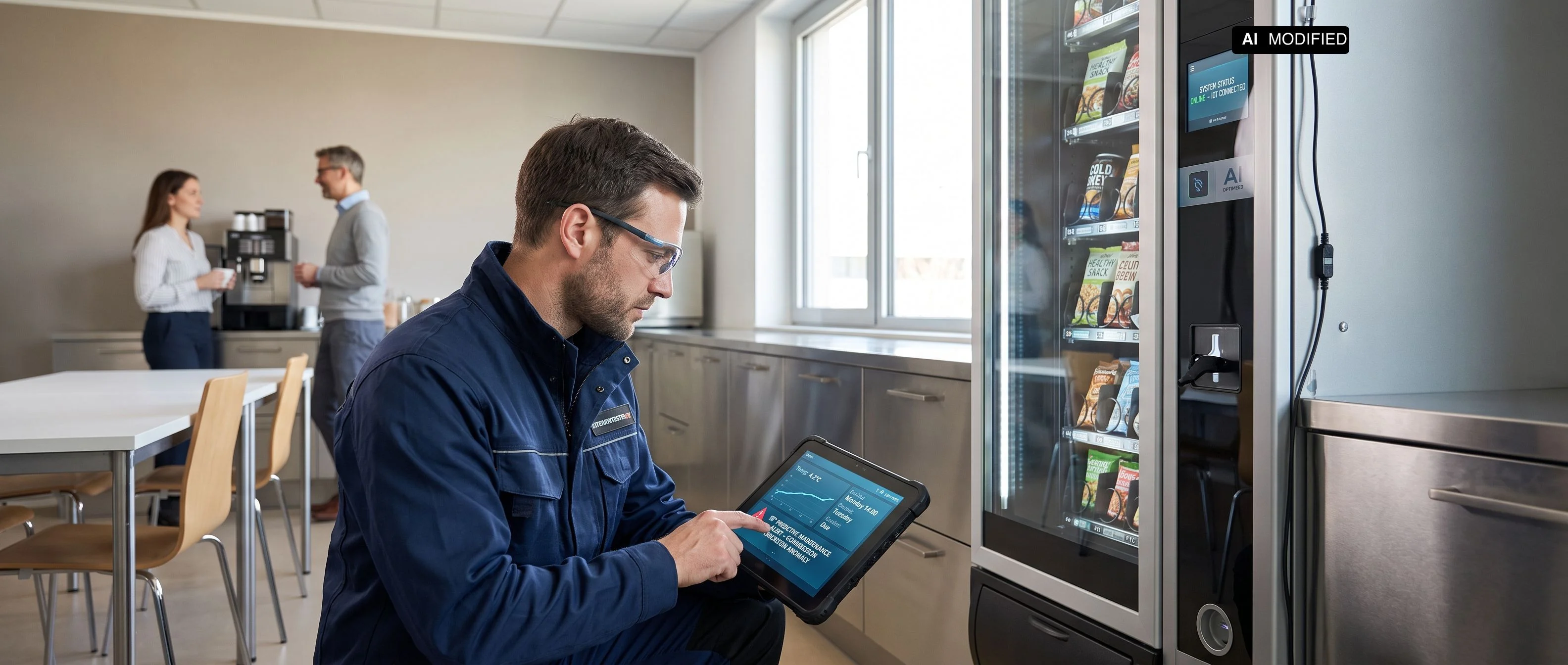
With 621,000 vending machines in Germany, revenue growth of 18.7% and the EU AI Act in force, AI applications in vending are no longer pilot projects in 2026. Find out which three areas are production-ready, what they deliver in practice and how to get started.