
Fundamentals & Getting Started
Allergen Labelling and Food Compliance in Vending: A Complete Operator’s Guide
 KI Modified
On this page
- What makes a vending operator a food business operator under the law?
- Registration: where to register, and by when?
- Which 14 allergens must be labelled?
- Prepacked or loose: which rules apply in a vending machine?
- HACCP in vending: what must be documented in writing?
- Section 43 IfSG: who needs training, and how often?
- Temperature monitoring for refrigerated machines: limits and records
- OCS and hot drinks machines: which allergens need particular attention?
- Traceability under Article 18 of EU Regulation 178/2002
- BDV quality seal: what it costs and what it demonstrates
- Packaging Act: LUCID registration for vending cups
- Compliance checklist: 7 core obligations for vending operators
Last updated: 2026-09-29
There are 621,000 vending machines in Germany, dispensing 11.5 million food and drink products every day (BDV market study 2024). Anyone operating even one of them is a food business operator under EU law and bears full legal responsibility for an HACCP plan, allergen labelling, hygiene instruction and registration. That responsibility lies with the operator—not the machine manufacturer or the site where the machine is installed.
These obligations apply whether a machine runs fully automatically or is restocked manually every day. For prepacked products such as chocolate bars, sealed sandwiches or bottled drinks, the labelling on the manufacturer’s packaging is sufficient. For loose products, open fresh products or OCS coffee variations, the LMIDV also applies, with its own requirements for a notice or QR code on the machine. This guide covers all seven core obligations, their legal basis, practical implementation requirements and the most common mistake in practice.
What makes a vending operator a food business operator under the law?
The term comes from Article 3(6) of EU Regulation 178/2002: a food business operator is anyone who, in the course of a business, handles food by manufacturing, processing, transporting, storing or distributing it. A vending operator who buys products, stocks them in machines and supplies them to consumers fully meets this definition (BMLEH). Business size offers no exemption: even a sole trader with three machines is subject to the full set of rules.
This classification automatically triggers the following obligations: registration under EU Regulation 882/2004; HACCP under Article 5 of EU Regulation 852/2004; hygiene training under Section 43 of the IfSG; allergen labelling under the LMIV (EU Regulation 1169/2011); and traceability under Article 18 of EU Regulation 178/2002. In BDV Intern 01/2023 (p. 43), the BDV explicitly clarifies that the machine itself is considered a food business (German Vending Machine Industry Association (BDV)). During an inspection, the food control authority checks not only the operator’s offices but also the machines at their installation sites.
Registration: where to register, and by when?
A machine must be registered with the competent food control authority before it is first put into operation. Depending on the federal state, this may be the veterinary office, food control office or public order office. Legal basis: EU Regulation 882/2004 in conjunction with Article 6 of EU Regulation 852/2004 (Lower Saxony Ministry of Food, Agriculture and Consumer Protection).
Registration is by business, not by machine. An operator based in Munich who also runs machines in Berlin and Hamburg registers with the health authority at the business premises. Registration is free of charge. A breach is an administrative offence; the fine varies by federal state and the severity of the breach, and there is no uniform nationwide amount.
Which 14 allergens must be labelled?
Since 13 December 2014, EU Regulation 1169/2011 (LMIV), including Annex II, has defined 14 major allergens (LMIV on EUR-Lex):
- Cereals containing gluten: wheat, spelt, kamut, rye, barley, oats
- Crustaceans and products derived from them
- Eggs and products derived from them
- Fish and products derived from it
- Peanuts and products derived from them
- Soybeans and products derived from them
- Milk and products derived from it, including lactose
- Nuts: almonds, hazelnuts, walnuts, cashews, pecans, Brazil nuts, pistachios, macadamia nuts
- Celery and products derived from it
- Mustard and products derived from it
- Sesame seeds and products derived from them
- Sulphur dioxide and sulphites at 10 mg/kg or 10 mg/l
- Lupin and products derived from it
- Molluscs and products derived from them
The labelling requirement also applies to processing aids, such as flour used as a binding agent or milk powder in instant mixes. “May contain traces of” statements are voluntary, but legally relevant: using one entails additional responsibility to inform consumers (Bavarian State Office for Health and Food Safety (LGL)).
Prepacked or loose: which rules apply in a vending machine?
Prepacked products such as chocolate bars, sealed PET bottles or wrapped sandwiches with a complete manufacturer’s label already carry allergen information on the packaging. The operator has no additional labelling obligation on the machine. However, the operator must ensure that packaging is complete, correctly labelled and intact, and promptly remove products that are past their best-before date (BMLEH). Without a label, or if the label is illegible, the product is considered improperly labelled.
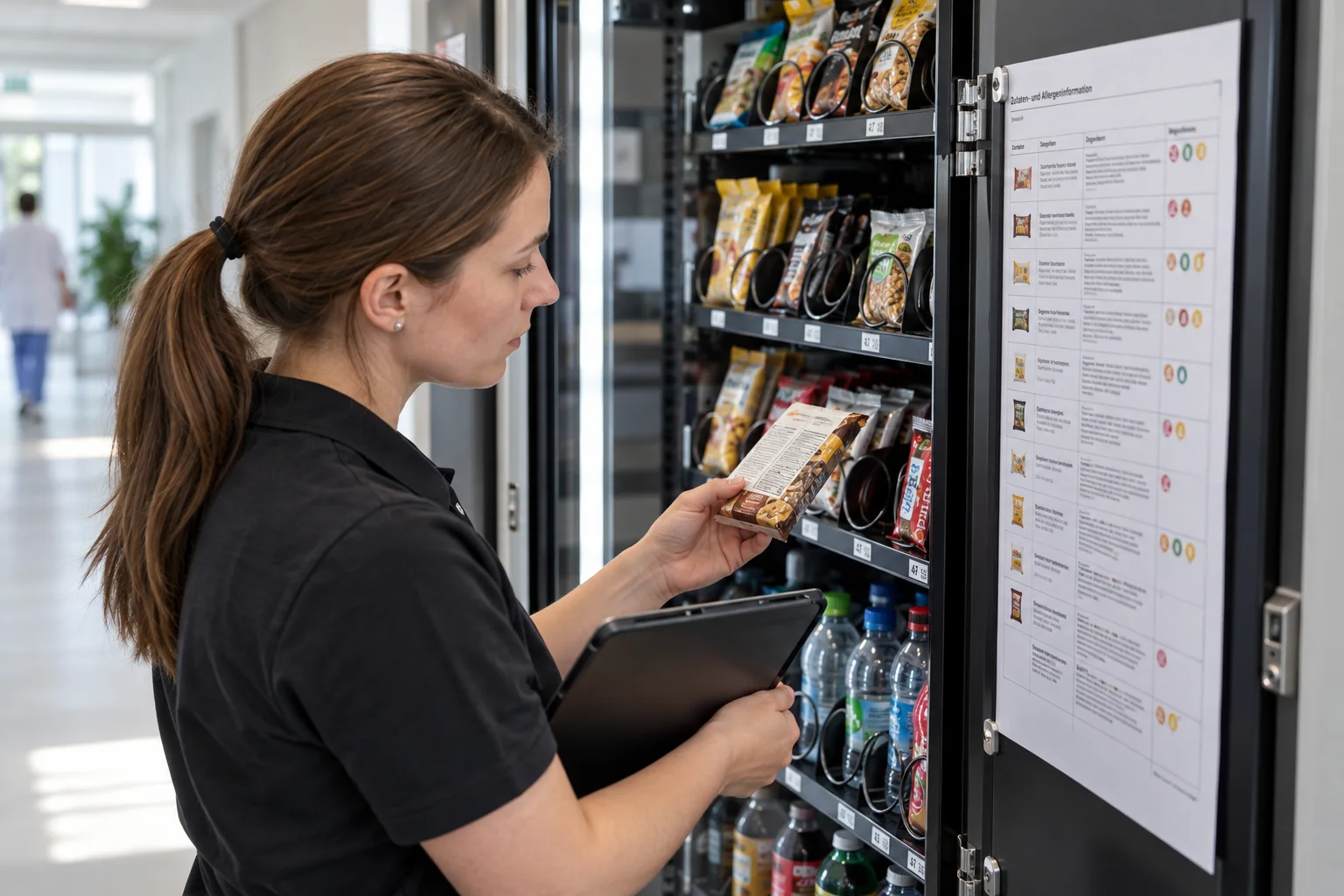
Loose goods and non-prepacked products are subject to the LMIDV (Section 3). These include freshly filled smart-fridge products without a complete individual label, OCS coffee from a fully automatic machine with a milk module, and bakery products from machines without sealed packaging (LMIDV). Section 3 of the LMIDV permits three ways to provide information for these products: a written notice on or beside the machine; a QR code with a permanently accessible link; or verbal information combined with a clearly visible notice on the machine. In practice, the verbal option is not feasible for unattended machines. A laminated allergen table beside the machine works well in practice: product names in rows, all 14 allergens in columns, with a tick wherever an allergen is present.

The classification of smart-fridge products that are wrapped in film but supplied without an LMIV-compliant label has not been conclusively clarified (not independently confirmed). The safer option is to place a complete allergen label on every product, regardless of packaging type.
HACCP in vending: what must be documented in writing?
Article 5 of EU Regulation 852/2004 requires every food business operator to have a self-monitoring system based on the 7 HACCP principles (Bosta Kaffee): (1) hazard analysis, (2) identification of critical control points, (3) setting critical limits, (4) monitoring procedures, (5) corrective actions, (6) verification procedures, and (7) documentation of all the above.
Simplified HACCP guidelines apply to machines selling only packaged, non-refrigerated products. Refrigerated machines and machines with fresh products are subject to the full documentation requirement: daily temperature readings, cleaning logs and waste records. The BDV provides templates and reviews the HACCP plan as part of its quality seal audit (BDV). Operators seeking the quality seal submit their HACCP plan as the basis for the audit, so the initial documentation effort serves two purposes.
Section 43 IfSG: who needs training, and how often?
Everyone who handles food—including people who restock machines, cleaners and service technicians—needs initial instruction from the health authority under Section 43 of the Infection Protection Act, followed by annual refresher instruction from the employer. Both must be documented and presented on request. The additional legal basis alongside the IfSG is Annex II, Chapter XII of EU Regulation 852/2004. The BDV provides a sample hygiene training document.
A common mistake is keeping proof of instruction in the office instead of with the service technician. During an inspection at the installation site, the control authority may ask to see the proof on site. Recommendation: store it digitally with access from a mobile device.
Temperature monitoring for refrigerated machines: limits and records
A maximum of 7 °C for chilled products, with an ideal range of 2 to 5 °C: these are the HACCP limits for vending refrigerators under EU Regulation 852/2004 (Bosta Kaffee). Under HACCP principle 4, temperature checks must be documented with the date, measured value and an assessment of whether it is within the limit. If a reading falls outside the limit, follow the corrective action procedure: take the machine out of service, secure the products, notify a technician and document the incident in writing.
The BDV quality seal audit explicitly checks temperature monitoring for vending machines (BDV quality seal brochure). Whether a machine automatically transmits temperature data via telemetry can be found in the manufacturer’s data sheet.
OCS and hot drinks machines: which allergens need particular attention?
Hot drinks machines that brew fresh coffee beans or instant mixes are subject to specific labelling requirements. BDV Intern 01/2024 (p. 39) and 02/2022 (p. 44) address this topic explicitly (BDV).
Milk (allergen no. 7): Every fully automatic coffee machine with a milk module or milk powder canister must indicate that it contains milk (casein, lactose). This information belongs on the machine, not just in the internal HACCP documentation. Nuts (allergen no. 8): These are present in nut or almond cappuccino mixes. Anyone using hazelnut cappuccino powder must display this information clearly. Sulphites (allergen no. 12): These are present in certain flavourings and must be labelled from 10 mg/kg. Operators using ready-made mixes should check the supplier’s ingredients list.
For machines with several product ranges (coffee, tea, cocoa, soups), a product-specific allergen table is the clearest solution: product names in rows, 14 allergens in columns, with a tick wherever an allergen is present. This format is expressly permitted under Section 3 of the LMIDV.
Traceability under Article 18 of EU Regulation 178/2002
Article 18 of EU Regulation 178/2002 requires food business operators to apply the “one step back, one step forward” principle. For vending operators, this means (BDV):

- Supplier records: name, address, delivery note or invoice for every delivery
- Batch traceability: batch number or delivery date when goods are put into storage
- Site allocation: which product was stocked in which machine, and when?
This documentation forms part of the HACCP system (principle 7) and is checked during the BDV quality seal audit. In the event of a food recall, the operator must be able to quickly identify all affected machines. Without batch allocation records, the operator may have to check the entire stock in case of a recall.
BDV quality seal: what it costs and what it demonstrates
€2,750 net plus VAT, valid for 3 years and based on DIN EN ISO 9001:2015-11: the BDV quality seal is the vending industry’s certification scheme for operators in Germany (BDV quality seal brochure). The audit explicitly checks compliance with current food law, the HACCP plan, labelling (allergens, additives, best-before dates), the traceability system, supplier selection and assessment, temperature monitoring, cleaning logs and hygiene training records.
For corporate customer tenders, the quality seal is reliable evidence that simplifies the customer’s internal compliance checks. Demand for it is increasing in the public sector and among large companies with their own compliance departments. Whether a customer requires the quality seal must be clarified in the contract.
Packaging Act: LUCID registration for vending cups
Vending cups are service packaging under the Packaging Act (VerpackG). Operators must register in the LUCID register and participate in a dual system. Fines for non-compliance: up to €200,000 (BDV). Under Section 32(5) of the VerpackG in conjunction with Section 9(4), point 5 of the PAngV, machines are exempt from the single-use/reusable labelling requirement. This does not remove the LUCID registration or system participation requirements.
Operators offering reusable cup systems are subject to additional requirements; the details depend on the system selected and should be clarified with a specialist legal adviser or the BDV.
Compliance checklist: 7 core obligations for vending operators
1. Register as a food business operator With the competent authority at the business premises, once and before the first machine is put into operation, free of charge.
2. HACCP plan under Article 5 of EU Regulation 852/2004 For snack machines selling only packaged goods: simplified guidelines. For refrigerated machines and machines with fresh products: full documentation with daily checklists.
3. Allergen labelling under the LMIV and LMIDV Prepacked products: the manufacturer’s label is sufficient. Loose and open products: a notice or QR code under Section 3 of the LMIDV listing all 14 mandatory allergens.
4. Hygiene training under Section 43 of the IfSG Initial instruction from the health authority, annual refresher instruction from the employer, with records documented in writing and available.
5. Temperature monitoring for refrigerated machines Maximum 7 °C, daily measurement and recording, with a corrective action procedure defined in writing for deviations.
6. Traceability under Article 18 of EU Regulation 178/2002 Supplier records, batch allocation and a site log for each machine.
7. LUCID registration under the Packaging Act Register in the LUCID register as a distributor of service packaging used in vending machines, and ensure participation in a dual system.
The BDV provides templates for HACCP plans and hygiene training and keeps members informed about legal changes (German Vending Machine Industry Association (BDV)). Use this checklist as a starting point for a compliance discussion with the competent authority.
Latest on this topic
- EUDR and coffee vending machines: what the EU Deforestation Regulation requires before it appliesMarket Analysis · October 13, 2026
- Commodity Monitor October 2026: Coffee eases, cocoa and sugar in focusMarket Analysis · October 13, 2026
- AI in Vending in 2026: Predictive Maintenance and Assortment Optimisation — How to Use the TechnologyMarket Analysis · October 2, 2026
More guides
 KI Modified
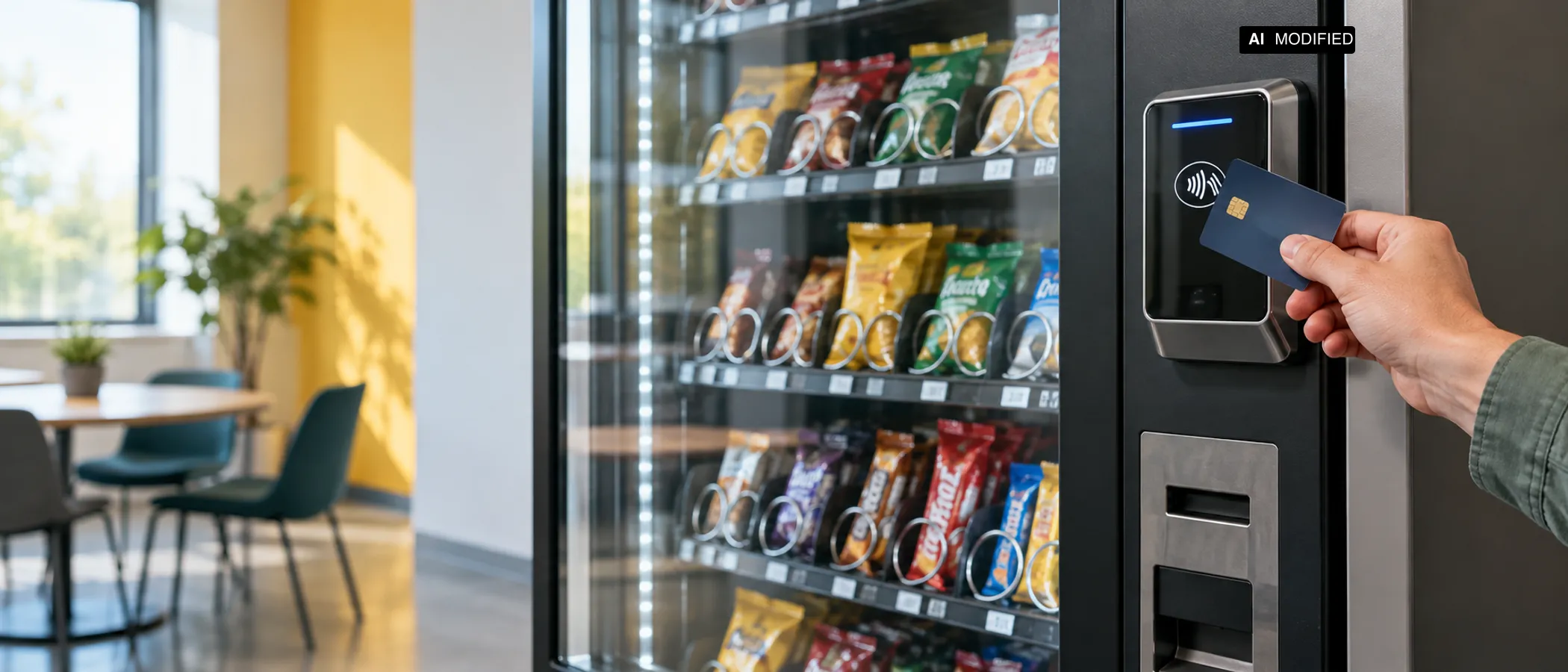
Retrofit cashless payment to a vending machine: MDB 4.3, costs and selection criteria
What do you need to retrofit a vending machine for cashless payment? This guide explains MDB 4.3, compatibility, terminal selection, installation, ongoing costs and typical checks, without making unsupported price promises.
 KI Modified
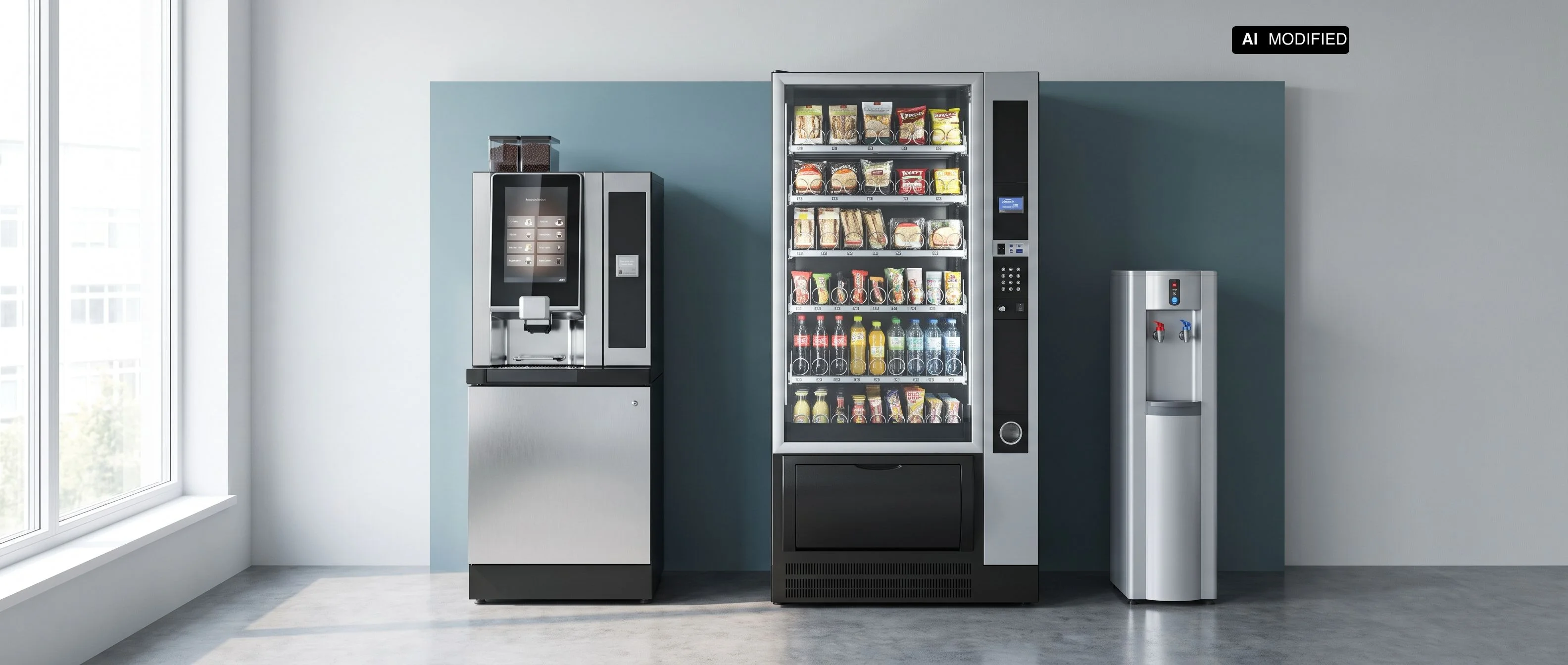
The Ideal Vending Machine Mix: Combining Hot Drinks, Snacks and Water
Which combination of hot drinks, snacks and water is right for an office, a public venue or a small site? This guide helps operators assess sales mix, site requirements, hygiene, refrigeration, replenishment and cashless payments.
 KI Modified
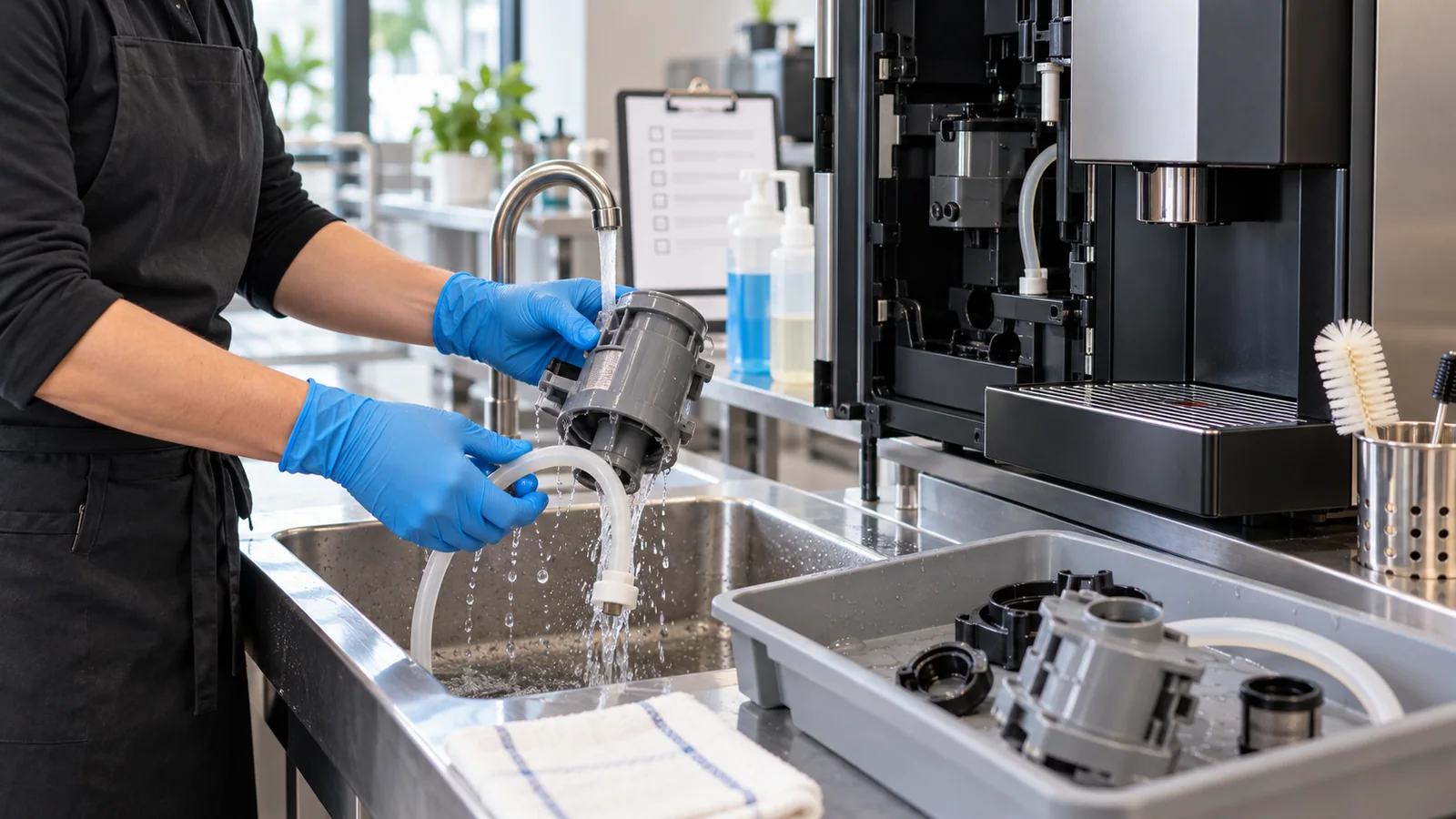
Hygiene plan for hot drinks vending machines: cleaning, HACCP and records
What cleaning obligations apply to hot drinks vending machines, which intervals must operators set themselves based on risk, and what records should the hygiene plan include? This guide distinguishes legal requirements, HACCP practice and standards guidance without prescribing blanket cleaning intervals.