
Fundamentals & Getting Started
Energy Efficiency in Vending Machines: Cost-Saving Techniques – A Practical Guide
 KI Modified
On this page
- Quick answer: What does energy efficiency really achieve in vending?
- Why electricity is no side issue in vending operations
- The EU energy label for refrigerated vending machines
- Six operating measures with demonstrable impact
- Night setback and standby operation
- Demand-based cooling
- Slide plates in snack machines
- Mains-connected water dispensers instead of gallon deliveries
- Telemetry and dynamic route planning
- Activate energy-saving mode
- Procurement: Criteria for machine selection
- TCO example: Hot drinks machine over five years
- Regulatory framework: What applies now and what is coming
- Checklist: Energy efficiency in day-to-day operations
Last updated: 2026-09-29
Quick answer: What does energy efficiency really achieve in vending?
Electricity costs €15 to €40 per month for each hot drinks machine, with additional costs for compressor-cooled machines. Across a fleet of 50 machines, that adds up to as much as €24,000 in annual electricity costs for consumption alone, excluding maintenance and service routes. Three measures offer the greatest savings potential without replacing machines: first, night setback with standby operation between 22:00 and 06:00; second, cooling tailored to the actual product range; and third, telemetry-supported route planning that avoids unnecessary trips. When buying new, operators who check the EU energy label (A to G under EN IEC 63252:2020) and choose machines with an Energy Efficiency Index below 50 can reduce operating costs over the long term compared with a Class G machine. The European Commission estimates that the ecodesign requirements in force since March 2021 could deliver 48 TWh in annual savings by 2030 across Europe. This guide explains which measures operators can implement straight away and what to look for at their next machine purchase.
Why electricity is no side issue in vending operations
There were 623,700 vending machines operating in Germany in 2024, and the number of refrigerated combination machines has risen by 30 percent since 2019 (BDV Market Overview 2025). Each machine runs 24 hours a day, 365 days a year, regardless of whether anyone is buying at the location at that moment. Even moderate efficiency gains per machine add up to five-figure annual savings across a larger fleet.
The German Vending Association (BDV) uses an industry benchmark of €15 to €40 in monthly electricity costs for hot drinks machines in its costing template. This includes standby periods and is not a full-load figure. A hot drinks machine in an office building with 150 employees sees little use at night and on weekends: operators who do not actively manage these periods pay for availability that nobody uses.
Consumption is higher for compressor-cooled snack and cold drinks machines because cooling draws energy continuously, even when visitor numbers are low. In the EU energy label, drum and carousel machines typically receive Class G, the lowest of the seven classes. Closed-can or bottle machines without an open cooling zone perform better. Choosing these machines is itself a strategic decision with a measurable cost impact over the full five-to-seven-year depreciation period.
Energy price increases since 2022 have also changed how the industry weighs the issue. According to the BDV Operator and Market Report 2023, operators responded directly to higher electricity and fuel prices by investing more in telemetry software and route optimisation. Since then, energy efficiency has been a cost lever for professional operators, not just a sustainability issue.
The EU energy label for refrigerated vending machines
Since 1 March 2021, refrigerated vending machines in the EU have been required to carry an energy label under Delegated Regulation (EU) 2019/2018, in conjunction with Ecodesign Regulation (EU) 2019/2024. The scale runs from A to G. There are no plus classes such as A+ or A++ in this appliance category.
The EU deliberately calibrated the rating scheme ambitiously: when it was introduced in 2021, no machine could achieve better than Class C (EVA). This keeps pressure on manufacturers to innovate for around ten years before the scale needs to be tightened again.
Measurements are made under EN 50597 / EN IEC 63252:2020 in climate class 3 (25 °C ambient temperature, 60 percent relative humidity). Topten.eu lists only machines with an Energy Efficiency Index (EEI) below 50, equivalent to Class D or better. The refrigerant must also have a GWP of no more than 3: R290 (propane), R600a (isobutane) and CO₂ (R744) meet this criterion. R134a (GWP 1,430) and R404A (GWP 3,922) do not. These refrigerants are no longer considered in a future-proof procurement strategy for older machines.
Manufacturers must register their refrigerated machines in the European Commission’s EPREL database. Before making a purchase decision, operators can look up the registration number in the database to confirm that the machine formally meets the ecodesign requirement. If there is no EPREL entry, the machine is not compliant with the regulations and will be excluded from tenders with sustainability criteria.
Hot drinks machines without a cooling function are not subject to a mandatory EU energy label. For these machines, the EVA Energy Measurement Protocol EMP 3.1b is the relevant industry standard for energy measurements. In July 2019, the EVA withdrew its earlier EMP for refrigerated machines and replaced it with EN 50597 (EVA). Comparing older EMP figures with new EN-IEC-63252 data means comparing different measurement methods, so a direct comparison does not provide reliable conclusions.
Six operating measures with demonstrable impact
The BDV catalogue of operating sustainability measures lists six operational levers that operators can use without replacing machines. None requires a major investment; most are configuration changes.
Night setback and standby operation
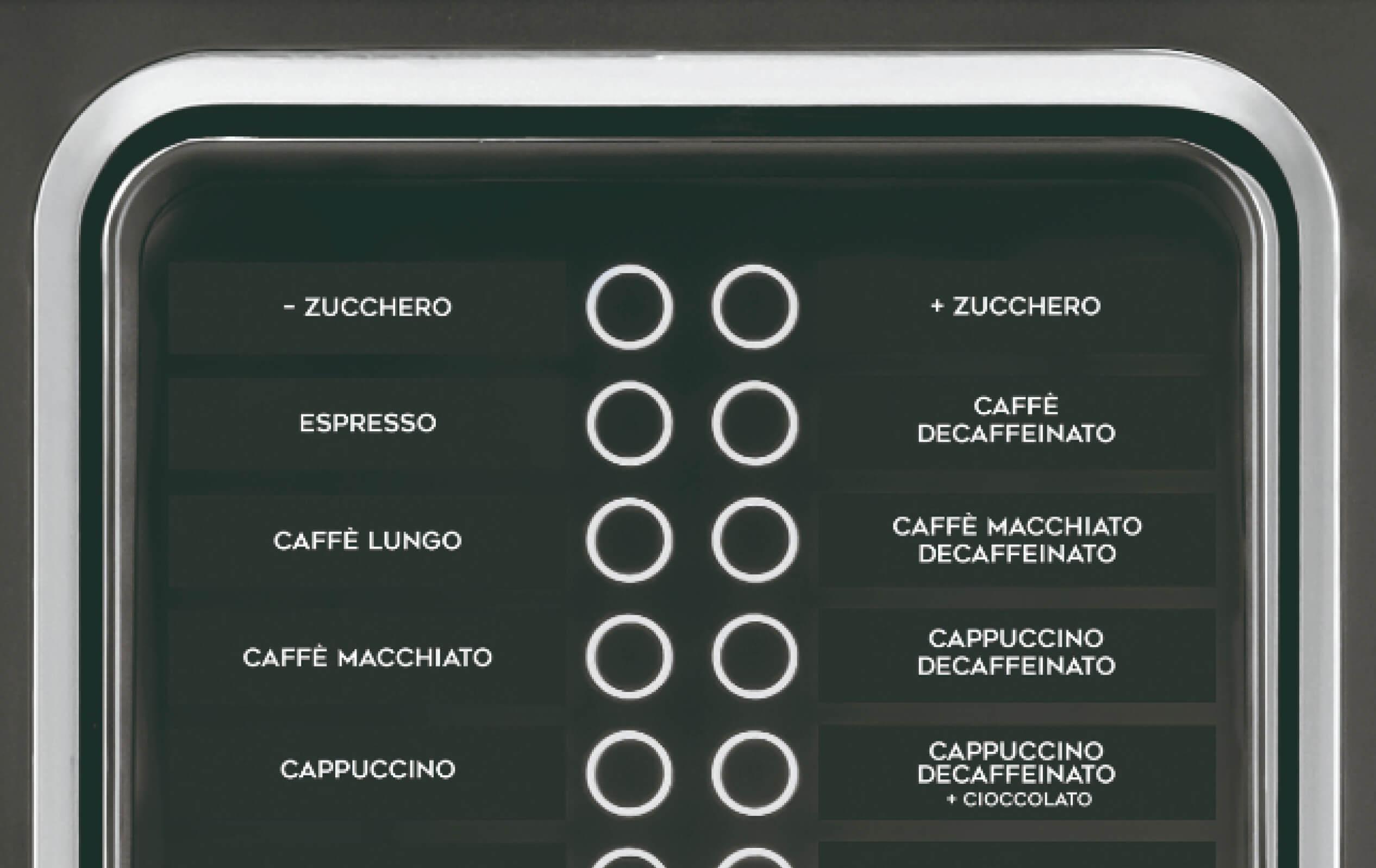
At most locations, no products are taken between 22:00 and 06:00. A programmable night setback reduces operating power to the technical minimum. For hot drinks machines, this means the boiler cools down to its holding temperature, while the lighting and display switch off. Machines with a telemetry interface can be configured remotely, without visiting the location. The BDV lists night setback and standby operation as the first and most important measure in its catalogue.
Demand-based cooling
A cold drinks machine set to cool to 4 °C wastes compressor runtime if its range consists only of standard cans that do not require such a low temperature. BDV recommendation: reduce the target temperature to the product-specific minimum, generally 6 to 8 °C for standard drinks. Specific savings in kilowatt-hours depend on the location and have not been publicly benchmarked; the direction of the effect is undisputed. Check the cooling setting before every change to the product range.
Slide plates in snack machines
Snack machines with spiral delivery often cool the entire interior, even when individual channels are stocked with products that do not need refrigeration, such as crisps, nuts or bars. Slide plates mechanically separate chilled and ambient-temperature zones. This is a low-cost retrofit that can be installed without a service technician and reduces the volume of air that needs to be cooled.
Mains-connected water dispensers instead of gallon deliveries
Point-of-use (POU) water dispensers connect directly to the water supply. This eliminates the carbon footprint of transporting gallon containers. According to the BDV Third Market Study 2024, an average of one POU water dispenser is installed for every ten freestanding machines. In a fleet of 30 freestanding machines, that corresponds to three POU machines, which eliminate regular gallon deliveries and reduce both logistics costs and emissions.
Telemetry and dynamic route planning
Machines that transmit their fill levels in real time allow operators to plan routes based on stock: technicians visit a location only when its fill level falls below a defined threshold, rather than following a fixed weekly schedule. Fewer kilometres driven mean lower fuel and emissions costs and less vehicle wear. For an operator with 200 machines and an average of 80 kilometres driven per route, the savings can be calculated directly against the fleet budget. The BDV documents this effect in its Operator and Market Report 2023 as one of the industry’s key responses to higher energy prices.
Activate energy-saving mode
Many machines are delivered with their factory energy-saving mode disabled. Switching it on during initial installation saves energy without further investment. This setting takes no extra technician time if it is enabled during the first service visit. On machines with remote access, it can even be activated without visiting the location.
Procurement: Criteria for machine selection
When buying new, machine selection determines energy use for the next five to seven years. The BDV uses a depreciation period of five years for drinks machines and seven years for snack and merchandise machines. A machine with a low EEI can offset any additional cost compared with a Class G machine through lower electricity costs, provided standby consumption is specified in the data sheet and night setback is used.
Specific procurement criteria:
- Include EEI below 50 (Class D or better) as a minimum requirement in the tender.
- Require refrigerant with GWP below 3: R290, R600a or R744.
- Verify the EPREL registration number in the EU database before ordering.
- Ask for standby power in watts separately in the data sheet. Manufacturers that do not specify this figure cannot provide a night setback calculation.
- Telemetry interface: machines without remote monitoring rule out stock-based route planning.
- Energy-saving mode configurable remotely: allows activation without visiting the location.

For public procurement and sustainability reports, EPREL evidence is a formal criterion. Machines without a valid EPREL entry do not meet the ecodesign requirement and may be excluded from tenders worded accordingly.
TCO example: Hot drinks machine over five years
Basis: BDV complex costing template, machine price €6,000 net, five-year depreciation.
Annual depreciation: €1,200
Electricity: €25/month (midpoint of the BDV range of €15 to €40) equals €300 per year. Over five years: €1,500.
Energy savings from night setback (indicative calculation): A machine with a rated power of 2,000 watts running 24 hours a day without night setback consumes 17.52 MWh per year. With eight hours in standby at a holding temperature of 200 watts, the calculated annual consumption is around 14.66 MWh. At a commercial electricity price of €0.28/kWh, that equals €800 versus €672: a saving of around €128 per year through configuration alone. This figure is indicative; actual standby power varies by machine and should be taken from the manufacturer’s data sheet.
Coffee ingredients: Premium beans cost around €0.22 per cup, while budget blends cost around €0.09. At 80 cups a day and 250 operating days, that amounts to €1,800 to €4,400 per year. Ingredient costs therefore generally far exceed electricity costs.
Conclusion: Electricity is not the largest cost item in TCO, but it is the easiest to optimise because operating measures require no investment. The combination of activated energy-saving mode and night setback is one of the few measures that delivers a measurable effect without any expenditure.
Regulatory framework: What applies now and what is coming
The Ecodesign Regulation (EU) 2019/2024 sets minimum efficiency requirements for refrigerated vending machines and excludes the least energy-efficient classes from the EU market. The regulatory review (contractor: Viegand Maagøe A/S) runs from December 2024 to April 2027. The outcome is expected to bring stricter EEI limits and expanded requirements for climate-friendly refrigerants.
In February 2026, the Bundestag’s Research Services documented the regulatory framework for vending machines in a public paper (WD 5-017-26 / WD 4-011-26 / WD 8-009-26), including current energy-efficiency requirements and tax aspects.
Operators who procure machines today with an EEI below 50 and GWP below 3 will be better prepared for the stricter requirements expected after 2027. Machines that sit just above today’s compliance threshold could become a retrofit problem after a revision.
Checklist: Energy efficiency in day-to-day operations
Immediate measures with no investment:
- Is night setback activated (22:00 to 06:00)?
- Is energy-saving mode switched on in the machine menu or via telemetry?
- Is the cooling temperature adjusted to the actual product range?
- Are slide plates installed in snack machines with mixed product ranges?
- Is route planning organised around stock levels using telemetry?
- Have POU water dispensers been considered as a replacement for gallon machines?
For the next procurement:
- Has an EU energy label EEI below 50 been included as a minimum requirement in the tender?
- Has refrigerant with GWP below 3 been specified?
- Has the EPREL registration number been verified before ordering?
- Is standby power specified separately in the data sheet?
- Are a telemetry interface and remotely configurable energy-saving mode available?
Last updated: 2026-09-29
Latest on this topic
- EUDR and coffee vending machines: what the EU Deforestation Regulation requires before it appliesMarket Analysis · October 13, 2026
- Commodity Monitor October 2026: Coffee eases, cocoa and sugar in focusMarket Analysis · October 13, 2026
- AI in Vending in 2026: Predictive Maintenance and Assortment Optimisation — How to Use the TechnologyMarket Analysis · October 2, 2026
More guides
 KI Modified
Retrofit cashless payment to a vending machine: MDB 4.3, costs and selection criteria
What do you need to retrofit a vending machine for cashless payment? This guide explains MDB 4.3, compatibility, terminal selection, installation, ongoing costs and typical checks, without making unsupported price promises.
 KI Modified
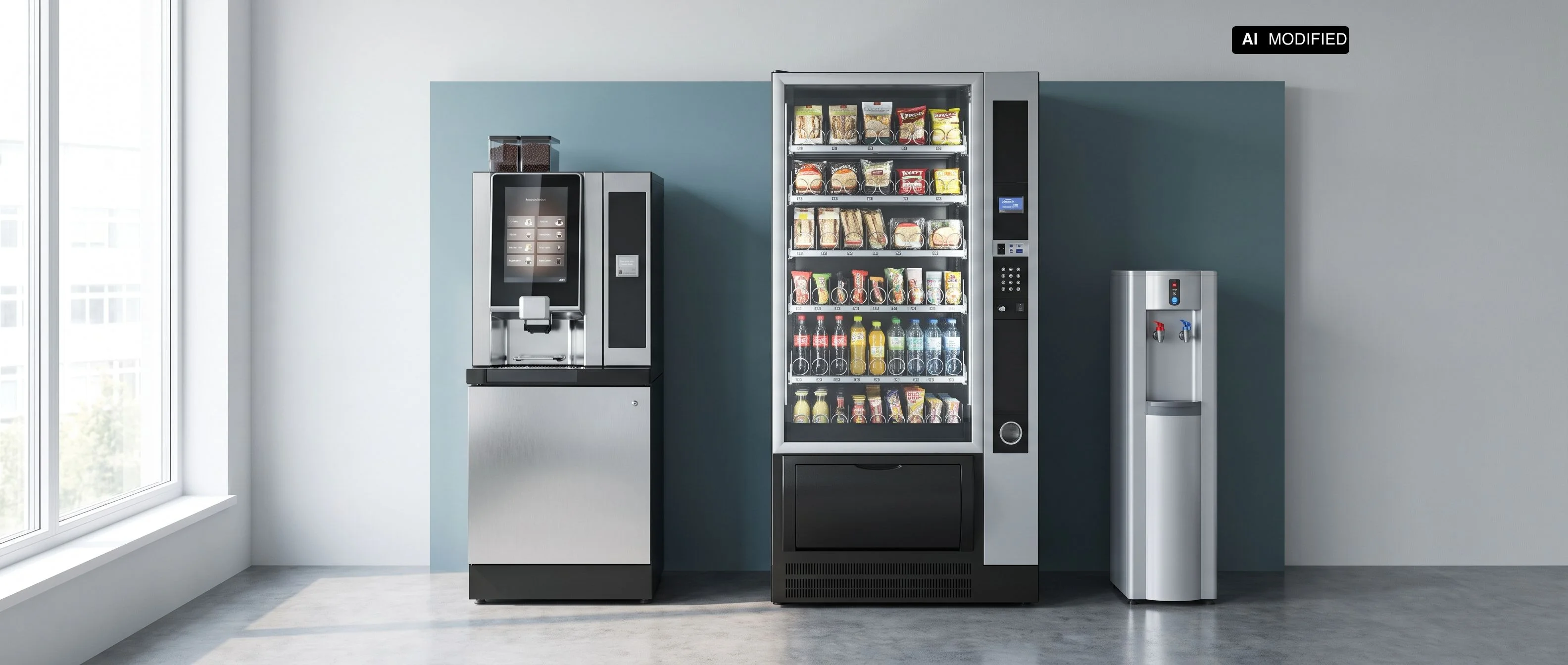
The Ideal Vending Machine Mix: Combining Hot Drinks, Snacks and Water
Which combination of hot drinks, snacks and water is right for an office, a public venue or a small site? This guide helps operators assess sales mix, site requirements, hygiene, refrigeration, replenishment and cashless payments.
 KI Modified
Hygiene plan for hot drinks vending machines: cleaning, HACCP and records
What cleaning obligations apply to hot drinks vending machines, which intervals must operators set themselves based on risk, and what records should the hygiene plan include? This guide distinguishes legal requirements, HACCP practice and standards guidance without prescribing blanket cleaning intervals.