
Fundamentals & Getting Started
Coffee Sourcing for Vending Operators: Quality, Costs and Supplier Management
 KI Modified
On this page
- Why coffee sourcing is about more than comparing prices
- What quality criteria must vending coffee meet?
- How can purchase price and total costs be calculated reliably?
- How can operators assess suppliers and reduce procurement risks?
- Which processes protect availability and quality in day-to-day operations?
- Procurement worksheet
- Practical recommendations
- Conclusion
- Further primary sources
This article was created with AI assistance and checked automatically. A human review before publication is not documented.
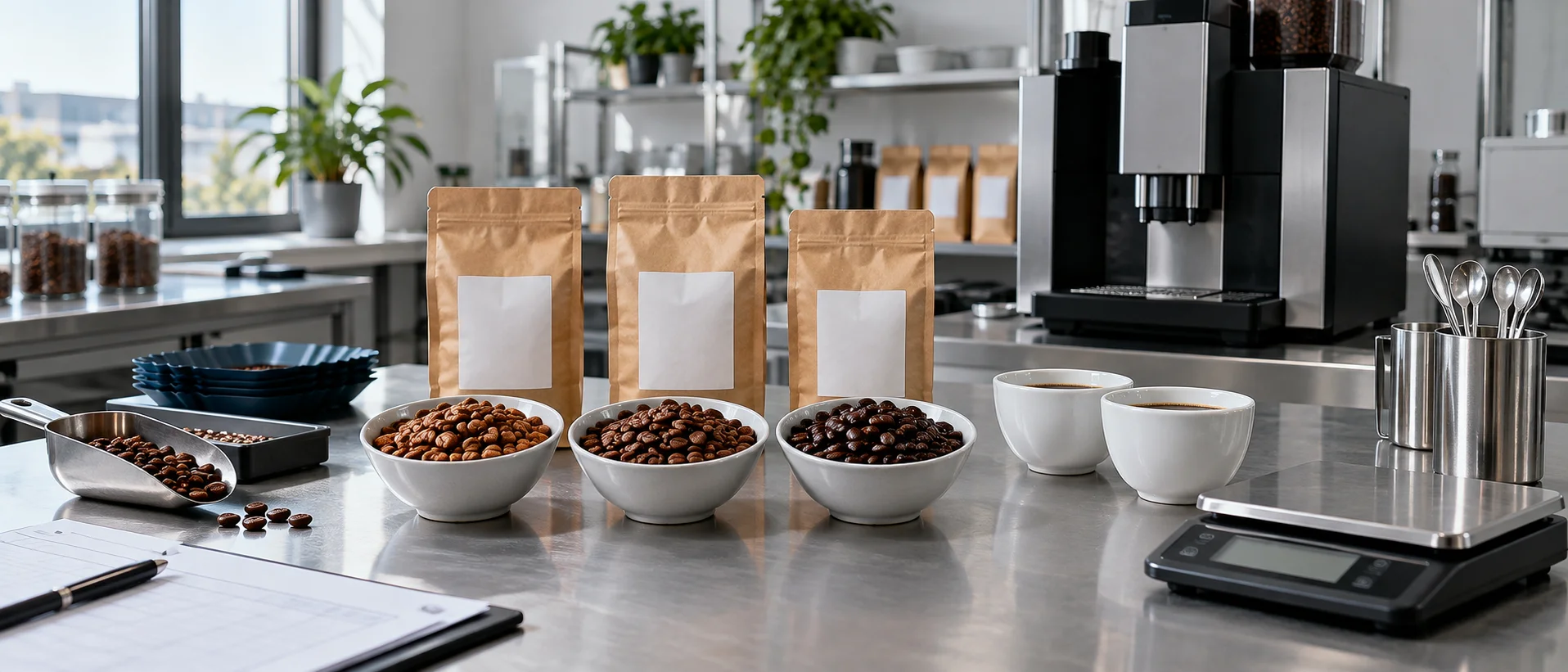
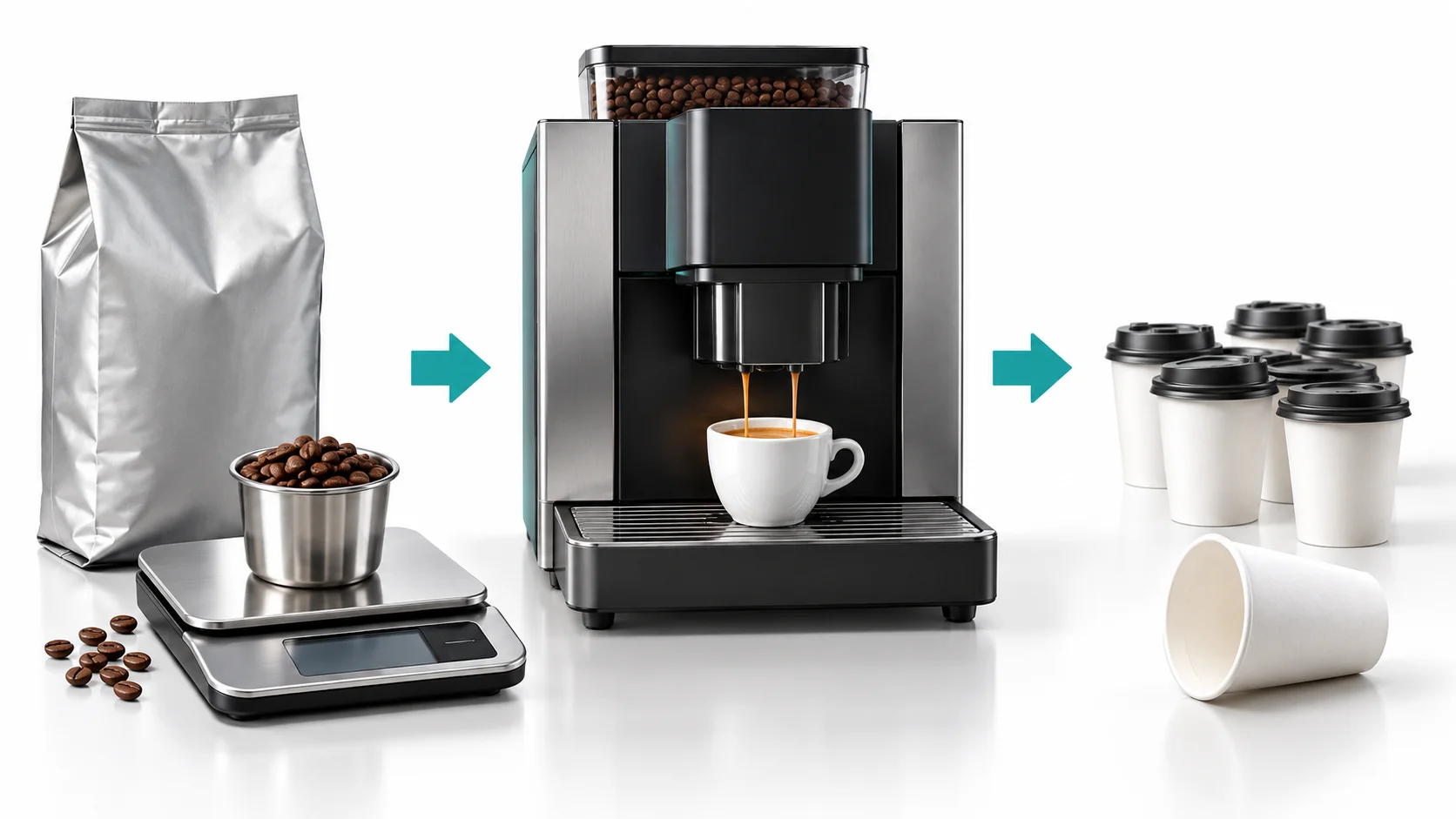
Image note: The cover image and cost graphic are AI-generated illustrations; they show neither a photographed branded product nor a practical test. The bean photo is a press image from the German Coffee Association.
Coffee for vending machines should be sourced based on taste, technical suitability, supply reliability and cost per drink sold. This guide provides an approval process and an adaptable supplier assessment for that purpose. The weightings and processes are editorial recommendations, not an industry standard or an independent product test.
Why coffee sourcing is about more than comparing prices
Demand is also shifting towards freshly ground offerings. The German Coffee Association reported that the whole-bean segment grew by just under 2 percent in 2024. The association particularly associates whole beans with fully automatic machines and traditional portafilter machines. In vending, this trend raises expectations for bean quality, grind consistency and cleaning. It makes the technical alignment of bean, grinder, dosage and brew group more important.
For procurement, this leads to a simple priority: the coffee must suit the specific use case. A strong, dark profile may be in demand in a production environment, while an office location may prefer a milder blend with milk options. This assumption needs to be tested through tastings. A general ranking of the best vending beans would not be reliable, because water, machine, dosage and target audience all affect the result.
Sourcing is therefore an operational management task. Supplier decisions affect the customer experience, replenishment logistics, maintenance effort and risk of downtime at the same time. The decision should not be based on the lowest list price. Coffee that appears inexpensive can end up costing more due to higher waste, more frequent adjustments or additional cleaning. Conversely, a higher purchase price does not automatically lead to a better margin. What matters is the combination of an accepted drink price, sales volume, recipe costs and reliable supply.
What quality criteria must vending coffee meet?
Quality starts with the bean, but does not end with origin or roast level. The German Coffee Association explains the factors that affect aroma: roasting, grind size, dosage, water and brewing temperature all affect the result. These fundamentals do not replace approval of the recipe for the specific machine model. These factors should be considered together in every supplier assessment.
First, the sensory profile and technical suitability of the bean need to be considered separately. Arabica and Robusta proportions, roast level, acidity, bitterness and body affect the taste. For the operator, it also matters whether the bean is processed consistently in the grinder being used. One variety may produce a stable result in one machine but run too slowly or too quickly in another. Approval must therefore take place on the actual vending machine, not just through a tasting as filter coffee or espresso made with different equipment.
Roasting affects aroma, solubility and extraction. Darker roasts can provide a stronger profile and pronounced roast aromas. However, a tasting should not lead to a blanket judgement about quality. What matters is whether the desired recipe works with the available dosage and brewing time. In milk drinks, the coffee aroma must also stand up to milk, topping or cocoa. Acidity, bitterness and aftertaste are perceived more directly in a small black coffee.
Dosage and grind size are part of the reference recipe. For each approved variety, operators should record the amount of coffee dosed per drink, the grind setting and the drink size tested. Changing the beans without readjusting the machine can change the flow rate and the flavour in the cup. A general dosage recommendation does not replace recipe approval: cup size, brew group and desired drink strength vary. The actual amount of coffee used must be measured on the operator’s own machine.
Brewing temperature also depends on the machine and recipe. It should not be assessed as an isolated supplier value. The operator checks whether the existing machine produces the approved recipe consistently. This includes drink volume, grind size, dosage, brewing time and water quality. The water filter is a separate check. Hardness and mineral content can change the taste and promote deposits. The German Coffee Association lists water quality as one of the factors affecting aroma. Technical water treatment should be selected in accordance with the requirements of the relevant machine manufacturer.
Batch consistency matters more in vending than a one-off sample that impresses. A blind tasting should therefore be conducted with at least two delivery batches once they are available. Both samples are prepared using the same machine recipe. The criteria to assess are aroma, body, bitterness, acidity, aftertaste and acceptance across the intended drink range. Record the assessment with the date, delivery batch and machine location.
A practical approval form can include five fields: sensory result, technical settings, recipe compatibility, packaging and delivery details, and decision. For the fairest possible supplier comparison, we recommend a blind tasting. The sample’s name and price should not be known during the tasting. This helps reduce the influence of the brand name and expected price on the assessment.
Quality checks do not end once a product is approved. Batch changes, customer complaints and drinks that seem unusual must be traceable. This requires the delivery batch, delivery date, location and machine ID. Without this information, it is difficult to attribute a deviation to a raw material, machine or maintenance issue. Quality is therefore not a one-off purchasing test, but a documented process.
How can purchase price and total costs be calculated reliably?
A general price per kilogram for vending coffee could not be reliably verified during research. The actual price depends, among other things, on bean type, roast, certification, order volume, supply contract, packaging and country of delivery. Specific suppliers were also not evaluated as recommendations because no comparable assessment of terms, supply reliability and product quality was available. A published benchmark would obscure these differences.
The calculation should therefore start with the actual invoice data paid. The first cost category covers beans or soluble coffee. For beans, at least the pack price, weight, dosage per sale and waste rate are needed. The basic calculation is: divide the pack price by the pack weight to get the price per kilogram. Multiply this by the amount of coffee actually dosed per sale. The operator must also account for the fact that incorrect portions, rinse cycles and discarded drinks do not all appear as cups sold.
Milk products, toppings and add-ons belong in a separate category. A cappuccino has a different recipe cost structure from a black coffee. If a recipe changes, the extra use of milk or topping may outweigh the effect of a small reduction in the price of beans. Each drink line should therefore have its own unit cost calculation. The calculation must account not only for the raw materials, but also for the actual volume of drink served.
Water and filtration are also cost components. Record water consumption, filter type, replacement intervals and disposal. A general flat rate for filter costs could not be verified because water hardness, machine model and site conditions vary. Operators should allocate filter costs over a period or the number of drinks served. They should also document whether an unsuitable bean or incorrect setting leads to more frequent cleaning.
Cleaning and maintenance are often considered separately from purchasing. For sourcing, that separation is misleading if the coffee variety affects operating effort. Residue, oily beans or unstable grinders can increase cleaning requirements. The specific effect must be measured on the operator’s own machine fleet. A comparison over several weeks is useful, using the same recipe, the same water treatment and documented cleaning intervals.
Logistics involve more than shipping costs. Delivery frequency, minimum order quantity, storage space, packaging format and route planning affect total costs. Larger packs can reduce the unit price, but require more storage space and tie up more capital in stock. Smaller packs make stock rotation easier, but can result in more packaging and delivery effort. The right unit depends on consumption, storage capacity and replenishment frequency.
A reliable cost sheet should include at least eight items: coffee, milk products, toppings, water and filters, cleaning, maintenance, logistics and waste. For each item, enter the quantity, unit price, consumption per sale and billing period. This gives the operator the cost per drink served. The purchase price of the machine belongs in a separate investment calculation and must not be mixed with the price of coffee.
A comparison between suppliers only makes sense once all providers use the same cost model. The lowest price per kilogram can become less attractive due to high minimum order quantities, longer delivery routes or more waste. A more expensive supplier may be more cost-effective if recipe losses are lower and deliveries are more reliable. This must be demonstrated by the operator’s own consumption and service data.
How can operators assess suppliers and reduce procurement risks?
A scorecard makes suppliers comparable when it is defined before reviewing offers. This sourcing model recommends six criteria. Sensory suitability accounts for 25 percent, price and total procurement costs for 20 percent, supply reliability for 20 percent, batch and quality consistency for 15 percent, sustainability and origin documentation for 10 percent, and technical compatibility for 10 percent. These weightings are an editorial recommendation for this procurement decision, not a legal requirement or published industry standard.
Batch and quality consistency cover traceable specifications, delivery batches, complaint rate and a defined approval process. The 10 percent for sustainability and origin documentation should only be awarded for claims supported by evidence. The supplier should provide specific evidence for the product offered and the actual delivery route. A general reference to a certification is not enough if it cannot be tied to the specific batch. Technical compatibility covers the grinder, dosage, brew group, drink recipes and cleaning intervals.
Diversification can take two forms. First, at least two approved sources can be maintained for the same drink line. Second, a primary supplier can provide a tested substitute with an identical or sufficiently similar recipe. Both options require tasting and technical approval. A last-minute change during a disruption is not a reliable contingency process.
Price protection should also be assessed carefully. A contract with a long period of fixed pricing can provide planning certainty if delivery volume, term and exit options are clearly defined. A pricing formula can be more transparent if it refers to traceable market parameters. Without specific contract details, it is not possible to say which option is more cost-effective. In either case, set out advance notice periods, substitute product testing and a repeat tasting.
The scorecard should be updated quarterly or when significant changes occur. Triggers include new batches, delivery delays, complaints, recipe changes and unusual cost developments. Every supplier gets the same assessment criteria. This turns a one-off purchasing decision into an ongoing management tool.
Which processes protect availability and quality in day-to-day operations?

Operational stability starts with a reference recipe. For each machine and drink line, document the bean, dosage, grind size, water parameters and sensory target criteria. These details belong in a version-controlled approval. If the bean or delivery batch changes, the recipe should not be used without review. A new tasting and technical check determine whether it is approved.
Safety stock should be based on actual consumption and documented delivery times. A general figure for the optimal storage period or minimum stock level could not be verified. The operator first records average daily consumption, delivery time, ordering frequency and possible delays. From this, an individual reorder point can be calculated. If sales fluctuate, normal and exceptional consumption patterns should also be distinguished.
Batch records provide traceability. Record the supplier, product name, delivery batch, delivery date, quantity, expiry or best-before information, storage location and associated machine locations. If a complaint arises, the operator can check which machines were stocked with the same batch. Without this link, isolating an affected batch can take considerably more effort.
Goods-in checks should be brief and practical. Check packaging condition, delivered quantity, delivery batch, visible damage and whether the delivery matches the order. Any questionable goods should be set aside and not loaded straight into machines. A sensory spot check can be carried out for new batches or known quality risks. Record the decision with the date and the responsible person.
Complaints need a defined process. The operator collects the location, machine ID, drink selected, time, delivery batch and description of the issue. A bitter taste, for example, can be related to the beans, grind size, water, cleaning or brewing parameters. Without this data, the cause cannot be narrowed down properly. The supplier receives the relevant information and a deadline to respond. The internal investigation runs in parallel so that technical faults are not wrongly attributed to the raw material.
Price changes should trigger a defined process. After receiving notice, the operator reviews new total costs, alternative products and the effect on the drink recipe. A new batch or substitute variety is tasted again. Approval is only updated once a documented decision has been made. This prevents purchasing savings from being lost through untested declines in quality.
Storage and stock rotation are part of quality management. If best-before dates differ, use the approved stock with the earliest date first. Products with the same dates can be sorted by goods-in date. The supplier’s storage instructions remain decisive. Stock levels, consumption and reordering must be aligned. Larger orders do not automatically reduce total costs if goods sit in storage for a long time, tie up capital or can no longer be used after a recipe change.
The ongoing process needs a small number of binding metrics. Useful measures include on-time delivery, complaints per delivery batch, waste, consumption per drink line, cost per sale and the number of unplanned recipe changes. These figures should not be interpreted as general industry benchmarks. They help the operator spot trends in their own business and use concrete data in supplier discussions.
Procurement worksheet
The following example uses freely chosen planning assumptions, not market prices: EUR 18 net per kilogram × 8 g of coffee per serving gives calculated bean costs of EUR 0.144 per serving. For 1,000 drinks served and 950 drinks actually sold, the assumed total cost of EUR 144 is spread across 950 sales, or around EUR 0.152 per drink sold. Milk, cups, cleaning, energy and labour are additional. The dosage used must be measured on site; this example is not a setting recommendation.
| Check | Operator entry | Decision |
|---|---|---|
| Bean price and delivery costs | Offer, date, net/gross basis | Compare on the same price basis |
| Dosage and waste | Measured grams and sales figures | Cost per drink sold |
| Recipe approval | Machine, water, grind size, drink size | Suitable, adjust or reject |
| Substitute delivery | Approved substitute product and lead time | Manage supply disruptions |
| Batch consistency | Delivery batch and tasting record | Trace deviations |
Practical recommendations
- Document the machine fleet: For each vending machine, record its location, model, drink lines, grinder, water treatment, dosage and current recipe. Without this information, supplier comparisons are too general.
- Define the target profile: Before issuing a tender, describe which drinks you plan to sell. Separate black coffee, espresso, milk drinks and decaffeinated options. A single flavour profile does not have to suit every location at the same time.
- Organise a blind tasting: Test several samples using the same machine recipe. Assess aroma, body, bitterness, acidity, aftertaste and acceptance. Record the delivery batch and technical settings.
- Build a cost sheet: Record coffee, milk products, toppings, water, filters, cleaning, maintenance, logistics and waste. Calculate the cost per drink actually sold, not just per kilogram of coffee.
- Agree the scorecard in advance: Use the recommended weightings of 25 percent for sensory quality, 20 percent for total procurement costs, 20 percent for supply reliability, 15 percent for batch consistency, 10 percent for sustainability documentation and 10 percent for technical compatibility.
- Approve a substitute product: Maintain at least two approved supply sources or a documented substitute product. Test the substitute before an emergency, not only after a supply disruption.
- Check contractual terms: Clarify price protection, advance notice periods, minimum quantities, substitute deliveries, the complaints process and terms for delivery delays. It is not possible to responsibly recommend a standard contract term without an offer.
- Track batches: Link the delivery batch, delivery date and machine location. This allows targeted blocking and investigation if a deviation occurs.
- Review quarterly: Update costs, complaints, on-time delivery, waste and sensory results. A supplier should be assessed throughout the relationship, not just when the contract is signed.
Conclusion
Operators should maintain at least two approved sources or a tested substitute product. Price changes must trigger a new cost review and tasting. Sustainability and origin claims should only be used when they are evidenced for the specific product and delivery route. This creates a practical system for quality, availability and cost control rather than an abstract supplier ranking.
Further primary sources
Latest on this topic
- EUDR and coffee vending machines: what the EU Deforestation Regulation requires before it appliesMarket Analysis · October 13, 2026
- Commodity Monitor October 2026: Coffee eases, cocoa and sugar in focusMarket Analysis · October 13, 2026
- AI in Vending in 2026: Predictive Maintenance and Assortment Optimisation — How to Use the TechnologyMarket Analysis · October 2, 2026
More guides
 KI Modified
Retrofit cashless payment to a vending machine: MDB 4.3, costs and selection criteria
What do you need to retrofit a vending machine for cashless payment? This guide explains MDB 4.3, compatibility, terminal selection, installation, ongoing costs and typical checks, without making unsupported price promises.
 KI Modified
The Ideal Vending Machine Mix: Combining Hot Drinks, Snacks and Water
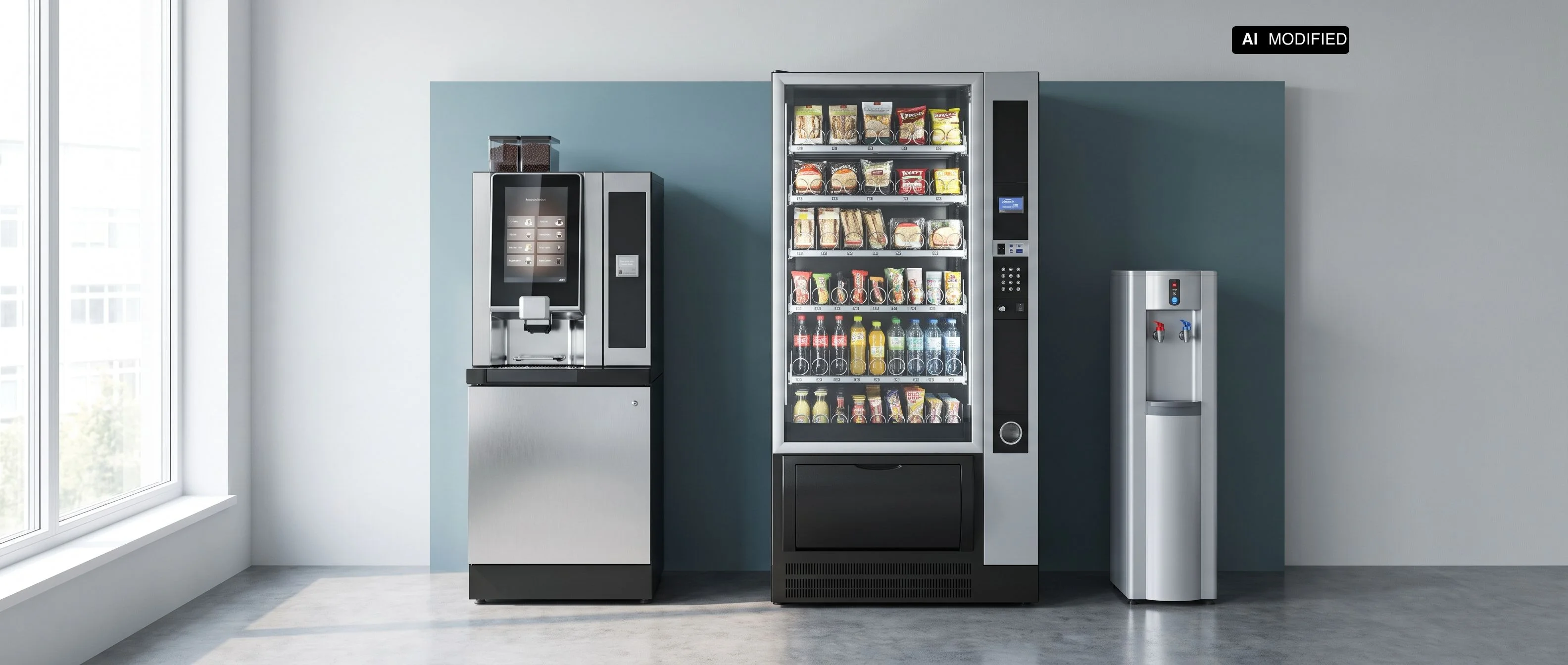
Which combination of hot drinks, snacks and water is right for an office, a public venue or a small site? This guide helps operators assess sales mix, site requirements, hygiene, refrigeration, replenishment and cashless payments.
 KI Modified
Hygiene plan for hot drinks vending machines: cleaning, HACCP and records
What cleaning obligations apply to hot drinks vending machines, which intervals must operators set themselves based on risk, and what records should the hygiene plan include? This guide distinguishes legal requirements, HACCP practice and standards guidance without prescribing blanket cleaning intervals.