
Fundamentals & Getting Started
Card payments: yes or no? Calculate the business case for going cashless
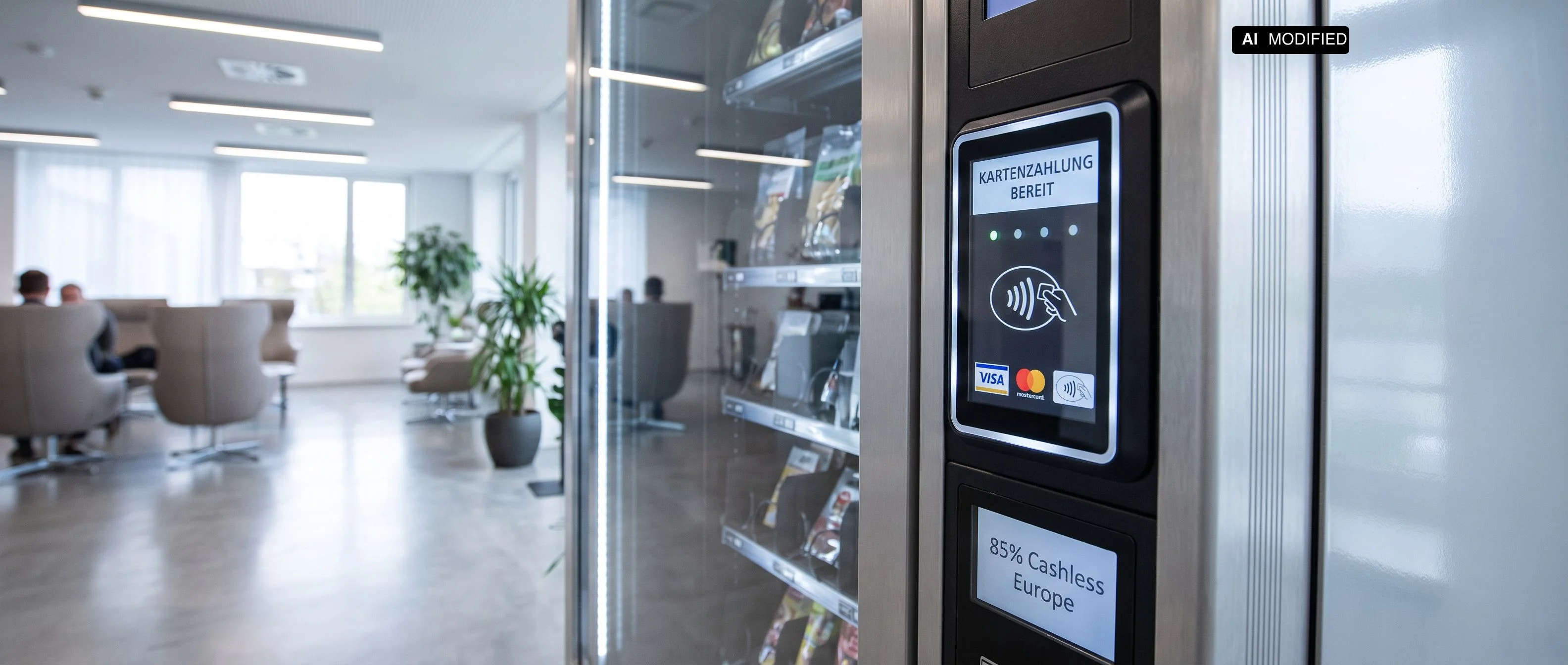 KI Modified
On this page
- Is upgrading to card payments worthwhile?
- Why market pressure is real in 2025
- Technical requirements to check before making an investment decision
- MDB interface: essential, not optional
- Connectivity and compliance
- The three billing models and their actual costs
- Model 1: girocard base (purchase)
- Model 2: Add credit cards (purchase)
- Model 3: Rental solution (no hardware investment)
- How cashless payments affect revenue
- Higher average transaction value: international reference figures
- Cash handling costs that disappear
- ROI calculation: three operator scenarios
- When cashless payments do not pay off
- BFSG requirement from 28 June 2025: what applies now
- Practical checklist: upgrading in eight steps
- Conclusion: the break-even threshold is around 500 sales per month
Is upgrading to card payments worthwhile?
47 percent of Germans paid by card during their last purchase, while only 41 percent paid in cash: for the first time since the Allensbach survey began in 2006, card payments have overtaken cash (IDZ Allensbach Study 2025). For vending operators who still accept coins only, this is no longer a trend but a structural shift in the market: according to the BDV Vending Market Study 2024, operators without a terminal lose access to around half of all buyers willing to make a purchase.
Whether the upgrade pays off depends on three factors: sales volume, average transaction value and the billing model selected. For a machine with 1,000 sales per month at €1.20 each, the girocard base case incurs an additional 6.1 cents per transaction, or €73.90 per month, with an €800 purchase price amortised over 60 months (BDV calculation 2022). At 300 sales per month, the average-transaction-value effect is not halved, but the fixed-cost burden remains almost the same. This guide provides the calculations for three typical operator scenarios, sets out the technical requirements and shows when cashless payment does not pay off.
Last updated: 2026-09-24
Why market pressure is real in 2025
There were 621,000 vending machines in Germany in 2024, 76 percent of them in the workplace market; the sector’s total revenue grew to €4.62 billion (+18.7% versus 2023, BDV Vending Market Study 2024). Across Europe, 85 percent of the pay-vend installed base is already cashless, up from 58 percent in 2019 (EVA Market Report 2025). Operators that do not accept cards are swimming against the market standard.
Two external factors will intensify the situation from 2025. The German Accessibility Strengthening Act (BFSG) has applied since 28 June 2025: new payment terminals on vending machines must be accessible, with tactile buttons, a high-contrast display and a speech output option (BDV Intern 03/2024). Anyone replacing a terminal or installing one for the first time must use hardware that complies with the BFSG. In the workplace market, facility managers increasingly require card payments as a standard in tenders; in many places, a site without a terminal is no longer a competitive offering.
Technical requirements to check before making an investment decision
MDB interface: essential, not optional
MDB (Multi-Drop Bus) is the universal communication interface between a vending machine’s control system and its peripheral devices. If the MDB connection is missing, a technical upgrade is not possible. MDB 4.3 (the standard since 2019) supports contactless payments, mobile payments and EVA-DTS integration (BDV/EVA). Machines built before 2010 often have no MDB implementation or an outdated one; a service technician or the manual can usually confirm this in under an hour. If MDB needs to be retrofitted, the investment decision changes: in this case, leasing or buying a new machine is often more cost-effective than a major retrofit.
Connectivity and compliance
The terminal needs a stable data connection: LAN (lowest ongoing costs, practical only for fixed installations), a GSM/LTE router (flexible; SIM costs should be confirmed with the provider) or an integrated modem (often included in a rental model). No stable signal means no cashless payments. Measuring connection quality on site is therefore the first step before ordering any terminal.
Certification requirements for the German market: TA 7.2 DC POS 3.0 (German Banking Industry Committee), PCI PTS 5.x, EMVCo L1/L2 and EVA-EPS v2. BFSG requirements also apply from 28 June 2025. Existing terminals are grandfathered, but this protection ends when they are replaced. The terminal supplier must confirm BFSG compliance in writing, as responsibility for compliance rests with the operator.
The three billing models and their actual costs
The BDV model calculation 2022 compares three scenarios at 1,000 sales per month. The figures are indicative; confirm current terms with the relevant provider.
Model 1: girocard base (purchase)
Hardware: €800 upfront, amortised over 60 months = €13.33/month. Transaction costs: €3.00 basic fee + €0.039 per transaction. Calculation: 13.33 + 3.00 + (1,000 × 0.039) = €73.90/month, equivalent to 6.1 cents per sale. With an average transaction value of €1.20, cashless costs account for 5.1 percent of revenue.
The transaction fee is a fixed amount per transaction, not a percentage of revenue: as the average transaction value increases, the relative cost share automatically falls. girocard remains the least expensive card-based payment method in the German market, as the Bundesbank 2024 also confirms for retail as a whole.
Model 2: Add credit cards (purchase)
Hardware: €800 (same as above). Credit cards: 1.10 percent merchant service charge on revenue. Total costs according to the BDV calculation 2022: approx. €86.00/month, equivalent to 7.3 cents per sale. Credit cards are most useful at sites with a high proportion of tourists and business travellers (railway stations, hotels, airports). Their share is low in the traditional workplace market.
Model 3: Rental solution (no hardware investment)
No upfront investment. Basic fee: €5.99/month. Merchant service charge: 3.90 percent. At €1,200 in revenue: 5.99 + 46.80 + allocated fixed costs = approx. €103.49/month, equivalent to 10.3 cents per sale. The rental model costs around 70 percent more per transaction than the purchase model (10.3 versus 6.1 cents), but preserves liquidity in full. It is suitable for operators who want to test a site’s sales volume first, or for sites with fewer than 500 sales per month where hardware amortisation would take disproportionately long.
How cashless payments affect revenue
Higher average transaction value: international reference figures
Two independent market surveys document that cashless transactions have higher average transaction values. In the US market, the Cantaloupe 2024 Micropayment Trends Report reports an average of USD 2.24 for card payments versus USD 1.78 in cash, an increase of 26 percent (data based on more than 600,000 card readers, food and beverage vending). For the UK market, Nayax reader data (cited in the EVA Market Report 2025) show that cashless transactions are 90 percent higher in value than cash payments; 80 percent of all UK transactions are cashless (2017: 34%).
Both figures are market-specific and cannot be transferred directly to Germany. No German primary study is available. For assessing an individual site, a 30-day A/B test replaces any extrapolation: activate the terminal, measure revenue, deactivate the terminal and compare the difference.
Cash handling costs that disappear
A cash transaction costs retailers an average of 43 cents in Germany, according to the Bundesbank Study 2024 (full-cost calculation: counting, transport, security and time). An earlier survey from 2017/2019 put the figure at 24 cents; the difference is explained by rising labour and transport costs. For vending operators, cash handling costs arise mainly from filling and maintaining coin changers, transporting cash to the bank, keeping a float and wear on coin validators. These costs disappear at a fully cashless site.
ROI calculation: three operator scenarios
The following scenarios show costs based on the BDV calculation 2022. Since no German primary study is available on the increase in average transaction value due to cashless payments, no specific additional revenue is included; break-even is calculated from costs alone.
Scenario A: Small site, 300 sales/month, average transaction value €1.20
Cashless costs for girocard purchase: €13.33 hardware share + €3.00 basic fee + (300 × €0.039) = €28.03/month. Monthly revenue: 300 × 1.20 = €360. Cashless costs as a share of revenue: 7.8 percent. With a gross margin of 25 percent, the remaining margin after cashless costs falls to a calculated 17 percent. That is tight. Recommendation: test the rental model or defer the decision until the 500-sales threshold.
Scenario B: Medium-sized site, 1,000 sales/month, average transaction value €1.50
Cashless costs for girocard purchase: 13.33 + 3.00 + (1,000 × 0.039) = €73.90/month (the transaction fee is a fixed amount per transaction, not dependent on the average transaction value). Monthly revenue: 1,000 × 1.50 = €1,500. Cashless costs as a share of revenue: 4.9 percent. Even without an average-transaction-value effect, this is affordable for operators with a typical gross margin.
Scenario C: High-volume site, 3,000 sales/month, average transaction value €1.80
Variable transaction costs: 3,000 × 0.039 = €117.00 + €3.00 basic fee + €13.33 hardware share = €133.33/month. Monthly revenue: €5,400. Cashless costs as a share of revenue: 2.5 percent. At this sales volume, cashless payments are clearly economical even without a measurable average-transaction-value effect. The US reference figure of a 26 percent higher average transaction value (Cantaloupe 2024) suggests that the revenue effect may greatly exceed cashless costs; only an A/B test at the site can provide a reliable forecast.
When cashless payments do not pay off
Not every site is economically ready. Specific warning signs:
Fewer than 200 sales/month. Fixed costs of the purchase model outweigh the benefits. The rental model involves less investment risk, but costs 10.3 cents per sale; without a proven average-transaction-value effect, cashless payments are difficult to justify.
No stable mobile connection. If the connection fails, card transactions cannot be authorised. Measure connection quality on site before requesting a quote.
No MDB connection. A technical upgrade is not possible. Buying a new machine or leasing are separate investment decisions with a different ROI horizon.
A demonstrably cash-dominant customer base. In some production facilities and on construction sites, cash is culturally dominant. A 60-day test before making a purchase decision can prevent a bad investment.
BFSG requirement from 28 June 2025: what applies now
Vending machines themselves are not covered by the BFSG. However, payment terminals on vending machines are subject to the requirement if they are newly purchased or replaced from the effective date (BDV Intern 03/2024). Requirements: tactile controls, sufficient display contrast and a speech output option. Existing terminals are grandfathered, but this protection ends when they are replaced. Anyone requesting quotes now should include BFSG compliance as a minimum requirement in the tender and obtain written confirmation of compliance.
Practical checklist: upgrading in eight steps
1. Check MDB. Ask a technician or consult the vending machine manual. MDB 4.3 is the minimum recommendation; check older versions for terminal compatibility in advance.
2. Validate sales volume. Review sales from the last three months using the replenishment log. Fewer than 200 sales/month: consider the rental model or defer the decision.
3. Measure connectivity. Check whether LAN is available or test the GSM signal on site. Ask the provider about offline transaction buffering.
4. Choose a model. The purchase model is cheaper than rental from around 500 to 600 sales/month. Use the rental model for test sites or lower volumes.
5. Check certifications. TA 7.2 DC POS 3.0, PCI PTS 5.x, EMVCo L1/L2, EVA-EPS v2 and BFSG compliance.
6. Compare quotes. Compare at least three providers. Record transaction fees, minimum contract term, support SLA and BFSG confirmation in writing.
7. Test phase. Run the terminal for 30 to 60 days; compare revenue with the previous period, then deactivate the terminal and read the difference.
8. Adjust bookkeeping. Report card and cash revenue separately; record merchant service charges as an operating expense.
The IDZ/BDV brochure 2025 “Card payments at vending machines” contains updated calculation guidance and certification checklists for the German vending market and is available for download.
Conclusion: the break-even threshold is around 500 sales per month
From around 500 sales per month, the purchase model (girocard, €800 hardware, amortised over 60 months) pays off in almost every scenario: cashless costs fall below 6 percent of revenue, which is affordable for typical vending margins. Below 200 sales, the investment remains risky; start with the rental model and an A/B test. Between these thresholds, the rental model is recommended to validate sales volume.
85 percent of Europe’s vending installed base is already cashless (EVA Market Report 2025), and 2025 Allensbach data show that card payments have overtaken cash in Germany for the first time. Operators who have not yet upgraded lose market share each passing season to competitors who already meet the standard.
Latest on this topic
- EUDR and coffee vending machines: what the EU Deforestation Regulation requires before it appliesMarket Analysis · October 13, 2026
- Commodity Monitor October 2026: Coffee eases, cocoa and sugar in focusMarket Analysis · October 13, 2026
- AI in Vending in 2026: Predictive Maintenance and Assortment Optimisation — How to Use the TechnologyMarket Analysis · October 2, 2026
More guides
 KI Modified
Retrofit cashless payment to a vending machine: MDB 4.3, costs and selection criteria
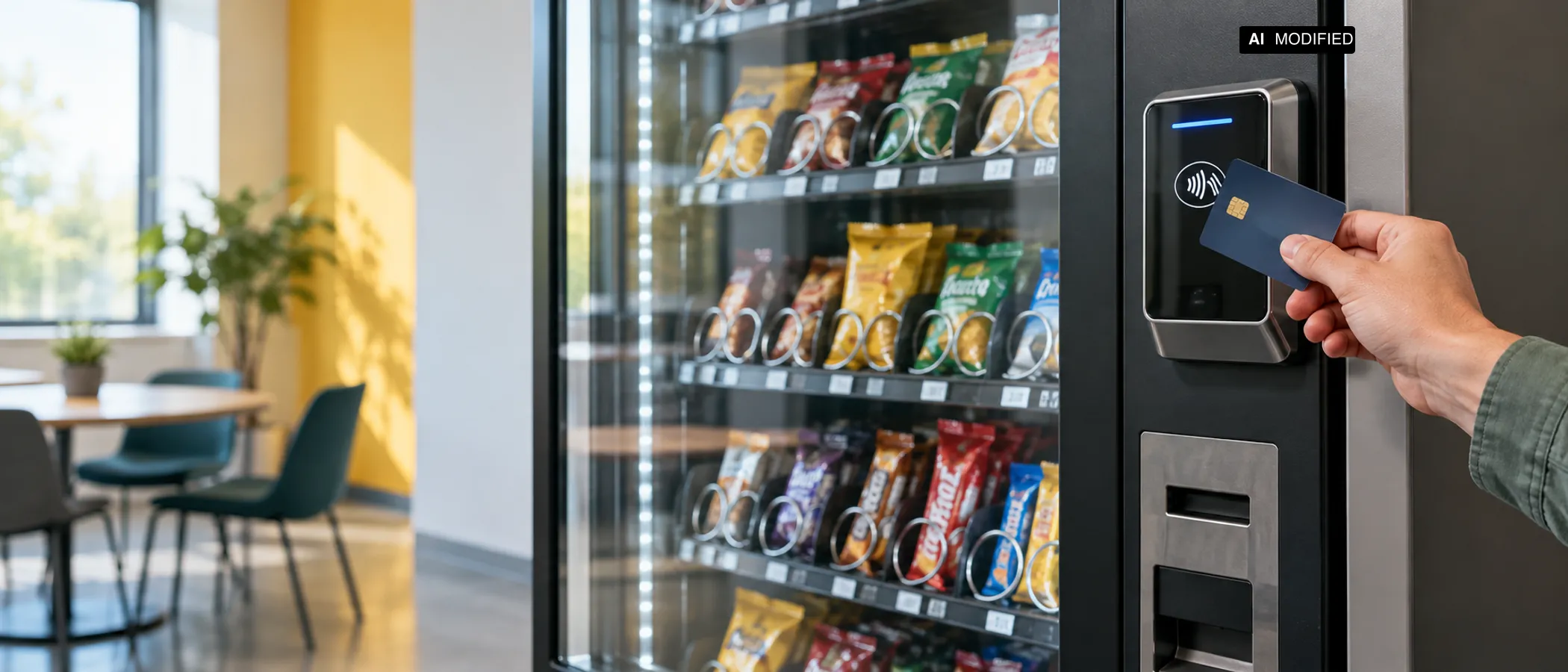
What do you need to retrofit a vending machine for cashless payment? This guide explains MDB 4.3, compatibility, terminal selection, installation, ongoing costs and typical checks, without making unsupported price promises.
 KI Modified
The Ideal Vending Machine Mix: Combining Hot Drinks, Snacks and Water
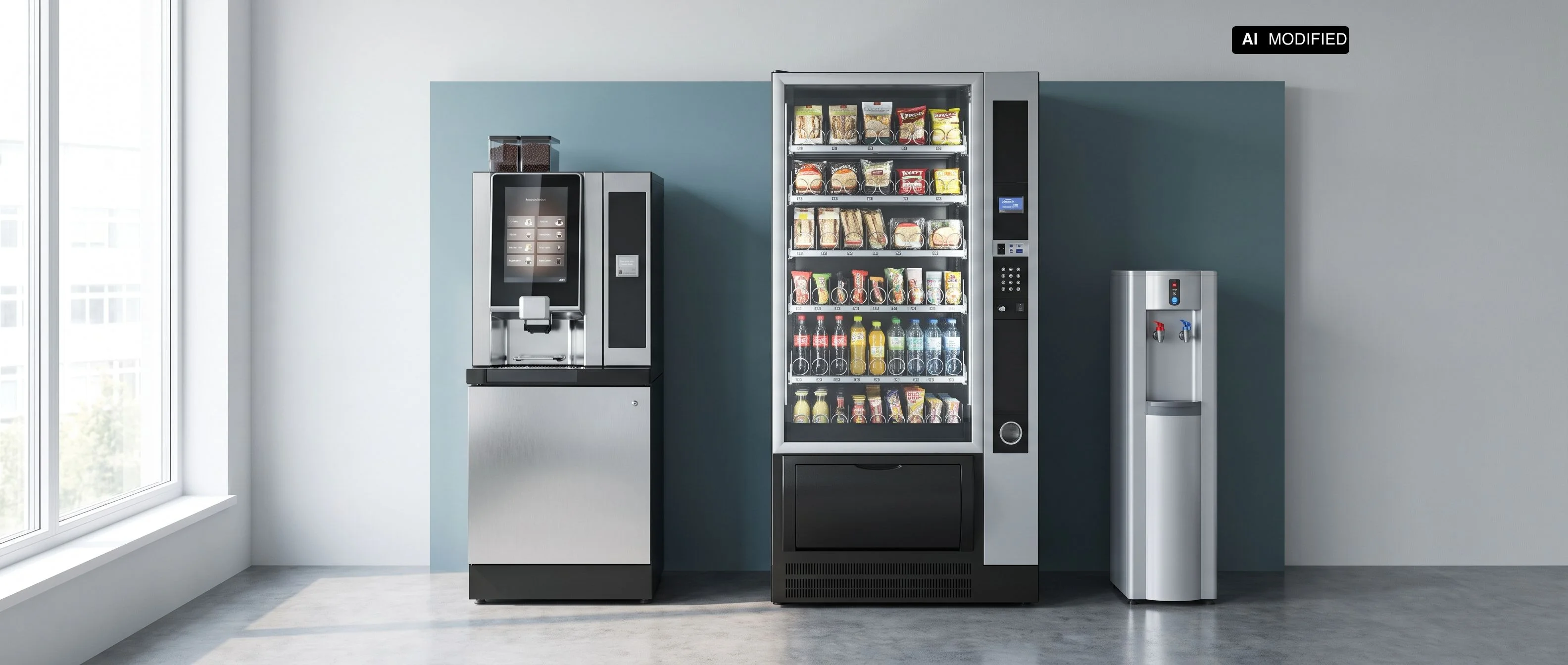
Which combination of hot drinks, snacks and water is right for an office, a public venue or a small site? This guide helps operators assess sales mix, site requirements, hygiene, refrigeration, replenishment and cashless payments.
 KI Modified
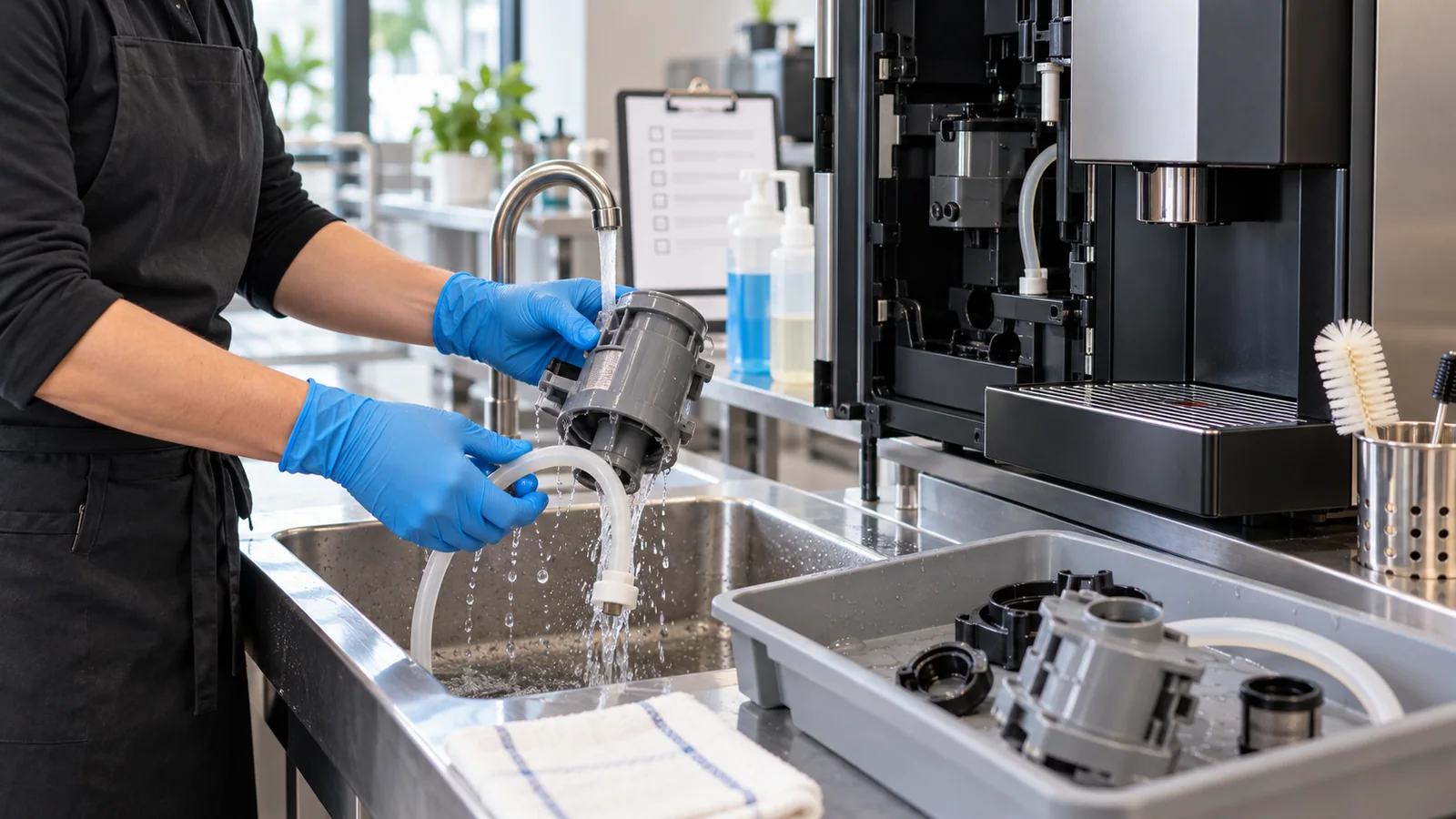
Hygiene plan for hot drinks vending machines: cleaning, HACCP and records
What cleaning obligations apply to hot drinks vending machines, which intervals must operators set themselves based on risk, and what records should the hygiene plan include? This guide distinguishes legal requirements, HACCP practice and standards guidance without prescribing blanket cleaning intervals.