
Fundamentals & Getting Started
Sustainable Vending Operations: 15 Practical Measures and Their Cost Impact
 KI Modified
On this page
- 15 measures for more sustainable vending operations
- Why sustainability in vending needs to become concrete now
- Energy efficiency (measures 1–6)
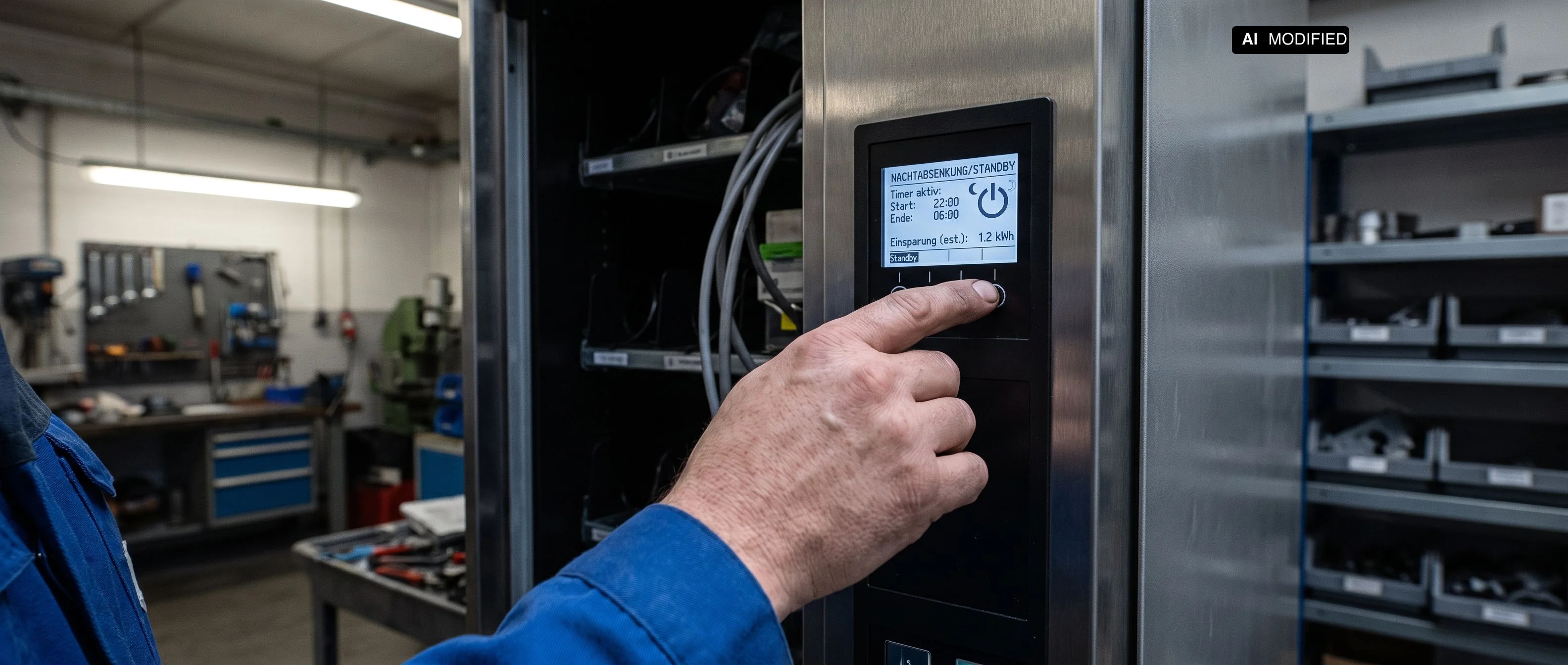
- Measure 1: Overnight setback and standby mode
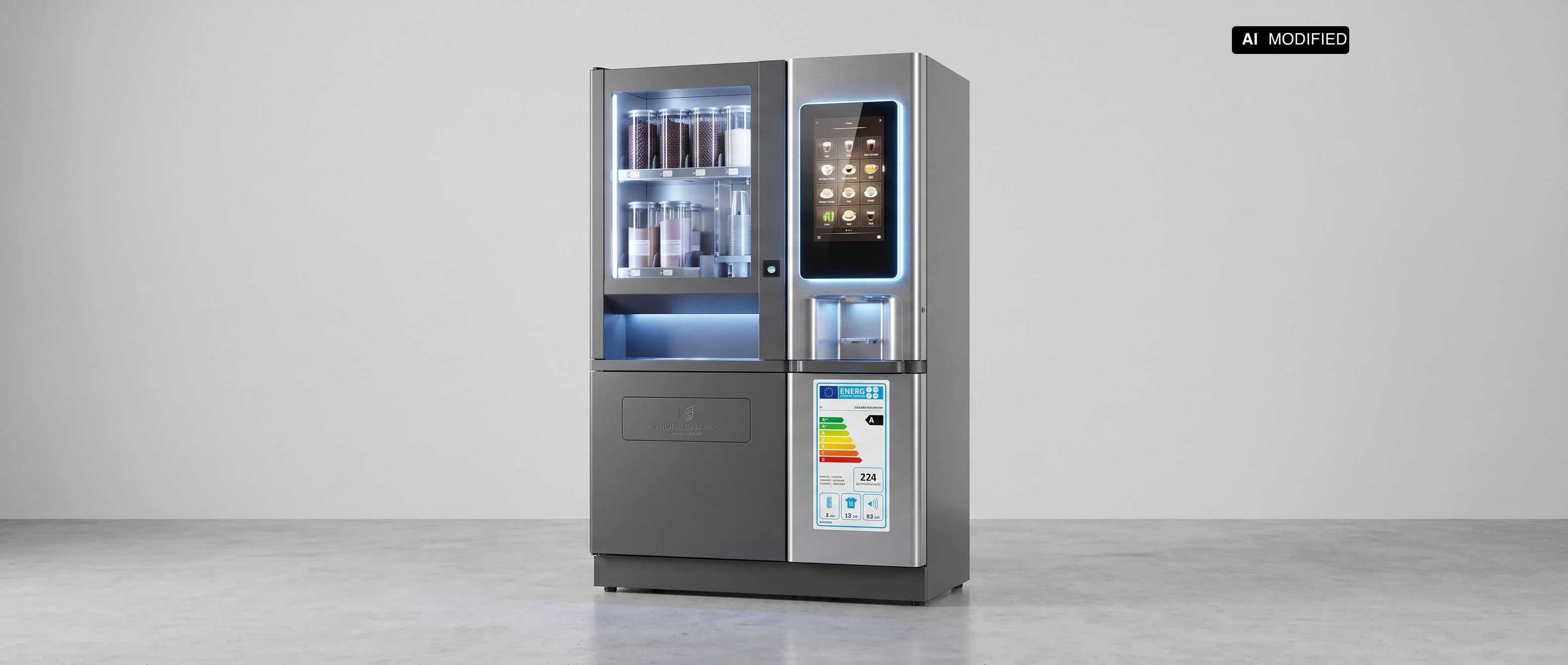
- Measure 2: Prefer machines that comply with EU energy labelling
- Measure 3: EN 50597 measurement for hot drinks machines
- Measure 4: Variable-speed compressor
- Measure 5: Switch refrigerant to R290
- Measure 6: LED lighting and high-quality insulation
- Transport and water (measures 7–8)
- Measure 7: Point-of-use water dispensers instead of gallon deliveries
- Measure 8: Telemetry and route optimisation
- Packaging and regulation (measures 9–12)
- Measure 9: Introduce a reusable cup option
- Measure 10: EWKFondsG compliance
- Measure 11: Keep an eye on municipal packaging taxes
- Measure 12: LUCID registration
- Products and range (measures 13–14)
- Measure 13: Add Fairtrade and organic coffee to the range
- Measure 14: Evaluate regional products
- Operations and food (measure 15)
- Monitor best-before dates and reduce food waste
- Three scenarios: When do the measures pay off?
- Scenario A: Small operator (20 machines)
- Scenario B: Medium-sized operator (150 machines, across Germany, Austria and Switzerland)
- Scenario C: Large operator (500+ machines, locations in cities with packaging taxes)
- ESG supply chain: What customer locations increasingly require
- Sustainability checklist for vending operators
15 measures for more sustainable vending operations
Three pillars, one goal: reduce energy costs, avoid regulatory risks and meet the ESG requirements of customer locations. Sustainability in vending is no longer optional in 2026: the EWKFondsG requires operators to register by 31 December 2026, municipal packaging taxes take effect in Freiburg from 01 January 2026, and major customers report their suppliers’ sustainability metrics under the CSRD. Taking action now not only reduces CO₂ emissions, but also avoids fines and helps secure locations with ESG-sensitive clients. The 15 measures are ordered by implementation effort: from a free timer setting to switching the fleet to alternative refrigerants. Every figure is based on verified sources; estimates are identified as such.
Last updated: 2026-09-24
Why sustainability in vending needs to become concrete now
The German vending market grew to total sales of €4.62 billion in 2024, up 18.7% on 2023 (according to the BDV Vending Market Study 2024). This growth is accompanied by rising regulatory pressure and customer expectations. At its July 2026 meeting at va-Q-tec in Kölleda, the BDV Sustainability Committee put it succinctly: “Sustainability in vending is not an abstract guiding principle, but a concrete task in day-to-day operations.” According to the EVA Market Report 2025, around 4.5 million vending machines are installed in Europe, 68% of them hot drinks machines. The three BDV sustainability pillars—environmental, social and economic—are reflected in concrete terms in the following 15 measures.
Energy efficiency (measures 1–6)
Measure 1: Overnight setback and standby mode
Timer-controlled standby periods between 22:00 and 06:00 are among the most cost-effective measures available. According to the BDV calculation model, a typical hot drinks machine consumes €15–40 worth of electricity per month. An overnight setback saves 20–40% of this amount, or €3–16 per machine per month, with no investment required. On modern machines, the setting is available in the menu; operators with a mixed fleet should first check which models have a programmable standby timer.
Measure 2: Prefer machines that comply with EU energy labelling
Since 01 March 2021, refrigerated vending machines have had to be labelled under EU Regulations 2019/2024 (Ecodesign) and 2019/2018 (Energy Labelling). The scale runs from A (most efficient) to G. Older machines in classes E, F or G measurably increase operating costs; non-compliant new machines have not been allowed on the market since March 2021. Operators still running older stock should calculate the annual energy cost per machine and compare it with the investment cost of a replacement. The EVA has explained in detail the implications of the energy label for refrigerated vending machines.
Measure 3: EN 50597 measurement for hot drinks machines
DIN EN 50597 (VDE 0705-597, 06/2019 edition) standardises the measurement method for the energy consumption of hot drinks machines, analogous to the Ecodesign regime for refrigeration equipment. Operators can use it to determine the actual annual consumption profile of their fleet and identify high-consumption machines. Benchmarking across multiple locations provides a sound basis for investment decisions.
Measure 4: Variable-speed compressor
Inverter technology adjusts cooling capacity to actual demand instead of running continuously at full power. According to Energy Star and Freshboost, this reduces cooling energy consumption by 20–45%. For operators with a large cold drinks fleet, this is an important selection criterion for their next machine purchase.
Measure 5: Switch refrigerant to R290
R290 (propane) has a Global Warming Potential (GWP) of 3, compared with 1,430 for R134a and 3,922 for R404A. According to an MDPI energy study (2022), R290 machines are approximately 6.6% more energy-efficient than R134a counterparts. Manufacturers such as SandenVendo already offer HC-R290 models on the market. Legal context: the EU F-Gas Regulation (EU) 517/2014 sets phased limits on refrigerants with high GWP. R290 technicians must be certified; factor this into maintenance planning.
Measure 6: LED lighting and high-quality insulation
High-performance LEDs replace fluorescent tubes and reduce the lighting share of total consumption. High-quality insulation, such as va-Q-tec technology, which was discussed as a concrete measure in machine development by the BDV Sustainability Committee in 2026, also reduces cooling demand. Together, both measures measurably improve the energy efficiency class of a newly purchased machine.
Transport and water (measures 7–8)
Measure 7: Point-of-use water dispensers instead of gallon deliveries
Mains-connected point-of-use water dispensers eliminate the regular transport of 18.9-litre water bottles entirely. Delivery journeys, packaging waste and the customer’s storage requirements are eliminated. The BDV catalogue of measures explicitly lists POU dispensers as a sustainability measure. For operators that run water dispensers under a rental model, the BDV members’ area provides a specific calculation model for mains-connected water dispensers.
Measure 8: Telemetry and route optimisation
Telemetry systems transmit fill levels and machine status in real time. Drivers only visit when a machine actually needs replenishing or servicing; unnecessary trips are eliminated. Predictive maintenance via IoT and ML forecasts failures before they occur and extends machine service life. Providers such as Pulse Vending offer solutions tailored to Germany, Austria and Switzerland. Specific ROI figures vary considerably with fleet size and route structure and must be calculated individually. As a guide, the lower the average fill level per visit before telemetry is introduced, the greater the potential savings.
Packaging and regulation (measures 9–12)
Measure 9: Introduce a reusable cup option
Since 2023, Germany has required reusable alternatives for food and drinks for immediate consumption in the public domain (§ 33 VerpackG). Operators that dispense hot drinks in disposable cups may be affected as final distributors. Allowing customers to use their own cups or offering a reusable cup at the machine can directly reduce the levy under the EWKFondsG.
Measure 10: EWKFondsG compliance
The EWKFondsG has been in force since May 2023. Operators placing single-use plastic products on the market in Germany must register on the DIVID platform of the German Environment Agency. The deadline for companies that were operating before 2026 is 31 December 2026. The levy is based on the volume of single-use containers dispensed; the German Environment Agency publishes current rates by product category on its EWKF page. Operators that switch to reusable options reduce their levy burden in direct proportion.
Measure 11: Keep an eye on municipal packaging taxes
Since 2022, Tübingen has levied a municipal packaging tax (as at 2022) of €0.50 per disposable cup and €0.20 per disposable food container; the Federal Constitutional Court upheld the model in January 2025. Freiburg introduced a comparable scheme from 01 January 2026. The exact rates in Freiburg for each container type have not been publicly confirmed to the nearest cent; the Tübingen rate serves as a reference. Other cities may follow; the legal position was essentially clarified by the Federal Constitutional Court ruling.
Measure 12: LUCID registration
Operators placing packaging on the market for the first time must register in the LUCID Packaging Register under § 9 VerpackG. Registration itself is free; participation in a dual system is the actual cost factor. The BDV has provided information on this several times since 2022 (BDV Intern 02/2022, 02/2023, 01/2024).
Products and range (measures 13–14)
Measure 13: Add Fairtrade and organic coffee to the range
Organic and Fairtrade-certified coffee is available from specialist suppliers for bean-to-cup machines and vending machines. According to its own statements, Kaffee Partner has once again held EcoZert certification since 2025 (manufacturer statement, not independently confirmed). For customer locations subject to CSRD reporting or supply chain law requirements, the sustainability credentials of the product range are a factor in contract awards. Public price comparisons do not substantiate a quantifiable premium for organic and Fairtrade coffee over conventional brands; this must be calculated individually by supplier and volume.
Measure 14: Evaluate regional products
Shorter transport routes reduce the supply chain’s CO₂ footprint. The BDV catalogue of measures explicitly lists regional products as an environmental measure. For operators, this means weighing up regional sourcing, generally with higher unit costs and shorter transport routes, against centralised purchasing, which offers volume discounts and planning certainty.
Operations and food (measure 15)
Monitor best-before dates and reduce food waste
Carefully monitoring best-before dates and purchasing quantities according to demand helps avoid disposing of products. The BDV catalogue of measures recommends limiting purchase quantities to what is necessary. In refrigerated snack machines, demand-based cooling—cooling only occupied compartments and using sliding panels to cover empty areas—also reduces energy consumption. Operators with telemetry can plan stock more accurately and avoid overstocking.
Three scenarios: When do the measures pay off?
Scenario A: Small operator (20 machines)
Measure 1 (overnight setback) for 20 machines: monthly electricity cost per machine is €15–40 according to the BDV. At 20–40% savings from an overnight setback, that is €3–16 per machine per month. For 20 machines, this amounts to annual net savings of €720 to €3,840, with no investment. EWKFondsG registration on DIVID is mandatory by 31 December 2026; failure to register creates a risk of fines. Municipal packaging tax only applies if locations are in Freiburg or Tübingen.
Scenario B: Medium-sized operator (150 machines, across Germany, Austria and Switzerland)
Switching 50 new machines to R290, assuming annual electricity costs of €300 per machine: a 6.6% efficiency gain from R290 (according to the MDPI study) results in savings of approximately €990 per year across these 50 machines. Telemetry reduces unnecessary trips; the specific savings depend on the current route structure and must be calculated individually. Major customers’ CSRD requirements call for sustainability evidence; LUCID registration and Fairtrade certification become subject to documentation requirements.
Scenario C: Large operator (500+ machines, locations in cities with packaging taxes)
100 machines in Freiburg, each dispensing 50 disposable cups daily: at the Tübingen reference rate of €0.50 per cup, this amounts to 100 × 50 × €0.50 = €2,500 in theoretical daily municipal tax. The exact rates in Freiburg have not been publicly confirmed; even with a considerably lower levy, switching to reusable cups is more cost-effective than the ongoing tax burden.
ESG supply chain: What customer locations increasingly require
Under the CSRD (Corporate Sustainability Reporting Directive), mandatory for large companies from 2024 and gradually expanded, customers hosting vending machines report on their suppliers’ sustainability metrics. Operators thereby become part of their customers’ ESG supply chains. Robust evidence of energy labels, refrigerants, packaging compliance and product range certifications strengthens their position in tenders. How far CSRD obligations extend to individual vending operators as suppliers depends on the specific customer and the depth of its reporting; specific figures have not been published.
Sustainability checklist for vending operators
The following checklist summarises all 15 measures and their implementation effort, and can serve as a basis for internal sustainability reporting or customer discussions.
Immediate measures (no investment):
- Activate overnight setback/standby timers on all machines
- Start EWKFondsG registration on DIVID (deadline: 31.12.2026)
- Check LUCID registration (if packaging is placed on the market)
- Systematise best-before-date checks and adjust purchase quantities to demand
Medium term (next machine purchase):
- Prioritise energy label A or B
- Prefer R290 machines over R134a and R404A
- Set a variable-speed compressor as a selection criterion
- Check LED lighting and high-quality insulation
Structural (6–18-month planning horizon):
- Introduce a telemetry system to optimise routes
- Offer POU water dispensers instead of gallon deliveries
- Implement a reusable cup option
- Introduce Fairtrade/organic certification in the range
- Evaluate regional products
- Check the status of municipal packaging taxes in cities where you operate
- Plan EN 50597 measurement for the hot drinks machine fleet
Latest on this topic
- EUDR and coffee vending machines: what the EU Deforestation Regulation requires before it appliesMarket Analysis · October 13, 2026
- Commodity Monitor October 2026: Coffee eases, cocoa and sugar in focusMarket Analysis · October 13, 2026
- AI in Vending in 2026: Predictive Maintenance and Assortment Optimisation — How to Use the TechnologyMarket Analysis · October 2, 2026
More guides
 KI Modified
Retrofit cashless payment to a vending machine: MDB 4.3, costs and selection criteria
What do you need to retrofit a vending machine for cashless payment? This guide explains MDB 4.3, compatibility, terminal selection, installation, ongoing costs and typical checks, without making unsupported price promises.
 KI Modified
The Ideal Vending Machine Mix: Combining Hot Drinks, Snacks and Water
Which combination of hot drinks, snacks and water is right for an office, a public venue or a small site? This guide helps operators assess sales mix, site requirements, hygiene, refrigeration, replenishment and cashless payments.
 KI Modified
Hygiene plan for hot drinks vending machines: cleaning, HACCP and records
What cleaning obligations apply to hot drinks vending machines, which intervals must operators set themselves based on risk, and what records should the hygiene plan include? This guide distinguishes legal requirements, HACCP practice and standards guidance without prescribing blanket cleaning intervals.