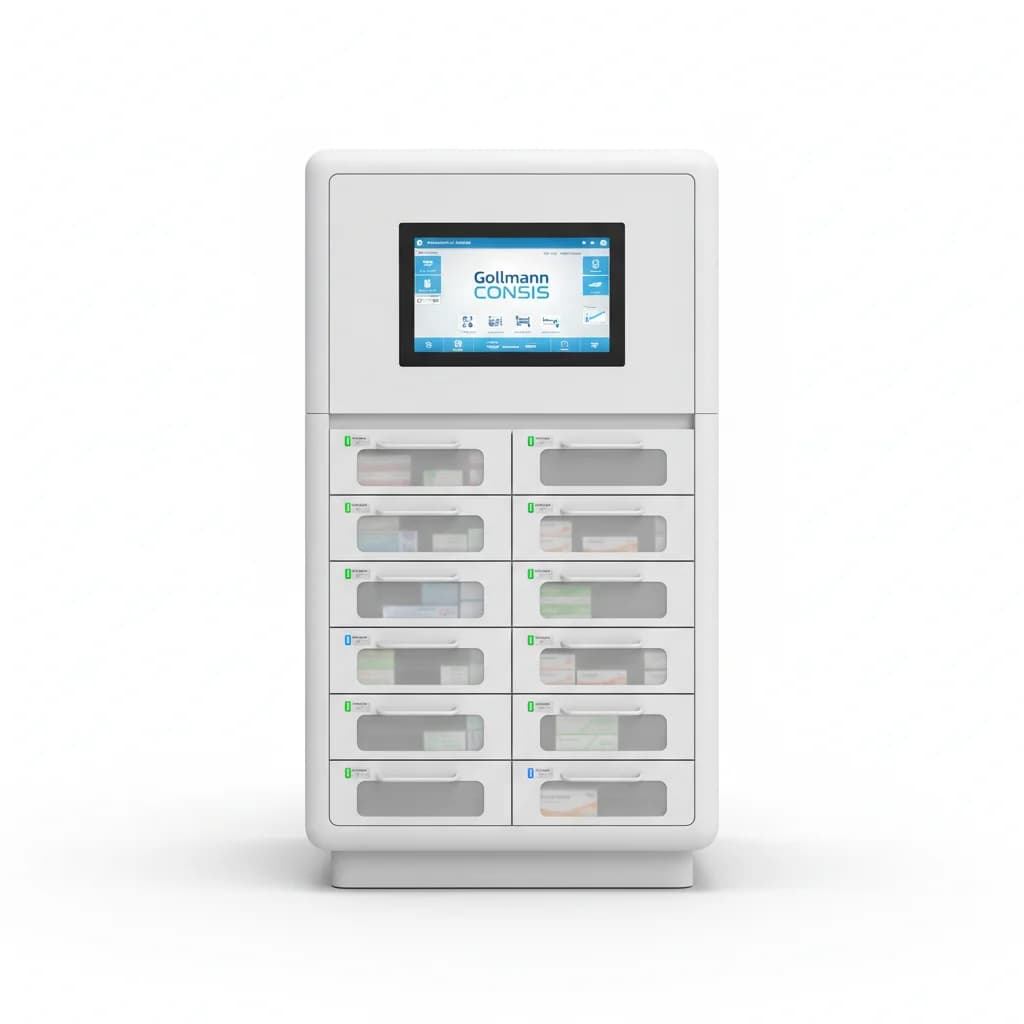
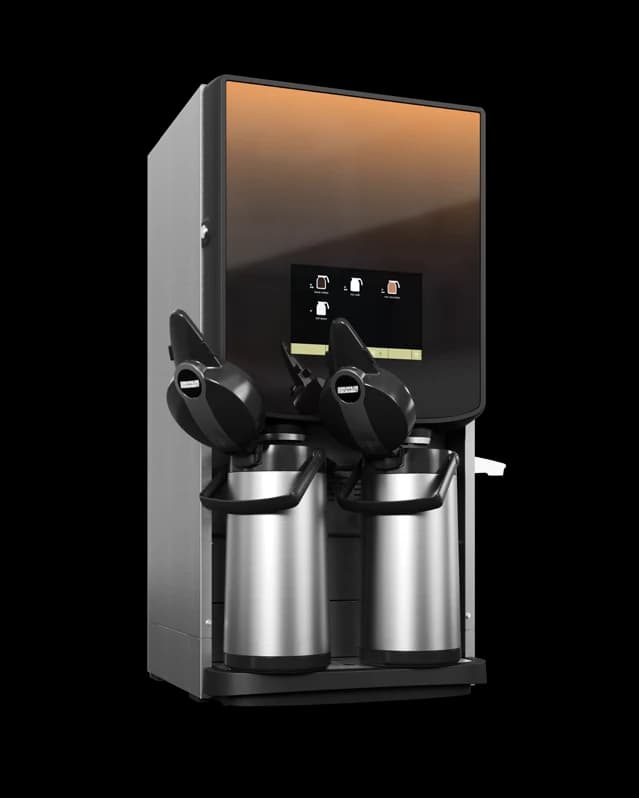
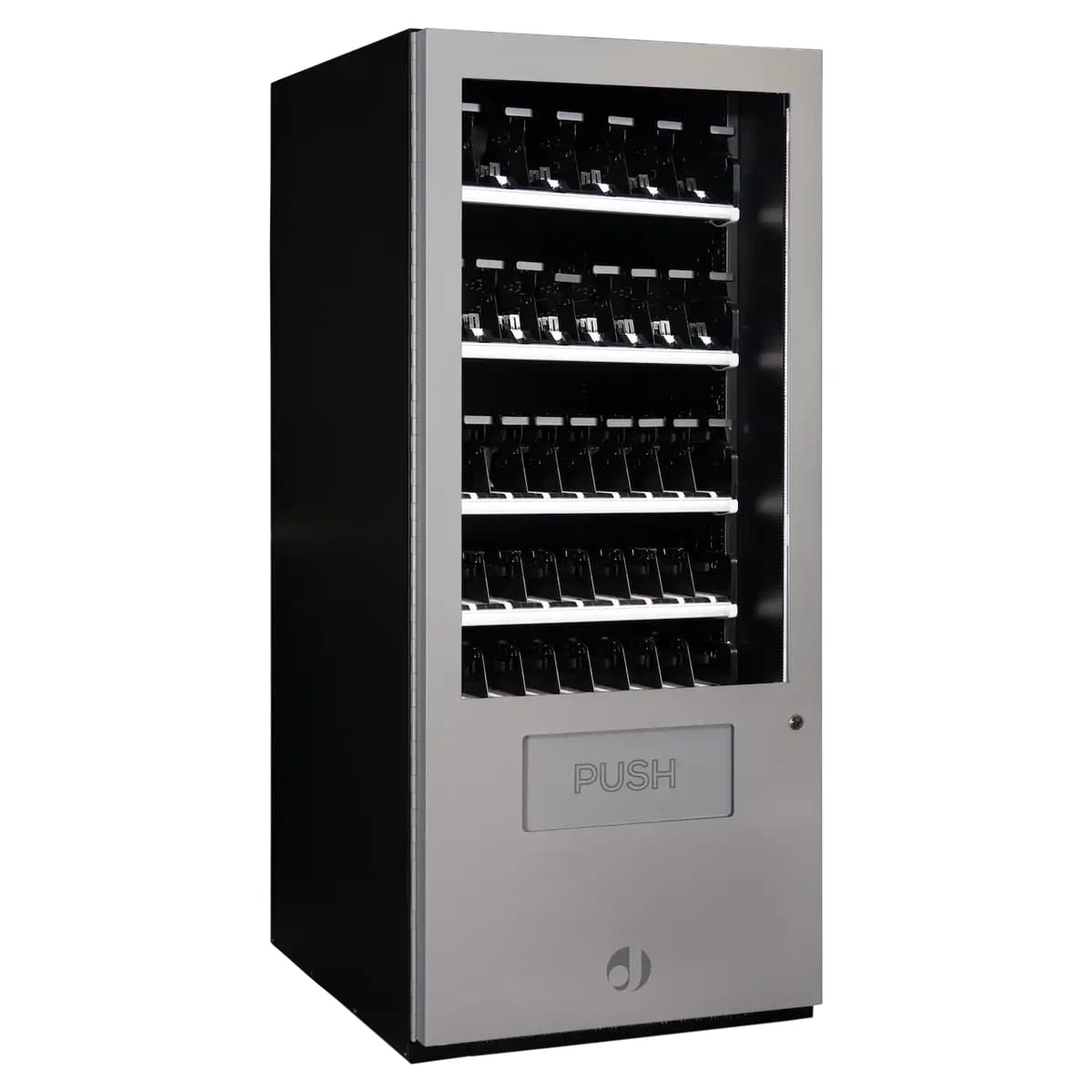
The Gollmann Consis is a compact pharmacy robot of premium class: fully automated storage and retrieval of medicines via robot arm, batch and expiry date management, complete GDPR-compliant record-keeping. For pharmacies with ~150 m² of sales floor and >250 prescriptions/day, the Consis delivers measurable efficiency gains of 30–50% in medicine dispensing. Investment from approx. €60,000 – amortizes over 3–5 years for large pharmacies.
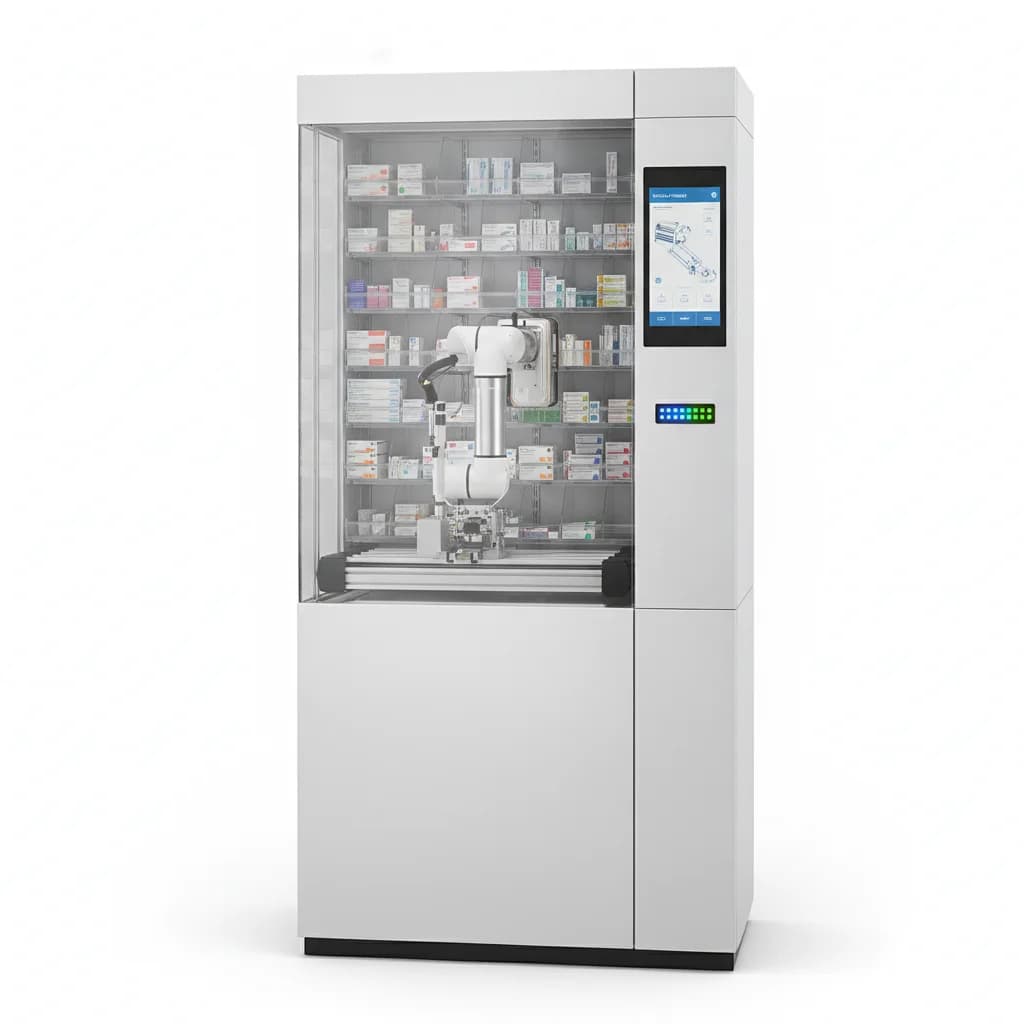
The Gollmann Robot C addresses the mid-sized pharmacy market of 200–600 daily prescriptions. Solid 60 packs per minute, up to 12,000 storage positions and proven integration with ABDA warehouse management systems. For locations with rapid growth or extended hours, payback in 3–5 years is realistic.
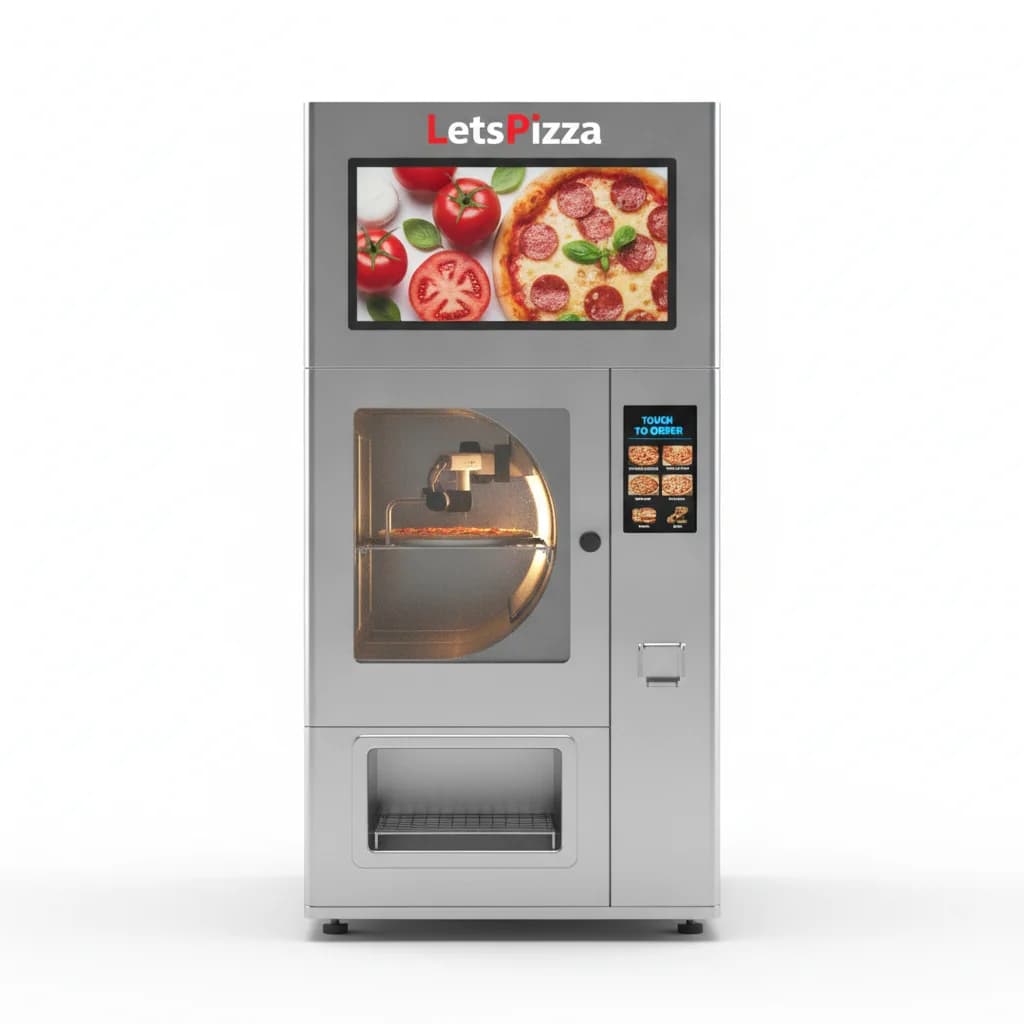
Let's Pizza by A1 Concepts is the world's most-installed pizza vending machine: fresh dough, chilled toppings, ready pizza in 3 minutes – 24/7 without staff. With ~3,000 global installations and established DACH presence in shopping centres, motorway service areas and railway stations, it is the reference machine of its category. High capital cost and more intensive maintenance than standard vending are the principal limitations.
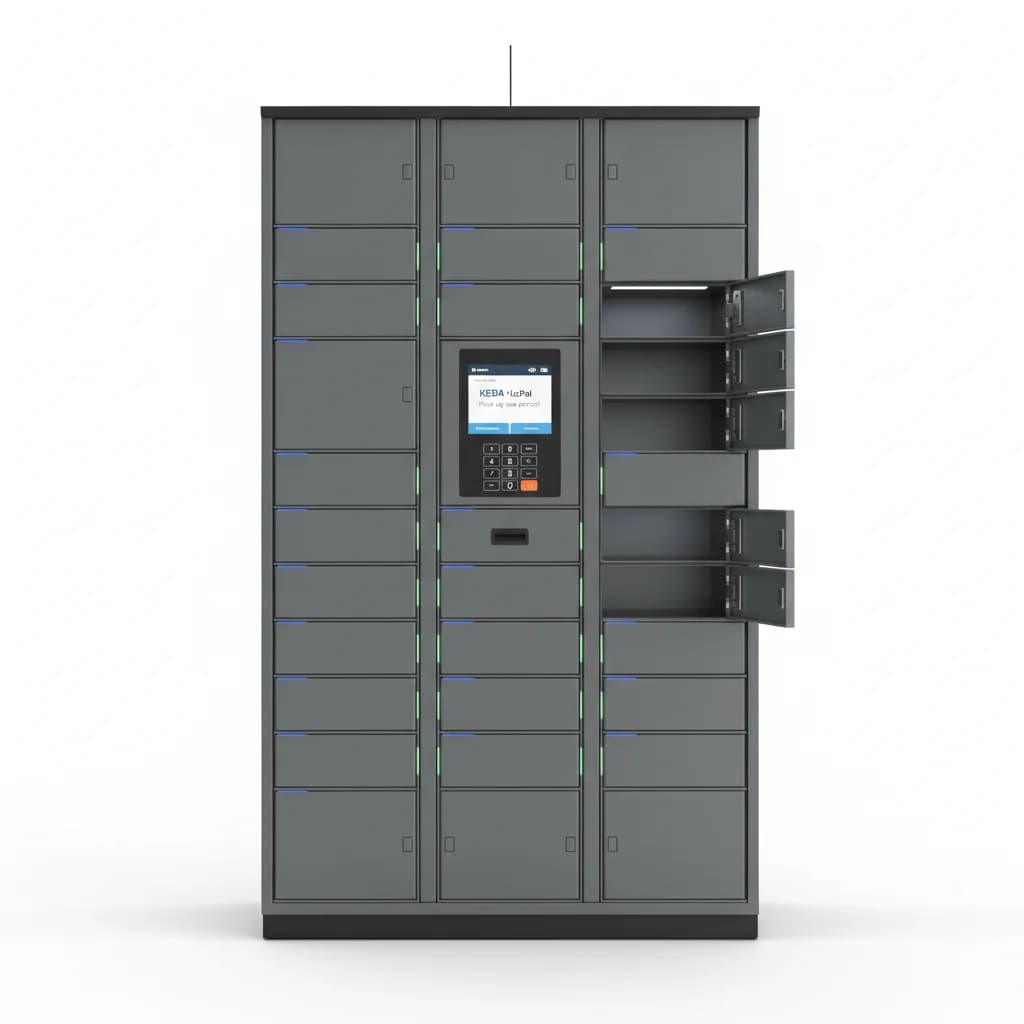
The KEBA KePol FS-16/20 is a modular outdoor parcel locker from Austria that supplements or replaces traditional KEP infrastructure (Post, DHL, DPD). With IP44 protection, optional heating, NFC/QR retrieval and the KEBA KePlug IoT backend, it convinces through robustness and low operating costs. For municipalities, residential developers and retail, a strong alternative to Packstation dependency.
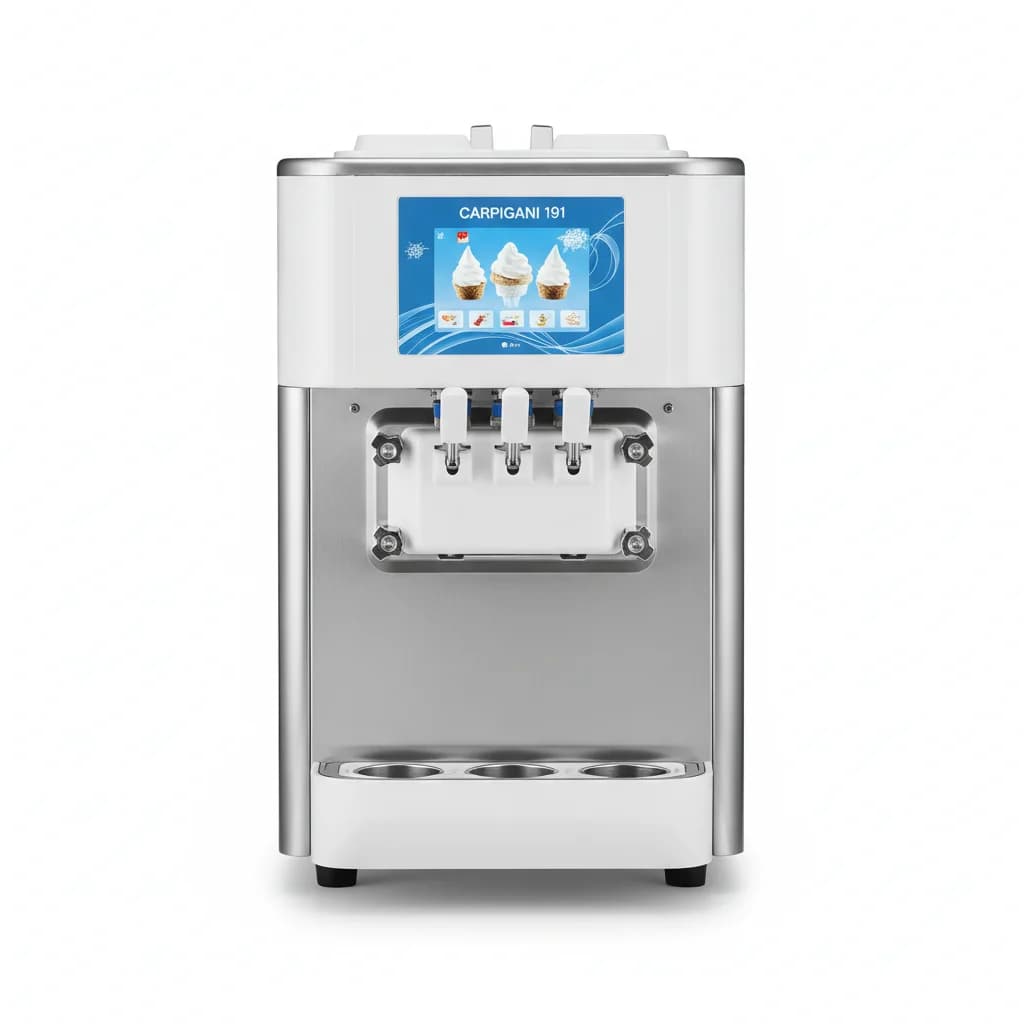
The Carpigiani 191 is Europe's most widely deployed fully automatic soft-serve vending machine: up to 300 portions per hour, optional dual-flavour capability, automatic sanitization cycle and MDB payment system. Carpigiani holds 35%+ global market share in professional ice-cream equipment; the 191 brings this expertise into unattended vending for the first time.
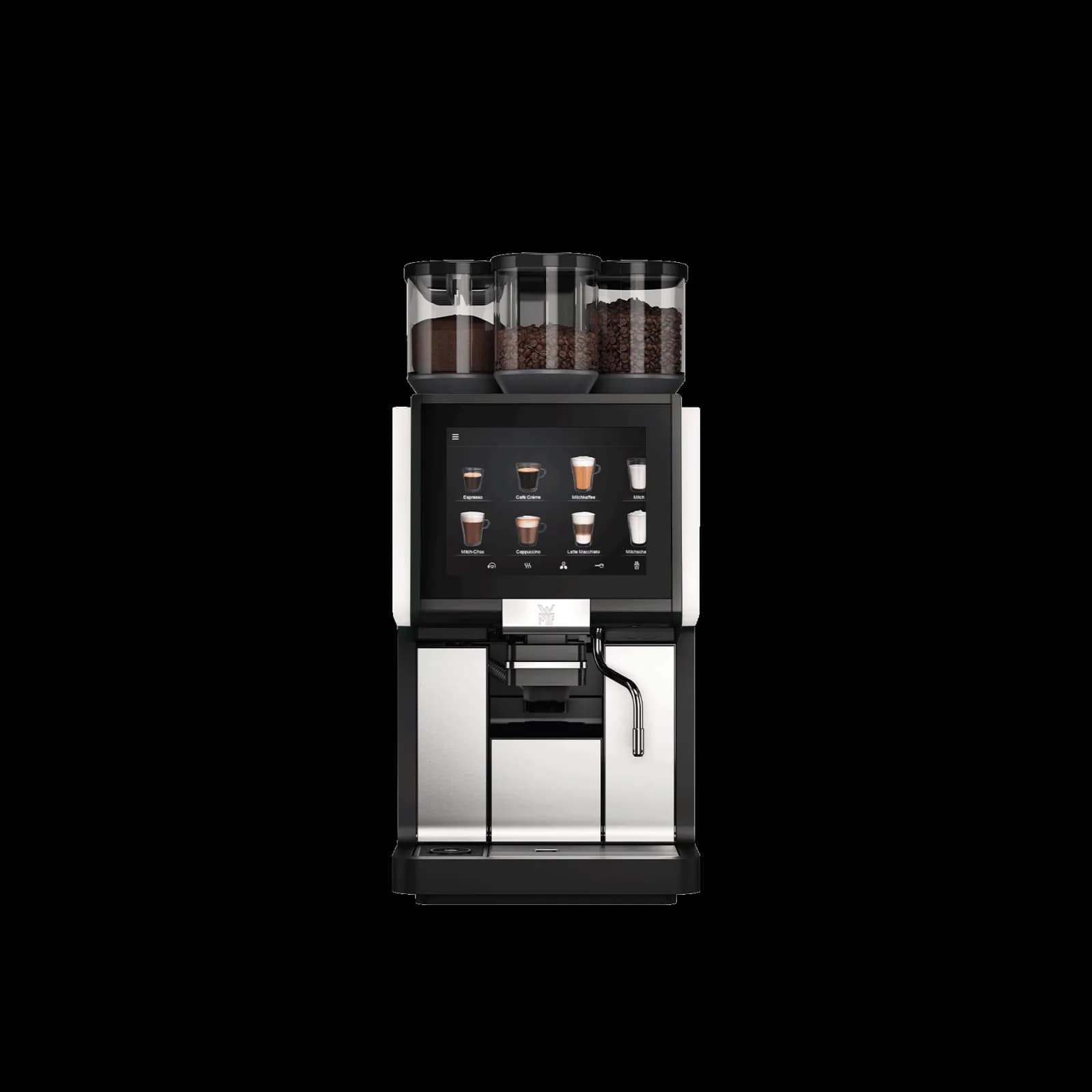
With a recommended daily output of up to 350 cups and excellent configurability, the WMF 9000 S+ is designed for enterprises and high-traffic locations requiring coverage of 80–250 employees per machine. Its core strengths include a robust stainless-steel brewing system (up to 19 g per extraction), a 10-inch touch display for flexible self-service workflows, and a milk system delivering seven foam variants (cold and hot). The machine supports parallel dispensing of coffee, hot water, and steam, integrates via CoffeeConnect with central management systems, and simplifies error-free continuous operation through dynamic brew monitoring. Limitations stem from the high acquisition cost: €17,860 net for a new unit with two grinders, Dynamic Milk and powder dispenser; remanufactured models from €4,980 net; and the required maintenance commitment for the milk system. Energy efficiency ranks mid-field compared to some competitors. For high-traffic cafeterias, bakeries and retail environments requiring output above 200 cups per day, the investment amortises over the machine's operating life provided maintenance and cleaning supply costs are systematically budgeted.
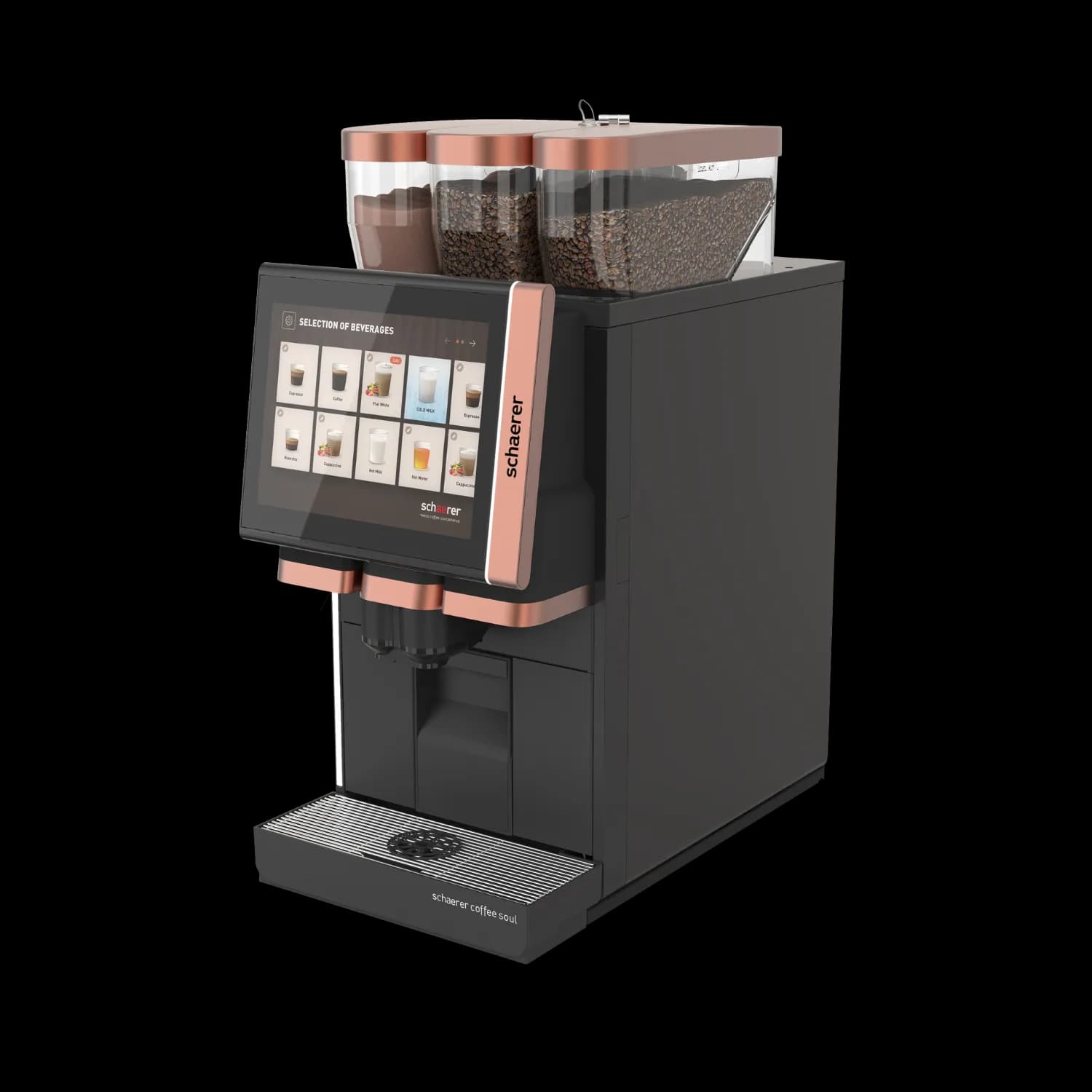
The Schaerer Coffee Soul addresses operators who require flexible configuration, reliable hygiene processes and an extensive beverage range at daily capacities up to 250 cups. Particularly in office, hotel and food-service settings, it impresses with modular configuration: up to three bean varieties and two milk options, optional syrups and telemetry integration make it, according to the manufacturer, the machine for sites with 60 to 200 employees. Operating comfort benefits from a large touchscreen display (10.4" or 12.1") and variable outlet heights. Practical limitations remain: cleaning costs amount to approximately 288 € annually, as both a coffee cleaner and milk cleaner are required for daily system maintenance. An external milk and syrup cooler occupies counter space. Net acquisition costs range between 12,340 and 15,520 euros (depending on configuration), which is economically justified for large offices or high-traffic hotels — solid engineering and an extensive beverage range partly offset the investment. Weaknesses emerge in the need for a service contract and complex accessory management.
The Rex-Royal S300 achieves 8.1 out of ten points and is recommended as a capable countertop super-automatic machine for locations with daily volume up to 500 cups per distributor guidance. With modular variants featuring fresh milk and CompactFoam options as well as full cloud connectivity, it reliably meets elevated demands in hospitality, office and food service environments.
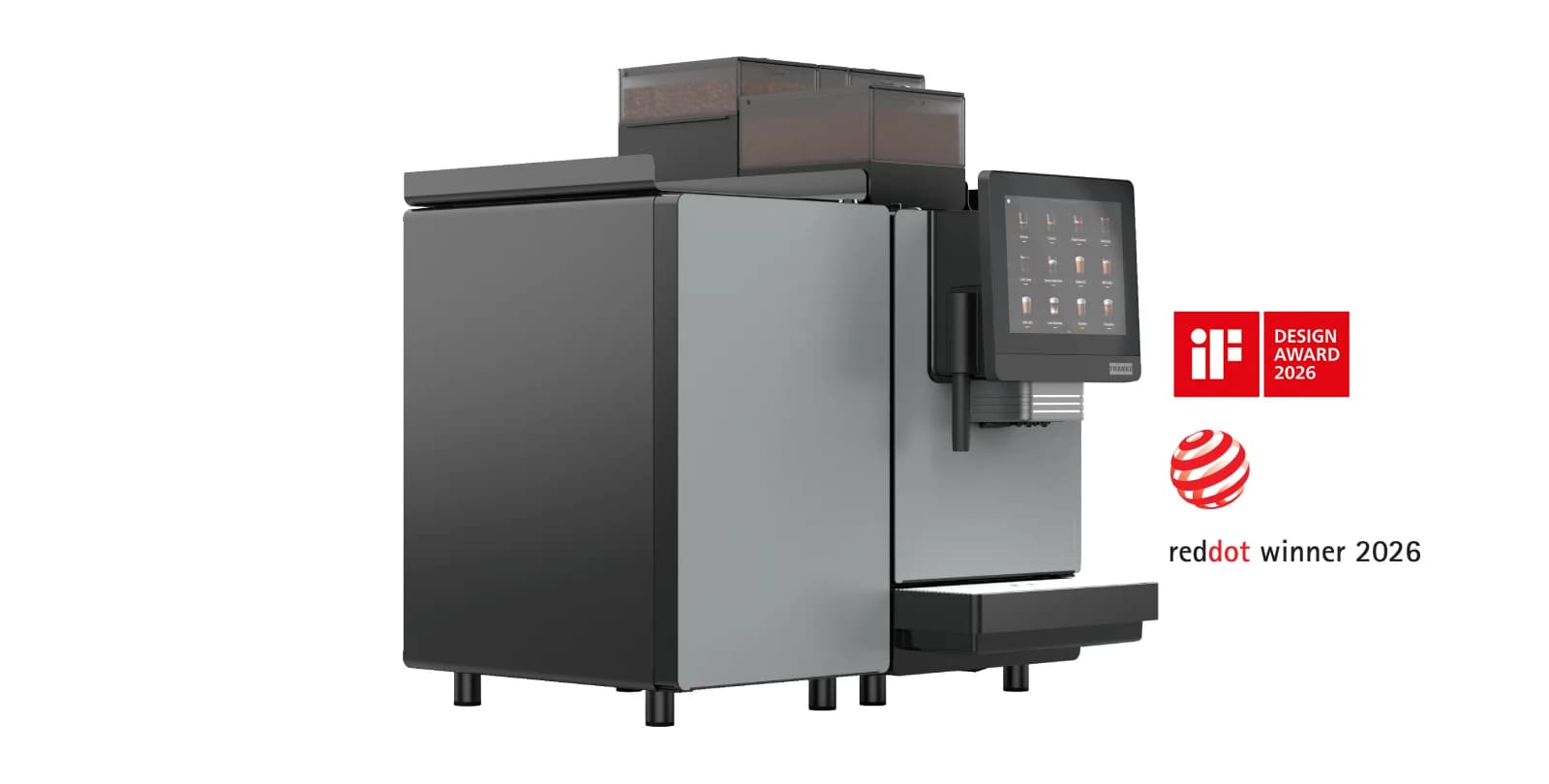
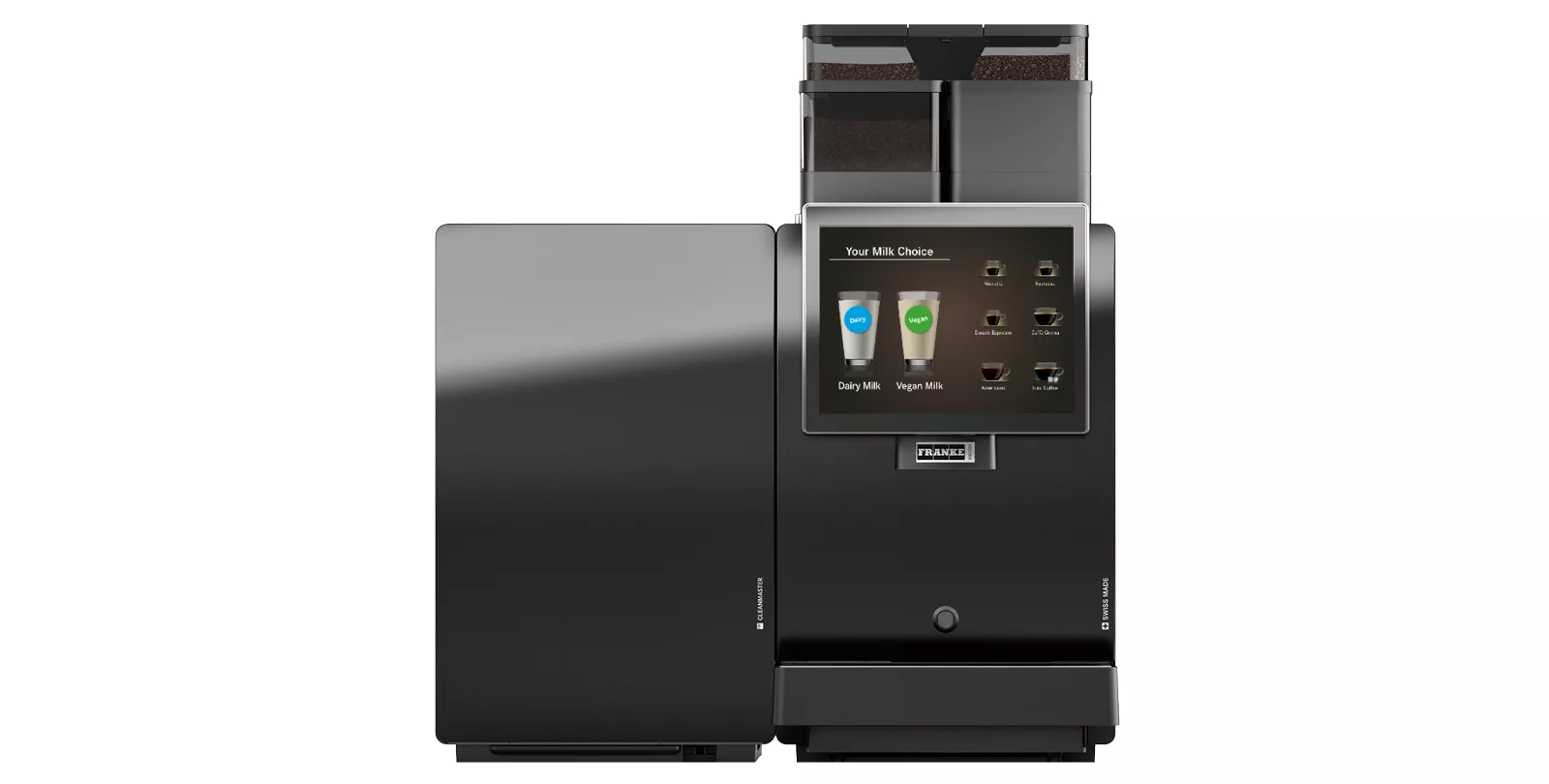
In the data review, the Franke A800 FM CM achieves an overall rating of 8.2 and positions itself as a capable fully automatic coffee machine for locations with daily demand of up to 250 cups. It is particularly well suited for offices, hospitality establishments and retail operations seeking a broad range of hot beverages, including cold milk foam variants, from a single unit. Solid Swiss manufacturing and the automated cleaning system partially offset the high entry price in the enterprise segment. The manufacturer does not provide an official energy efficiency class or EcoGrade classification.
The Melitta Cafina XT4 is a German-manufactured fully automatic coffee machine for venues with a recommended daily throughput of 180 cups. The fully automatic cleaning system for the brewing and milk system built into the machine, combined with modular expansion options, make it a solid choice for offices, hotels and food-service operations that prioritize hygiene and beverage variety. With an overall rating of 7.2, the machine impresses with its build quality, though its entry-level price requires operators to make a deliberate investment decision.
With a documented daily capacity of up to 300 cups, two grinders, and fully automatic milk foam preparation, the La Cimbali / Faema X30 is clearly aimed at locations with consistently high throughput, such as larger offices, retail and foodservice facilities with approximately 80 to 200 employees, or demanding hospitality venues. The touchscreen interface, broad beverage range, and standard Wi-Fi telemetry enable demand-based, flexible control even in multi-site operations. The weight of 79 kg and dimensions of 370 × 620 × 762 mm are unsuitable for mobile deployment. The initial investment of at least 13,000 to 18,000 EUR net aligns with other high-end fully automatic machines in this performance class. For small locations or operators with fewer than 80 employees, the machine is clearly oversized. Daily cleaning of all circuits requires approximately 15 minutes, and professional servicing by trained technicians is mandatory. For operators with seasonally fluctuating visitor numbers, the machine only achieves payback at moderate sales volumes. Without fixed water connection and secured service infrastructure, deployment should not proceed; overall cost-effectiveness depends clearly on actual cup throughput.
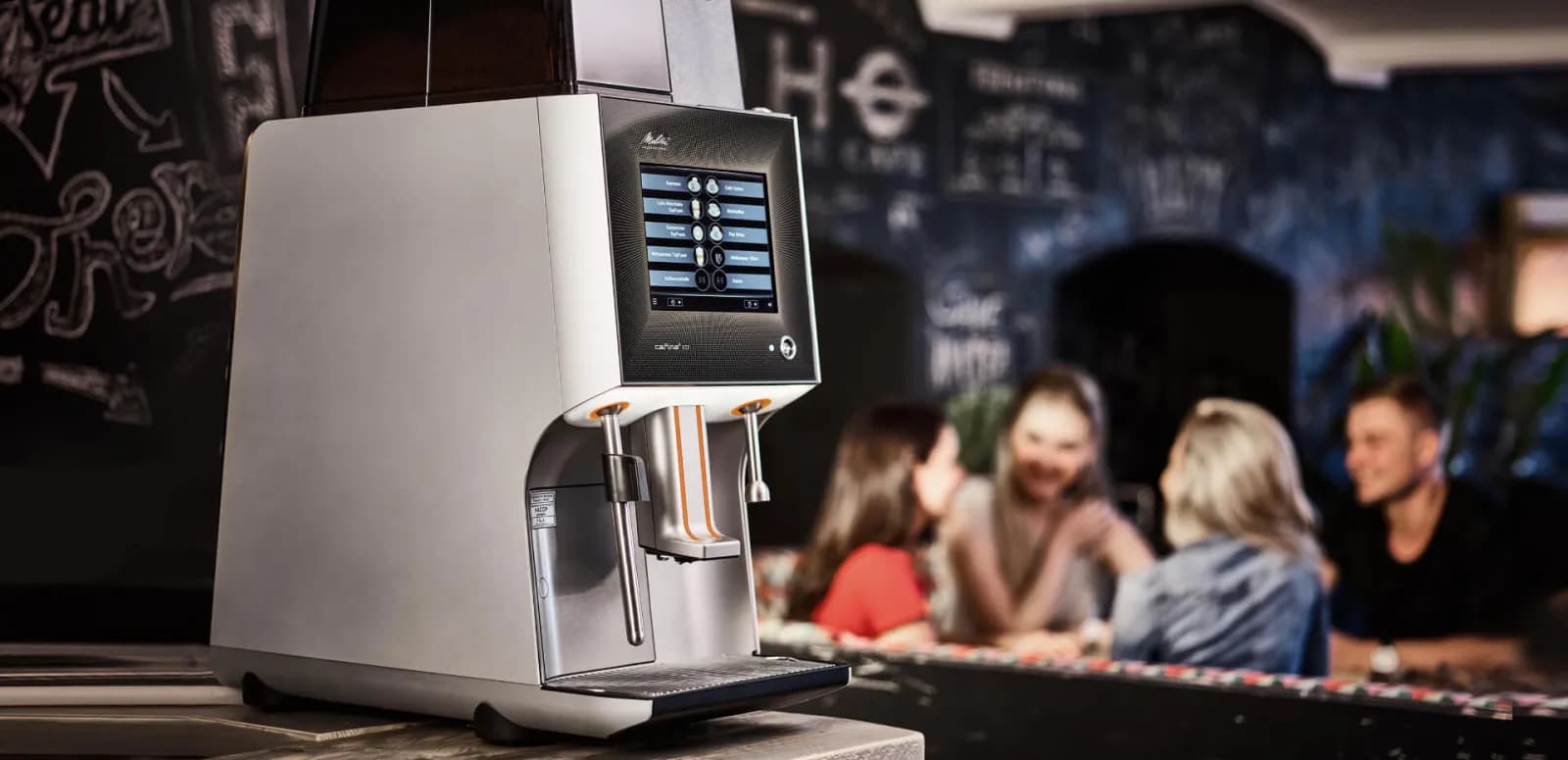
The Melitta Cafina XT7 is engineered for dense output peaks, not for a small location with low volume. The manufacturer specifies approximately 250 cups per day and 176 individual espressos per hour. Two grinding units, TopFoam for 2 milk types, an 8.4-inch touchscreen, CIP cleaning and optional telemetry form a robust feature set for hotels, bakeries or large self-service areas. The trade-offs remain substantial: 300 × 715 × 580 mm, 60 kg, 400 V, maximum 5700 W and daily cleaning demand prepared infrastructure and clear responsibilities. At approximately €13,000–16,000 net for the reviewed configuration, the machine is capital-intensive. Those not regularly requiring the stated capacity purchase expensive reserve capacity. Those using it should calculate accessories, service scope, water treatment and installation work as a complete bill of materials before placing an order.
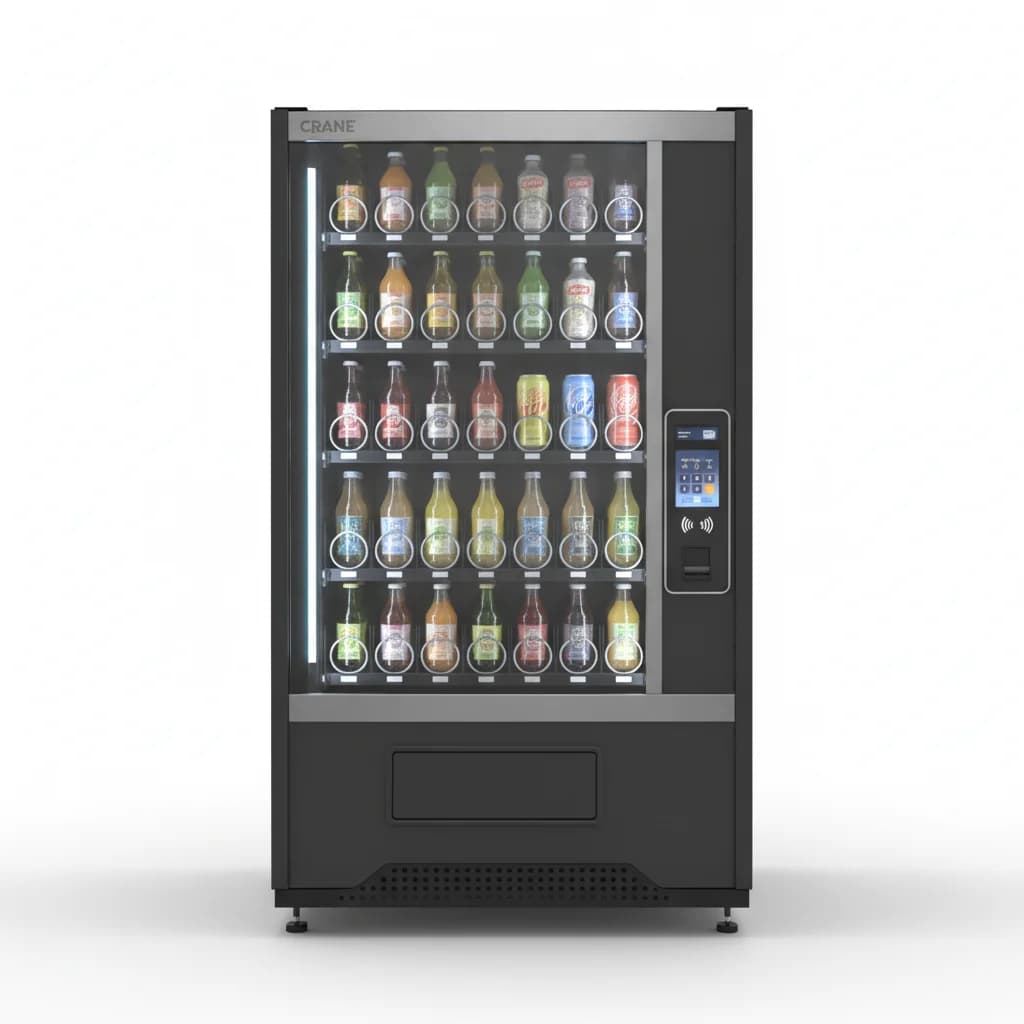
The Crane BevMax Media2 delivers as a premium cold-beverage vending machine with 9" touchscreen, elevator dispensing, and comprehensive telemetry—ideal for high-traffic locations in offices, hotels, and retail environments. With an overall rating of 7.8, the device offers a well-considered package whose investment pays off particularly well with high daily throughput volumes.
The Franke A800 sets a new standard as a modularly configurable professional fully automatic coffee machine for sites serving approximately 100 to 250 users. Three independently controlled boilers deliver coffee, milk and hot water simultaneously—enabling large offices, hospitals and retail outlets to achieve up to 250 vends per day during peak hours. A 10.4-inch touchscreen and remote maintenance via FrankeConnect streamline operation and service, while the brew module capable of handling up to 29 g of coffee and the ultrasonic-controlled FoamMaster milk system deliver espresso-bar quality even at high throughput. The investment of €12,330 to €15,020 net (depending on configuration) becomes economical where high volumes of specialty coffee drinks are required daily and labour costs for machine operation are to be minimised. Weaknesses include high electrical demand (7.4–8.8 kW connected load) and technician-dependent initial setup. For sites with highly variable user numbers or small headcounts, the machine is oversized. Overall, the A800 offers operators a low-maintenance, future-proof system that becomes economically viable at approximately 120 cups per day.
Two hardened steel grinders, a 10-inch colour touchscreen and WMF CoffeeConnect as standard: the WMF 5000 S+ is aimed at office locations with 80 to 200 employees, hotel breakfast operations with up to 120 rooms and multi-site vending operators. WMF specifies 250 cups/day as recommended daily capacity; distributors such as Kaapi Machines recommend 180-200 cups/day as a sustainable continuous operating figure.
On the plus side are AutoClean with automatic cleaning granule dispensing and integrated HACCP logging, MultiMilk for up to four milk and plant-based drink varieties simultaneously, and CoffeeConnect with remote diagnostics and fill-level alerts. Two lockable bean hoppers of 1,100 g each permit two coffee varieties without reconfiguration.
Two limitations are purchase-critical: the new price stands at €12,250–12,550 net, noticeably above comparably equipped competitors in the professional OCS segment. WMF service times are variable according to forum reports; operators without in-house technicians should secure a maintenance contract with SLA in writing before purchase. For locations with assured service access and more than 80 cups/day, the 5000 S+ is a long-term economical choice.
The Melitta Cafina XT6 achieves a data review score of 7.8 out of ten and positions itself as a compact gastro-automatic for locations with up to 250 cups per day. With a professional milk system for hot and cold milk foam, two milk type options, automatic extraction quality control and optional access to Melitta INSIGHTS via telemetry, it offers a comprehensive equipment package in the premium segment whose investment can justify itself with regular utilisation.
The Schaerer Coffee Club is the flagship product of the renowned Swiss coffee machine manufacturer for unattended operation: two ceramic grinders, two bean varieties, seven separate brew circuits for simultaneous dispensing and Schaerer's patented Perfect Foam milk system. Price, quality and service requirements place this unit clearly in the luxury class — TCO-optimal for locations with 80+ cups/day and a user base for which coffee quality matters.
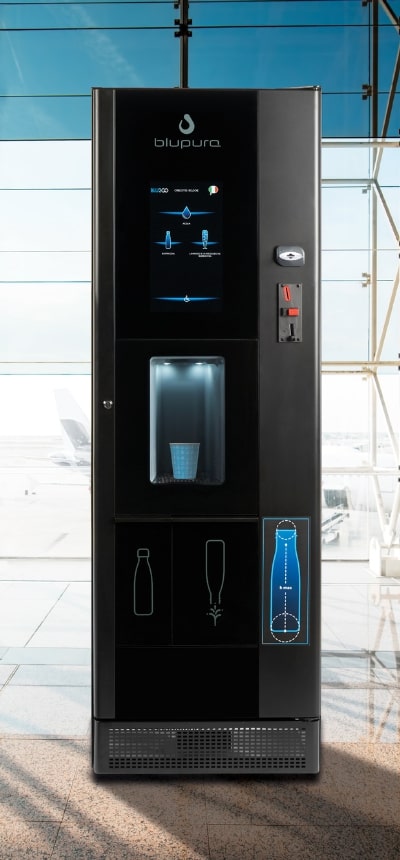
The Blupura Blu2Go combines chilled still and sparkling water with an integrated reusable bottle dispensing system. According to the manufacturer and datasheet, it delivers up to 60 litres per hour, dispenses 170-millilitre portions and stores up to 40 bottles of 500 millilitres each. This version is aimed primarily at public indoor spaces, universities, factories, larger offices and transport locations with around 100 to 500 employees or visitors per day. Bottle cleaning includes a pre-wash with filtered water, ozone cleaning and a rinse with filtered water. Its main drawbacks are its large footprint of 615 × 1,850 × 735 millimetres and its 181-kilogram weight in the base version. The published net price ranges from €11,334 to €13,361. A reliable ROI therefore depends on daily dispensing volumes, selling price, water connection, CO2 consumption and the number of single-use bottles avoided. With low usage, the investment is difficult to recoup. With steady footfall, the combination of sales, reusable bottle logistics and bottle cleaning may make economic sense.
Multi-temperature combi unit with three temperature zones that holds up to 464 items across 53 product selections, replacing two single-purpose machines at high-traffic locations. The limitation is not mechanical but connectivity-related: no public documentation exists for telemetry or remote reading.
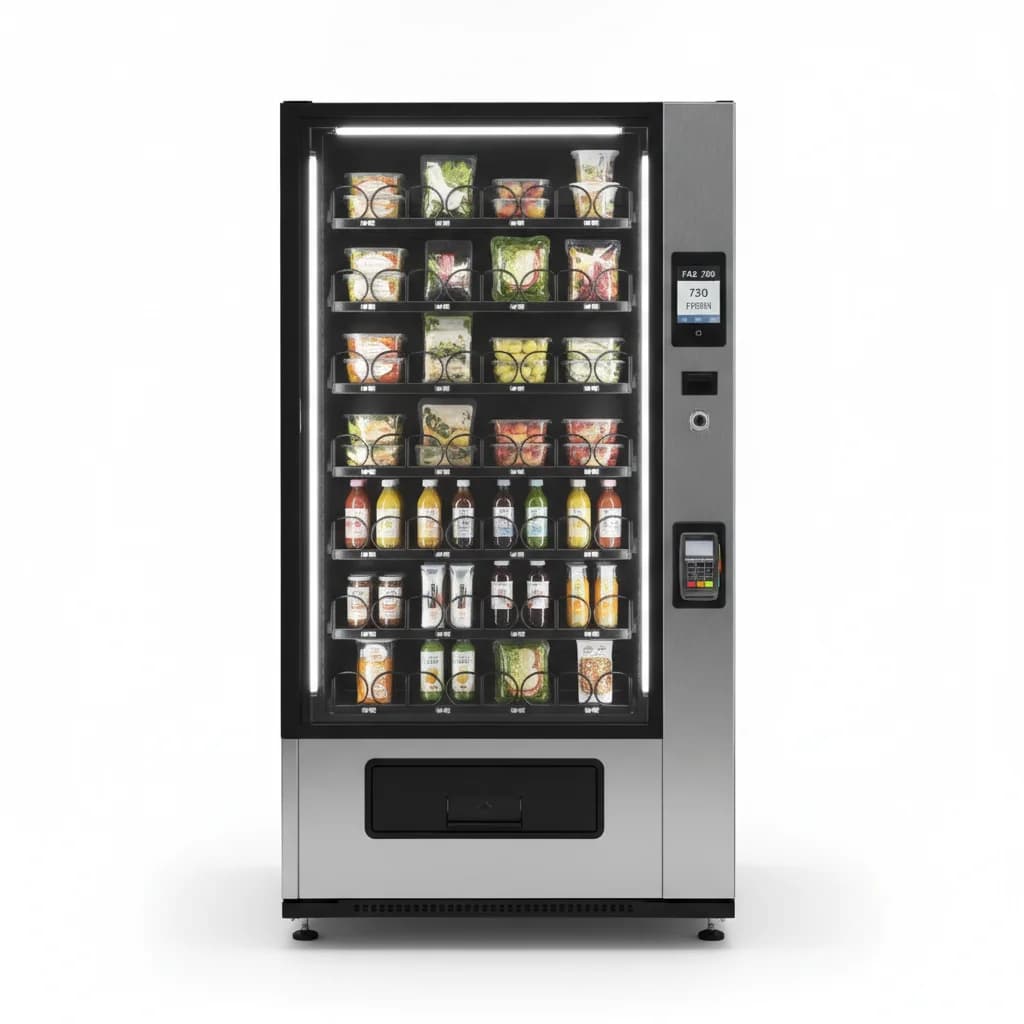
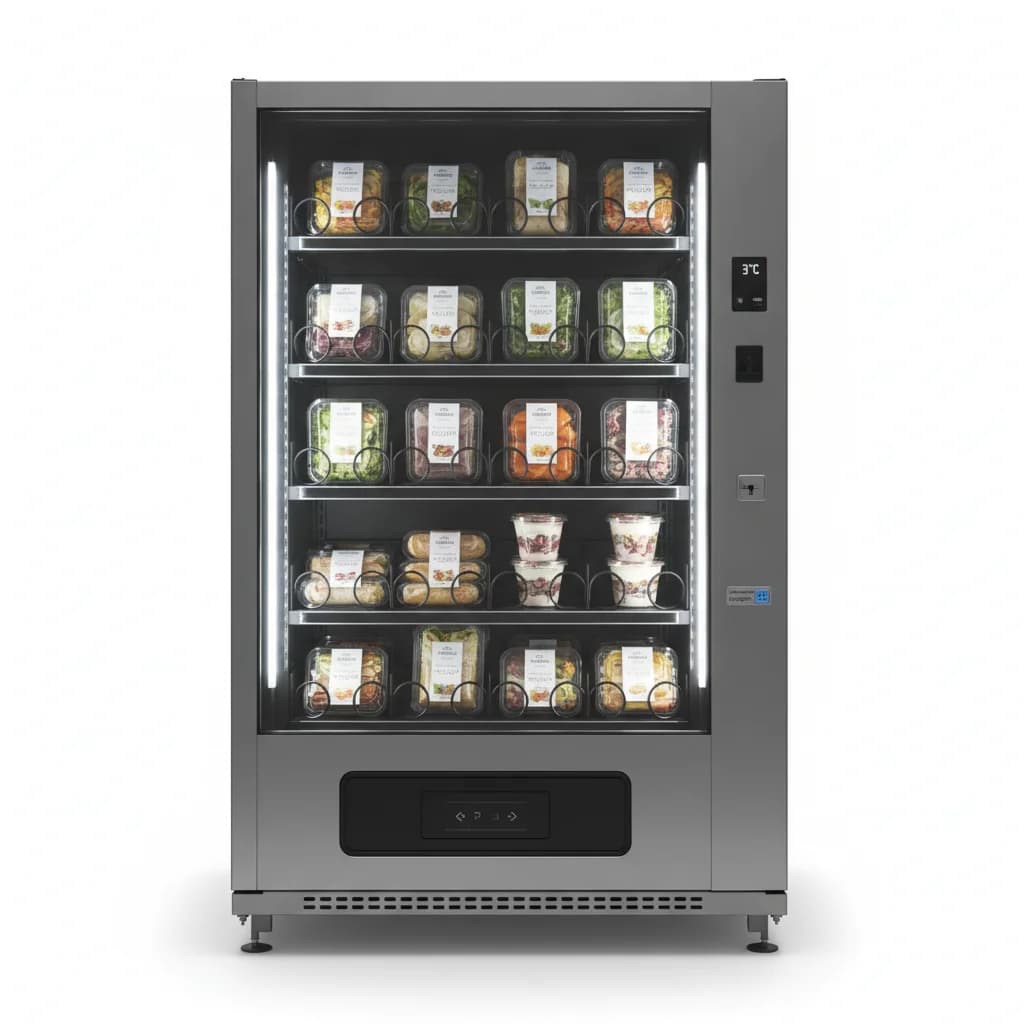
Compact multi-zone fresh-food machine for offices up to 80 employees. Delivers sandwiches, salads and ready meals in a single unit with HACCP-compliant temperature control—the simplest entry point for fresh-food vending.
180 cups daily, a 10-inch colour display, and three selectable milk systems: the WMF 1500 S+ positions itself in the upper segment of commercial tabletop machines for locations with 50 to 200 employees. The key differentiator is Dynamic Milk, which delivers four hot foam consistencies, three cold foam variations, and cold foam without modification or system changeover (manufacturer specification, brochure p. 2). With the optional AutoClean, daily cleaning effort drops to approximately 5 minutes. CoffeeConnect is included as standard according to the current WMF brochure and enables remote access to machine data.
Acquisition cost ranges from EUR 9,635 to EUR 10,167 net depending on configuration (August 2026). Operators should plan for two factors: the manufacturer's specification of 180 cups daily applies only without cleaning pauses; in office operation with morning and lunch-time peaks, 80 to 130 cups daily is the realistic planning figure. Additionally, a documented software malfunction exists in which the display reverts to text view; restart resolves the issue. For mid-size office locations and upmarket hospitality operations with professional service requirements, the 1500 S+ offers a solid cost-benefit profile.
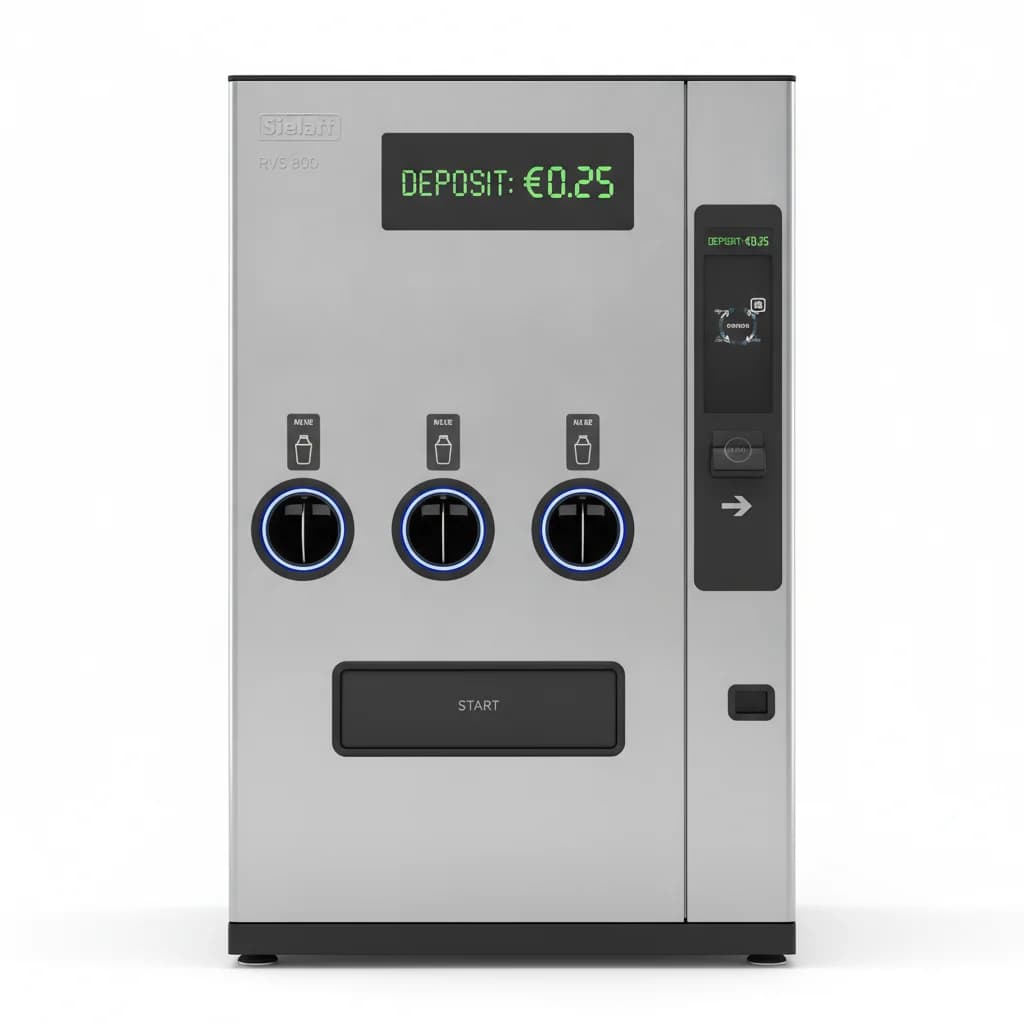
The Sielaff RVS 800 is the well-engineered alternative to Tomra in mid-market retail. 800 containers per hour, integrated compressor, and a service network that delivers faster response times than the market leader in DACH regions. The more cost-effective choice for retail spaces up to 5,000 m².
370 cups per day (indicative manufacturer specification), 312 espresso cups per hour per DIN 18873-2, and a 10.4-inch touchdisplay behind tempered glass: the Melitta Cafina XT8 is a fully automatic espresso machine for hospitality and institutional catering with high throughput. Target market is facilities with 150 to 350 persons—typically hotels, canteens and conference centres.
The optional telemetry module (Melitta INSIGHTS) enables web-based status monitoring and production reporting; it is not included as standard. Licensing costs are not publicly disclosed by the manufacturer.
Two shortcomings must be noted directly: the 8.7 kW connection rating at 400 V three-phase requires a separate supply line, which must be retrofitted in many existing kitchens. Purchase costs range from EUR 14,084 to 18,915 net depending on configuration; without a lease model, this represents a substantial upfront investment. Value for money is justified only above 150 cups daily on a sustained basis. Those exceeding this threshold reliably and valuing fully automatic Clean-in-Place and optional dual-milk capability will find in the XT8 a technically mature machine for professional continuous operation.
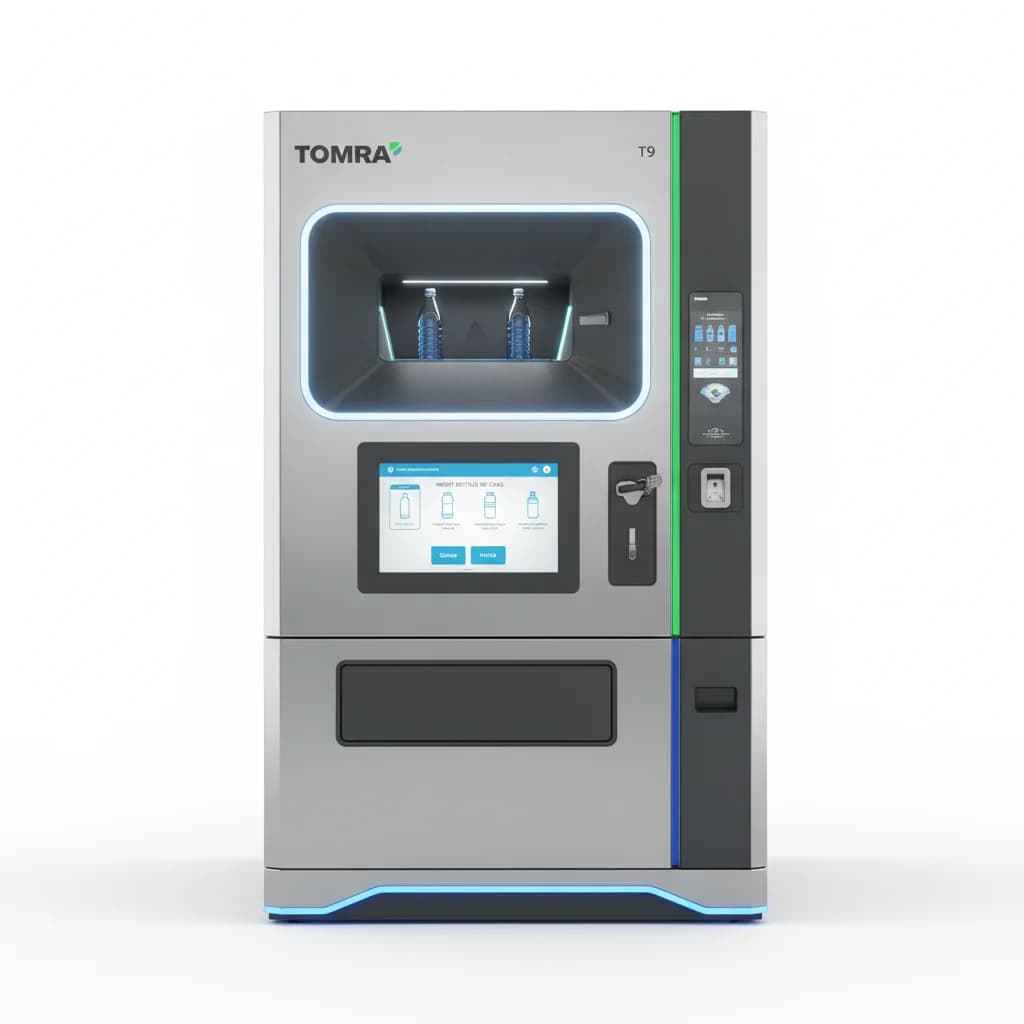
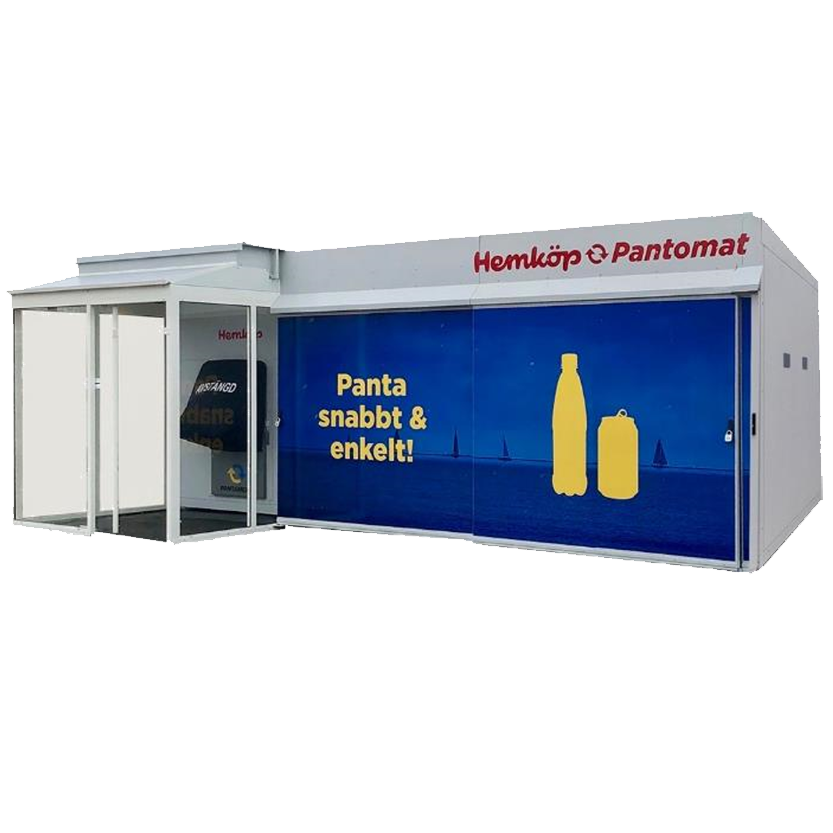
The Tomra T9 is the reference machine for beverage container returns under Germany's single-use deposit system. With ~80 % market share in Europe, 15-inch touchscreen, Tomra Insight IoT platform and up to 2,000 units/hour, it sets the industry standard. For supermarkets from ~300 m² retail floor space, the clear first choice – yet its near-monopoly status is simultaneously its weakness and its strength.
The Crane BevMax 4 is the most widely installed glass-front cold-beverage vending machine in Europe: 480 selection positions, Crane Streamware telemetry, multi-payment including NFC, dynamic pricing and ENERGY STAR efficiency. For high-traffic locations (airports, railway stations, office parks, hospitals), it is the first choice among cold-beverage vending machines.
The Franke A600 positions itself as a versatile fully automatic coffee machine for demanding offices, canteens and large sites with daily demand of up to 200 cups. Through its 10.4-inch touchscreen, modular brew groups and a powerful milk system, the machine is designed for both attended dispensing and pure self-service. Businesses with 60 to 200 employees particularly benefit from the high hourly throughput (e.g. 240 espressos/hour) and central fleet management via FrankeConnect. Weaknesses lie in non-publicly accessible purchase prices in Germany for the new generation and in the complexity of cleaning with IndividualMilk or CleanMaster variants. The investment pays off for locations with a broad hot beverage range, high dispensing frequency and digitalized administration. In used condition, a classic A600 is available from approximately 4,000 € net; for the current generation, German dealers do not quote list prices. The range stated here of approximately 9,700 to 10,800 € comes from two British dealers, applies to the classic A600 and has been converted at the ECB reference rate. Lower total cost of ownership results primarily through central control and reduced downtime during malfunctions or service.
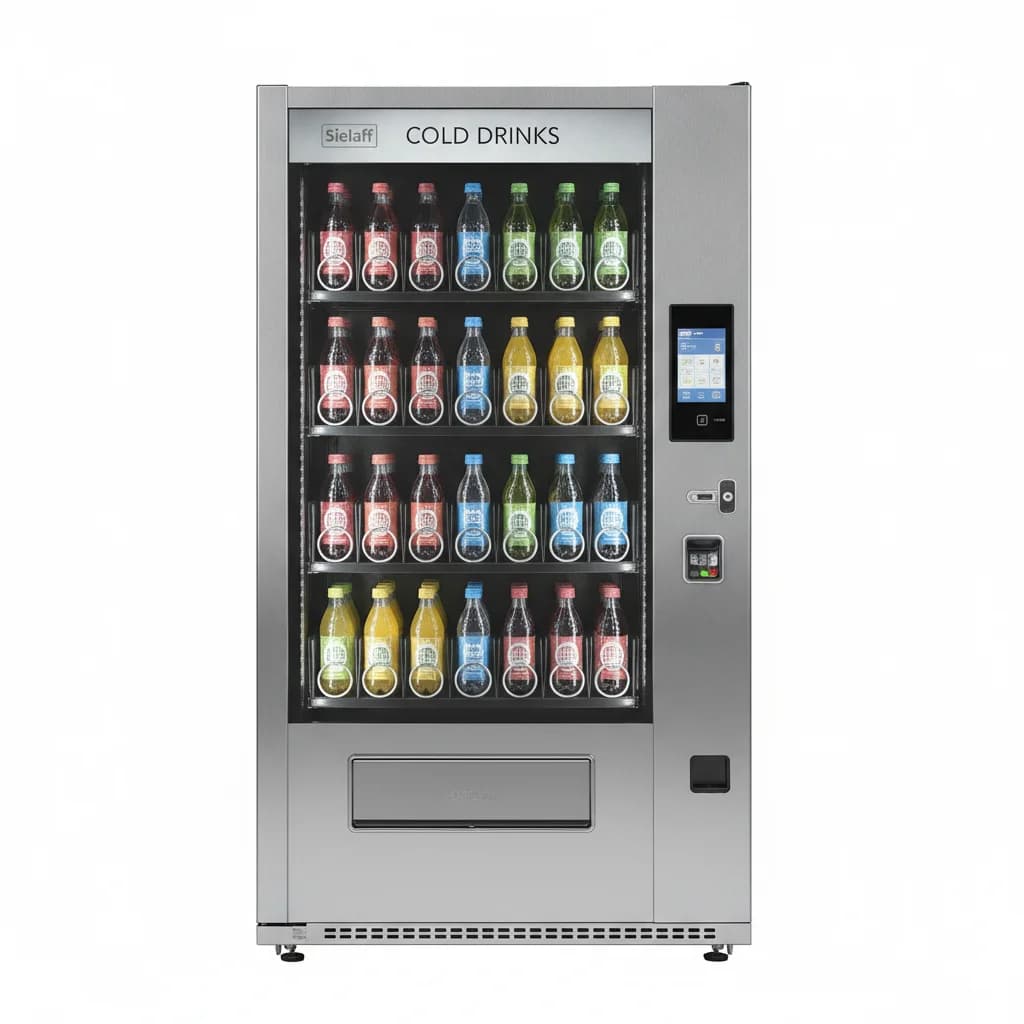
Glass-fronted beverage vending machine with lift dispensing, 45 to 72 product selections and payment technology included, new from approximately €8,080 net. Capacity and operability represent a different class than column vending machines — documented telemetry data are also absent here.
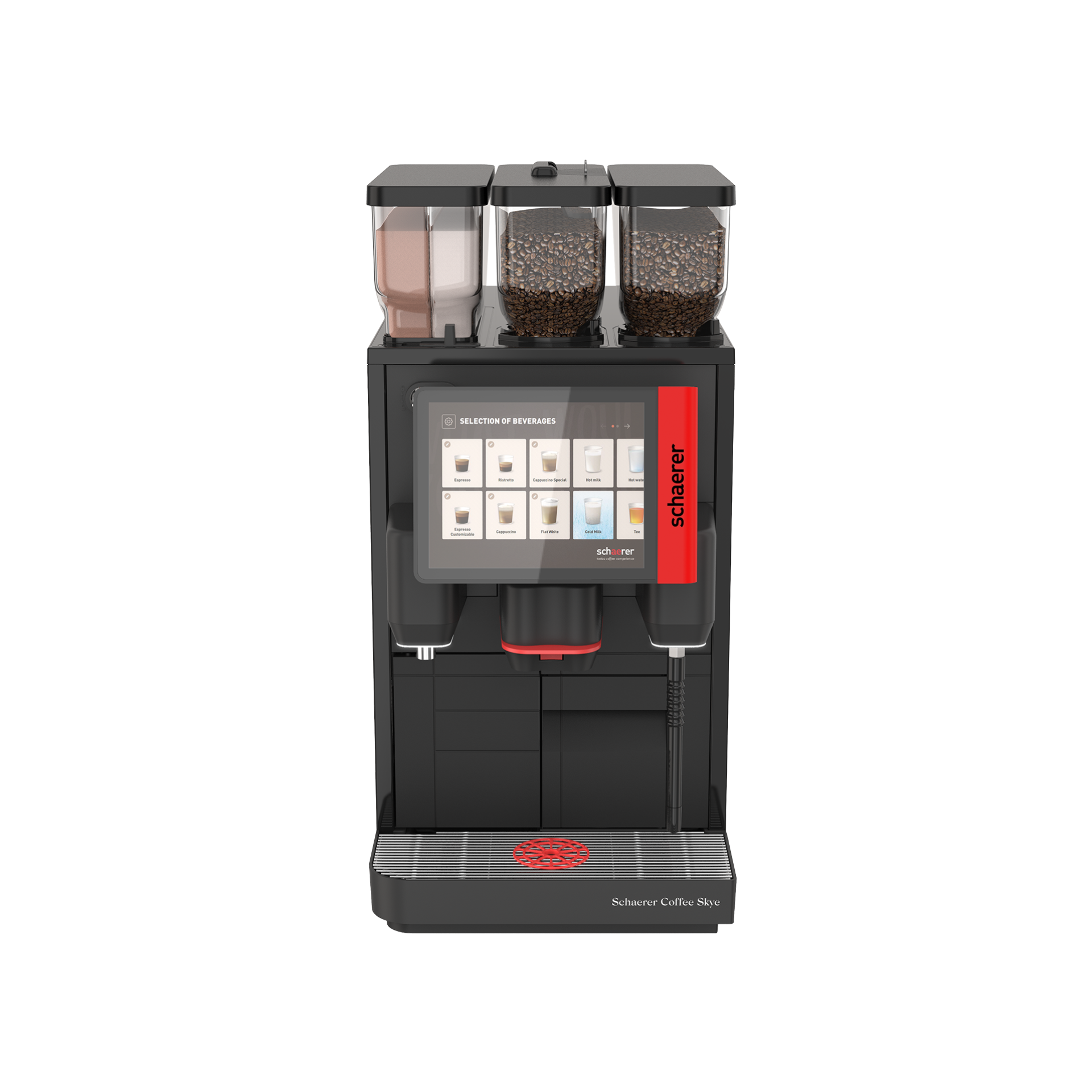
Compact premium fully automatic coffee machine from Swiss heritage brand Schaerer, designed for mid-volume locations up to approximately 180 cups/day: video-capable 8-inch touchdisplay with three operation modes, BestFoam milk system for hot and cold specialty beverages, and CoffeeLink telemetry. As a countertop unit with internal tank or mains water connection options, the Skye remains flexibly deployable — its capacity is deliberately sized for mid-volume locations, not high-volume operations.
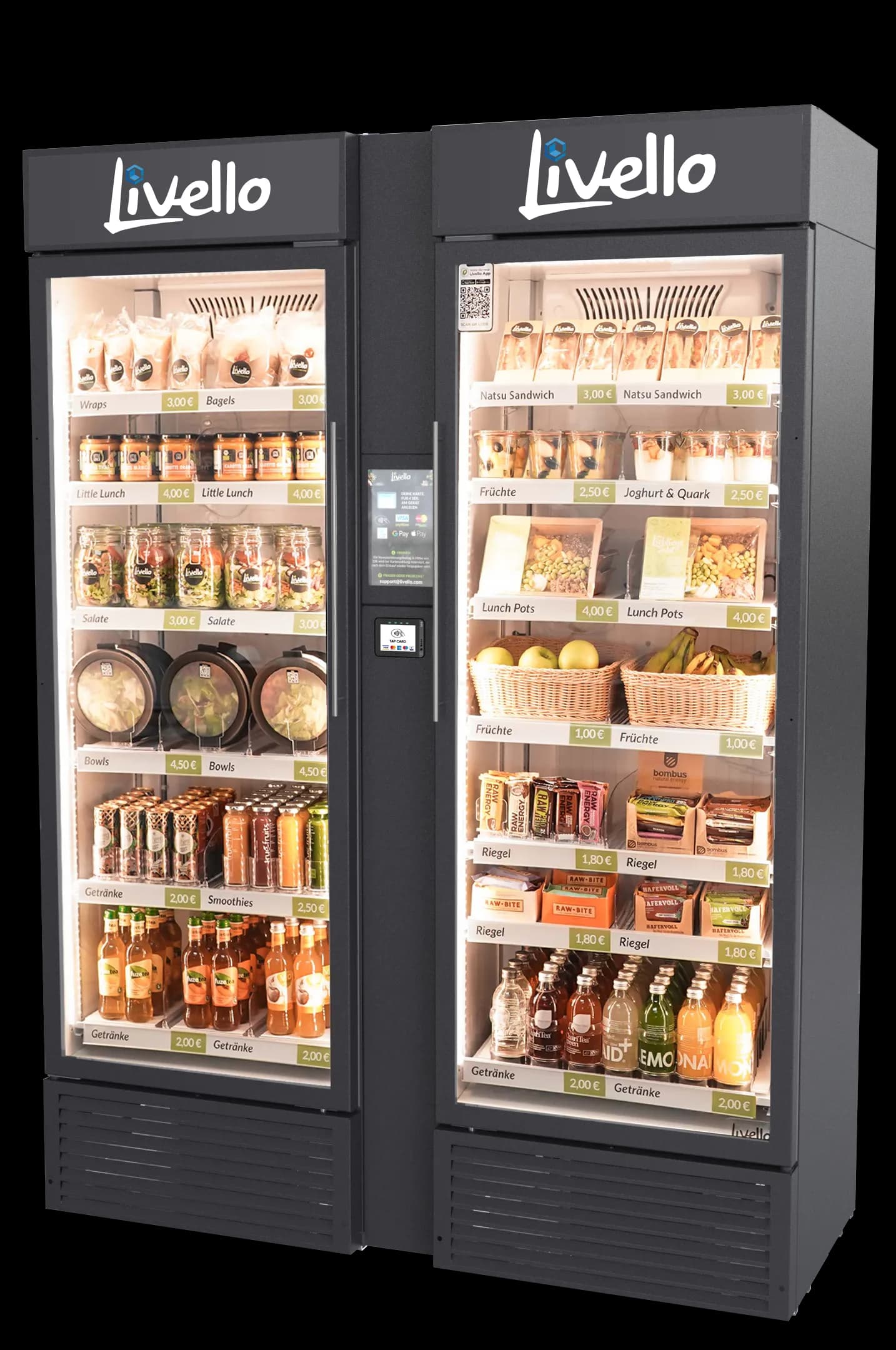
Twelve scales beneath the goods rather than label or scan: the purchase process follows Amazon Go Store logic, not vending-machine logic. Card, wallet or staff ID authorize access, the door opens, billing covers only what is actually missing when it closes. The target audience is no longer limited to offices with 50+ employees: hotels, clinics, universities, sports facilities and farm shops use the same technology for the same purpose—making fresh products available when the canteen, reception or staff are not operating. Two limitations persist. Without stable internet connectivity, regular sales functions are not fully available according to the user manual, and payment is exclusively cashless—the unit does not accept cash. The economic logic is straightforward: no cashier required, no spiral mechanism as a wear part, remote diagnostics instead of service calls. How much this can pay off is demonstrated by a real case from a clinic in North Rhine-Westphalia: two units in the emergency department and lobby achieved an average of approximately €9,900 gross revenue per month, with nearly 80 per cent of that outside regular canteen hours.
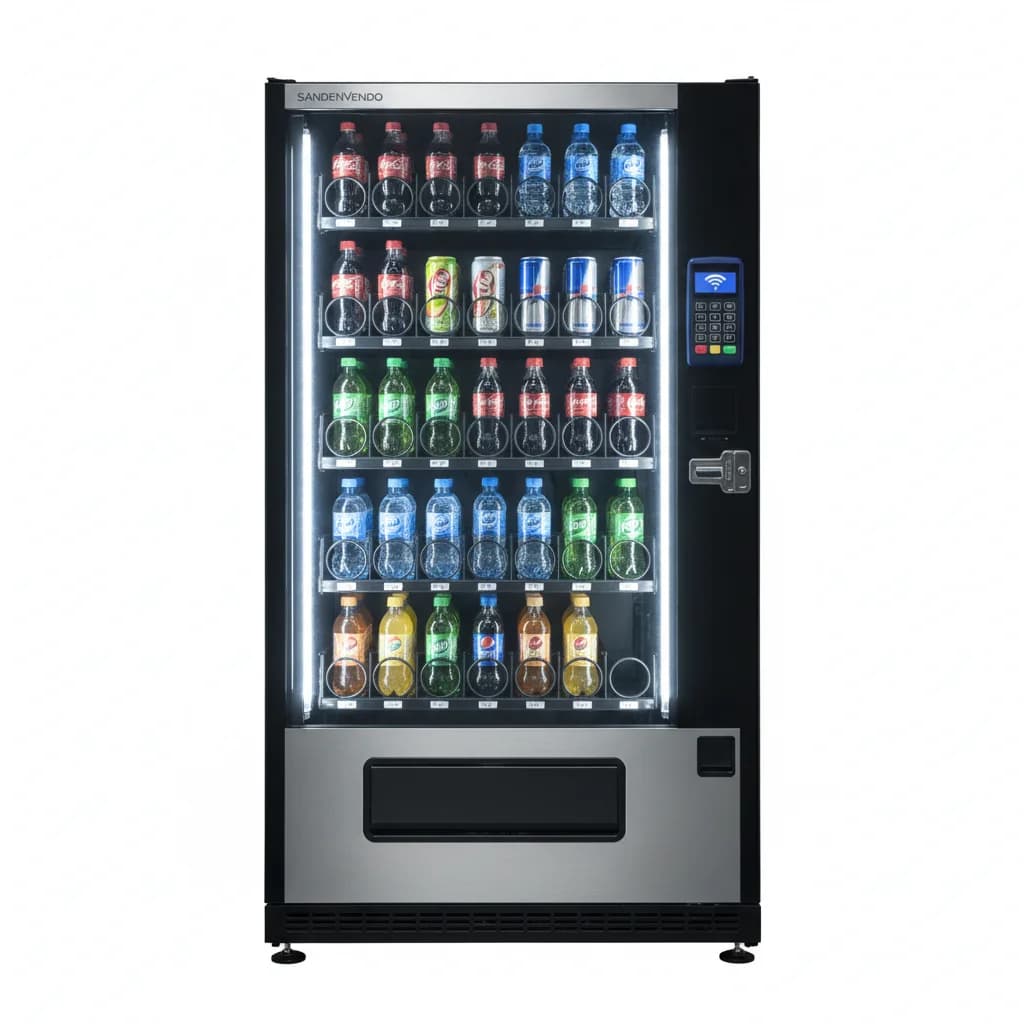
The SandenVendo G-Drink Standard DM6 is a refrigerated glass-front drinks machine with a vertical lift system. According to the manufacturer, the standard version holds up to 336 0.33-litre cans or 240 0.5-litre PET bottles; the wider DM9 holds up to 504 or 360 units, respectively. This verdict is a source-based data review, not a hands-on test of a machine: dispensing quality, fault rates, noise and actual replenishment capacity were not measured. Strengths include clearly differentiated variants, a refrigerated product range, up to 42 or 63 selections, and support for Executive/MDB payment interfaces. Before ordering, operators should specify the cabinet width, scope of delivery and refrigerant in particular. The energy consumption figures conflict: SandenVendo states 624 kWh/year, while Lavazza Professional states 252 Wh/h. On 02.10.2026, SnackMe listed the DM6 at €6,820 net without accessories, plus VAT and shipping; DGA Vending lists it at €6,850 and currently marks it as sold out. These are dealer prices, not the manufacturer's recommended retail price; check availability and final price before ordering. The DM6 suits indoor locations with less width to spare, while the DM9 is for operators seeking a wider selection.
200–250 beverages daily, fresh-milk system with automated cleaning and touch operation: The Necta Kalea Plus targets larger offices, canteens and breakfast areas in hotels and foodservice venues with 60 to approximately 150 staff or high-volume guests. Testing confirms the robust Z4000 brew group and modular architecture for beans, instant and milk; the telemetry-capable platform enables straightforward monitoring without add-on modules. Operators praise reliability (with consistent cleaning), rapid beverage dispensing and parts availability (German warehouse: 1–3 days). Weaknesses: daily milk-system cleaning (5–8 minutes, mandatory) cannot be skipped, and every 10,000 vends requires brew-group service—at maximum throughput, this means every 2–3 months. Acquisition cost ranges from €6,800 to €9,400 net; maintenance and consumables are material. For high-throughput sites with professional oversight, the model justifies itself through minimal downtime and predictable follow-on costs.
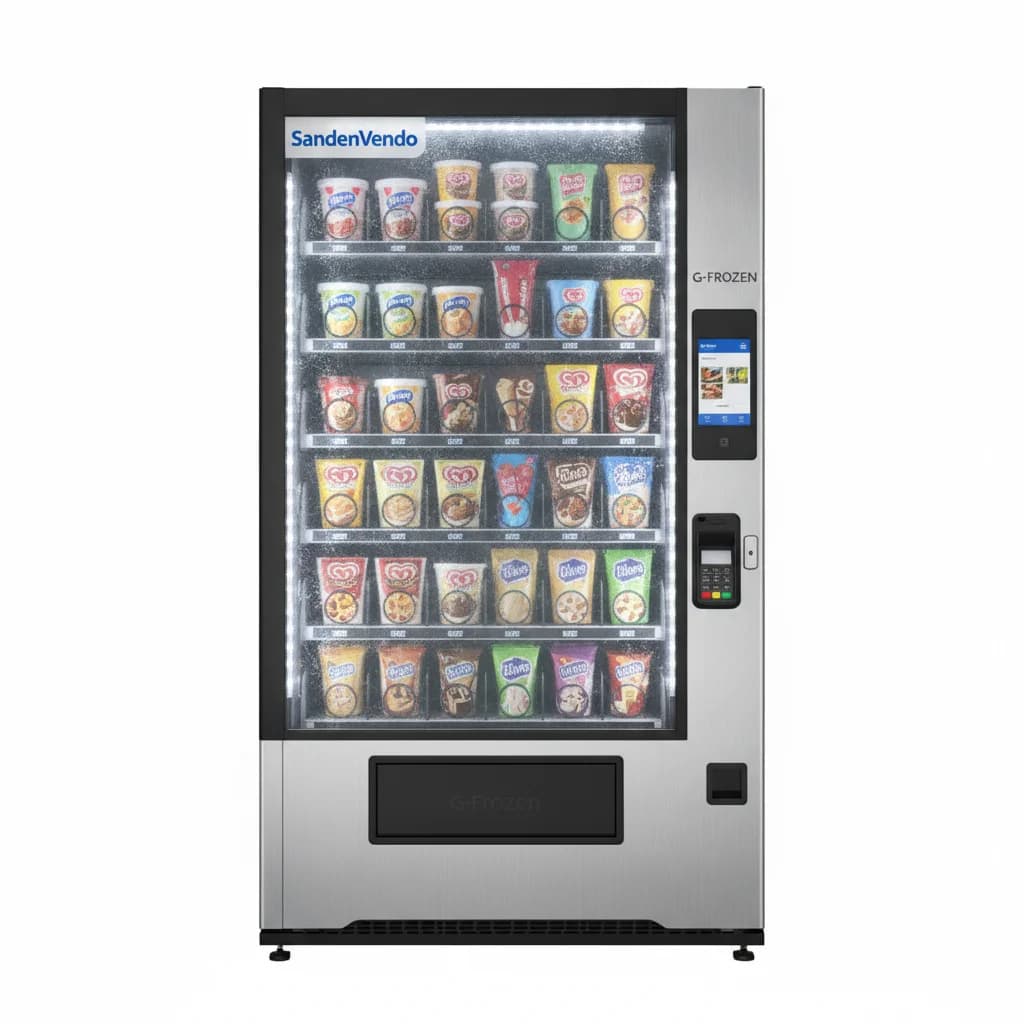
Frozen-product spiral vending machine operating at –18 °C with 180 product positions for ice cream, frozen food and chilled beverages. Excels through high capacity and robust construction; energy consumption and the older refrigerant R404a are the main weaknesses.
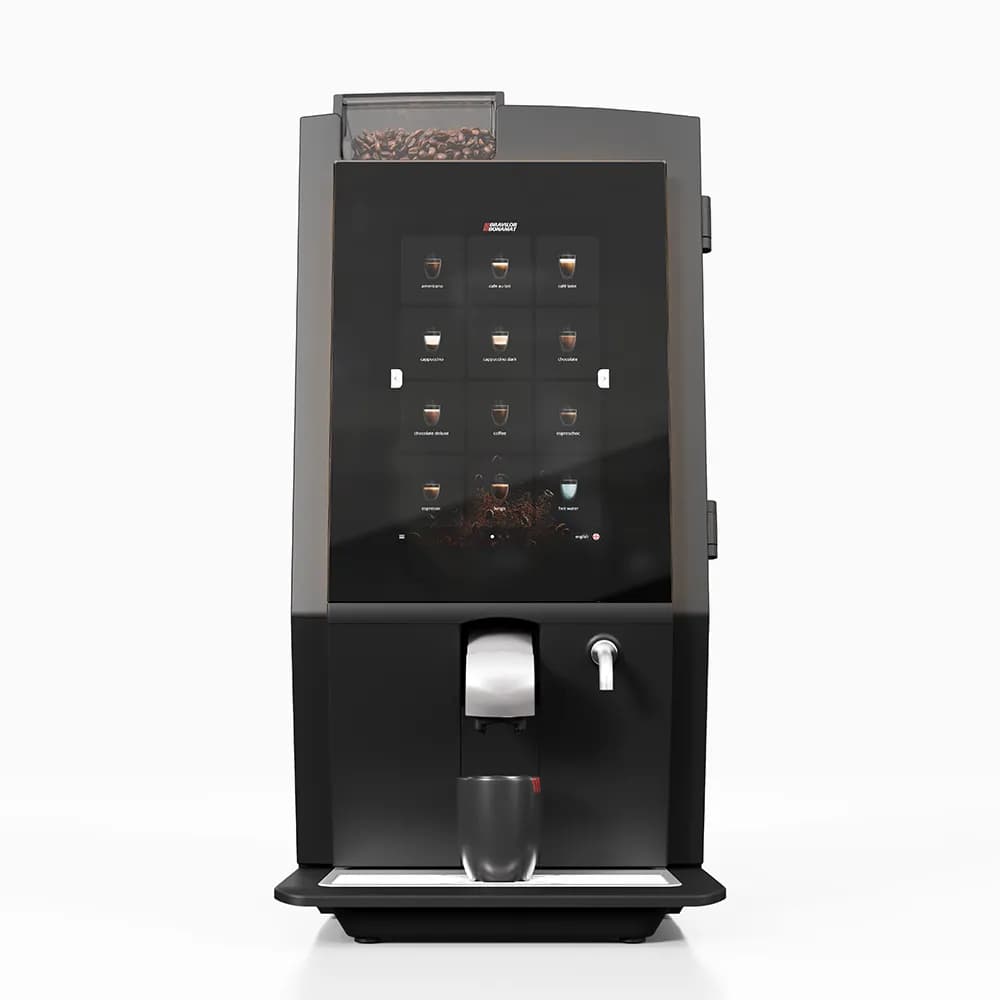
The Bravilor Esprecious 11 and 12 are not a pair of larger and smaller units, but two internal configurations of the same machine. Dimensions, bean capacity, number of grinders, beverage limit, dispensing heights, waste bin, daily output, user count and energy label are identical. One question remains: a single instant container with 3.2 litres or two with 1.3 litres each. Operators needing two powder varieties take the 12 and lose around 19 per cent instant volume. Documentation stands out positively. The German technical manual with 54 pages includes information not found on any datasheet: water pressure of 1 to 10 bar explicitly measured as static pressure after the filter, and the expansion kit for 2.4 kilograms of beans, which raises the machine by 13 centimetres. Bravilor does not publish a list price.
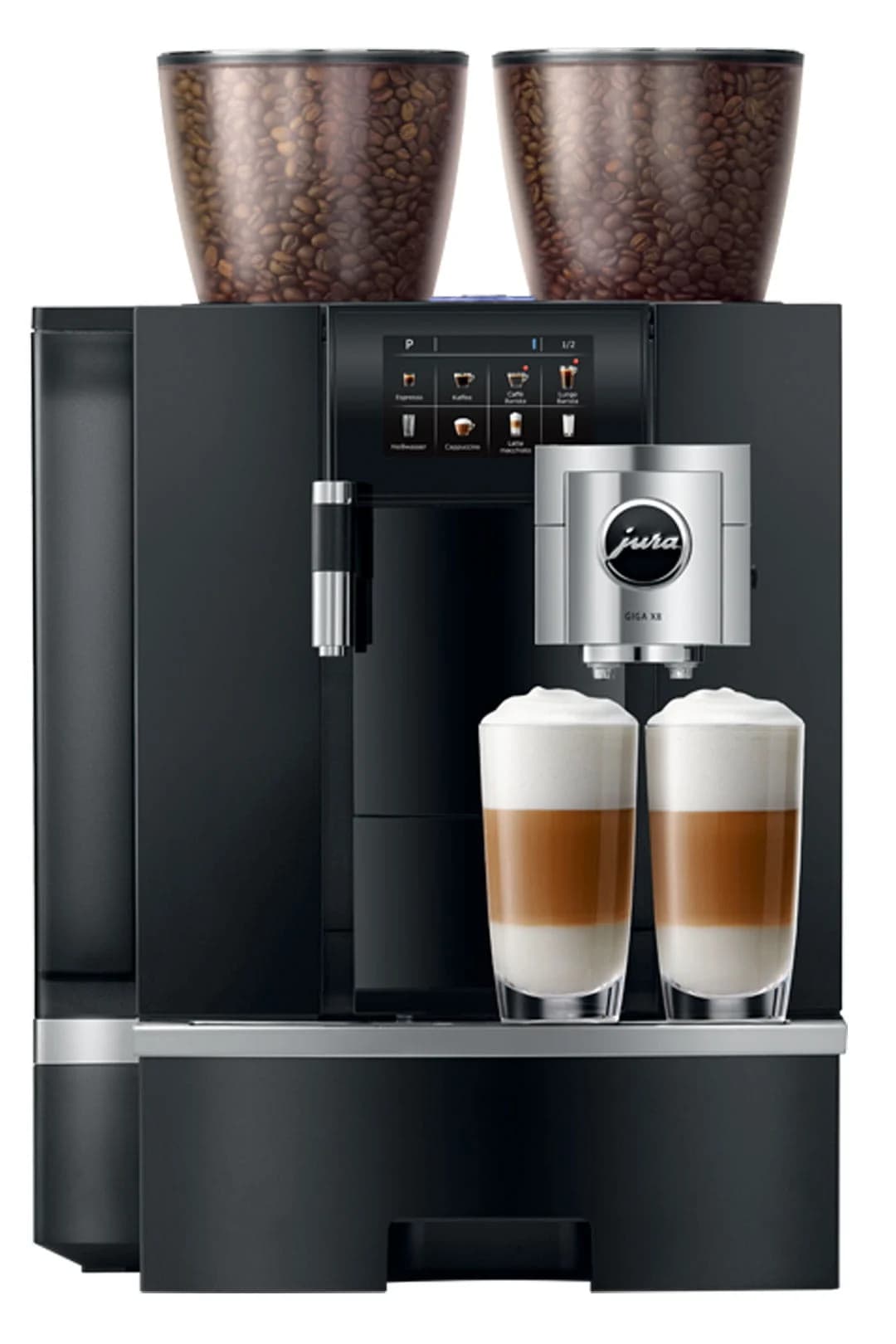
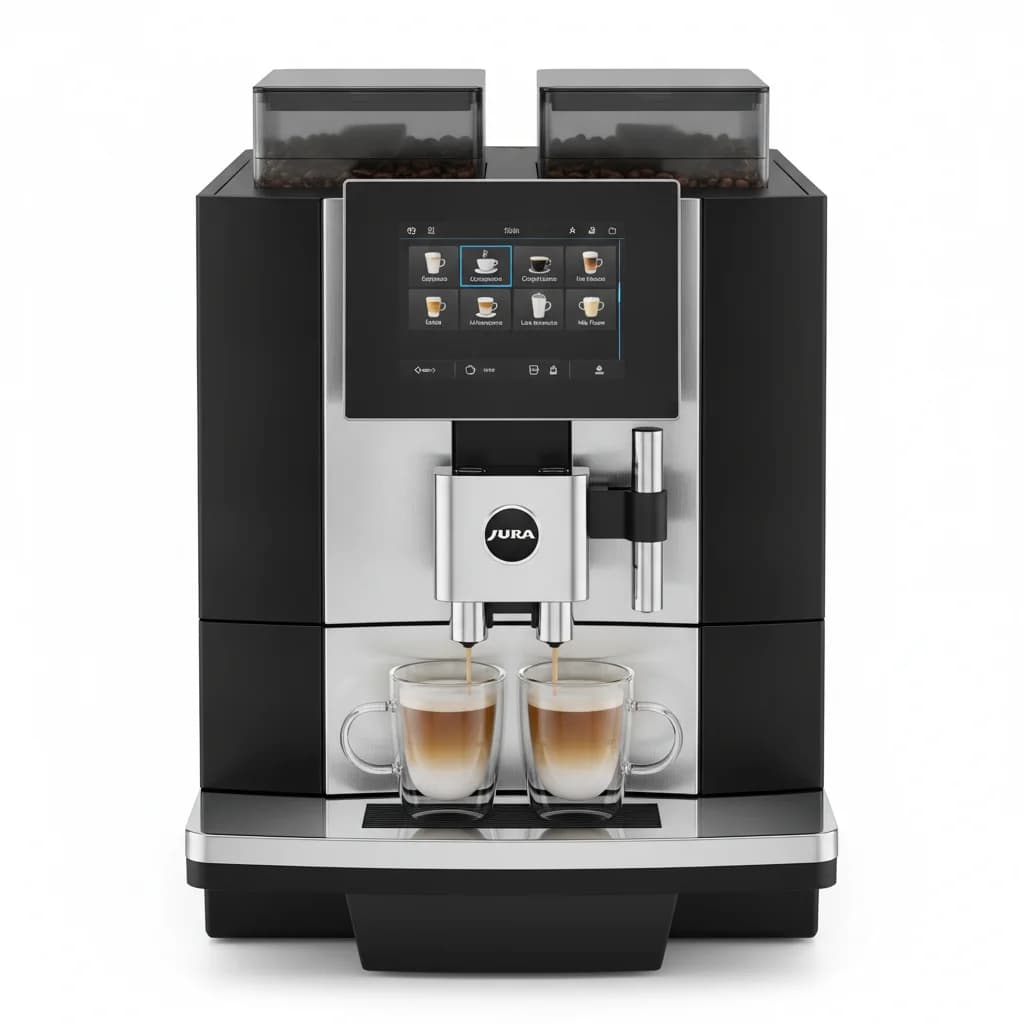
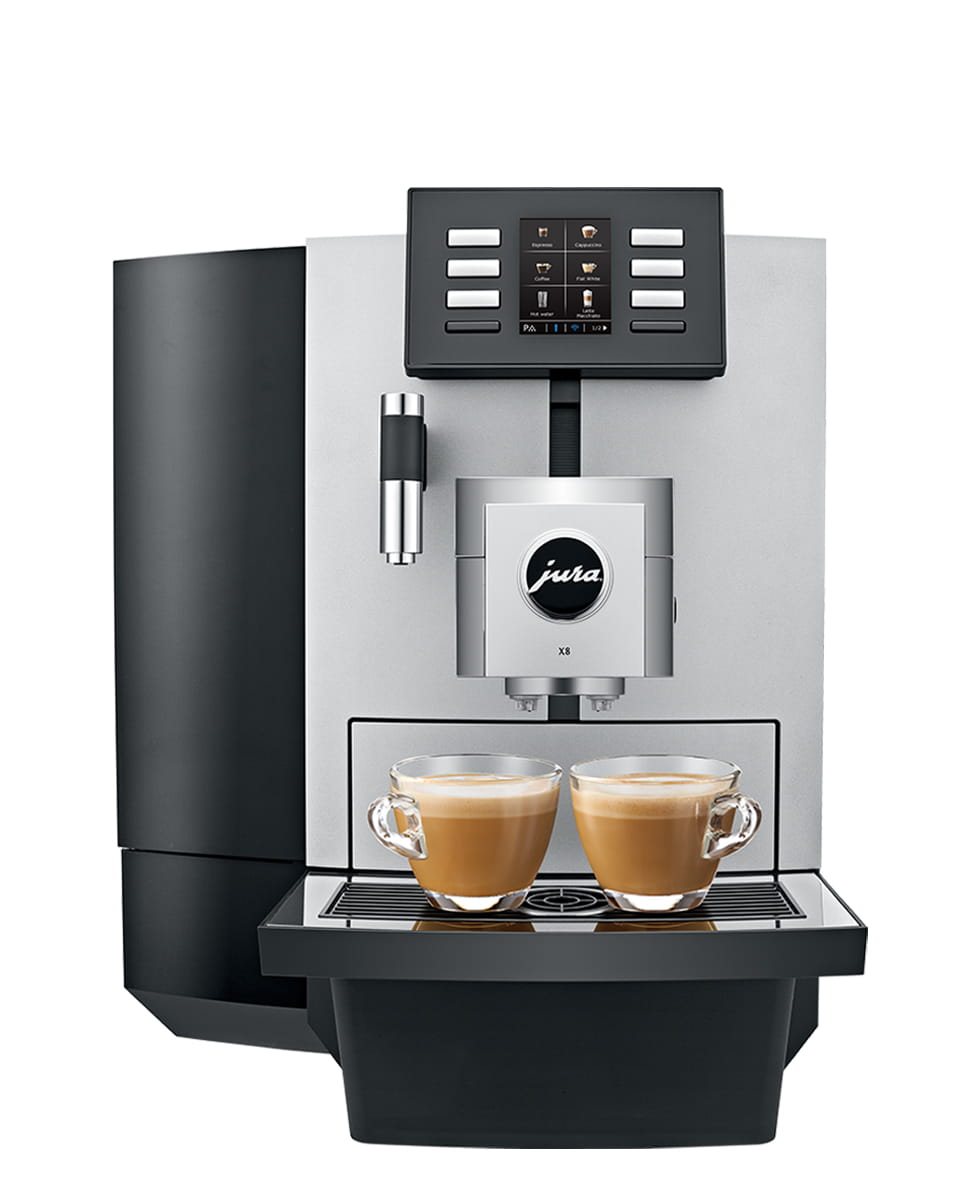
With up to 180 cups daily output and 34 individually programmable specialities, the JURA GIGA X8 Professional targets sites with 80 to 200 employees, catering venues or seminar centres. Critical to performance is the dual 650 g bean hopper with two grinders, enabling parallel preparation of different bean varieties. What remains critical is the required cleaning workload, especially with the external milk cooler: the milk system demands daily maintenance, consumables and scheduled milk tube replacement. The machine costs between EUR 6,200 and EUR 7,000 net — in international comparison, a price segment that becomes economical only at high volumes. For those requiring fewer than 80 cups daily, more cost-effective alternatives exist with lower power consumption and reduced footprint. The LCD display is robust but appears functionally outdated against modern touch-enabled competitors; app and telemetry functions require separate licensing. At high utilisation, many users and professional maintenance intervals, the X8 Professional convinces through predictability, quality and specification — smaller operations are better served by simpler systems at lower cost.
The FAS 500 Fresh is the smaller sibling of the FAS 750 Food — with 120 instead of 200 selections, but more compact dimensions that make it suitable for tighter office corridors and clinic canteens. R290 refrigerant, complete telemetry and MDB cashless are standard. For locations with up to 80 users, the most cost-effective fresh-food vending machine offering in the FAS portfolio.
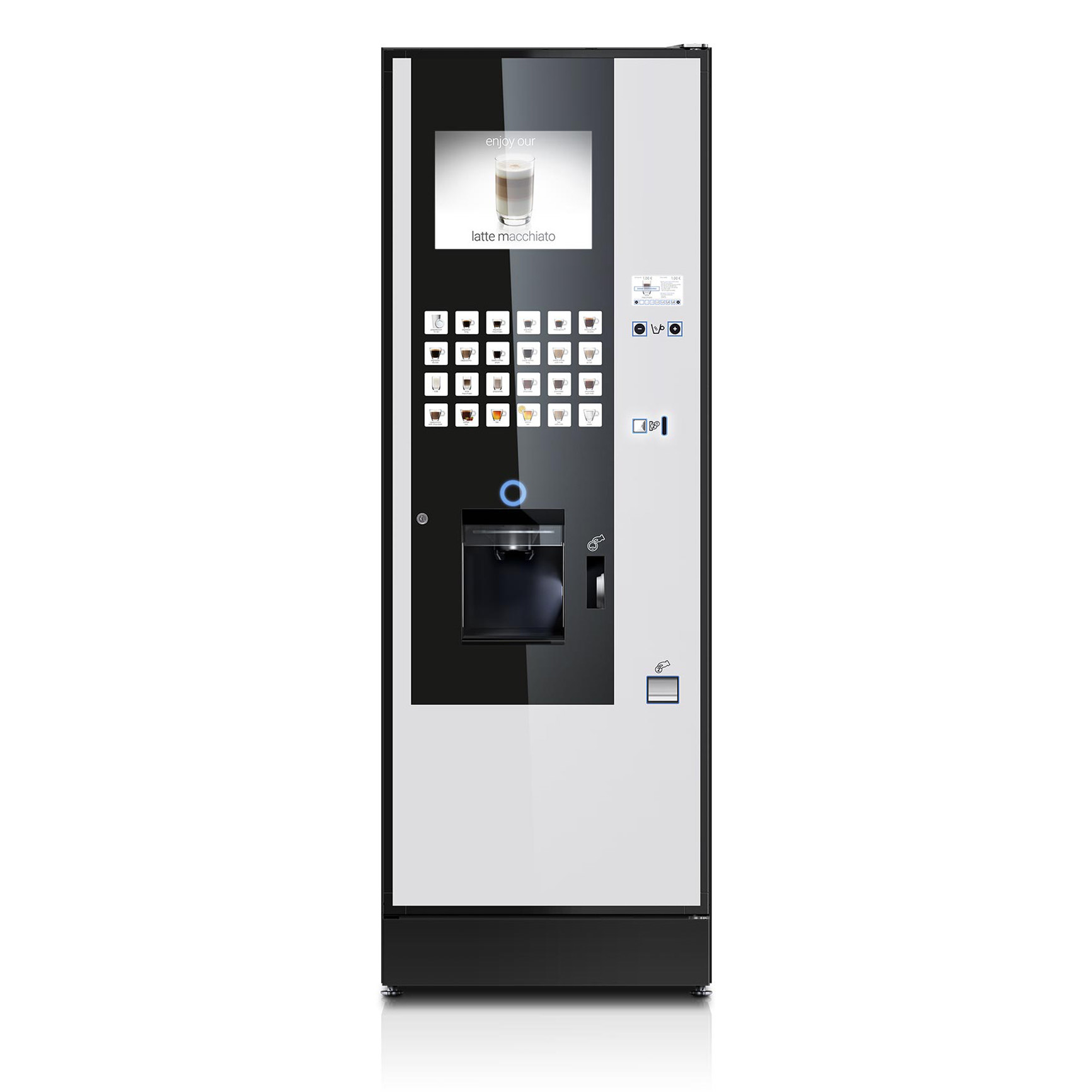
The Rheavendors rheavolution S is the best-selling hot-beverage machine in European canteen environments—robust Italian engineering, up to 300 cups/day, MDB standard and optional Nayax telemetry. As part of the Evoca Group, the machine benefits from Necta and Wittenborg service network synergies across DACH.
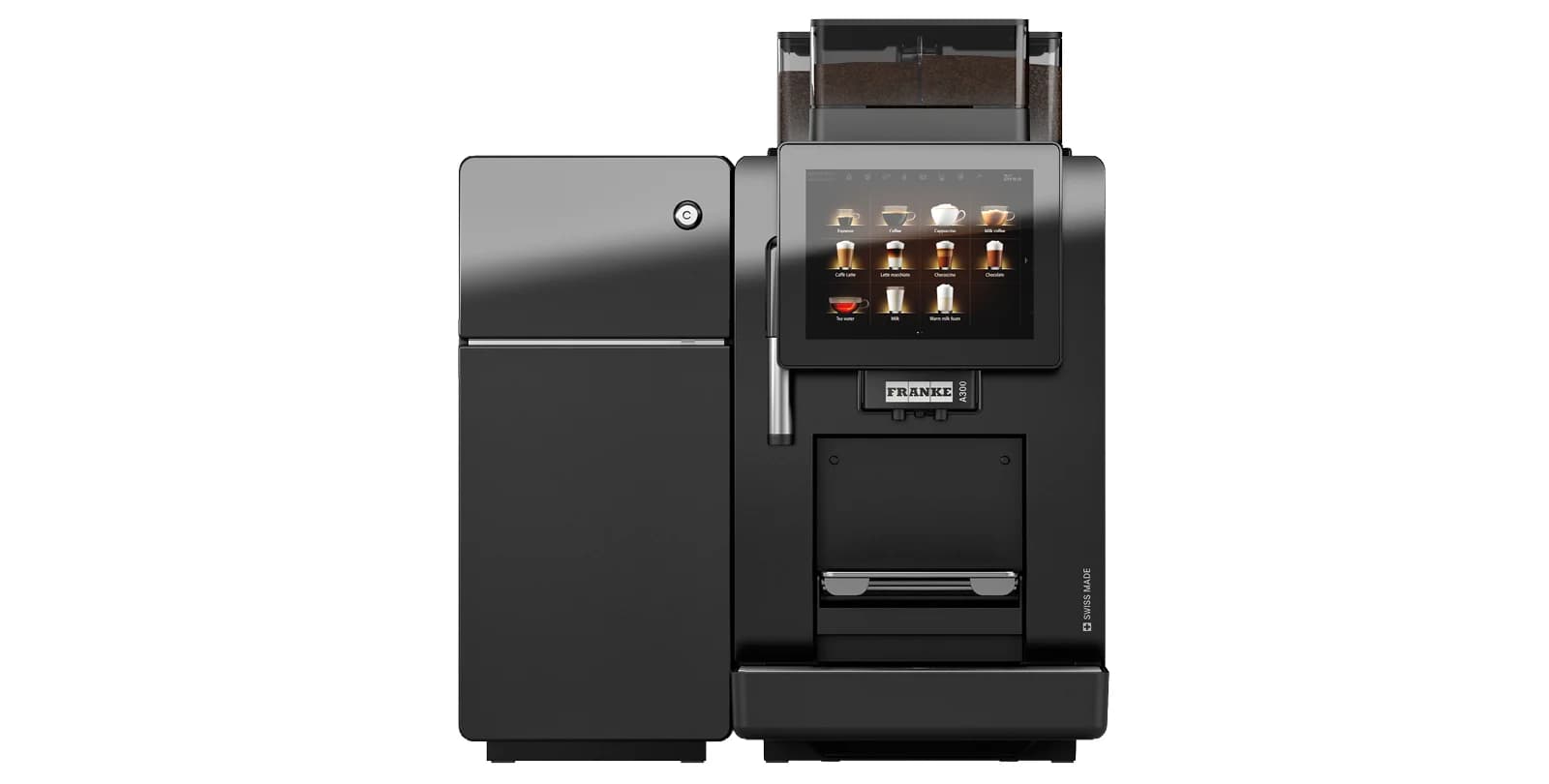
The Franke A300 impresses as a compact, multi-award-winning super-automatic coffee machine for locations with hourly demand of up to 124 espressos or 80 café crèmes. With bean-to-cup technology and the optional FoamMaster™ milk system, it delivers professional coffee quality in minimal space and achieves an overall rating of 7.9.
JURA's dual-grinder flagship for continuous commercial operation – 32 specialities, TÜV-certified hygiene and P.E.P. brewing method. The revised Generation II (2023, Type 748/749) increases to 2700 W and 32 specialities; any buyer should always verify the generation. Strongest argument: turnkey package combining quality, hygiene and an active JURA service network – a genuine investment that pays off at ≥ 80 cups/day.
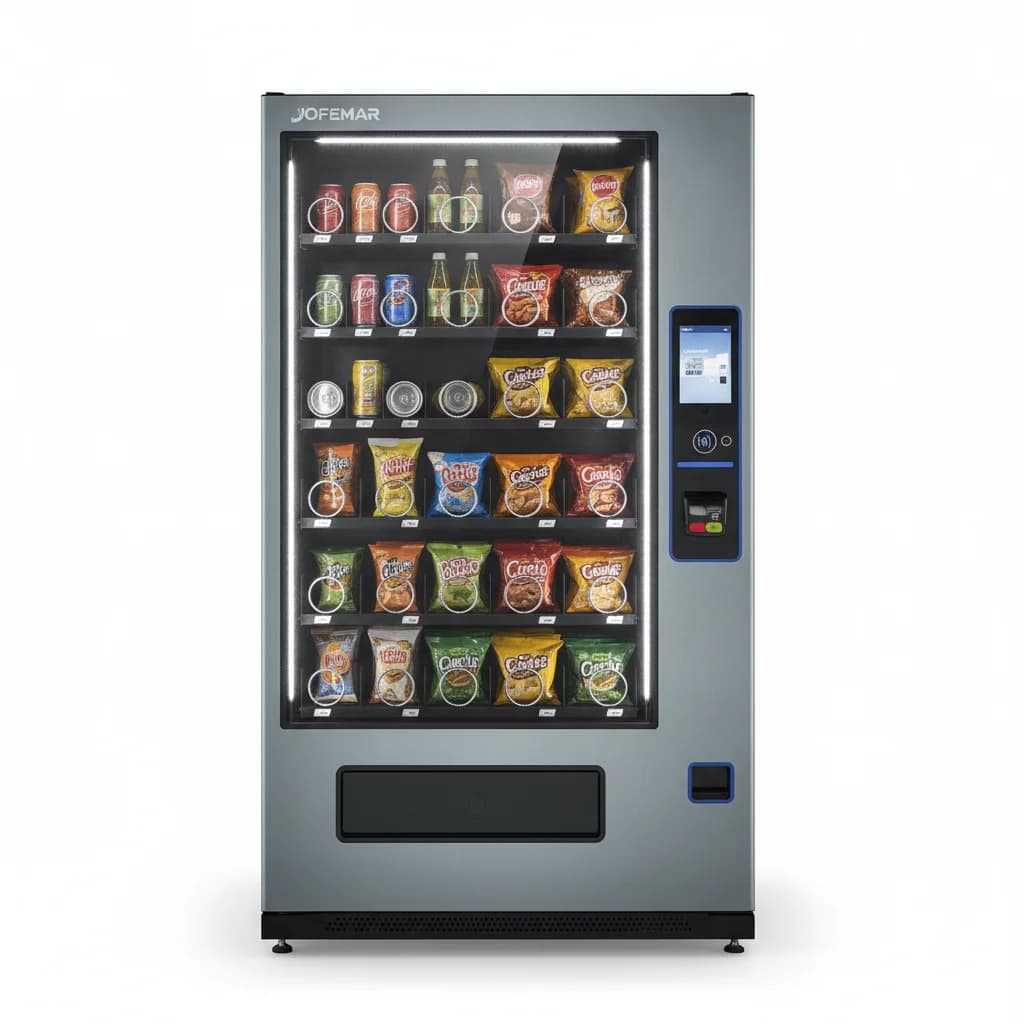
The Jofemar C 4000 combines 400 product positions for snacks and chilled beverages in a single unit and delivers complete out-of-the-box cashless capabilities—NFC, Mobile Pay and 4G SIM included. For locations seeking a compact all-in-one solution instead of two separate machines, it offers attractive pricing and solid technical specifications.
High-capacity glass-front can dispenser with proven spiral mechanics, climate-friendly R290 refrigerant, and the densest service network in the DACH region. Operators prioritising maximum reliability over smart features make a sound choice.
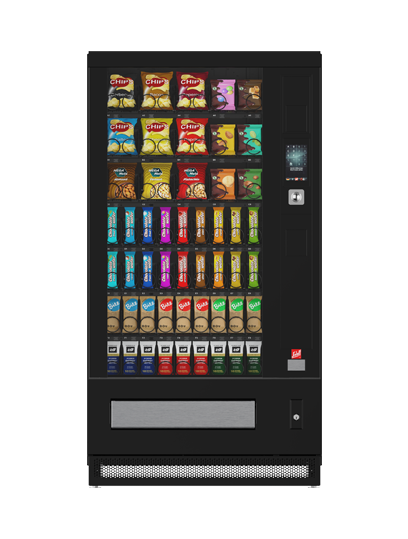
Seven-tier snack spiral machine with high capacity (50+ products), illuminated glass front, and reliable Evoca spiral mechanics. First choice for campus and office locations with broad assortment requirements.
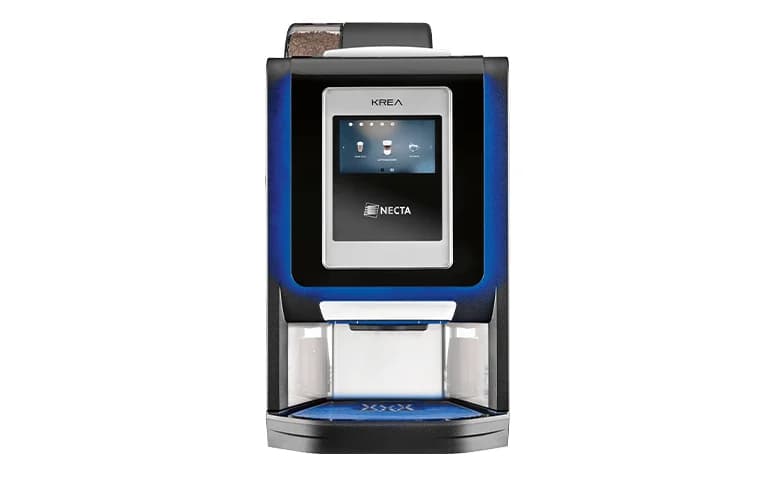
At 100 to 150 cups daily with a 7-inch HD touchscreen, the Necta Krea Touch is a solid bean-to-cup machine for offices with 30 to 100 employees, as well as hotel and lounge operations. The patented Z4000 brewing system from Evoca Group delivers reproducible espresso quality; the powdered milk system eliminates any cold-chain requirement, which significantly simplifies unattended locations. Weaknesses exist in the dosing mechanism, which appears in operator forums as a wear point after 12 to 18 months, and in the cold-start phenomenon of the first cup, which is reliably circumvented by running a flush cycle beforehand. The machine is end-of-life: Necta no longer lists the Krea Touch in its current catalogue; the successor is the Gaggia G300 Krea with a 10-inch display and EU energy class A. New prices range from €3,690 to €5,434 net; second-hand units are available on the German market for an estimated €900 to €2,200. For operators seeking a proven Evoca fully automatic machine at closeout prices, the Krea Touch is a defensible choice, provided limited long-term spare parts availability is factored into the investment decision.
Up to 140 espressos or 100 cappuccini per hour, touchscreen menu and two grinders: the Nuova Simonelli Prontobar positions itself as a B2B automatic coffee machine for medium-sized locations with 80 to 200 employees. Cleaning requires a minimum of four minutes daily plus additional care of the milk system, which must be factored into catering or office routines. An external milk cooler is mandatory and adds over 2,000 EUR net if EasyCream and a matching milk cooler are ordered. The machine scarcely justifies its investment for lower throughput or unsuitable water quality—a water filter is essential. The machine price ranges from 5,289 to 7,261 EUR net according to dealers; a complete maintenance kit costs 328 EUR net annually. Running costs for consumables and cleaning add up quickly. Those needing reproducible beverage quality and a touchscreen menu for diverse user groups in office, hotel, or university catering environments receive a robustly engineered automatic machine. For locations with fewer than 80 people or low cappuccino demand, the machine is typically oversized.
Classic shaft-vending machine, German-made, for cans and bottles up to 295 mm; new from approximately €5,270 net. Robust and low-maintenance, but without glass front, without documented telemetry, and rated energy class C.
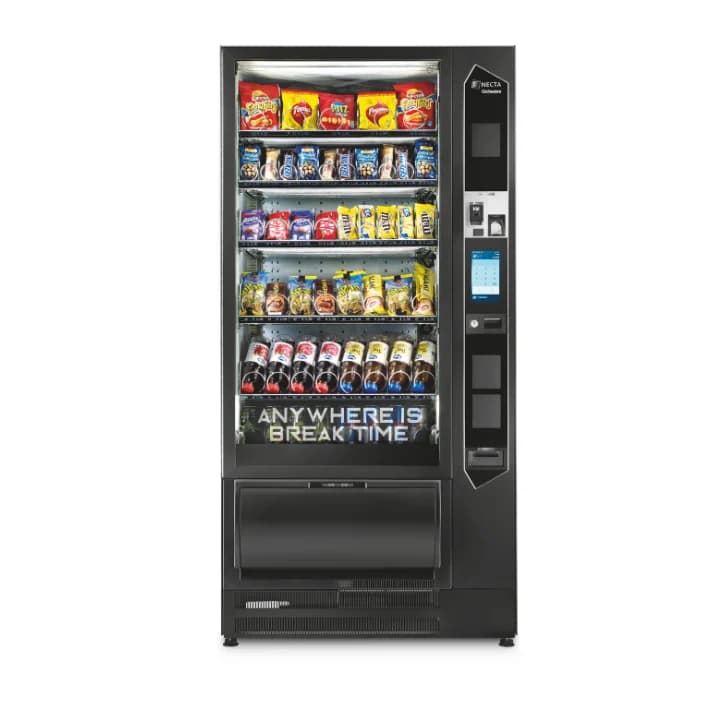
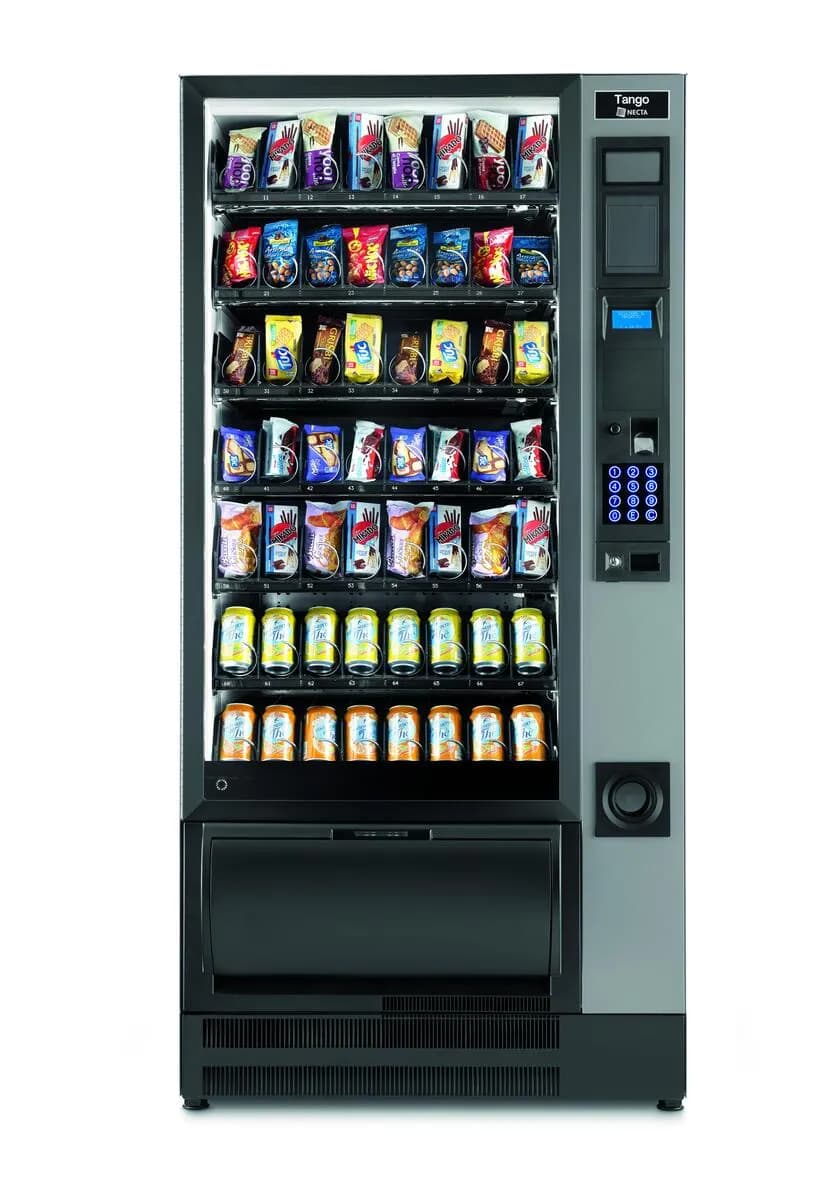
The Necta Tango has been in active use for years as a versatile combo vending machine for snacks, cold beverages and food products, targeting office and educational facilities with 50 to 200 employees. Up to 48 different products (R290 variant; base model: 44 selections) across six levels, flexible compartment layouts and maximum capacity of 466 units serve mid-market consumption patterns. The machine offers low cleaning and maintenance effort—no milk system, no descaling required. Robust spiral mechanics with up to 48 individual motors minimizes total failure risk; spare parts are internationally available and repair costs are manageable. Weaknesses emerge around the outdated graphical display (no touch), missing standard telemetry and looming software support uncertainty as the Necta Swing succeeds the Tango. Annual operating costs of approximately 1,450–2,124 kWh align with market averages; new units cost from approximately € 3,000 net in DACH markets, used machines from € 800. The Tango suits cost-conscious operators valuing reliability and low maintenance burden who can forgo the latest connectivity features.
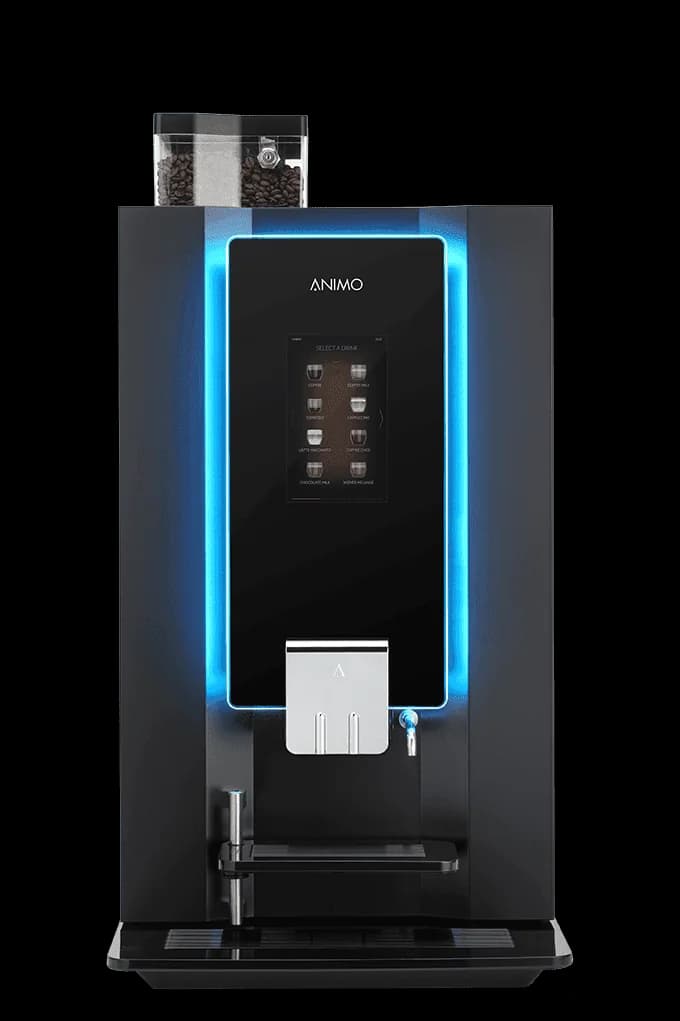
The Animo OptiBean XL Touch achieves an overall rating of 7.3 and positions itself as a capable bean-to-cup tabletop machine for locations with moderate to premium beverage consumption. New units are available from 5169 € net — the investment is particularly worthwhile where freshly ground bean coffee and flexible instant beverages from a compact machine are in demand.
120 cups daily output, dual grinders and 36 programmable beverages: the Bravilor Bonamat Esprecious 22 is a compact countertop unit for office locations with 20 to 40 staff. The hybrid system combines freshly ground beans with two instant containers, enabling a broader product range than pure bean-to-cup machines without the footprint of a floor-standing model. The A+ energy rating and programmable energy-saving mode support economical continuous-duty operation. Clear limitation: the Esprecious 22 works exclusively with powder products for milk-based beverages; no fresh milk system is integrated in this configuration. Operators requiring fresh milk cappuccino must switch to the Bravilor Esprecious FreshMilk variant. German specialist retailers listed the unit in August 2026 between €5,020 and €5,524 net; Bravilor's 2026 price list specifies €6,706 net as recommended retail price, indicating dealer margin. For locations under 20 staff, the unit is oversized. From 50 staff upwards, the 120-cup daily capacity is mathematically insufficient for peak periods without risking bottlenecks.
With 48 selections, five or six levels and chilled dispensing, the Sielaff SN48 is a combination vending machine for snacks, drinks and, depending on the variant, fresh products. At a site with around 30 to 120 employees, it can cover basic refreshments between canteen service times. It is designed for indoor use. The cabinet measures 880 × 1,830 × 840 mm and weighs 265 kg without products, according to the manufacturer. Notable strengths include R290 refrigerant with a GWP of 3, energy consumption of 2,144 kWh per 24 hours, and MDB and EVA-DTS support. Its drawbacks include the lack of published standby power consumption and an unverified noise level. The specific cashless payment method must be confirmed before ordering. The researched net base price is approximately EUR 5,000, rounded. A reliable ROI assessment depends on sales, replenishment frequency, selling prices and service costs. With regular use by 30 to 120 employees, the SN48 is more likely to be cost-effective than at small sites with irregular demand.
The Necta Brio Up is a compact tabletop hot drinks machine with 14 selections, six ingredient canisters, an integrated Z3000 espresso brewer and an optional 20-litre water tank. Measuring 540 × 760 × 605 mm and weighing 65 kg, it fits in kitchenettes, reception areas and smaller retail outlets. Its capacity is generally suitable for an office with around 30 to 120 employees, provided daily demand does not consistently exceed the available cup supply. The design supports MDB and EVADTS connections, as well as master-slave connections to certain Necta snack machines. Its drawbacks include the powdered milk system and limited documentation on energy consumption, noise level and heat-up time. Fresh milk quality is therefore not established. The documented net purchase price for the ES-6 configuration is €4,939. A reliable ROI calculation depends on the selling price, utilisation, bean costs, maintenance and operating model. For in-house office use, the machine is most likely to be worthwhile when it serves many drinks each day without a separate cafeteria. Verified manufacturer figures for daily throughput are unavailable for high-traffic locations.
The Sielaff SiVend ST is a professional, configurable vending platform for fixed indoor locations. Its strengths lie in visible product display and the ability to configure compartments, payment, and service for the specific site. This same configuration complexity makes ordering demanding: dimensions, planogram, payment scope, telemetry, and service must be documented in writing to match the specific build. For the reviewed configuration, dimensions of 790 × 1,830 × 880 mm and approximately 300 kg are documented. These are planning values, not a guarantee for every variant. The SiVend ST suits enterprises, educational institutions, and public spaces with predictable demand. For small or changing locations, the platform is often too complex. Our assessment: interesting for a planned vending operation, but reliable only after dimensional verification, pilot deployment, and a complete specification.
With the Franke A200 and A300 series, the Swiss manufacturer clearly targets small to medium-sized locations with 60 to 120 employees or approximately 100 to 120 cups per day. The machine combines an 8-inch touchscreen, automatic cleaning system (EasyClean) and flexible positioning options (water tank or mains water) in a compact cabinet measuring at least 270 × 465 × 587 mm. Users can rely on solid construction, intuitive operation and espresso throughput of up to 163 cups per hour. Realistically recommended daily output, however, falls below peak laboratory capacity, as weekly cleaning cycles and operator availability limit performance. Weaknesses emerge in high capital costs from €4,675 net per unit and comparatively expensive original consumables. Serviceability is assured, provided the service partner is accessible. Locations with frequently changing users, low coffee expertise or specialised barista requirements lack customisation options and modular upgrades. Return on investment is demonstrable for offices from approximately 80 cups per day; below that threshold, deployment rarely makes financial sense.
The Franke A400 positions itself as a fully automatic coffee machine for medium commercial locations requiring up to 100 cups daily. Its CleanMaster system shortens daily cleaning to approximately 9 minutes and reduces manual effort to a minimum—a core argument for offices with 30 to 100 staff, cafes and self-service hotels. The FoamMaster variant delivers barista-level milk foam without requiring specially trained personnel. Capacity remains stable for constant use below the 100-cup threshold; sustained throughput beyond this level stresses grinding mechanisms and brew groups, shortening their operational life. Drawbacks include high acquisition costs in full configuration (up to €10,500) and regular service expenses. The Franke A400 amortizes within several years at high-traffic sites, provided that cleaning effort, service intervals and repair outages are factored into total cost of ownership. For sites requiring 120+ cups daily, upgrading to the larger A600 is recommended.
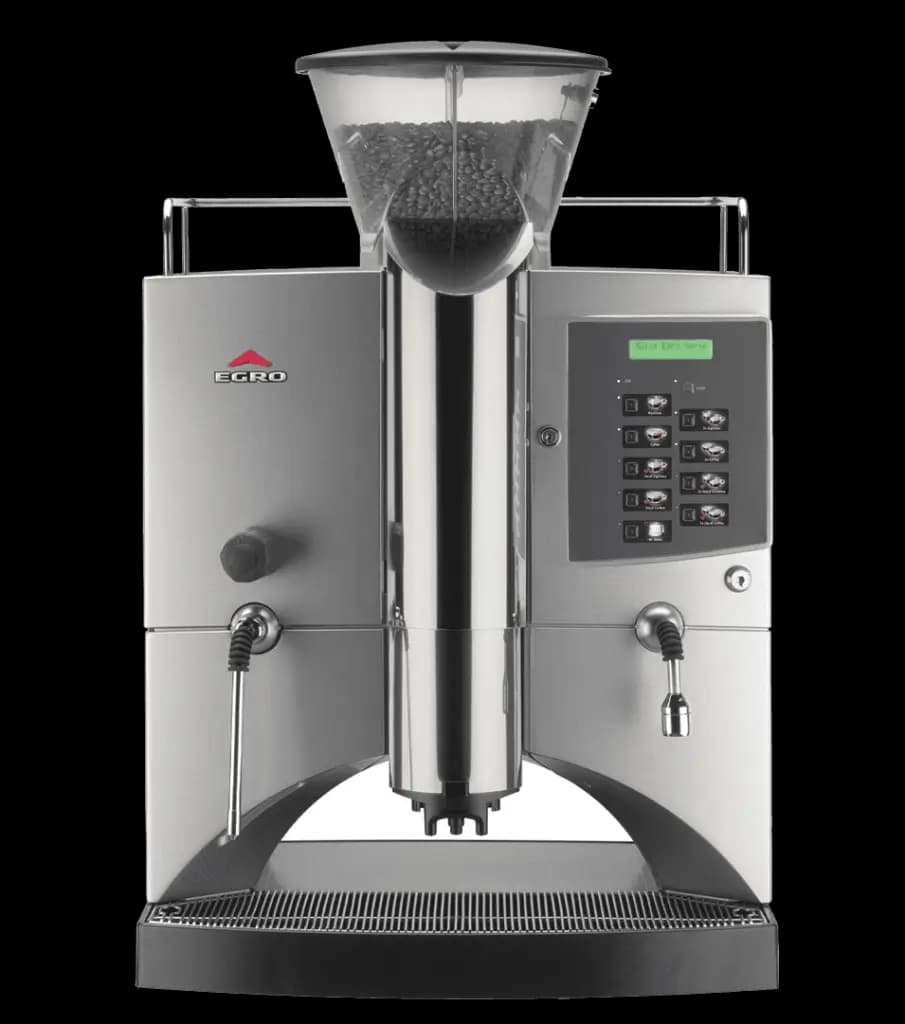
Up to 300 espresso shots per hour, two integrated grinders, and 2.5 kg bean capacity: the Swiss Egro 70 series ranks among high-output units for operations and hospitality. The pressure-resistant stainless-steel design (57 kg) is engineered for continuous deployment in canteens, clinics, and hotels with 150 to 500 employees. Automatic cleaning cycles (24-hour intervals), external milk connection, and robust components reduce daily operator workload to approximately 10 minutes. Weaknesses: the legacy keyboard interface rather than touchscreen slows onboarding, and spare parts for this model line are partly available only through specialist distributors with lead times. Maintenance costs (pump, milk frother head) remain manageable provided inspection intervals are observed. Purchase price ranges from €10,000 to €14,000, representing solid investment over 7–10 years relative to durability and hourly throughput. For smaller teams, cleaning interruptions impact operations acutely – the device is recommended from 100 daily portions. Operators seeking maximum reliability and rapid service in the DACH region benefit from the established infrastructure of the Rancilio Group (Egro Suisse AG). ROI realistic after 2–3 years, provided utilisation is consistent.
The Schaerer Coffee Prime impresses as a compact Swiss countertop machine with a recommended daily output of 100 cups (Standard variant) or 100 cups (Powerpack, manufacturer specification) and is particularly suited to offices, hotels, and retail locations. With an overall rating of 7.3, it offers a well-considered concept combining flexible water supply, maintenance-friendly milk system, and optional cloud connectivity — but demands an investment at the premium end of the market. No official EU energy efficiency label has been published to date; the manufacturer advertises CERT certification.
The SV-400 is SandenVendo's workhorse in the cold-beverage segment: 400 vend positions, R290 refrigerant, robust steel cabinet and an MDB interface for straightforward cashless retrofit. For production facilities, schools and leisure venues where durability takes precedence over design aesthetics, it represents the most cost-effective option in the portfolio.
The Animo OptiBean XL Touch delivers 120 cups per hour, a 1.5 kg bean hopper, and dual instant modules, targeting mid-sized offices, clinics, and educational facilities with approximately 50+ employees. Strengths include high throughput, flexibility for multiple hot beverages, and a freely programmable 7-inch touchscreen. The optional MDB interface enables coin payment and change dispensing but is not standard-fit; cashless payment requires an additional module. Milk supply relies on instant powder only, which sets taste limits in clinical and premium office settings. List price in 2024 ranged from €4,060–4,470 net—for the machine alone without base unit or options. In comparison, the OptiBean offers a robust stainless-steel brew group with Ditting ceramic grinder, though telemetry is available only as an option without remote configuration. Service intervals align with practical use, requiring a maintenance kit after >25,000 vends. For high-volume sites dispensing ≥80 beverages daily, the investment yields mid-term returns; operators prioritising fresh-milk capacity, app payment, or remote service support will find broader feature sets in competing models.
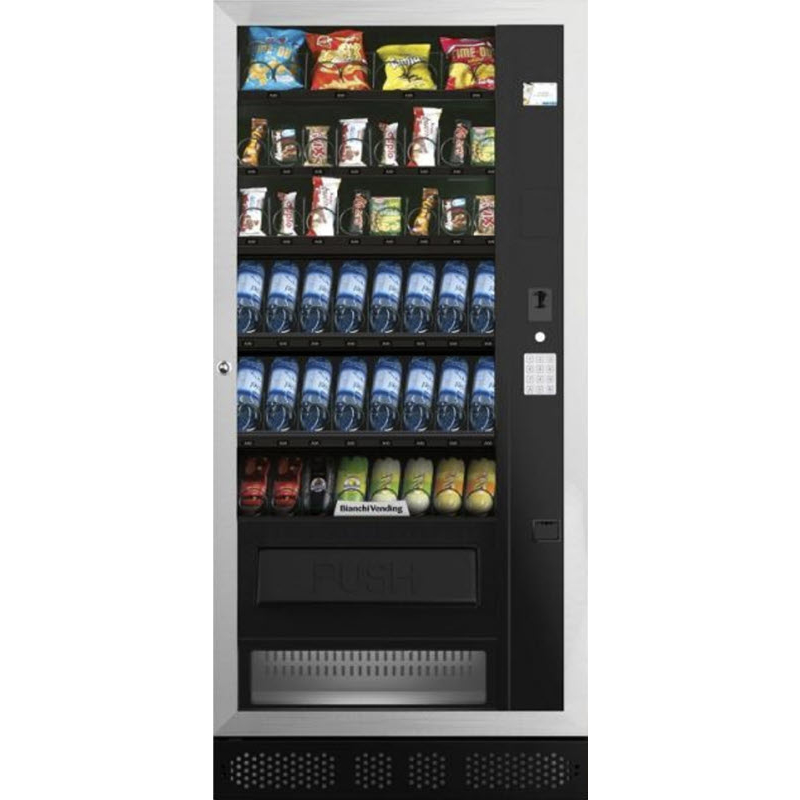
The Aria L EVO by Bianchi Vending is a freestanding spiral vending machine for cans, bottles, snacks and—via an optional accessory kit—sandwiches, with 44 sales compartments and a total capacity of up to 356 products across six to seven shelves. Unlike the smaller Aria S EVO product line, which according to manufacturer datasheet functions exclusively as a slave module paired with a hot beverage machine, the master version of the Aria L EVO operates as a standalone unit with its own coin validator, illuminated keypad and 3.5-inch colour display. The target audience comprises locations with approximately 100 to 250 daily visitors, such as office buildings, staff canteens or fitness facilities of comparable size. Weaknesses include: the guaranteed 3 °C cooling applies only to the two lower compartments according to datasheet, and card payment plus telemetry are not standard equipment but rather cost-addition options available through specialist retailers. At a net price of approximately 3,800 to 6,500 euros depending on configuration, the acquisition cost typically amortises at a well-frequented location through ongoing product sales within two to three years, provided that card payment is retrofitted as a minimum.
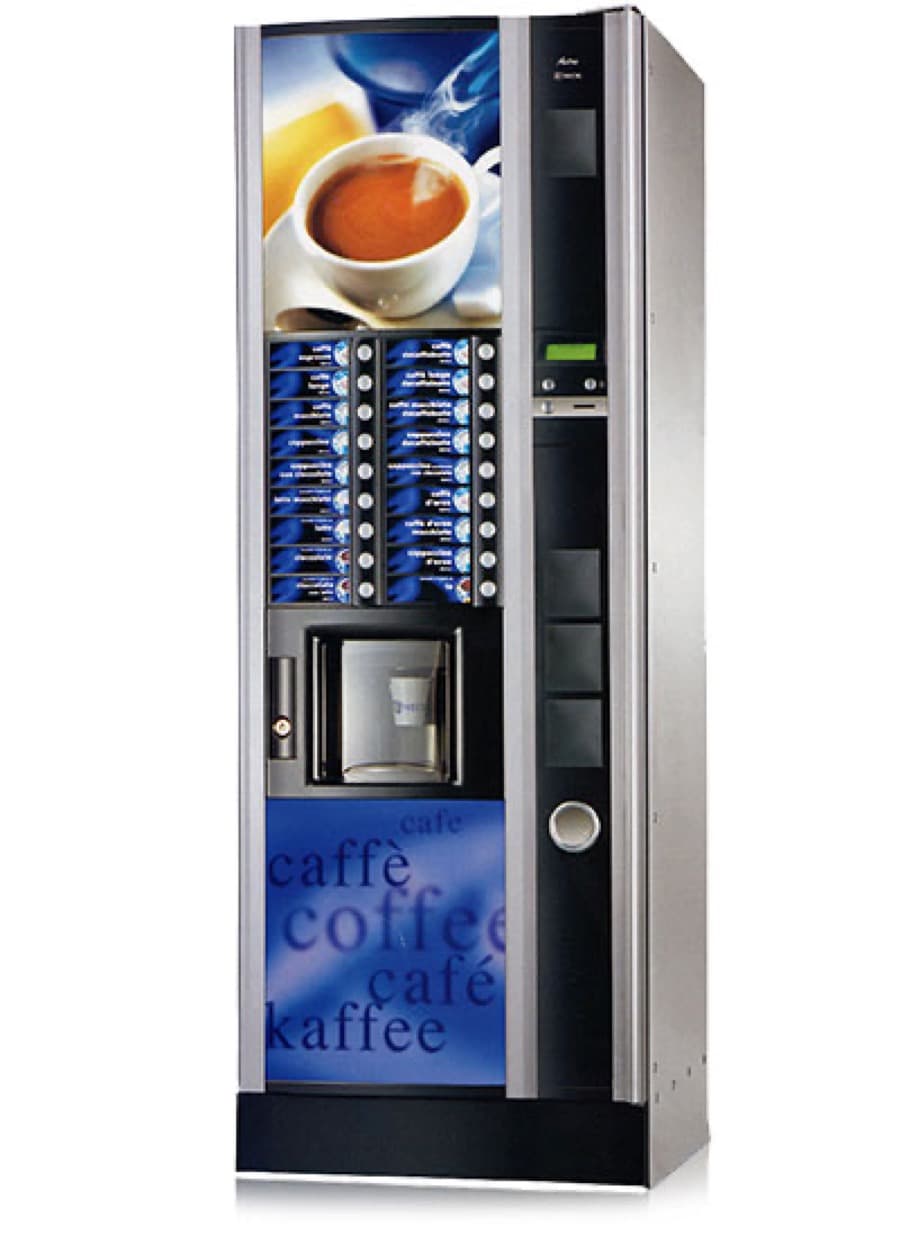
Up to 900 cup dispensings, 3.2 kg bean hopper and eight ingredient motors: the Necta Astro is a floor-standing automatic coffee machine designed specifically for mid-size sites with 100 to 300 employees. The machine combines a direct espresso system (piston brewing unit, disc grinder, dual boiler) with flexible instant modules for cocoa, toppings and soups. Operation is via key pad (18 direct-select buttons); payment is accepted via Executive, BDV, MDB or 24V validator. Critical for maintenance: daily cleaning is completed in 6.5 minutes without tools; however, boiler descaling requires external service technician appointment. Telemetry or online monitoring are entirely absent; cashless solutions can only be retrofitted via external hardware. Strengths include cost-effective spare parts supply (wear items mostly under €20) and high mechanical durability, making the Astro a highly economical choice on the used market. With used prices from €850 with full functionality, it suits both price-conscious operators and more demanding industrial and office locations, provided a technician service contract for maintenance and descaling is factored in.
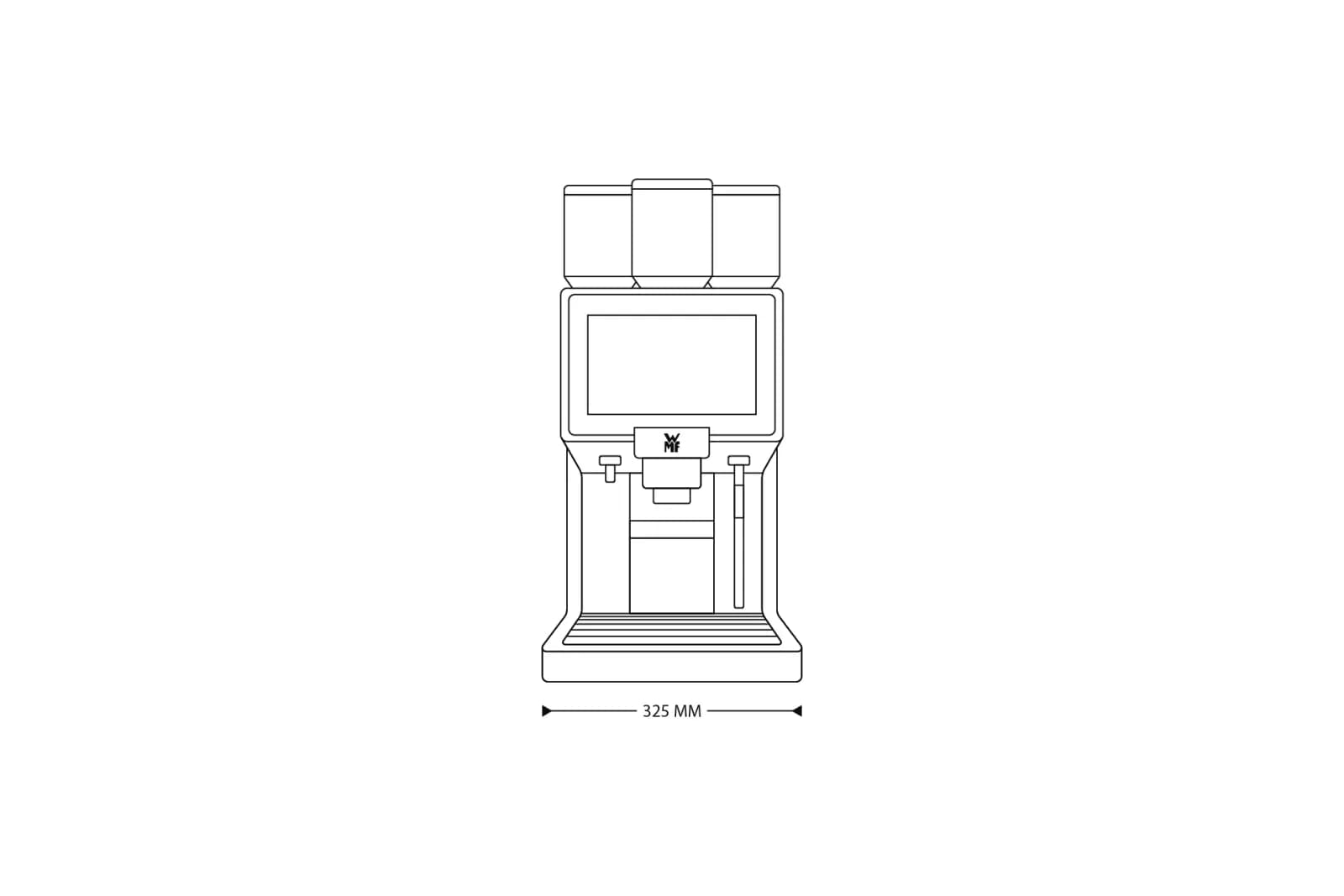
Up to 80 cups daily, 7-inch touchscreen display, and HACCP-capable cleaning protocols: the WMF 1100 S is a compact super-automatic espresso machine for offices with 20 to 60 employees. The unit measures 325 × 500 × 571 mm, weighs approx. 25.5 kg, and fits most kitchen counters without structural modification. The removable brewing unit processes a maximum of 15 g coffee grounds per brew and delivers consistent results; cleaning protocols can be exported via USB for HACCP documentation.
Two operational limitations merit attention: the Basic Milk system draws milk via tube from an external cooler or milk carton, requiring more daily handling than an integrated refrigerated system. Additionally, WMF designates the 1100 S as discontinued—orderable only until 30.09.2026. New units cost €3,495 to €4,873 net depending on configuration; spread over five years, depreciation amounts to €699 to €975 annually, plus consumables and service charges. The machine suits operators seeking a low-maintenance office unit with HACCP documentation who do not operate high-throughput sites.
The Bravilor Sego 12 achieves an overall rating of 7.3 and positions itself as a compact combination fully automatic machine for locations with a recommended sustained output of up to 60 cups per day. Fresh bean coffee and instant specialities from one device make it a versatile solution for offices, hotel lobbies and educational institutions. The technical maximum output lies significantly higher and enables brief high-volume beverage production when demand spikes.
The Necta Vismo is Evoca Group's entry-level offering in the snack segment—240 product slots, 7-inch touchscreen, and optional telemetry at one of the lowest price points in the category. Without R290 refrigeration (no cooling compartment), it is designed for dry goods only, but for bars, crisps, and nuts it is the most cost-effective option under €3,500.
The Necta Kikko is the most proven cold beverage vending machine in the German market – reliable, maintenance-friendly, and backed by the broadest service network (Evoca Group). It makes no technical leaps, but has solved the core challenge for decades: cans and bottles cooled, payment processed, immediately available. The Kikko ES version with touchscreen modernizes the user interface. For offices, factories and restaurants with 30+ vends per day, the first choice under €5,000.
The Necta Snakky Max is a classic snack vending machine for protected indoor locations and a straightforward entry point into unattended sales of packaged products. Necta specifies 703 × 1,700 × 853 mm, approximately 190 kg, and approximately 320 W installed power for the configuration reviewed here. Up to six levels and up to 36 selections provide capacity for candy bars, crisps, biscuits and similar products. However, success depends on the correct spiral choice, reliable payment processing and a fixed restocking route. The display remains alphanumeric and functional, not touch-based. This suits offices, workshops and waiting areas. For fresh goods, outdoor locations or unpredictable demand, the machine is less suitable. Our conclusion: solid technology for a defined product range, but not a machine that becomes profitable automatically without inventory and service planning.
330 mm cabinet width, genuine espresso brewer (Z3000 L, maximum 12 g dose) and eight beverage options including chocolate: the Necta Koro Max Prime by Evoca (Varese, IT) is designed for offices with 30 to 80 employees and small food-service locations with moderate daily demand up to approximately 50 vends. Mains-fed variant from approximately €3,105 net (All4Vending DE); tank version up to €4,429 net (NL market). Two structural limitations: milk capability is restricted to powder, with no fresh-milk system. Telemetry and remote service are absent, as this device predates the 2020 product generation. Door opening for refilling triggers a complete device restart. Service infrastructure across the DACH region is sparse; spare parts arrive via specialist retailers with 3 to 10 days lead time. For office locations without high-throughput demands and with in-house cleaning staff, the device is a solid offering. Locations with more than 80 vends daily or requiring digital service interfaces should evaluate current OCS models with connectivity.
Mains-fed water dispenser for 10 to 60 users, four water formats, refrigerant R290 — from approximately 2,815 euros net. The hygiene technology is standard and the reason to purchase this unit; filter consumption and commissioning are reasons for careful examination.
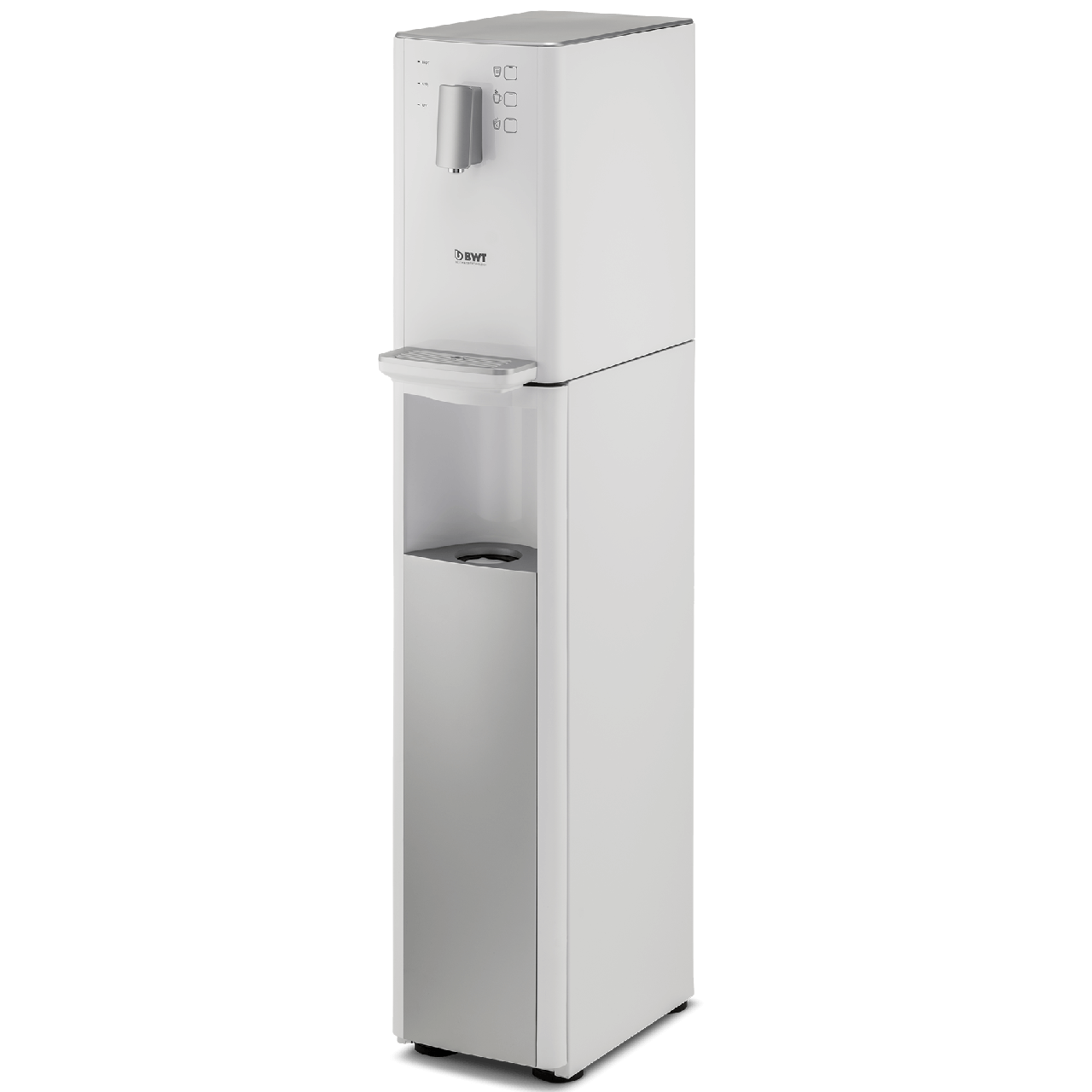
The BWT AQA drink Pro 20 CAS is a mains-fed water dispenser for cold still and cold carbonated water. The datasheet specifies 20 litres per hour for this CAS variant, 4 to 12 degrees Celsius for cold water, 230 W, 23 x 39 x 36 cm and 18 kg. Performance figures for hot water from the HCS and HCA variants do not apply to the CAS rating. For offices, reception areas and facilities with regular water demand, the compact dispenser module can be a suitable choice. Before installation, water and CO2 connection, pressure, filter, cleaning, spare parts and service must be clarified. Operation is not maintenance-free. Our verdict is positive for a fixed indoor location with clear hygiene protocols in place. Operators requiring hot water should specify a dedicated variant and not derive requirements from a combined datasheet.
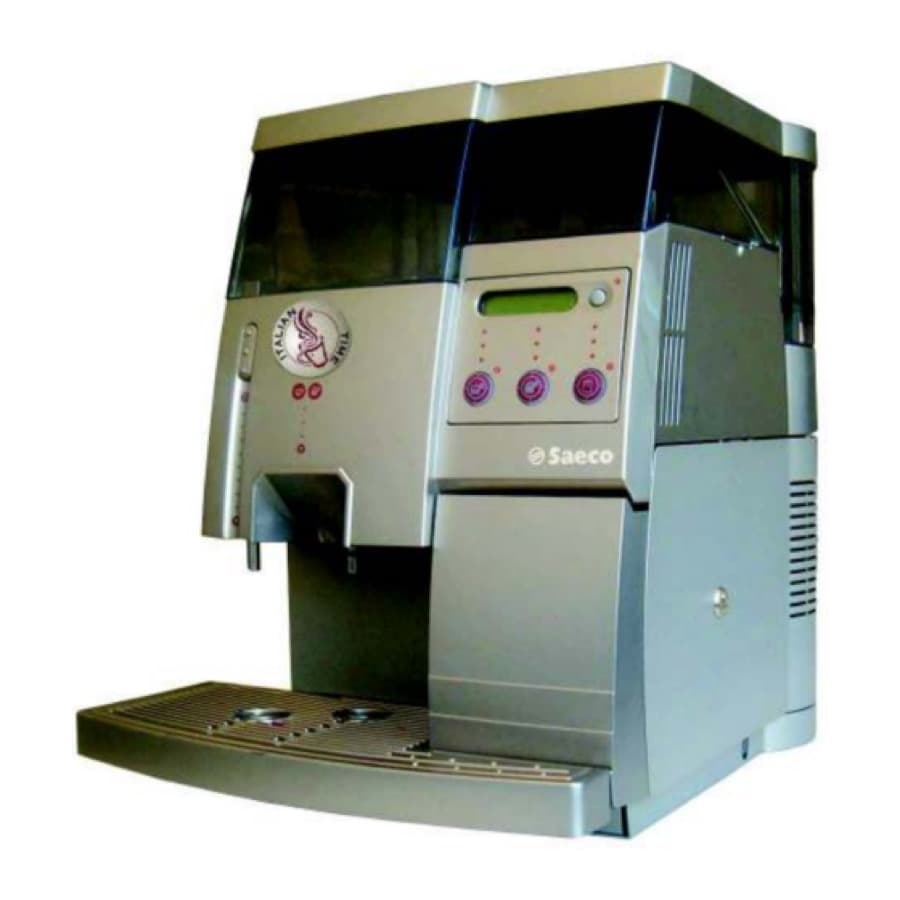
The Saeco Phedra Evo achieves an overall rating of 7.4 and is recommended as a compact countertop fully automatic coffee machine for offices, hotels and meeting rooms with moderate beverage volumes. The machine combines bean-to-cup brewing technology with flexible water supply and professional payment interfaces, but requires an entry price in the premium segment (manufacturer prices from €2,550 net; higher in specialist retail).
The Rheavendors CB1 is Evoca Group's budget offering in the hot-beverage segment: bean-to-cup under EUR 2,500, powder-milk system for low maintenance overhead, and MDB-equipped for later cashless upgrade. For locations with fewer than 80 cups per day and limited budget, it is a solid choice—without premium expectations for taste or IoT capabilities.
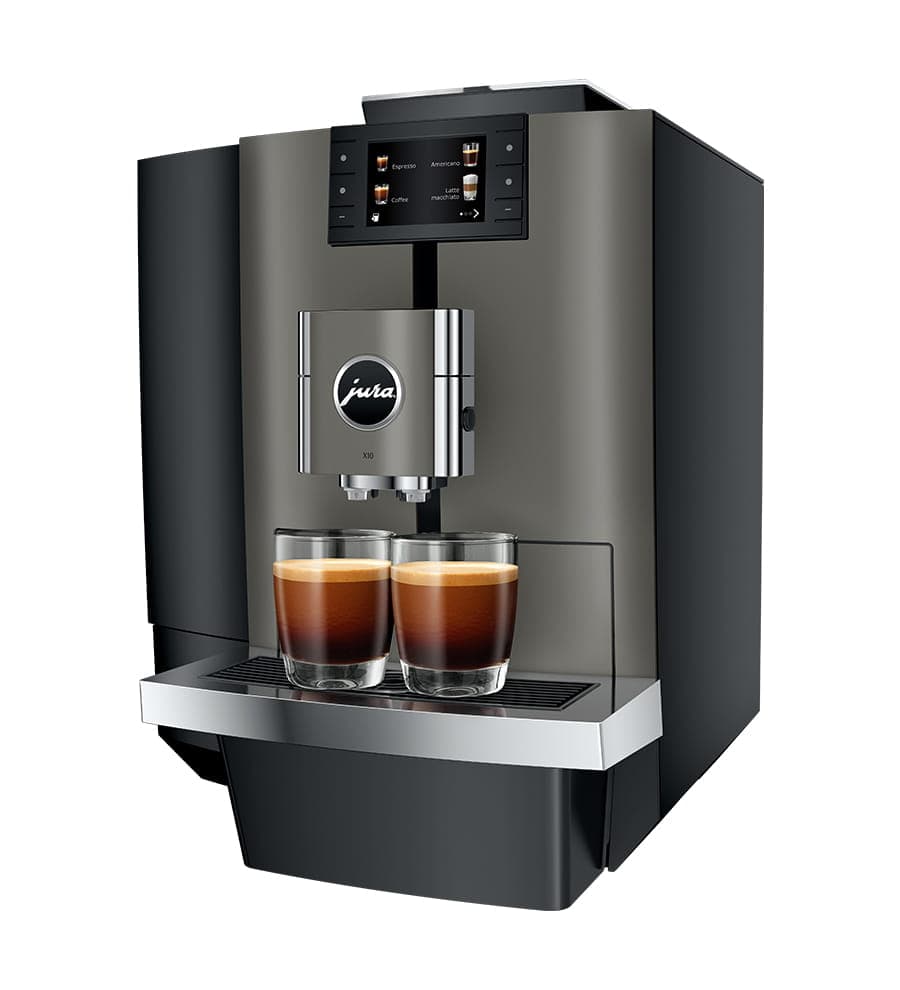
With a recommended daily capacity of 100 cups and 35 selectable coffee specialties, including nine cold-brew variants, the JURA X10 Professional is clearly positioned for larger offices, self-service zones, canteens and care facilities serving approximately 40 to 120 people. Equipment includes a 3.5-inch colour display with button control, P.A.G.2+ precision grinder, automated cleaning routines and optional payment and telemetry solutions. The solidly built machine measures 373 × 470 × 461 mm (W × H × D), weighs 14 kg and is designed for fresh-water or tank operation. Weaknesses emerge in maintenance: milk-based beverages require daily manual servicing. An external milk cooler or milk container is mandatory, as no internal cooling system is present. The entry price starting from 2,270 EUR net (to approximately 2,500 EUR, excluding accessory premiums) can be justified for locations with consistently high coffee consumption, but remains difficult to defend for smaller teams or operation without regular servicing. The model sets a noticeable counterpoint to cheaper bean-to-cup solutions in terms of variety and interface design, but remains a typical representative for environments with permanent staff or professionally managed self-service.
The Jura X10 Professional impresses as a compact Swiss-made automatic espresso machine in the premium segment with an overall rating of 7.8 points. Cold-brew functionality, comprehensive payment integration, and TÜV-certified hygiene make it a versatile solution for offices and hospitality venues with a manufacturer-recommended daily throughput of 80.
The Saeco Ambra (SUP015VR) is a compact bean-to-cup automatic for office sites with 15 to 35 employees, delivering espresso, coffee and hot water via three direct selection buttons. Manufactured in Gaggio Montano, Bologna, the unit was on the market circa 2006 to 2008 and is no longer available as new stock. Strengths: robust galvanised steel construction, minimal cleaning effort without milk system, CE and VDE certified, aftermarket replacement parts still available as of 2026. Weaknesses: no milk foam, no fixed water connection, no network connectivity, dated 2-line LCD. Those requiring exclusively black coffee and espresso and who do not need telemetry will receive a reliable used machine. Available used for EUR 143 to EUR 350 on international platforms; no confirmed active listings known for the German market. For new purchases, current models with telemetry and milk system are recommended.
The Jura X8 is a solidly engineered Swiss automatic coffee system rated for daily throughputs of up to 80 cups. Dual-thermoblock, automatic fine-foam technology, and standard Bluetooth telemetry make it particularly attractive for mid-sized offices and hospitality venues—though the entry price requires robust capacity planning to justify the investment.
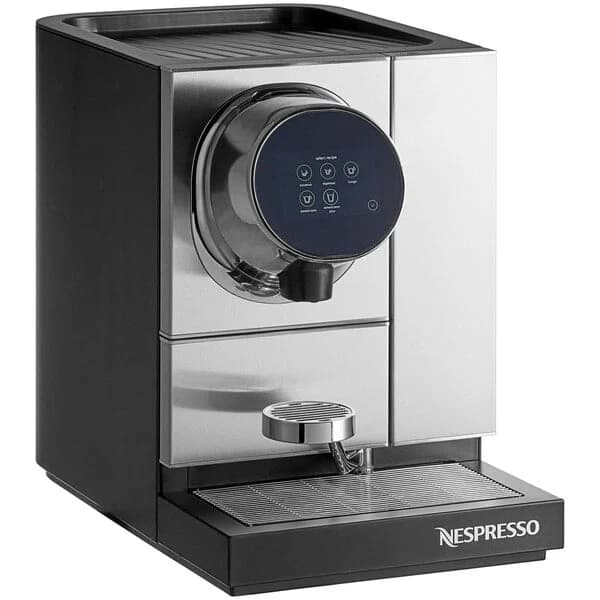
Two independent extraction heads, five programmed coffee sizes and a capsule system rated for up to 100 cups per day define the Nespresso Momento 200 Coffee & Coffee, model NP200. The machine is designed for offices with 30 to 100 employees, reception areas and meeting zones where several people may want coffee at the same time. The brewing heads operate in parallel, while automatic capsule recognition makes selection easier without training. The available sizes are Ristretto at 25 ml, Espresso at 40 ml, Lungo at 100 ml, Americano at 150 ml and Large Americano at 210 ml. Important limitations remain: the Coffee & Coffee model has no milk system, and plant-based milk preparation is not confirmed. Automatic rinse cycles interrupt operation every two hours and, according to an operator report, cannot be rescheduled. According to the Nespresso offer page (price as of 2026-10-04), the promotional price is €2,081 and the regular price is €2,945, both including installation; it does not state whether these prices are net or gross. Capsule consumption, energy, maintenance and the service contract must be costed separately before purchase. For sites without their own technical team, the Nespresso service network may reduce the internal support workload.
Compact dimensions, a 1.8-litre water tank and 21 programmable beverage options characterise the WMF 950 S profile. The fully automatic machine primarily addresses smaller locations seeking to deliver a maximum of 50 cups daily at consistent quality—including offices with up to 40 staff, legal practices or small medical clinics. Core functions are oriented towards simplicity: touch display, one-touch milk froth (with external milk cooler/milk lance) and tool-free preparation. Cleaning requires at least one system run cycle per week of approximately 10 minutes. Weaknesses remain: no fixed water connection as standard, no serial telemetry, limited fill capacities (750 g beans, 1.8 l water) and product discontinuation from 2026 that will constrain spare parts supply in the medium term. For operators seeking rapid beverage changeover and straightforward operation, the investment becomes economical from approximately 30 cups daily. The net price range of €1,630–1,699 sits below typical food service sector competitors, yet presupposes operator engagement in maintenance and periodic component replacement.
The Animo OptiVend Touch achieves an overall rating of 7.4 out of ten points and stands as a dependable instant hot-beverage vending machine for commercial sites delivering 360 to 1,250 cups per hour. The Dutch model range impresses with intuitive operation, HACCP-compliant cleaning guidance and a broad product portfolio, yet must accept the flavour compromise inherent to instant-brew technology.
300 × 500 × 420 mm footprint, 16 kilograms, iF Design Award 2019: The Nespresso Momento 100 is a capsule machine for offices with 20 to 60 staff, built around simplicity and professional aesthetics. Five recipes from Ristretto to Large Americano are selected via touch panel; capsule recognition automatically recommends the appropriate cup size. Optional mobile telemetry (2G/3G/4G) enables remote diagnostics and over-the-air updates. Net purchase price ranges from €1,399 to €1,599 depending on vendor; capsule costs add €0.41 to €0.44 per vend.
Two structural limitations constrain deployment: the mandatory cleaning cycle after 300 vends cannot be deferred and locks the machine even during peak periods. Multiple independent reports document espresso temperatures below specification. Plant-based milk alternatives (oat, almond, soy) are not officially supported. The recommended service contract costs €800 to €1,200 per year according to operator reports and auto-renews; cancellation requires notice by registered mail 30 days before expiry. For operations prioritizing reliability and flexibility over aesthetics, bean-to-cup alternatives warrant evaluation.
The BWT Mira is a compact POU tabletop device with BWT's signature Mg²⁺ enrichment — the single feature that noticeably shifts tap water flavour towards spring water. For offices up to 20 persons, it is the most compact solution in the BWT portfolio; full-service rental models from 45 EUR/month make entry straightforward.
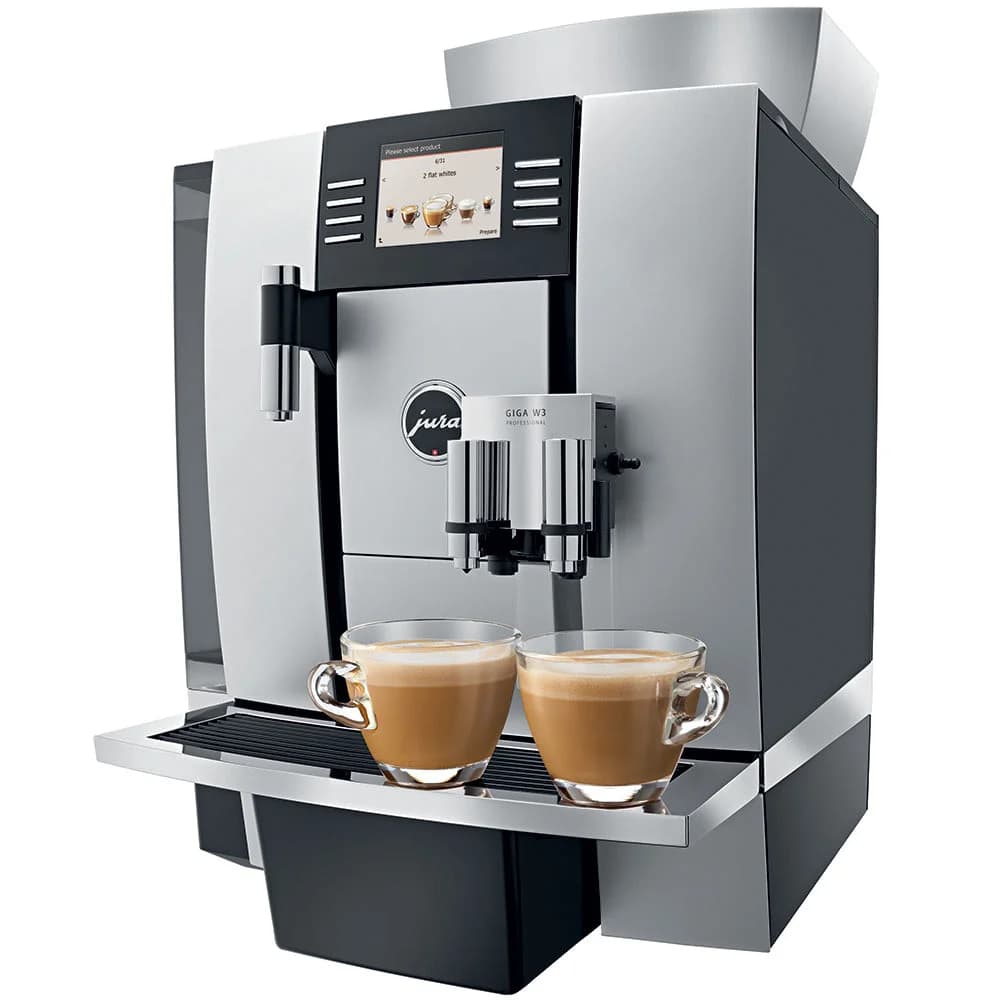
Two ceramic burr mills, two thermoblocks, two pumps with 15 bar each: the GIGA W3 Professional is designed for simultaneous dual pours. The target market is offices with 80 to 200 people where peak hours with multiple simultaneous coffee requests are the norm. 43 programmable beverage specialities, a 5 litre water tank and a 1,000 g bean hopper form the operational baseline. On the German market, the unit is predominantly available as factory-refurbished stock; a verifiable new price for the German 230 V market is not documented in reviewed sources. The reviewed offer for a professionally refurbished unit (item number 15071) is EUR 1,260 net. Operationally relevant limitations: the spent grounds receptacle holds a maximum of 40 portions and must be emptied daily. Bluetooth telemetry via optional Smart Connect is insufficient for centralised fleet management. Technical data sheets date from 2015; current availability as new stock cannot be clarified from public sources. For operators seeking a robust dual-dispensing tabletop unit without complex infrastructure requirements and who maintain service routines consistently, the unit is a valid option.
144 cups per hour, fixed water connection, three operational steps: the Animo MT200 is a high-volume filter brewer for offices with 30 to 100 employees, hotel breakfast buffets, and canteens up to 80 staff. Each brew cycle produces 2.2 litres of filter coffee in 7.5 minutes; the thermal pump carafe maintains beverage temperature for 2 to 3 hours without a hotplate. This prevents the bitter aftertaste that develops in glass carafes with active hotplates after 30 minutes.
Core strength: low-maintenance continuous operation with minimal staff training required. The weaknesses are equally clear: no integrated grinder (pre-ground only), no telemetry interface, no display beyond the descaling indicator. Operators with over 100 employees or remote monitoring requirements should evaluate the MT202 or Animo ComBi-Line.
At 5 brew cycles daily over 250 working days, approximately 22,000 cups per year are produced. Annual operating costs are €742 to €1,208 (coffee supply, electricity, filter paper, descaling agent); including capital depreciation of €487 net over 5 years, this yields €0.04 to €0.06 per cup. For a reliable, manually operable filter coffee solution with no connectivity requirements, this represents solid value.
Compact 35 cm width, modular design, up to 250 espressos per hour and two separate bean hoppers: the Melitta Cafina C35 (technically identical to the C50 variant) is engineered for high-traffic offices, canteens and hospitality areas serving 80 to 200 employees or guests daily. The robust stainless steel construction and automatic hygiene programmes target locations without dedicated barista staff. Weaknesses: the machine weighs 60 kg even without the milk module and requires a 3-phase 400 V connection with 16 A fuse protection. Cleaning requires proper execution and daily tablet costs; maintenance is available only through authorized technicians. A fixed water connection is mandatory; mobile single-office solutions are excluded. Historical new prices were around €13,000 net. The C35 is no longer available as new; two private Swiss listings on the used market were converted to €535 to €587—isolated cases, not a reliable market price. High hourly capacity justifies the investment only with sustained throughput; for small locations the machine is clearly oversized.
Glass-front beverage machine with 45 selection positions, 9-inch touchscreen, and genuine remote management — the only reviewed machine with documented telemetry. The catch is in the manual: the refrigeration unit is not serviceable on-site and must be returned entirely to the manufacturer.
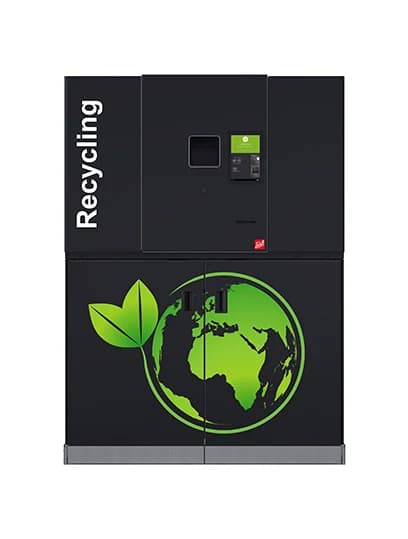
Single-phase deposit-return machine for single-use PET and cans, 0.80 square metres floor space, three sizes including a low accessibility-compatible model. The catch: container recognition is an optional feature on this series, not standard equipment.
The parcel robot with the highest published package density in the field: 118 packages per square metre, retrieval in 10 seconds, up to 3,400 shipments. The cost is 300 kWh per month—ten times the small cabinet system—and ceiling height.
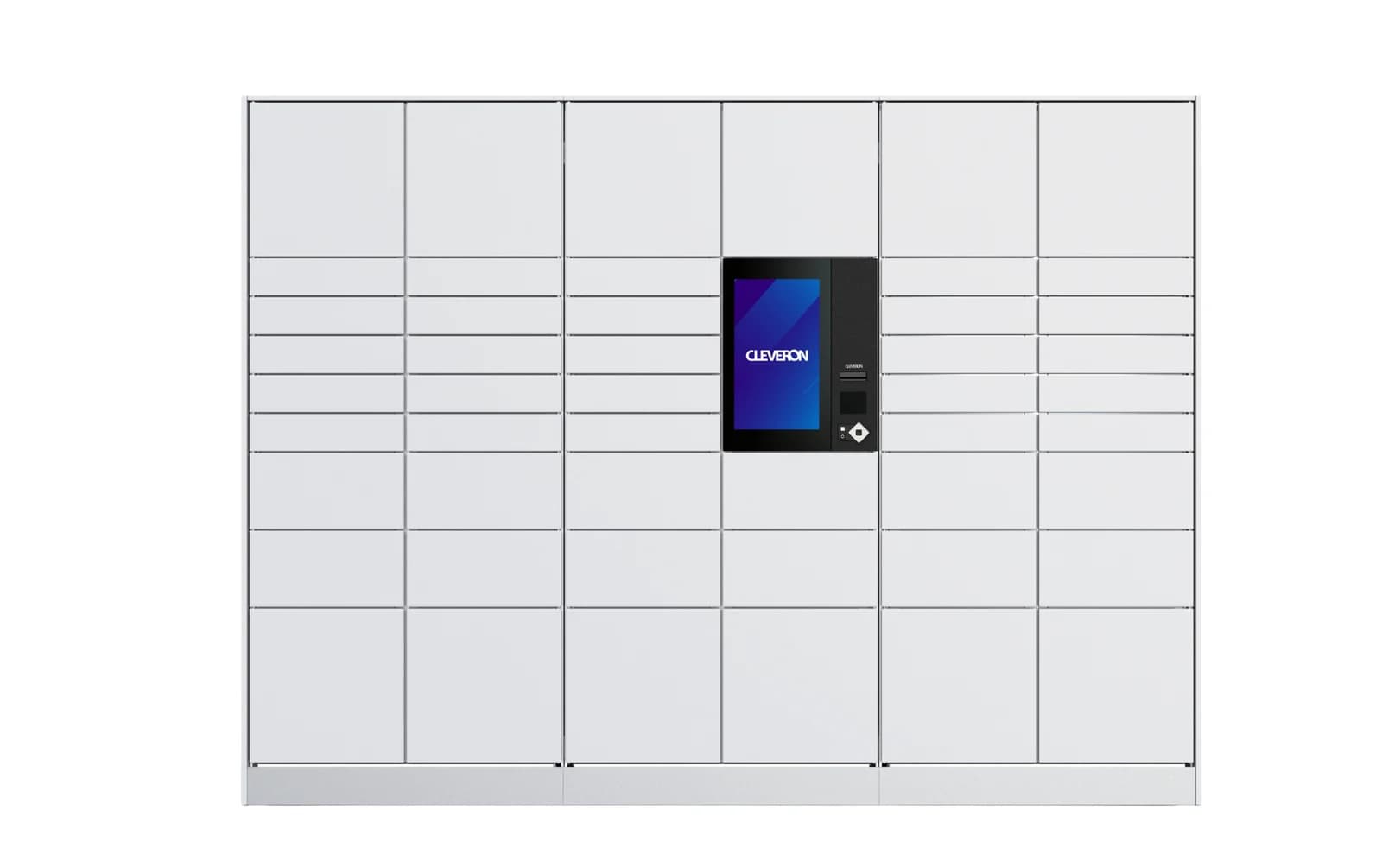
Wall-mounted compartment system with 0.70 m depth and 2.00 m height, modular in width from 1 to 17.5 m. Accepts packages up to 1,870 mm length — the longest in its series — and consumes 30 kWh per month, one-tenth that of the Cleveron 402.
The parcel robot for medium volume: 63 parcels per square metre, up to 567 parcels, 2.00 metre height. Draws half the power of the Cleveron 402 and fits under a standard retail ceiling — but holds only one-sixth of its capacity.
Sielaff's high-capacity reverse vending series: up to 60 items per minute, camera-based 360-degree recognition as standard, collection in half-pallet roll containers. The constraint: it requires 400-volt three-phase power instead of a standard outlet.
The Franke SB1200 is not a high-throughput machine, but a self-service machine. At up to 250 cups per day, according to Franke's own product overview it ranks exactly at A800 level and below the A1000 with 300 cups. Its premium is justified by two other features: the 12.1-inch display, the largest in the product line, and IndividualMilk Technology with two completely separate FoamMaster systems that keep cow's milk and plant-based milk separate from container to cup. Operators running unattended sites with substantial plant-based milk demand will not find this combination elsewhere in the A-Line. Two points warrant clarification before ordering: the required water quality of 4 to 8 degrees total hardness with less than 0.5 milligrams chlorine per litre, which at many sites requires a filtration solution, and the fact that Franke supplies the station without cabinetry. Neither the manufacturer nor any of the retailers reviewed publishes a list price.
The Sielaff SiLine Snack and Combi is an operator machine, not a showcase vending machine. Three points distinguish it in its class: hydrocarbon refrigerant R 290 with a global warming potential of 3, telemetry capability with readout via USB and MDB plus fault indication on door opening, and Food-Safety software that prevents warm product dispensing in LM and 2T configurations. Additionally, a detail rarely documented by manufacturers: wheelchair mode in the 7-inch display. Standard delivery includes up to seven shelves with up to nine selections per shelf. Two specifications warrant review before ordering: product dimensions for slide compartments, which are tight at 72 and 78 millimetres width respectively, and empty weight of 300 to 340 kilograms on 0.70 square metres floor space. Sielaff publishes no list price.
The BWT AQA drink Pro 20 is a narrow, well-documented water dispenser for approximately 20 users. At 230 millimetres wide, it fits into gaps where no refrigerator would go, and the base cabinet solves four operational issues at once: filter space, CO2 space, an approximately 3-litre waste water tank with fill-level sensor, and an integrated cup dispenser. The key point to understand before ordering is the variant logic: each model delivers exactly three of four water options. CAS has no hot water, HCS has no ambient-temperature still water, HCA has no carbonation. This comes alongside a maintenance plan that creates in-house workload: weekly cleaning by a trained person, daily wiping of the dispensing area, half-yearly disinfection, filter replacement and UV lamp replacement by qualified staff. BWT does not publish a list price.
The luce zero is a ladder with five rungs, and its strength is that the footprint remains constant across all tiers: 640 × 1,830 × 705 mm, regardless of specification. The purchasing decision hinges on a clear breaking point. Between zero.1 and zero.2, power doubles from 1,600 to 3,200 watts, cup dispensing stations increase from one to two, grinders from one to up to two, and only here does the Varitherm induction system become available—for which Rheavendors claims 85 percent energy savings versus a boiler. Practically speaking: the smaller tiers operate at approximately 7 amperes on a standard outlet; the larger ones require 14 amperes and a dedicated circuit. The documentation is the weak point—weight, water connection, cup capacity, daily and hourly throughput, and any maintenance specifications are not publicly available.
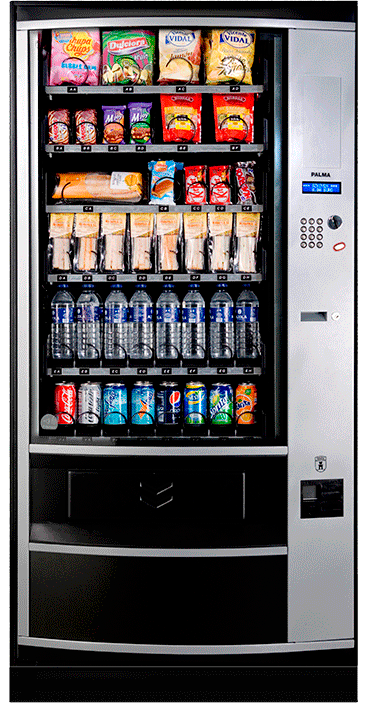
The Azkoyen Palma+ H87 is a true combination unit and not a snack machine with a beverage compartment: Azkoyen breaks down the 300 units into 212 snacks, 40 sandwiches and 48 cans or bottles, and cites 589 litres of usable capacity via the energy label. It is cooled with R290 to 3 degrees, explicitly measured at 32 degrees ambient. Vend control via I-Detect, six direct-select buttons and the open protocols EXE, MDB and EVA-DTS are included, plus triple-glazed front glass and a specified door pass-through of 70 centimetres. Two manufacturer specifications exist for consumption and conflict with each other: label 2,211 kilowatt-hours, idle-load extrapolation 2,812. This yields 641 to 956 euros in electricity costs per year before any product is sold. Per litre, the H87 is more energy-efficient than the smaller H70.
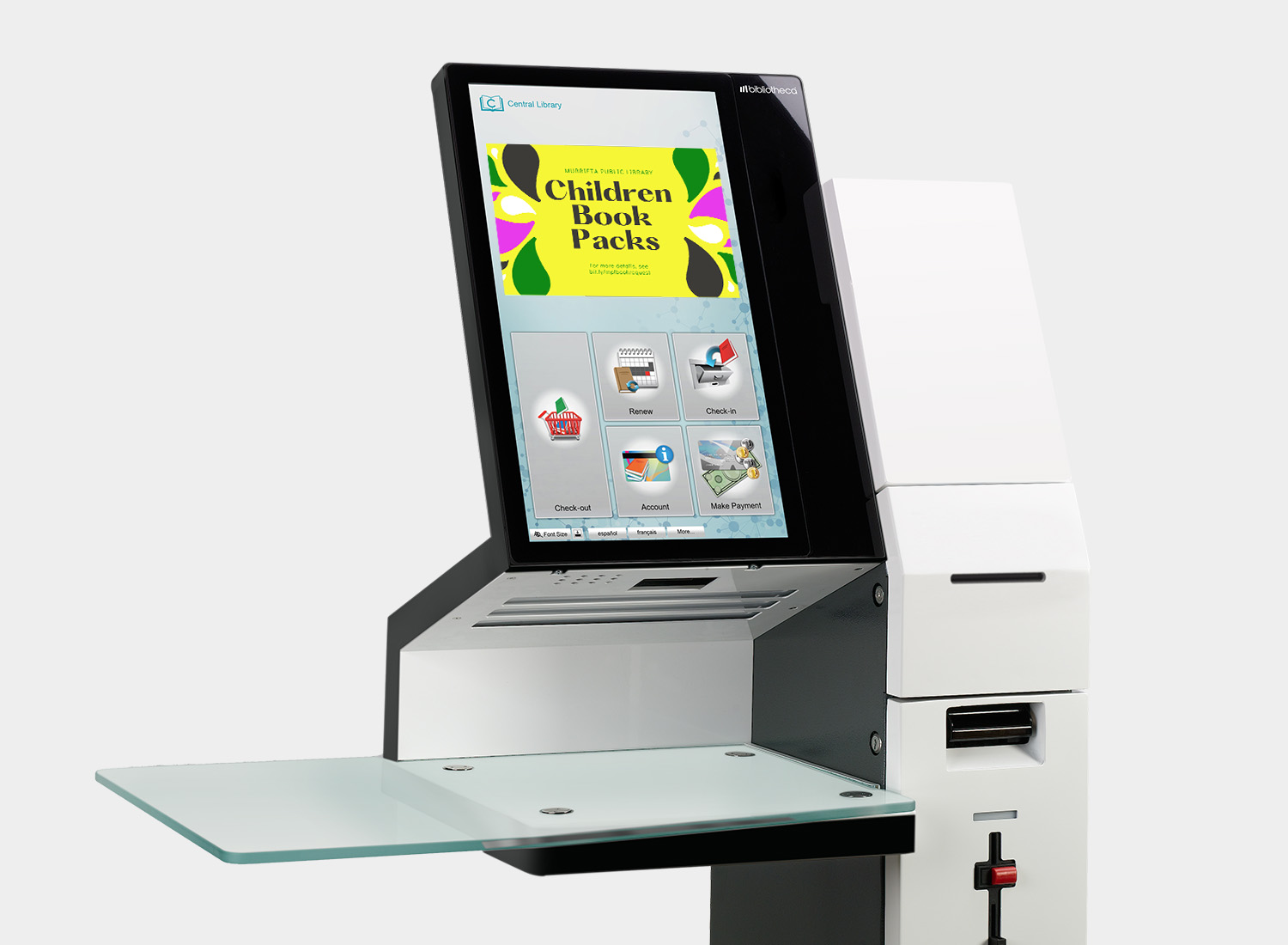
The hybrid selfCheck 1000 has one argument that no other model in the lineup has: it reads electromagnetic security tags and RFID simultaneously. For a library with both collections in circulation, that is the reason to purchase it. The specification sheet is comprehensively detailed — three form factors with dimensions and weights ranging from 88.5 to 165.5 kilograms, 268 millimetres of height adjustment during operation, 130 watts, operation from 0 to 40 degrees, connectivity via SIP2. Two specifications in it, however, are warning signs: 225 candelas without anti-glare coating is marginal for bright rooms, and the computing platform is listed as Windows 7 Embedded, whose security updates ended in 2021. Anyone procuring today should have the current platform confirmed in writing. Anyone who has completed the RFID transition should evaluate the 2500 or 3000 instead.
Envipco operates an unusually complete range: from 400 containers per day at the Compact to 7,200 per hour with the Quantum. The bulk-feed units accept unsorted material and identify by four criteria — material, form, size and weight — plus self-diagnosis, self-cleaning and automatic recovery. For each size, the manufacturer states floor space and storage capacity, so the right size can be calculated in advance: a Quantum XXL reaches capacity after eleven hours at full load, a Quantum Indoor after 83 minutes. Two factors cloud the picture. Envipco publishes no electrical specifications and no dimensions in millimeters. And glass is accepted only via single-drop input — operators who must handle glass returns have no choice but Optima or Flex Tri, regardless of volume.
The FAS Excellence 1050 is a well-documented machine: the four datasheets in the range present the same fields, including depth with the door open — 1,810 millimetres, a value few manufacturers specify and one that determines stocking feasibility. 70 selections across 0.83 square metres equals 84 per square metre and thus 19 per cent more than the smallest version; the operator panel consumes proportionally more of the product width on the narrower machine. It is cooled with CO₂ to plus three degrees, explicitly with temperature monitoring. Energy class C at 450 watts nominal power — whereas the smallest version achieves only class D, meaning an undersized machine costs more to operate. What is missing: annual consumption in kilowatt-hours and climate class. The datasheet suffices for selecting size; it does not suffice for calculating operating electricity costs.
The Bolero Turbo XL 33 is an instant system for locations where pitchers are filled during peak hours — filling two 2-litre pitchers simultaneously in 90 seconds is the function for which it is purchased. Two things must be known before ordering. First: the 104 litres per hour stated on the product page apply only to the 400-volt article number; the single-phase variant delivers 44 litres at 3500 watts. Second: similar model names in dealers' catalogues refer to predecessor machines with different dispensing heights (247 instead of 251 millimetres) and different capacity data. Ordering by article number avoids both issues. The recommended 650 cups per day applies equally to every Turbo variant — the XL premium purchases concurrent dispensing and an upgrade path, not daily throughput.
The Jofemar Vision EsPlus V8 is a floor-standing combo vending machine for operators who need snacks, food and drinks in one cabinet. This review uses the Refriger/R290 catalog configuration documented by Jofemar: 800 mm wide, 1,835 mm high, 1,025 mm deep, 337 kg and 370 W rated power. Its documented architecture supports up to eight trays with up to ten channels per tray, a large-capacity elevator with EasyFlex dispensing, photocell product detection, FIFO stock rotation and programmable expiry-date control. The format suits commercial vending environments where a dedicated floor position, a load-bearing access route and planned replenishment are available. The cabinet is not a compact counter unit. The reviewed sources do not establish a verified total unit capacity, standby consumption, noise level or exact payment media. Jofemar does not publish a verifiable net purchase price in the reviewed sources, so return on investment cannot be calculated from documented purchase, sales and operating data. The model offers broad product flexibility and useful stock-control functions. Procurement should confirm the exact cooling, payment and service configuration before ordering.
The Azkoyen Palma+ H70 is a freestanding refrigerated combination vending machine for snacks and chilled products. Its documented capacity is 278 units across a standard configuration of five configurable trays plus one adjustable tray, with a maximum of seven trays and up to 30 selections. The documented standard configuration has 214 snack positions and 64 sandwich positions. The cabinet measures 723 × 1,830 × 865 mm and weighs 270 kg. Cooling is specified at 3 °C inside the cabinet at 32 °C ambient temperature and 65% relative humidity. The machine uses R290 refrigerant, a 500 W rated power input and 1,947 kWh annual energy consumption according to the model-specific energy label. Its documented payment protocols are EXE and MDB, while EVA-DTS telemetry and I-Detect product detection support operator workflows. The main limits are equally clear: standby consumption, noise level, warranty period and maintenance clearance were not publicly verified. The available research also does not confirm which cashless hardware is installed. No reliable net EUR purchase price was verified, so ROI cannot be calculated without an operator’s sales volume, product margins, service costs and contract terms. See the [Azkoyen product page](https://azkoyenvending.es/palma/palma-h70/) and [model-specific energy label](https://azkoyenvending.com/wp-content/blogs.dir/3/files/sites/3/2020/04/Palma-H70_82045760_H2_R290.pdf).
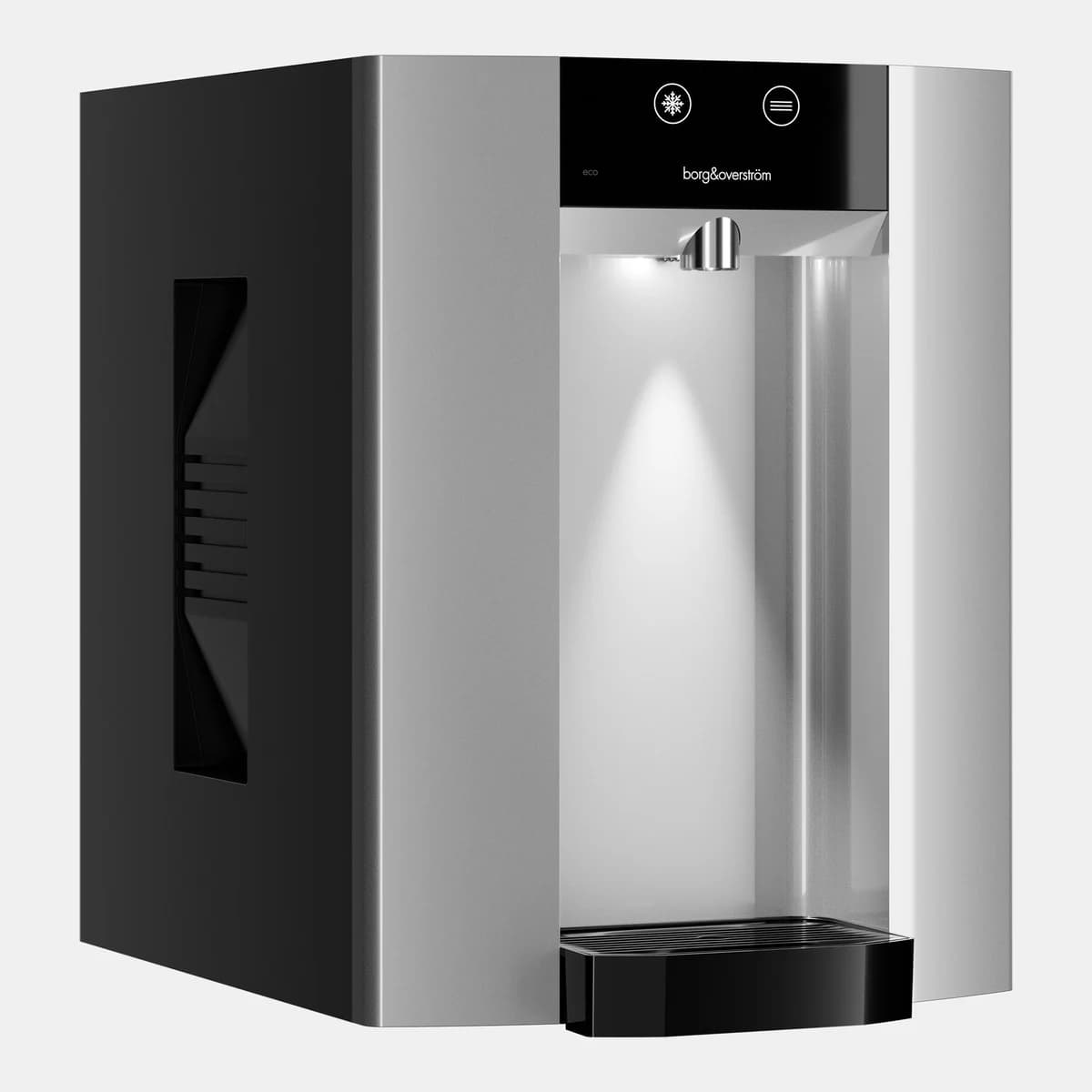
The Borg & Overström E6 is a mains water tabletop unit for chilled and ambient water. The reviewed EU version operates at 230–240 V AC, 50 Hz, with compressor cooling and R290 refrigerant. The stated cooling capacity is 80 l/h, and chilled water output is listed at 2 °C. At 320 × 420 × 460 mm and 18 kg, the unit fits on a suitable counter or dispensing area. The dispensing height of 290 mm leaves room for larger drinking vessels. Its design is appropriate for indoor settings such as offices, shared spaces, food service, and comparable commercial applications. A mains water connection and 3/4-inch BSP connection must be available at the installation site. For inlet pressure, the dated installation manual specifies 0.5–10 bar (regulated internally to 2 bar); the product page specifies at least 1 bar. Confirm the value for the delivered version with the supplier before installation. A euro purchase price for Germany is not documented for the reviewed Chilled & Ambient version; prices from other markets and currencies are not converted. The price for Germany is available on request. For power consumption, the dated installation manual specifies 140 W maximum running power, while the manufacturer’s data sheet lists 110 W; the figures are not averaged, and the value for the delivered version should be confirmed with the supplier. Standby power, annual consumption, and refrigerant GWP are not listed in the reviewed sources. A cost-effectiveness calculation is not reliable without a purchase price, usage volumes, and operating data.